
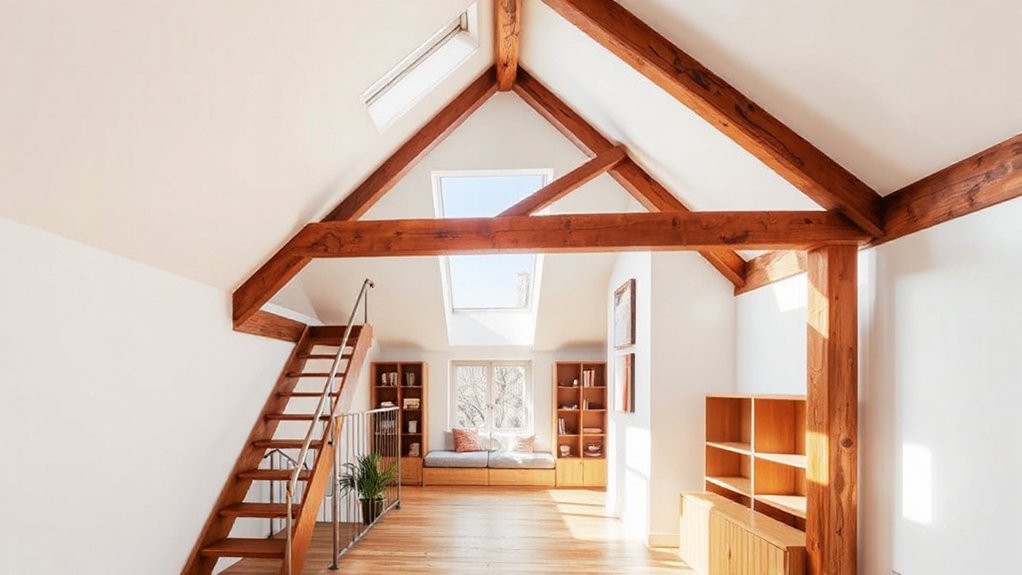
Chances are you don’t realise how a slim dormer, paired with discreet rooflights, can double usable space in a terraced roof without compromising heritage brickwork. You’ll want precise layouts, high-performance detailing, and mindful window choices that respect sash proportions while maximizing headroom. There’s more to balance than light and space—consider structure, planning constraints, and budget trends that shape every decision, and the next steps could redefine how your home sits within its street.
Why Loft Conversions Work for Terraced UK Homes
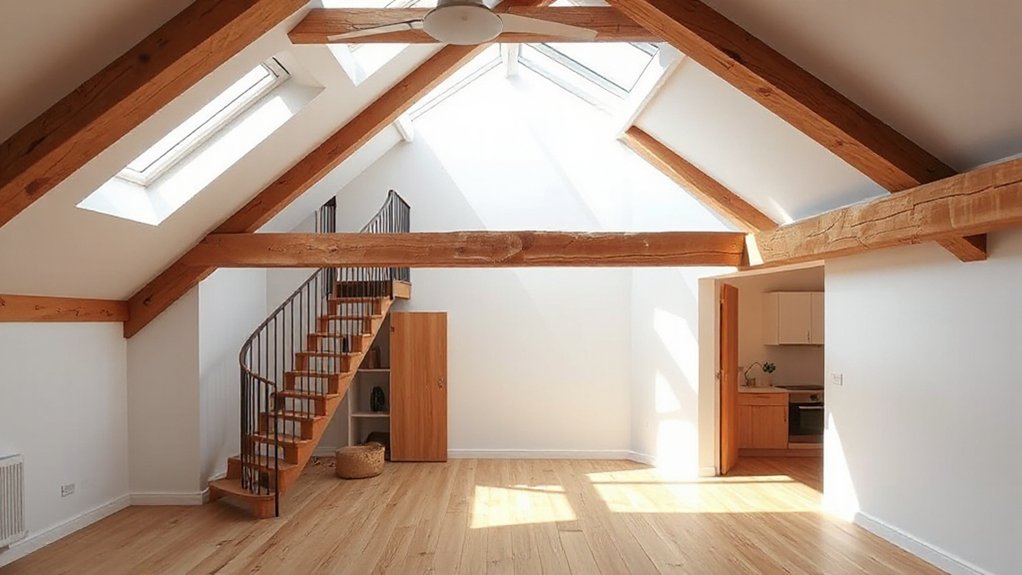
Loft conversions are particularly effective for terraced UK homes because they maximize vertical space without expanding the building’s footprint. You’ll optimize structural efficiency by preserving party-wall integrity while adding habitable levels above.
The approach concentrates demand on load-bearing elements, allowing precise placement of services and finishes. Furniture placement becomes a key design constraint, guiding corridor widths, storage niches, and seating layouts to maintain flow and accessibility.
Insulation techniques must address thermal bridging at ridge and eaves, using continuous cavity fills, rigid boards, and airtight membranes to meet modern standards.
Ventilation is integral, with passive strategies complemented by controlled mechanical systems where needed.
You’ll achieve daylight balance through skylight zoning and carefully oriented windows, ensuring comfort without compromising structural clarity or acoustic performance.
Dormer vs Velux: Choosing the Right Roof Option for Space and Light
Dormers and Velux (rooflights) each offer distinct space and light advantages in terraced conversions. Your choice hinges on internal floor area, headroom, and the reliability of daylight distribution.
Dormers release additional envelope volume, enabling deeper rooms and a more functional staircase run, but they add complexity, cost, and potential planning prerequisites.
Velux windows deliver rapid daylighting with minimal ex‑sun control, making them ideal for compact lofts where you prioritize ceiling height over room volume.
Prioritize roof insulation to limit thermal bridging and maintain comfort year‑round, regardless of option.
Ventilation systems become essential with larger openings; balance passive and mechanical strategies to avoid condensation and damp.
Consider combined strategies: small dormer with rooflights can optimise space, light, and energy performance without overextending budget.
Preserving Character in Terraced Lofts
Preserving Character in Terraced Lofts blends architectural integrity with modern efficiency. You approach the project by cataloging existing features—stone or brickwork, sash windows, cornices—and evaluating how each element serves structure and atmosphere.
Prioritize minimal intrusion: retain original ceiling lines, preserve timber joists where feasible, and align new services with discreet routing to avoid visible hacks.
When introducing insulation, choose breathable, historically sympathetic materials that sustain both ROIs and interior aesthetics without compromising acoustics or fire performance.
Document heritage cues in a design brief, then translate them into detailing: skirting, architraves, and step-down floor progressions that respect proportion and rhythm.
Emphasize precise joinery, calibrated finishes, and a restrained material palette to uphold authenticity while delivering contemporary comfort.
Historical preservation guides your decisions; function reinforces character.
Maximizing Headroom: Efficient Layouts for Terraced Lofts
To maximize headroom in terraced lofts, start with a precise vertical assessment and plan to reconfigure the floor plate around the existing structural envelope. You map rafters, joists, and ceiling heights to identify constraint zones, then iteratively optimize the voids and payload.
Prioritize a compact mezzanine or stepped plan that preserves primary living spaces below while increasing usable height above. Integrate storage solutions within eaves alcoves and under stairs to avoid wasted floor area.
Use insulation techniques that target thermal bridging and reduce overall thickness without compromising assembly integrity. Specify a continuous air barrier, high-performance membrane, and batt or spray insulation aligned to the ceiling plane.
*Guarantee* structural connections remain compliant, and align ventilation with any new thermal envelope to maintain comfort and energy efficiency.
Planning Steps and Budgeting for a Terraced Loft Conversion
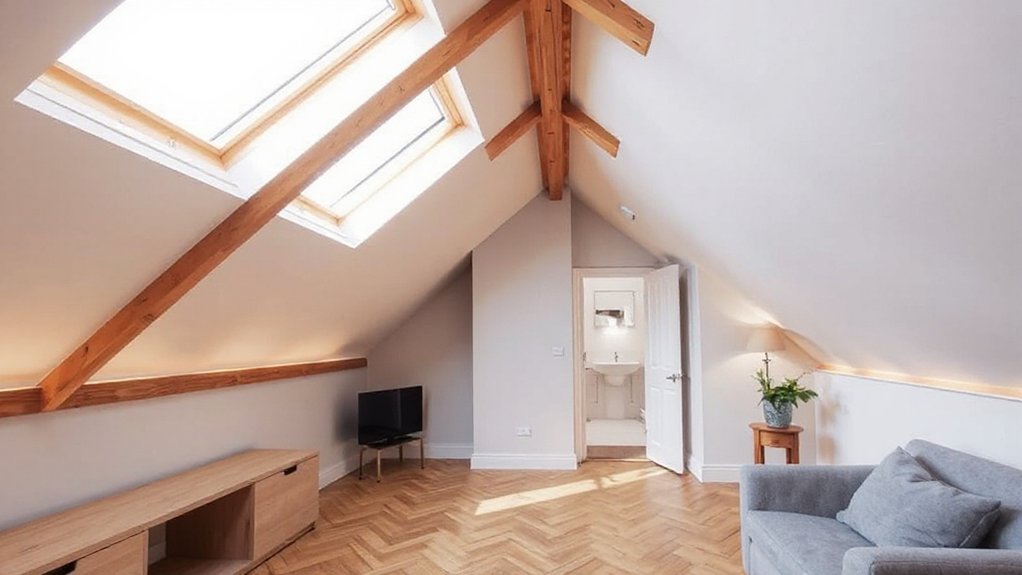
Planning steps for a terraced loft conversion start with a clear scope and a realistic budget, anchored by your existing structural envelope. You’ll map structural constraints, service routes, and headroom targets before any drawing.
Define a spatial brief: core zones, stairs, access, and egress, then quantify construction stages, subcontractor procurement, and contingency (typically 10–15%).
Budget planning emphasizes costs per square metre, party-wall considerations, and trades coordination, with a detailed bill of quantities and milestones.
Secure Planning permissions early, gathering site-specific requirements, amendments, and council expectations to prevent scope creep.
Align design intent with practical limits: insulation, ventilation, fire safety, and drainage must integrate with existing fabric.
Maintain rigorous documentation, regular cost reviews, and decision logs to avoid budget overruns while preserving design quality.
Maximizing Natural Light: Skylights, Stairs, and Finishes
Skylights, stair geometry, and finish choices are your levers for flooding a terraced loft with daylight while maintaining structural integrity and thermal performance. You optimize light by sizing skylights to align with habitable zones, using flat or rooflight variants that minimize heat loss, and staggering openings to reduce glare.
Stair placement matters: a straight run risks shadowing; a well‑pitched, open-well stair maximizes perceived brightness and circulation without compromising insulation.
Finish selections must be low-emissivity where possible, with light-reflective interiors and durable, easy-clean surfaces. Interior finishes influence daylight distribution; choose pale, matte palettes to amplify ambient light without hotspots.
Roofing materials affect thermal performance and weatherproofing, so pair high-performance membranes with overlaid skylight flashing. Prioritize detailing that prevents thermal bridging and guarantees airtight continuity.
Case Studies: Standout Terraced Loft Conversions and What They Teach
Case studies of standout terraced loft conversions reveal how restrained project scopes can yield high-impact spaces, illustrating the power of disciplined typology decisions, airtight detailing, and daylight strategy. You’ll see how tight footprints sharpen program, prioritizing core needs over flourish.
Loft insulation is deployed to maintain thermal comfort without compromising headroom, using continuous membranes and batt insulation where practical to minimize thermal bridges. Structural reinforcement emerges as a non-negotiable discipline, with explicitly labeled load paths, careful joist upgrading, and discreet reinforcement that preserves timber stairs and original ceilings.
You learn to balance fabric-first gains with mechanical precision, ensuring airtight envelopes align with balanced ventilation. These case studies demonstrate that measurable performance, elegant geometry, and durable finish materials yield enduring, low-maintenance spaces you can trust.
Frequently Asked Questions
How Long Does a Terraced Loft Conversion Typically Take?
A terraced loft conversion typically takes 4–8 weeks, depending on scope and council approvals. You’ll install proper loft insulation and ventilation systems, ensuring airtight performance and compliance while coordinating trades, inspections, and access to materials throughout the project.
What Are the Average Costs by Region for Terraced Lofts?
Costs vary by region, with regional differences shaping terraced lofts’ price. You’ll see higher rates in London and the Southeast, lower in the Midlands and North. Cost variations reflect labor, materials, permits, and design complexity.
Can Loft Conversions Add Value to a Terraced Home?
Yes, loft conversions can boost your terraced home’s value. You’ll maximize returns with integrated interior lighting and roof insulation, improving daylight, energy efficiency, and thermal comfort while preserving ceiling lines and structural integrity during transformation.
Are Planning Permissions Required for Terraced Lofts?
You’ll generally need planning permission for terraced lofts, especially if adding dormer windows or altering rooflines; check permitted development limits. Make sure dormer windows are compliant and roof insulation is upgraded to meet current standards and performance targets.
How Much Impact Do Building Regulations Have on Design Choices?
Yes, building regulations shape your design, constraining structure, fire safety, and ventilation, yet you can adapt aesthetics within those limits. Building code governs feasibility; aesthetic considerations drive alignment with space, light, and proportions to maximize your loft’s impact.
Conclusion
You’ve seen how terraced lofts can blend space, light, and character with surgical precision. By choosing the right roof form, preserving brick and sash details, and planning efficient layouts, you’ll maximize headroom and daylight without compromising historic charm. Think of your loft as a finely tuned instrument—a symphony of structure, light, and finish. With careful budgeting, thoughtful detailing, and smart skylight placement, your conversion becomes a precise, design-forward upgrade that respects the street’s heritage.