
When you’re vetting a builder, you should start by confirming licenses and insurance in official databases to make certain they’re current and fit the project scope, then lock in the contract details—warranties, milestones, change orders—before any work begins. Verify certifications and trade affiliations, review past projects and references with a critical eye, and ask pointed questions about timelines and costs to spot red flags. It won’t be easy, and skipping steps invites costly mistakes you’ll wish you avoided.
Verify Licenses and Insurance Up Front

Before you hire a builder, confirm they hold valid licenses and up-to-date insurance. You’ll scrutinize records, not vibes, because licenses show baseline competence and regulatory compliance. Verify that the license type matches the project scope and the issuing authority, then check status—active, suspended, or revoked.
Demand current insurance certificates, focusing on general liability and workers’ compensation, and confirm endorsements for subcontractors. Ask about recent claims history and whether the insurer provides defense coverage for ongoing projects.
Inspect for Building permits on past work, ensuring approvals align with local codes and inspector sign-offs. Investigate any Insurance claims tied to previous jobs, noting patterns of delays or payout issues.
Document findings meticulously to support objective decision-making.
Review Contracts, Warranties, and Insurance Terms
Do you really know what you’re signing? Contracts, warranties, and insurance terms aren’t mere formalities; they’re the backbone of accountability. Read every clause with a fine-tooth comb, particularly sections on project timelines and change orders.
Look for vague language that lets a builder extend timelines without consequence, and insist on concrete milestones and penalties for delays. Warranties should specify coverage duration, what’s guaranteed, and any exclusions or required maintenance.
Insurance terms must prove adequate coverage, naming you as an additional insured where appropriate, and confirming subcontractor policies. Confirm payment schedules align with milestones, not vague progress claims.
Don’t sign until you’ve flagged ambiguities, requested clarifications in writing, and documented agreed changes. A precise contract reduces disputes, protects warranties, and clarifies responsibilities long after the dust settles.
Check Credentials, Certifications, and Trade Affiliations
To verify a builder’s credibility, start by checking their credentials, certifications, and trade affiliations, because a documented track record matters as much as the finished product.
You should demand current licenses and professional registrations, then confirm active status with issuing bodies. Look for specific certifications relevant to the project scope and note any renewals or recent suspensions.
Scrutinize trade affiliations to gauge peer recognition and adherence to industry standards, not just membership. Cross-check credentials with online verifier tools and direct inquiries to issuing authorities.
Consider recent disciplinary actions, complaint history, and scope limitations. Credentials verification and trade affiliations together reduce risk by revealing legitimacy, ongoing education, and accountability.
If gaps appear, request explanations, documented renewals, or alternative qualified affiliations to inform your decision.
Inspect Past Projects and Gather References
Inspect past projects and gather references with a critical eye: don’t accept a glossy portfolio at face value. You’ll cross-check claimed outcomes with real-world results, focusing on consistency across multiple jobs.
Request full project timelines, including start dates, milestones, and completion dates, to gauge adherence to schedules and potential delays.
Verify material quality by asking suppliers, reviewing invoices, and examining warranty terms, not just the builder’s assurances.
Contact previous clients, preferably those with projects similar in scope, to confirm workmanship, durability, and communication responsiveness.
Look for red flags like unexplained overruns, missing permits, or substitutions without documented approvals.
Document lessons learned from each reference, noting how issues were resolved.
Build a short, verifiable dossier that informs your decision without relying on marketing hype.
Spot Red Flags and Ask Targeted Questions
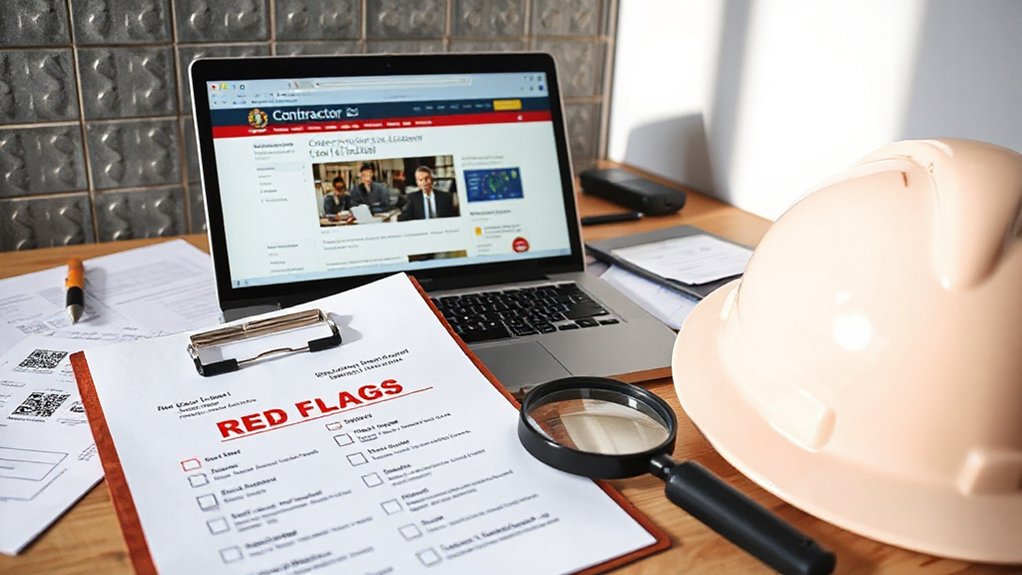
Spot red flags early and ask pointed questions that separate hype from reality. You’ll scrutinize promises against documented facts, not best-case anecdotes.
Ask for licenses, insurance certificates, and local permits, then verify online records and expiration dates.
Probe project timelines, cost breakdowns, and change-order procedures, noting any vague or inconsistent answers.
Look for patterns: delayed payments, subcontractor turnover, or unexplained project gaps.
Request a detailed workmanship-quality checklist and compare it to industry standards; insist on examples of completed work similar to yours.
Check building reputation by contacting past clients about durability and follow-up service.
Demand written warranties and maintenance plans, then test responsiveness to inquiries.
If the contractor can’t substantiate claims, or you sense pressure to sign quickly, step back.
Trust concrete evidence over persuasive rhetoric.
Frequently Asked Questions
How Do I Verify a Builder’s Creditworthiness or Financial Stability?
You should verify a builder’s financial background and credit history, then corroborate with written records. Look for consistent cash flow, debt load, liens, and recent project funding. Don’t rely on promises; seek independent audits and credible references.
What Questions Reveal Hidden Subcontractor Practices or Labor Violations?
You should ask pointed questions about subcontractor transparency and labor practice transparency, because hidden practices reveal risk. You’ll seek documented audits, payment trails, and subcontractor lists, and you’ll scrutinize responses for inconsistencies, omissions, or evasions with careful, evidence-based skepticism.
How Can I Confirm Builder’s Compliance With Local Building Codes?
You seek a Building permit and pass every Safety inspection by demanding written reports, dated photos, and third-party audits; you verify codes, compare deviations, and insist on timely corrections, documenting each decision with skeptical, evidence-based notes.
Do Builders Hold Required Performance Bonds for Projects?
Yes, you should verify they hold a performance bond; inspect official documents and ask for proof. You’ll favor insurance verification and past project reviews, treating any gaps skeptically, demanding precise, documented evidence before proceeding.
What Credentialing Timelines Should I Expect for Ongoing Projects?
You’re steering a maze, traveler; project timeline slips without steady credential verification. Expect staggered milestones, frequent updates, and verifications at each checkpoint, as you demand evidence-based progress. Rely on clear milestones and ongoing credential verification for reliability.
Conclusion
You’re not just buying a project; you’re buying a promise. So yeah, check licenses, insurance, and contracts—but don’t kid yourself that forms alone guarantee quality. The real signal is consistent projects, tight milestones, and honest change orders. Gather refs, verify past work, and ask tough questions, even when it’s inconvenient. It’s adorable to trust vibes, but the data don’t lie. If red flags pop, walk. Skeptical diligence beats wishful certainty every time.