
You want comfort, security, and efficiency, you want resilience, you want future-proofing. You’ll gain from reliable, UK-friendly ecosystems, energy monitoring, and robust local control. You’ll compare adaptive thermostats, zoned lighting, and battery-backed security devices for cost and ROI. You’ll factor in dual connectivity and offline automation to survive outages. You’ll balance setup ease with long-term value, and decide which system best fits your home before proceeding to the details.
Why UK Homes Benefit From Smart Upgrades (Pain Points and Outcomes)
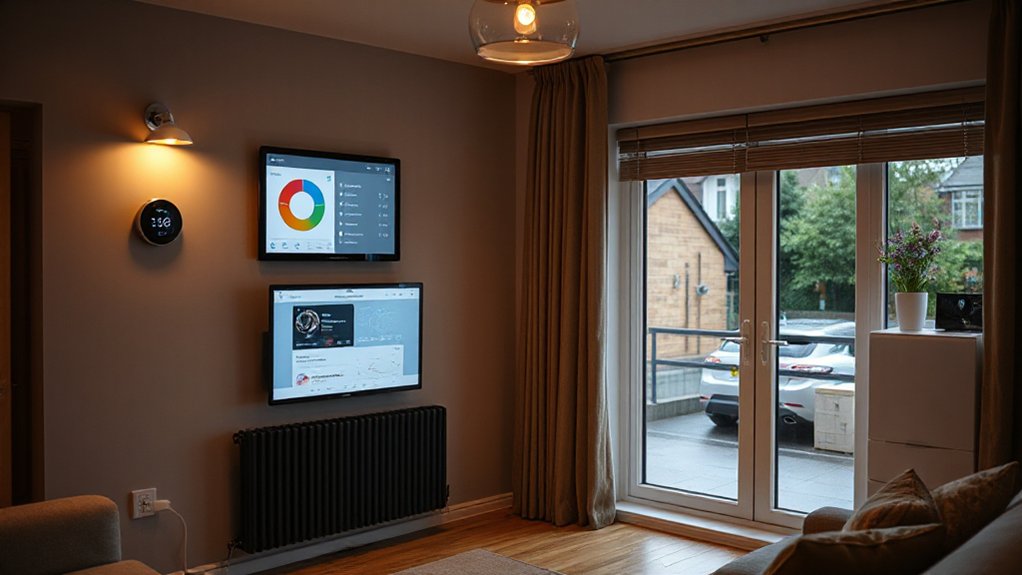
Smart-home upgrades address chronic pain points in UK properties by delivering precise, measurable improvements in comfort, security, and efficiency. You gain centralized control over devices, reducing time spent on routine tasks and enabling consistent performance across rooms.
Voice control accelerates interactions, lowering friction when managing lighting, climate, and access, while maintaining a clear audit trail for accountability.
Data privacy remains central: you configure encryption, robust authentication, and local processing where possible to limit exposure. You’ll experience improved energy awareness through real-time monitoring that highlights usage patterns without compromising personal data.
Reliability rises as devices coordinate through standardized protocols, decreasing outages and incompatibilities.
Overall outcomes include smoother daily routines, enhanced safety, and tangible cost savings, supported by verifiable metrics and compliant governance.
UK-Focused Energy Savings: Thermostats and Lighting That Work Here
UK homes can specifically reduce energy waste by optimizing thermostats and lighting systems that align with local usage patterns and climate. You optimize by selecting thermostats with adaptive schedules tuned to UK living habits, weather data, and occupancy detection.
Pair these with dimmable, zone-based lighting and LED mains in common areas to minimize consumption without sacrificing comfort. Implement geofencing and remote access for off-peak heating boosts and daytime lighting coordination.
Embrace smart technology that supports occupancy analytics, weather-linked planning, and auto-away modes to prevent phantom loads. For energy management, central dashboards should present real-time and historical usage, enabling targeted adjustments.
Prioritise interoperable devices, secure cloud integration, and clear firmware update paths to sustain efficiency gains over time. Maintain minimum standby draw and review seasonal performance quarterly.
Reliable Security and Resilience for UK Outages
Outages can expose gaps in home security and disrupt critical functions, so you should design a resilient system that remains operable during power or network interruptions.
To maintain security during outages, select battery-backed devices and local processing where possible, reducing reliance on cloud alerts.
Prioritize robust connectivity reliability by using dual-path networks, such as wired Ethernet plus cellular failover, and keep essential sensors on low-latency channels.
Implement local automation controllers that can operate offline and execute predefined rules without internet.
Use energy storage strategically—UPS for routers, cameras, and alarm hubs—to preserve surveillance and alerting.
Regularly test failover routines and update firmware to close vulnerabilities.
Document recovery procedures and ensure remote access is still auditable during outages.
Home automation improves resilience without compromising safety.
Easy-Install, UK-Friendly Ecosystems and Setup Tips
If you’re setting up a UK-friendly smart home, start with ecosystems that prioritize local control, straightforward pairing, and reliable regional support. Choose platforms with verified local servers and robust over-the-air updates to minimize latency and outages.
Favor Zigbee, Matter, or Wi‑Fi‑based hubs that offer plug‑and‑play device catalogs and clear certification, reducing setup friction. Prioritize ecosystems that provide native UK data routing and UK‑specific incident response.
For quick onboarding, rely on documented step‑by‑step guides and mobile apps with rapid auto‑discovery. Keep configuration lean: enable only essential automations at first, then expand.
When integrating Smart appliances, confirm compatibility and firmware update cadence. For Voice assistants, guarantee regional voice models, local routines, and privacy controls align with your expectations.
Budget, ROI, and How to Pick the Right UK System
Budget decisions drive both upfront costs and long-term savings, so you should quantify total ownership—hardware, installation, ongoing subscription, and support—against expected energy, security, and convenience gains to determine ROI.
When choosing a UK setup, map your needs to interoperability: guarantee Smart home integration across core platforms and devices, not just niche components. Prioritize ecosystems with proven UK compatibility, robust update cadence, and transparent pricing.
Assess installation complexity and ongoing support, including data privacy and local service options. Evaluate voice control capabilities, responsiveness, and multi-room reliability, then test routines that automate scenes and routines.
Compare total cost of ownership over 3–5 years, weighing energy savings and added security against monthly fees. Select a scalable system that balances performance, cost, and future-proofing.
Frequently Asked Questions
How Do I Ensure Smart Devices Work With UK Voltage and Plugs?
To guarantee compatibility, verify UK device voltage (230V) and plug type, then check Wi Fi compatibility and power adapter requirements; use a certified UK adapter if needed, and ensure your router supports 2.4/5 GHz for stable connectivity.
What UK Data Privacy Standards Apply to Smart Home Hubs?
Data privacy standards in the UK require applying data encryption and obtaining user consent for smart home hubs. You should implement strong access controls, comply with the UK GDPR, and conduct regular risk assessments to protect personal data.
Can Smart Meters Integrate With Existing Energy Tariffs in the UK?
Yes, smart meters typically support Energy tariff compatibility, allowing you to switch rates and use dynamic pricing. You’ll benefit from Billing integration that aligns meter readings with your supplier’s invoices, ensuring accurate charges and streamlined account management.
Are There Uk-Specific Warranty Terms for Smart-Home Gear?
Yes, UK-specific warranty terms exist. A Smart warranty typically covers parts and labor, with UK coverage often including manufacturer-backed guarantees, service windows, and remote diagnostics. Guarantee product-mandated registrations, and understand exclusions for misuse or DIY repairs.
Which UK Insurers Offer Discounts for Smart-Home Security Setups?
Yes. You’ll find Insurance discounts and Security incentives from major UK insurers when you install compliant smart-home security systems, with validators like alarms, CCTV, and connected devices; insurers quantify risk reductions and apply premium reductions accordingly.
Conclusion
You’ve bought the right tools to future-proof your home, and smart upgrades are your quiet backbone. Think of your system as a resilient compass—adaptive, private, and locally anchored—guiding comfort, savings, and security through every outage. When you choose UK-ready ecosystems, you’re stitching reliability into daily life, not chasing trends. Let storage, dual connectivity, and offline automations keep the lights on and the climate steady, even when the grid wavers. Smart choices, solid foundations, lasting calm.