When warmth matters, choose flooring that feels warm, performs well, and lasts. You’ll weigh comfort underfoot, insulation, and moisture resistance every step of the way, and you’ll want options that pair with your home’s layout and heating. Ready to see which choices strike the right balance for your space and climate, and how to apply them without overhauling your plan?
What Makes a Floor Feel Warm in UK Winters
Warm floors feel warm mainly because they transfer heat efficiently and stay comfortable underfoot. You’ll notice warmth when floor materials conduct heat well and reduce heat loss at the surface.
To maximize comfort, pick materials with high thermal mass and low emissivity losses, and pair them with proper underlayment that minimizes cold transfer from subfloors.
You should consider how long the heat stays in the room after the heating system cycles off, as this affects perceived warmth.
Floor material durability matters because it preserves warmth-associated performance over time.
Also, choose flooring installation techniques that guarantee consistent heat distribution, avoid gaps, and prevent air leakage.
With careful material choice and precise installation, you’ll maintain steady warmth across rooms and seasons.
Carpet vs Hard Surfaces: Which Insulates Best?
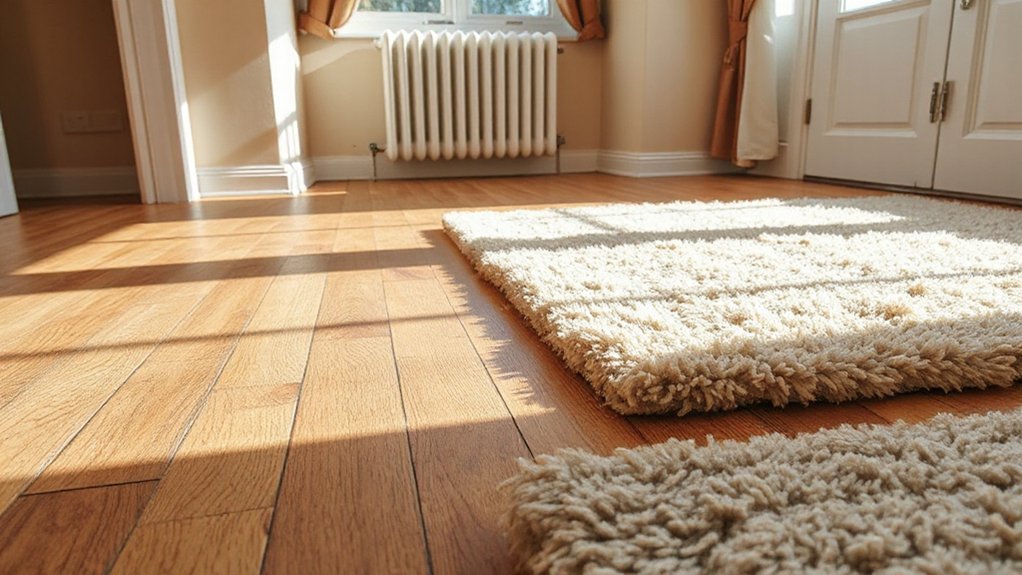
Carpet and hard surfaces handle insulation differently, affecting how heat stays in a room once your heating cycles off. You’ll notice carpet traps more air, creating a warmer feel underfoot and reducing heat loss through the floor in the first hours after heating stops.
Hard surfaces reflect heat poorly and conduct warmth away, so rooms cool faster without a significant underlay. When choosing, consider your priorities: comfort and added warmth versus ease of cleaning and durability.
Luxury vinyl can mimic warmth with thick underlays, while cork flooring naturally provides a modest insulative layer and comfort underfoot.
For many UK homes, pairing a low-maintenance hard surface with a quality underlay or selecting a plush carpet offers a balanced approach to insulation and practicality.
Radiant Floor Heating: When It Makes Sense for Cold Homes
Radiant floor heating can be cost-effective if you plan by zones and smart thermostats, so you heat only where you’re based and when you’re there.
Installation varies by floor type and existing systems, but the payoff comes from precise control and reduced energy waste.
Consider how you’ll run distribution, budget for upfront costs, and compare long-term savings with your monthly bills.
Cost-Effectiveness Of Heat
Radiant floor heating can cut operating costs when paired with efficient insulation and a well-sized system, but its cost-effectiveness hinges on how you use it. You’ll save more when you heat only occupied zones and program smarter schedules, not only raising comfort.
Compare upfront costs (system, installation, controls) against long-term savings from lower boiler loads and reduced heating cycles. In UK homes, the best value comes with well-insulated lofts, walls, and underfloor insulation; poor sealing wastes energy and money.
Consider floor types and their impact on heat transfer, since flooring aesthetics can influence perceived warmth but isn’t a substitute for efficiency.
Maintenance challenges are real: thermostat calibration, circulator checks, and periodic leak tests protect performance and cost-effectiveness over time.
Installation For Floors
Installing radiant floor heating requires careful floor-by-floor planning to maximize efficiency and comfort. You’ll want to assess subfloor condition, moisture barriers, and the weight load of the chosen system before any installation.
If you’re retrofitting, consider electric mats for smaller areas or hydronic loops for larger spaces, weighing upfront costs against running expenses.
Confirm subfloor flatness and proper insulation beneath the heating layer to minimize heat loss and enhance response time.
Compatibility with your flooring type matters: some materials tolerate radiant heat better, preserving flooring durability over time.
Plan for the finish layer early to maintain aesthetic appeal, avoiding thick toppings that could impede heat transfer.
Finally, hire qualified installers to guarantee electrical safety, proper sensing, and reliable, long-term performance.
Zones And Thermostats Use
Zones and thermostats are where radiant floor heating really proves its practicality; using individual zones and smart controls lets you heat only where and when you need it, cutting energy use and boosting comfort.
In colder UK homes, zone heating keeps floors warm without overdoing the boiler. Plan layouts by room function and occupancy, prioritizing living areas, bathrooms, and entryways.
A smart thermostat learns routines, adjusts based on timing, and accounts for external temperatures, smoothing progressions between zones.
Install separate thermostats or a multizone controller to avoid overheating unused spaces.
Choose compatible wiring for underfloor systems and consider humidity and floor type.
Regular maintenance and software updates keep responses snappy, saving both heat and money while you stay cozier.
Engineered Wood: Stability and Warmth for Chilly Climates
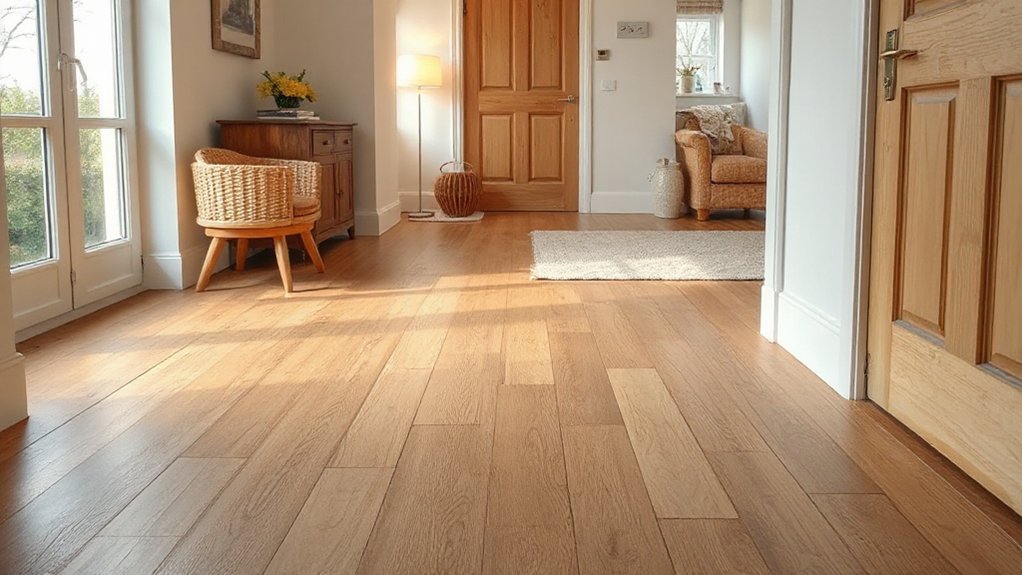
Engineered wood offers the stability of a solid floor with the warmth of real wood, making it a practical choice for UK homes in cold winters. You get reliable dimensional stability, so seasonal shifts won’t cause curling or gaps.
The layered construction resists humidity swings and provides a smoother, quieter feel underfoot than many solid woods. Choose core materials engineered for durability, and top it with aesthetically appealing veneers that mimic oak, walnut, or maple.
Installation is straightforward for most UK homes, with options like click-lock systems easing DIY or fast professional fit.
Eco-friendly options exist, from responsibly sourced cores to reduced formaldehyde emissions.
With good underlay, you’ll enjoy insulation benefits and comfort, plus the aesthetic versatility needed to complement varied decors.
Warm, Moisture-Resistant Tiles: Comfort Underfoot
Warm, moisture-resistant tiles offer a practical, comfortable solution for UK homes facing cold winters. You’ll appreciate a surface that stays warm to the touch and easy to clean, even after wet shoes.
Choose ceramic or porcelain with a low water absorption rating, and pair them with a quality underlayment designed for tile use. Make certain the subfloor is flat and stable to prevent cracks that invite cold drafts.
Incorporate moisture barriers at the tile perimeter and joints to guard against dampness seeping upward. Maintain underfloor ventilation near tile areas to improve air exchange and prevent condensation buildup behind the tiles.
Regular grout maintenance helps sustain a hygienic, warm feel while protecting against moisture-related damage. This combination delivers durable comfort underfoot without sacrificing performance.
Underfloor Insulation Options to Maximize Heat
Underfloor insulation is a practical, high-return upgrade for UK homes, especially in cold winters. You should start with a target U-value and choose insulation that fits your floor type—solid or suspended—without compressing joists.
For best results, consider rigid foam boards or mineral wool batts for continuous coverage, reducing heat loss through gaps and edges. Layer thickness matters: aim for the thickness your floor allows, and seal around perimeter boards to prevent drafts.
Combine insulation with strategic use of area rugs to add warmth in living zones without compromising heat efficiency; they don’t replace insulation but can soften cold spots.
Guarantee proper installation around pipes and vents, and preserve airflow with controlled underfloor vents to avoid moisture build-up while maintaining heat.
Quick-Win Flooring Upgrades on a Budget
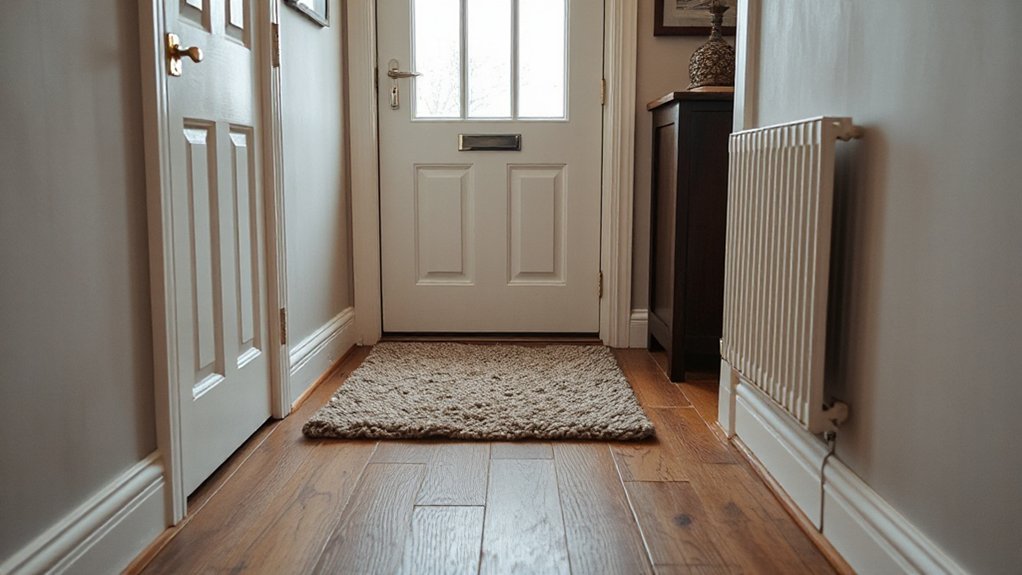
If you’re chasing quick, low-cost gains, start with simple surface tweaks that don’t require major renovations. Quick-win upgrades focus on impact first, not overhaul.
Prioritise flooring aesthetics by choosing area rugs, runners, and grippier mats to zone spaces and add warmth without replacing underfoot materials.
A fresh-clean look comes from proper cleaning and sealants, so implement a straightforward maintenance routine: vacuum regularly, spot-clean spills promptly, and reseal high-traffic areas when needed.
Consider edges and junctions—trim frayed carpets, re-nip loose laminates, and rebed loose boards to reduce drafts and creaks.
Use underlay scraps to improve insulation beneath rugs where possible. This keeps costs down while boosting perceived warmth and comfort.
Short-term investments here can compound into lasting functional gains with minimal disruption.
Breathable Materials for Allergy-Friendly Warmth
Breathable materials can help regulate moisture and reduce mold risk, supporting allergy-friendly warmth in UK homes.
I’ll show how to balance breathability with comfort, so you don’t trade warmth for air quality.
You’ll get practical tips on choosing materials that stay comfortable without trapping allergens.
Breathable Material Benefits
Breathable materials keep indoor air clean and comfortable by regulating moisture, reducing mold risk, and supporting better allergy management. When you choose flooring with breathable fibers or underlays, you allow moisture to escape rather than trap it, helping prevent damp patches on walls and floors.
This reduces stubborn musty odors and supports a healthier environment for allergy sufferers. You’ll notice steadier temperature distribution because moisture moves through the system rather than condensing in isolated spots.
In practice, look for natural or engineered options that permit vapor transmission and pair them with breathable underlays. This approach improves moisture management across rooms and maintains consistent indoor air quality, even as humidity fluctuates.
Simpler maintenance follows, with fewer heavy cleaning cycles and less mildew concern.
Allergy-Friendly Warmth Tips
When you choose breathable materials for warmth, you’ll reduce moisture buildup that can aggravate allergies while keeping rooms comfortable. Prioritize natural fibers and structured layers that wick moisture without promoting mold growth.
Opt for breathable insulation under floors, like mineral wool or cellulose, to maintain a steady indoor humidity.
Select flooring materials with low pollen retention and easy cleaning, such as treated hardwood, cork, or high-quality laminate, avoiding dense carpets that trap dust.
Use underlays with anti-microbial properties and tight seams to minimize allergen ingress.
Eco-friendly options matter: choose responsibly sourced wood and recycled-content underlays.
Aesthetic considerations matter too; balance warmth with a light, neutral color palette to ease allergen visibility and support air movement.
Breathability and Comfort Balance
Balancing breathability with comfort means picking materials that wick moisture without feeling chilly or damp. You want flooring that stays dry underfoot and doesn’t trap humidity. Opt for breathable options like natural fibers or engineered surfaces with moisture-control layers, paired with proper underlayment.
In spaces with allergens, choose finishes that won’t harbor dust mites or mold, yet still allow air exchange to named indoor air quality benefits. Prioritize materials with low chemical emissions and good airflow under gaps and joins.
Use radiant warmth strategically; breathable substrates help you maintain even temperatures without condensation. Regular ventilation improves indoor air quality and reduces moisture buildup, cutting allergy triggers.
Pair with dehumidification when needed, ensuring consistent comfort across rooms.
Practical Maintenance to Keep Floors Dry and Warm
To keep floors dry and warm, establish a quick daily routine: wipe feet at entryways, mop up spills immediately, and use absorbent mats on all thresholds. You’ll maintain a dry surface and reduce heat loss by preventing cold dampness from seeping indoors.
Start with floor cleaning after high-traffic periods, focusing on hard floors first, then rugs, to stop moisture from saturating underfoot. Use a damp—but not soaking—mop and a mild cleaner suitable for your floor type.
Monitor humidity and ventilate enclosed spaces to curb damp buildup. Prioritize moisture control around doorways and near windows during colder days.
Regularly remove snow and moisture from entry zones to prevent tracking indoors. This routine supports safer, warmer living areas and longer-lasting floors.
How to Choose the Best Flooring for a UK Cottage or New Build
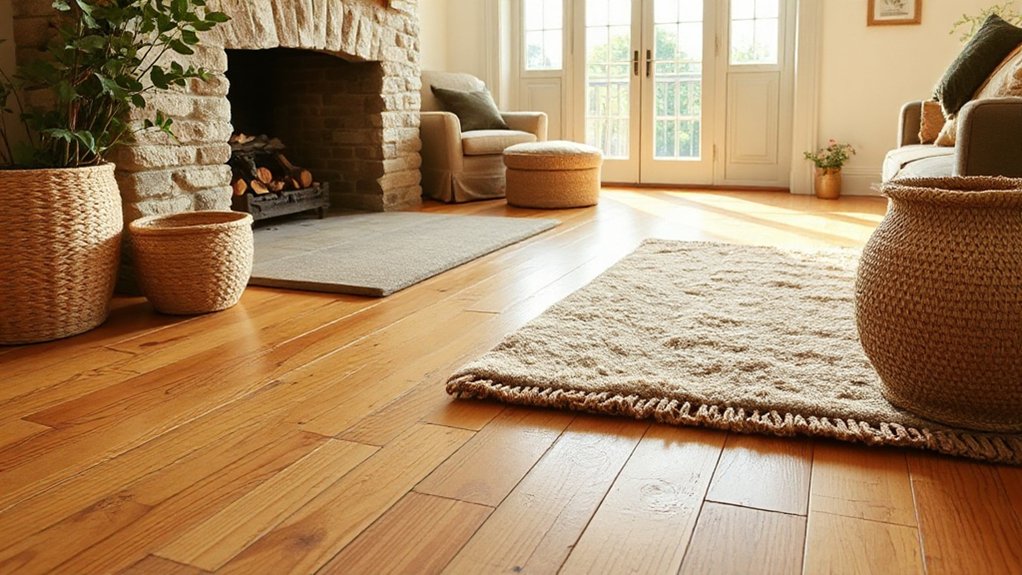
When you’re choosing flooring for a UK cottage or new build, start with material warmth—think how the surface feels underfoot and how well it retains heat.
Consider climate-appropriate options that balance insulation, durability, and maintenance for cold winters.
Use these factors to guide your choice, aligning warmth and practicality with the home’s design and your lifestyle.
Material Warmth Considerations
For UK homes, warmth isn’t just about insulation—it’s about material properties that feel warmer underfoot and retain heat longer. When selecting flooring, consider how materials store and release heat.
Sunlight optimization matters: choose finishes and colors that reflect or absorb daylight to reduce cold spots near windows.
Thermal mass plays a *vital* role in moderating indoor temperatures; dense materials like stone or concrete can smooth temperature swings, while wood can feel warmer but stores less heat.
Pair high-thermal-mass options with underfloor heating or proper insulation beneath the subfloor to maximize efficiency.
Avoid lightweight surfaces in consistently cold rooms where heat leaks quickly.
Prioritize solid or engineered formats with tight joints and durable wear layers.
Balance comfort, cost, and maintenance to sustain long-term warmth.
Climate-Appropriate Flooring Choices
Choosing the right flooring for a UK cottage or new build hinges on climate, energy efficiency, and daily comfort. In cold winters, opt for materials that warm quickly, trap heat, and resist moisture.
Consider solid timber or engineered wood for wall-to-wall warmth, but pair with underfloor insulation and a breathable underlayment to boost energy performance.
If you prioritise durability, look at luxury vinyl or composite tiles with high density cores and good wear ratings, which also mimic natural textures.
For low maintenance, choose ceramic or porcelain with a matte finish that hides wear and cleaning marks.
Prioritise aesthetic appeal by selecting tones and grains that complement existing woodwork and brick.
Balance flooring durability with visual warmth to create a cohesive, cosy living environment.
Frequently Asked Questions
How Does Humidity Affect Perceived Floor Warmth in Winters?
Humidity makes floors feel colder when higher; you’ll notice reduced thermal comfort. To improve warmth, maintain humidity control and choose insulating materials, use radiant heat if possible, and seal gaps. You’ll enhance perceived warmth and overall comfort substantially.
Do All Underlays Improve Insulation Equally?
Not all underlays improve insulation equally. Some Underlay types offer better thermal performance, while Insulation materials vary widely. You should assess R-value, thickness, and moisture resistance, then choose accordingly for your floor and climate.
Are Vinyl Floors Warm Enough Without Underfloor Heating?
Vinyl floors can feel warm, but they aren’t inherently heated; underfoot comfort depends on underlayment and room temperature. Vinyl durability remains solid, and flooring aesthetics stay versatile, yet you’ll benefit from underfloor heating or rugs for warmth.
Can Pets Influence Floor Warmth and Moisture Needs?
Like a cozy blanket, yes: pets can influence warmth and moisture needs. You’ll notice pet fur adds static and dampness, while scratching damage raises maintenance. Plan for humidity control and durable flooring to counter moisture and wear.
Which Flooring Is Best for Energy-Efficient Refurbishments?
You should choose energy-efficient flooring like cork or bamboo, paired with Eco friendly materials and modern insulation techniques. It reduces heat loss, lowers bills, and stays durable; combine underfloor or thick carpet for optimum warmth and comfort.
Conclusion
When you’re choosing for a UK winter, think warmth first, then practicality. Carpets and rugs trap heat; engineered wood adds balance; moisture-resistant tiles handle damp areas; cork delivers soft insulation. A touch of underfloor heating can boost comfort where it matters. Quick upgrades, like a thick underlay or new tiles, can make a noticeable difference without fuss. Your home will feel like a warm beacon in a frosty sea.