
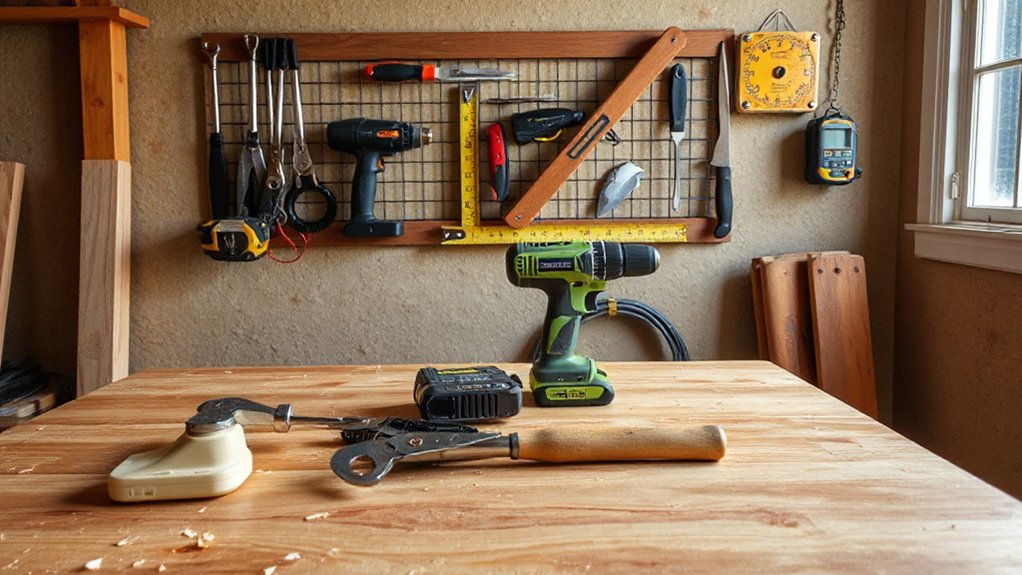
You want a reliable, versatile set that covers quick fixes, precise cuts, and durable performance. Choose cordless tools with quick-change bits, brushless motors, and smart charging for ready-to-go power. Pair these with essential hand tools like a claw hammer, tape measure, and combination square for accuracy. Look for good warranties, durable housings, and compatibility across brands. Remember, durability plus ergonomic design saves time and effort on projects. If you keep reading, you’ll learn how to pick by project type and budget.
What Makes a Tool Essential for DIY Projects
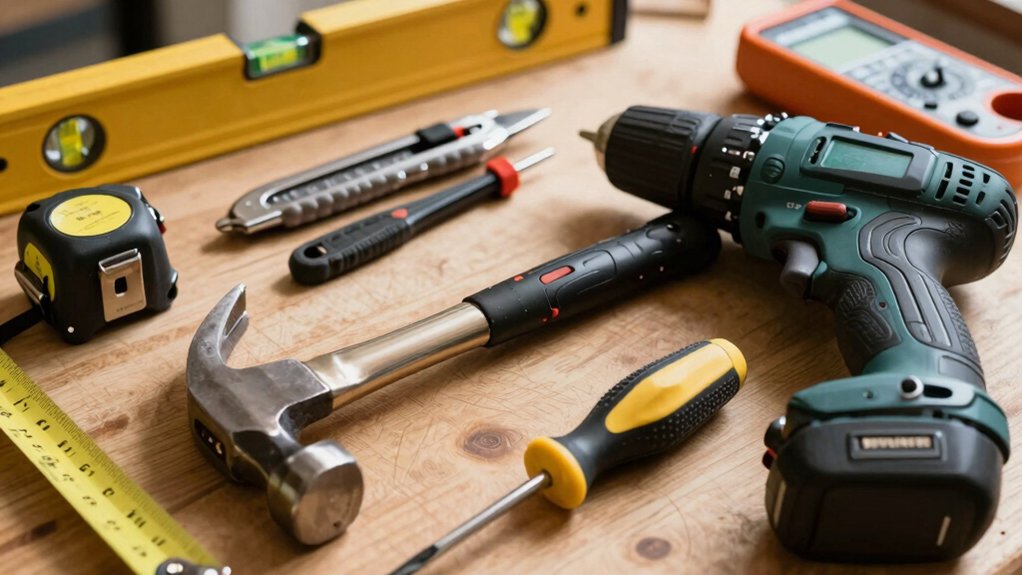
Can you identify the tools that truly justify a DIY project? You do, because you crave results that feel earned and immediate.
An essential tool isn’t flashy; it’s dependable, with tool versatility that lets you switch tasks without hunting for a separate gadget. You value ergonomic design, reducing fatigue as you work, so precision stays steady from start to finish. Consider grip, balance, and control: these cues reveal commitment to longevity and accuracy.
Durability matters, too—your essential tool withstands repeated use and tough materials without faltering. Compatibility with common fasteners and standards speeds up progress, avoiding dead-end detours.
In the end, the tool that earns its keep is the one that amplifies your capability, keeps you productive, and delivers consistent, quality results.
Essential Power Tools for Quick Home Fixes
You’ll reach for cordless power basics first, so you’re never tethered when you’re tightening, drilling, or assembling.
I’ll spotlight how quick fixes hinge on a reliable drill and the right bit selection, plus how cordless models keep you moving.
We’ll keep the focus tight on practical use, from fast battery swaps to choosing tools that suit small, speedy home repairs.
Cordless Power Basics
Cordless power basics put room-temperature reliability in your toolkit, letting you tackle quick fixes without dragging out extension cords. You gain speed and precision when you understand battery technology and smart charging, so your tools stay ready when the job calls. Keep a clean workflow by selecting compatible packs and acknowledging real-world runtime.
- Visualize a compact drill swinging into action, powered by a high-energy cell, charging on a fast station.
- Imagine a saw that shifts between speeds as you sweat through a cut, fed by a balanced battery and a robust charging station.
- Picture a driver snapping bits with confidence, its battery delivering consistent torque from start to finish.
Stay mindful of heat, voltage, and cycle life to maximize performance in every project.
Quick Fixes With Drills
Quick fixes with drills keep projects moving fast, especially when you’ve got a reliable cordless model backed by a well-matched battery. You’ll stay productive by selecting the right drill bit varieties for the material at hand, whether wood, metal, or masonry, and matching bit type to the task.
Pinpoint torque settings matter too; start low, then dial up as needed to avoid stripping or bogging down. The drill’s weight and balance should feel natural, letting you maintain control during each plunge or screw.
Attachments and bits aren’t optional luxuries—they’re tools that multiply your speed. Choose a model with variable speed, a solid chuck, and intuitive controls so you don’t waste time stopping to reconfigure.
Power, precision, performance—delivered reliably.
Everyday Hand Tools Every DIYer Should Own
A solid set of everyday hand tools is the backbone of any DIYer’s kit. You want reliable gear, instant access, and controlled power. Build your core with these essentials:
- Claw hammer
- Tape measure
- Combination square
With these in hand, you’ll measure, mark, and strike with purpose, reducing guesswork and boosting precision. Prioritize DIY safety by wearing eye protection and keeping your workspace organized, so tools don’t slip from your grip.
Maintain momentum through deliberate hand tool maintenance: wipe blades, oil moving parts, and store in a dry case. Choose hardened steel where possible, ensuring longevity under daily use.
As you upgrade, stay mindful of grip comfort and balance to sustain force without fatigue. Your toolkit should empower, not encumber, every cut, fit, and fasten.
The Best-Rated Cordless Drill Options for Beginners and Pros
If you’ve built a solid hand-tool foundation, you’re ready to choose cordless drills that fit both beginners and seasoned pros. Modern cordless drills balance power and control, with models offering high torque while remaining manageable for new users.
Look for extended battery life without excessive weight, so you don’t fatigue mid-project. An ergonomic design matters as you drill through fasteners, pilots, and hardwood, reducing wrist strain and improving precision.
Features like brushless motors deliver sustained performance and longer life, while two-speed settings cover driving and drilling tasks. Lithium-ion packs, quick-charge options, and magnetic bit storage keep workflows efficient.
Prioritize versatility: compatible chucks, sturdy clutch control, and a comfortable grip that feels natural in your hand.
Key Saws for Accuracy: Circular, Miter, and Jigsaws
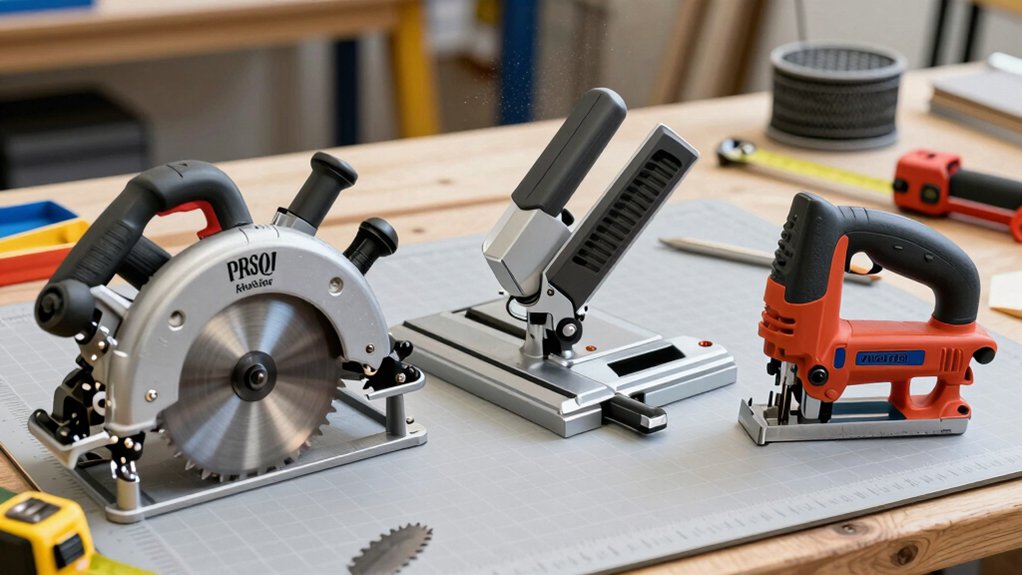
You’ll compare precision circular razors for clean, straight cuts and reliable edge control. Consider how miter cutting accuracy hinges on square setups, steady handling, and consistent blade quality.
With jigsaws, you’ll gauge blade control for curved cuts and smooth changeovers, tailoring choice to project needs.
Precision Circular Razors
Are precision circular razors the backbone of clean, accurate cuts in home projects, or do miter and jigsaws hold the edge for intricate work? You’ll feel the bite of precision cutting as you push steady, guided by a rigid base and a low-vibration chassis.
When you demand performance, choose blades designed for fast, clean detours through plywood, laminate, or hardwood.
- High-traction grips keep your stance solid without fatigue
- Low-spark, heat-dissipating motors protect blade life during long sessions
- Quick-release mechanisms streamline blade replacement and setup
Keep blade replacement smooth and purposeful: align, lock, and cut. Respect the power, and maintain accuracy with regular checks and clean passes. You’ll stay ahead, every project.
Miter Cutting Accuracy
Angle the cut with precision: how do you guarantee miter joints that lock tight and stay square over time? You optimize miter cutting precision with rigid setups, precise fences, and calibrated stops. Start by checking your saw’s angle gauge, then dial for exact degrees rather than trusting the blade’s mark.
Use a dedicated push block, steady feed, and slow, consistent pressure to prevent deflection. For angle accuracy, square the workpiece in a stable jig, and confirm with a test cut on scrap before committing the joint.
Use sharp blades, clean miter boxes, and torque-safe fasteners to avoid creeping joints. In sum, disciplined setup and deliberate technique deliver durable, high-precision frames you’ll trust for years.
Jigsaw Blade Control
Jigsaw blade control matters as much as precise setup in ensuring smooth cuts and accurate results. You’ll harness force with deliberate feed, steady pressure, and responsive steering, turning challenge into control.
Focus on how blade speed and blade types shape outcomes, avoiding deflection and chip-out.
- You adjust blade speed to match material, minimizing jogs and chatter while preserving edge integrity.
- You select blade types designed for material—fine teeth for plywood, tougher carbide for hardwood—stability gained through proper alignment.
- You chart a path with smooth starter cuts, then follow lines with controlled propulsion, stopping to reassess if drift appears.
Mastery comes from practice, not brute force; precision gates power when every cut stays true to your mark.
Measuring and Marking Tools You Can Trust
When you’re tackling a project, accurate measuring and marking are non-negotiable, because small errors compound into costly mistakes. You demand tools you can trust, so choose digital calipers, laser distance meters, and steel rules with tight tolerances.
Calibrate regularly using established calibration techniques, verifying readings against traceable standards before every cut or drill.
Marking should be quickly visible, using sharp pencils or mechanical pencils, center punches, and fine-tipped pens for durable lines. Maintain consistent pressure and keep work surfaces clean to avoid distortions.
Prioritize marking precision by aligning rulers to edges and using QA checks at critical corners.
Invest in ergonomic grips and durable bodies to reduce fatigue during long sessions. Reliability now equals speed and accuracy later.
How to Choose Fasteners and Adhesives for Common Materials
Choosing fasteners and adhesives starts with the material you’re joining. You’ll pick confidently when you match fastener types and adhesive selection to the substrate, load, and environment.
Precision matters, and your choice should maximize grip without compromising integrity.
- Wood: use wood screws or coatings that resist pullout, plus wood-friendly adhesives for joints that flex.
- Metal: choose stainless or plated fasteners with locking adhesives to prevent loosening under vibration.
- Plastic or composites: select low-profile fasteners and specialty adhesives that cure without cracking or creep.
Focus on performance over price, verify compatibility, and test in a hidden edge area first. Your project thrives on exacting standards, clarity, and decisive action.
Safety Gear That Protects You on Every Project
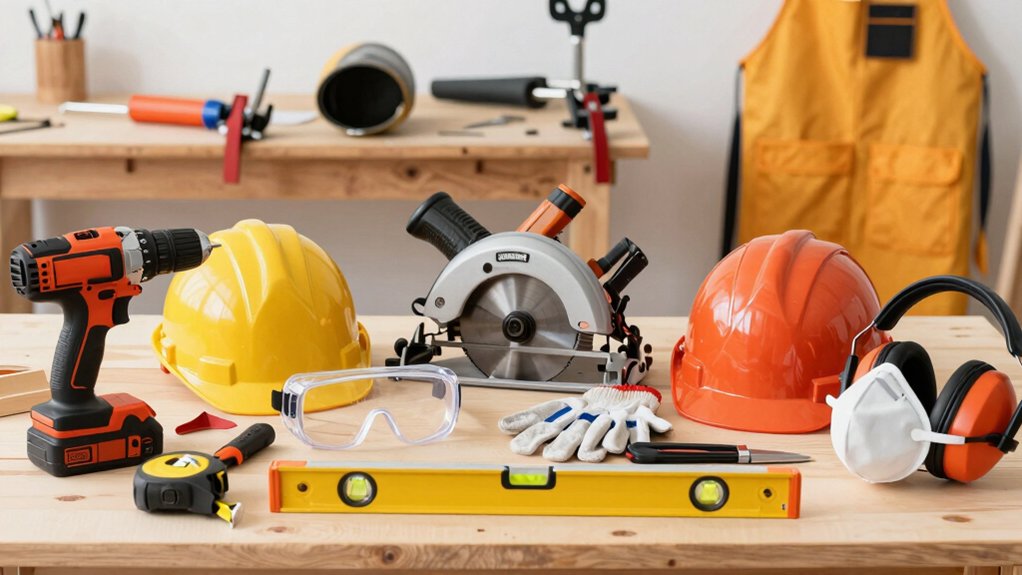
Eye protection, hearing safety, and breathable masks form the core trio you should have ready on every project. You’ll rely on clear eye shields, dependable ear protection, and respirators or dust masks to stay comfortable and protected.
You know risks from flying debris, loud tools, and dust, so choosing gear that fits well and blocks the right wavelengths or particles is essential. Start here by matching each protection type to your tasks and setting a quick, consistent routine before you begin.
Eye Protection Essentials
Are you protecting your sight on every project? You take control with purpose-built eye protection that never slips or gaps. Your focus stays sharp when you choose purposeful gear you can trust.
- protective eyewear that seals against dust and splash, staying secure as you move
- safety glasses with impact-rated lenses, anti-fog coating, and side shields for full coverage
- a comfortable fit that lasts all day, so you never compromise protection for ease
This gear channels power: it reduces risk, preserves visibility, and keeps you productive. Wear it consistently, inspect for scratches, and replace worn components promptly. Your eyes deserve precision, clarity, and defense on every cut, grind, or drill.
Hearing Loss Prevention
Protect your hearing from daily noise and sudden blasts with purpose-built protection you’ll actually wear. On every project, you’ll choose gear that delivers real hearing protection without slowing you down.
Start with proven earplugs or earmuffs that strike a balance between comfort and attenuation, then verify noise reduction ratings match your equipment’s decibel output. Look for adjustable fittings, low-volume communication options, and easy maintenance to keep gear ready.
Consider modular systems that let you swap filters or add earmuffs for louder tasks, preserving situational awareness.
Prioritize durable shells, skin-friendly materials, and a secure seal to prevent leaks. Protecting your hearing means consistent use, proper cleaning, and timely replacements to sustain peak performance and long-term safety.
Respiratory Guard Measures
Respiratory guard measures keep you safe on every project by limiting inhalation of dust, fumes, and aerosols. When you suit up, you command control over your environment, not the other way around. You stay sharp, focused, and relentlessly protected, turning risky tasks into calculated moves.
Prioritize respiratory safety with gear that fits you snugly and seals well, because comfort boosts compliance and performance. Dust mask importance is real: choose a respirator or N95 with proper fit, replace cartridges, and test seal before work.
- Secure seal, snug straps, minimal facial leakage
- Filters rated for your hazard, swapped per use
- Fit-tested mask that remains comfortable under heavy workload
Budget-Friendly Tools That Punch Above Their Weight
If you’re budget-conscious but still want reliability, these budget-friendly tools prove you don’t have to overspend to get professional results. You’ll discover gear that performs like higher-tier models without the premium price.
Look for solid build quality, comfortable grips, and dependable motors that don’t scream disposable. In drilling, fastening, and measuring, precise results come from thoughtful design, not inflated branding.
These tools punch above their price point by prioritizing efficiency, durability, and consistent performance under real DIY workloads. Expect features that boost accuracy, such as tight tolerances, good bit retention, and stable power delivery.
With the right budget friendly tools, you’ll tackle projects confidently, finish faster, and maintain control over your workflow while staying lean. Budget friendly tools truly punch above.
How to Compare Durability and Warranties Across Brands
Durability and warranties aren’t afterthoughts; they’re the practical tests of a tool’s real-world value. When you compare brands, measure build quality, material grade, and failure rate against price. You want tools that endure, not sing-and-dalliance.
- Look for robust motors, hardened gears, or reinforced housings—these speak to longevity and performance under load.
- Check warranty coverage details: length, what’s covered, and process to claim—unambiguous terms save headaches.
- Gauge brand reputation via service responsiveness, repair turnaround, and customer feedback, then weigh it against documented durability data.
Keep brand reputation top-of-mind, then validate claims with real-world tests. Prioritize warranty coverage that’s straightforward, all-encompassing, and transferable where applicable.
Smart Buying Guide: Selecting Tools by Project Type
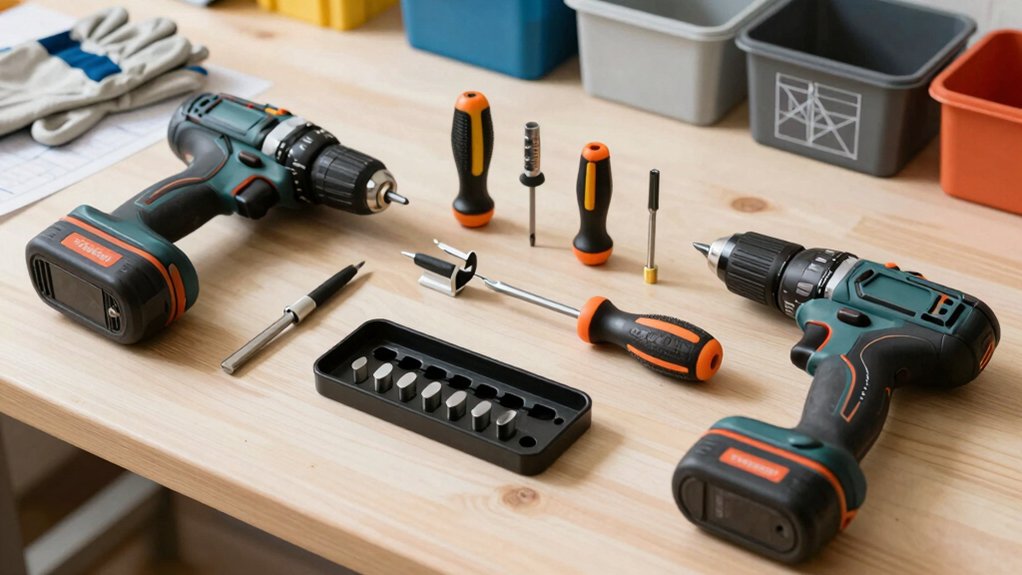
When you’re choosing tools by project type, start by mapping each job’s core tasks, materials, and required precision. Then identify the tool classes that deliver those capabilities most efficiently.
You’ll prioritize ergonomics where long sessions wear you down, because tool ergonomics directly affect accuracy and endurance. For framing and fastening, select drivers and impact drivers with balanced weight and comfortable grips, ensuring steady control.
For cutting tasks, choose blades and saws that resist binding and deliver clean edges, aligning with your material specifics.
Consider brand reputation to anticipate consistency and service support. Finally, confirm compatibility with accessories and safety features, so every purchase compounds efficiency rather than surprises.
Your strategy: purposeful, powerful tools matched to precise project demands.
Maintenance Tips to Extend Tool Life and Performance
Maintaining your tools is how you protect the investments you just selected for specific projects, so you get consistent performance over time. You’ll optimize power and reliability with deliberate upkeep that minimizes downtime and maximizes output. Remember: tool maintenance isn’t optional—it’s decisive for peak results and extended tool lifespan.
- Clean and lubricate moving parts after every use, then store in a dry, climate-controlled space.
- Check batteries, chargers, and cords, replacing worn components before failures strike.
- Calibrate and test precision settings monthly, keeping blades sharp and terminals grime-free.
This disciplined routine sharpens capability, reduces breakdowns, and preserves torque and speed. With focus and consistency, you command better performance and longer-lasting gear.
Conclusion
You now know which tools actually move the needle on DIY projects, from must-have hand tools to dependable power options. Don’t get dazzled by flashy features—prioritize reliability, comfort, and compatibility with your typical tasks. If budget is tight, start with versatile basics and upgrade as you gain experience. One objection you might have: “I’ll just rent when needed.” Noting that ownership builds readiness, choose a durable starter set and maintain it well for lasting, cost-efficient results.