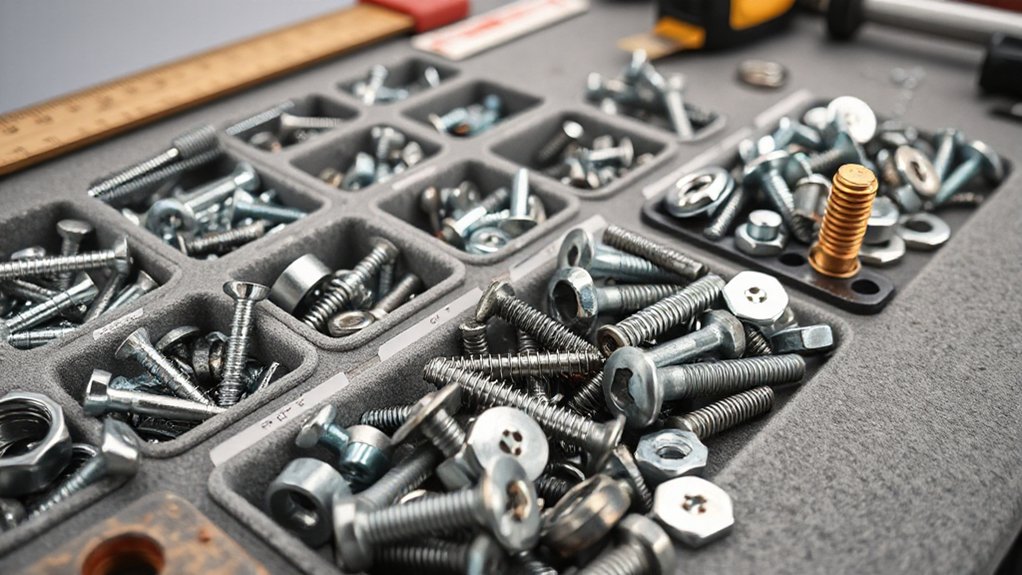
When you compare fasteners for home projects, you weigh load type, substrate, and environment. Nails suit simple shear and quick assembly; screws give strong withdrawal resistance in wood or composites; bolts deliver high clamping in deep joints. Consider anchoring for masonry, outdoor-grade corrosion resistance, and head/drive styles to minimize cam-out. Match gauge, length, and thread to the material, and account for moisture, temperature, and budget. If you keep going, you’ll uncover precise choices for every application.
Why Choosing the Right Fastener Matters
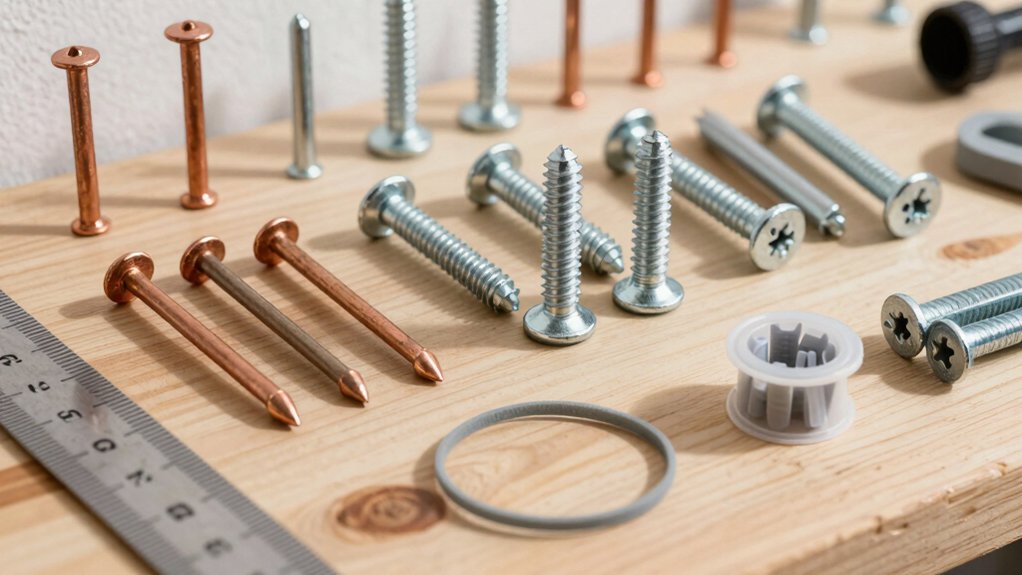
Choosing the right fastener is essential because it directly affects joint strength, durability, and safety. You evaluate load paths, material compatibility, and environmental exposure to select a fastener that resolves stress concentrations without overengineering.
The fastener history informs current choices: early wedges and rivets evolved into standardized screws, nails, and bolts, driving reliability in structural assemblies. Today’s landscape prizes innovation: corrosion-resistant coatings, high-tensile alloys, and coatings that reduce galling under load.
You assess withdrawal resistance, shear capacity, and bearing stress to prevent premature failure. Innovative fastening methods, such as modular systems and integral inserts, enable rapid, repeatable assemblies with predictable performance.
Decide the Right Fastener: Nails, Screws, or Bolts
When selecting between nails, screws, and bolts, you must align fastener type to the load path, material, and environment. You assess shear, withdrawal, and axial demands, then choose a fastener that preserves strength without overuse.
Nails excel in simple shear and rapid assembly; screws provide withdrawal resistance through threads; bolts deliver high clamping force in joints that endure deep loading.
Consider fastener material and coating to resist corrosion, fatigue, and embedding. Pair fasteners with correct fastening techniques: pilot holes, proper torque, and matching hole size to avoid lumber failure.
Your goal is predictable performance, minimal creep, and durable joints under load. Evaluate service life, maintenance, and compatibility with surrounding materials before finalizing.
- Match load path to fastener type
- Prioritize correct fastening techniques
- Ensure material compatibility and finish
When to Use Anchors and Wall Fasteners
Anchors and wall fasteners come into play when a project demands dependable attachment to masonry, concrete, or existing structural substrates, where wood screws or nails alone won’t suffice. You assess load type, shear vs. tensile, and substrate conditions to choose effective restraint.
Anchor selection hinges on withdrawal strength, embedment depth, and compatibility with fastener diameter, ensuring predictable performance under dynamic loads. For walls, wall fastening protocols depend on substrate density and exposure; use corrosion-resistant anchors in moist or outdoor environments.
Consider whether surface routing, sleeve installation, or toggle mechanisms yield optimal transfer of forces without damaging substrates. Precision in install torque, alignment, and certification requirements matters.
In every case, document the rationale for anchor selection to sustain long-term system integrity and safety.
Self-Tapping vs. Pre-Threaded: What Works Where
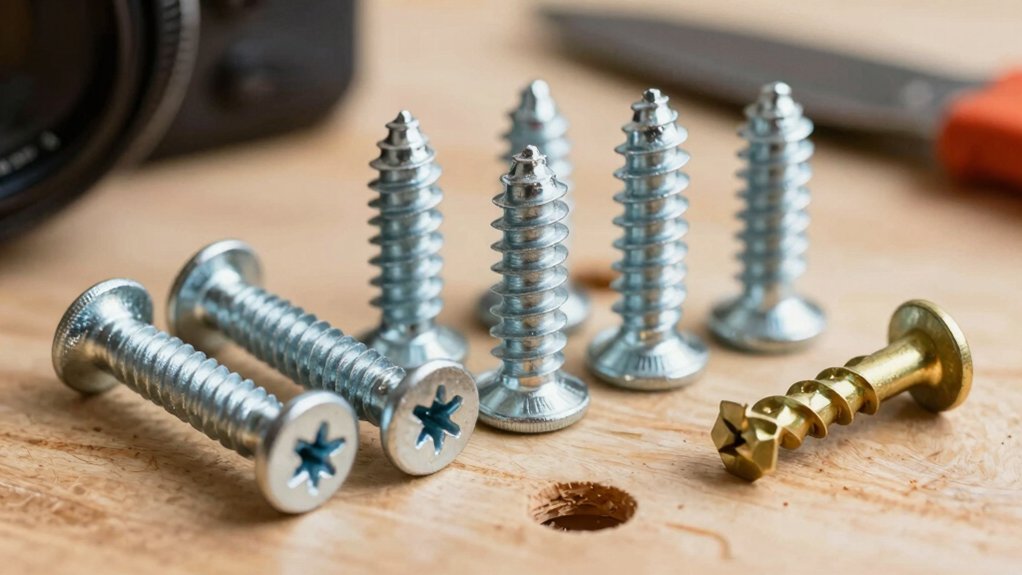
Self-tapping fasteners install without pre-drilling by cutting their own mating threads, whereas pre-threaded screws rely on a pre-formed thread in the substrate or in a tapped hole. Your choice hinges on material behavior, access, and load path.
Self-tapping designs excel when you need speed and field adjustments, especially in softer materials or thin substrates, but can suffer from thread deformation if over-torqued.
Pre-threaded options provide predictable engagement in well-prepared holes, with sharper thread form. The torque control favors precise seating and pullout resistance.
Consider fastener materials and thread design to optimize strength and fatigue performance, especially where vibration is present or maintenance intervals are long.
For critical assemblies, pre-threaded fasteners often outperform in controlled environments; for on-site refinements, self-tapping may win.
- Use case–driven material and thread design considerations
- Speed vs. precision trade-offs in installation
- Field adaptability and long-term integrity
Matching Fasteners to Wood, Metal, and Composites
Selecting fasteners that suit wood, metal, and composites hinges on substrate strength, working thickness, and load path. You assess shear stress, withdrawal resistance, and edge distance to determine appropriate profiles.
For wood, you prioritize wood fasteners designed with coarse threads and corrosion resistance, balancing draw and holding power against grain direction.
In metal, you select high-strength fasteners with proper preload, matching hole tolerances to prevent fatigue.
For composites, you emphasize controlled embedment and anti-fracture features to avoid delamination; consider self-limiting driving and backing materials that distribute load.
When mixing substrates, you choose fasteners with compatible coatings, shank geometry, and drive systems to sustain joint integrity under dynamic loading.
You optimize by testing pilot holes, nut-and-bolt combinations, and the assembly sequence for maximum performance.
Composite fastening demands precise compatibility and deliberate selection.
Rust-Proof Coatings for Outdoor Fasteners
You’ll assess corrosion-resistant layers as the first line of defense for outdoor fasteners, focusing on how the coating composition impacts wear under UV exposure and moisture.
You’ll compare long-term protection benefits by evaluating film integrity, adhesion, and sacrificial versus barrier mechanisms.
You’ll consider practical implications for maintenance intervals and compatibility with common substrates to guide selection decisions.
Corrosion-Resistant Layers
Corrosion-resistant layers protect outdoor fasteners by forming a durable barrier against moisture, salt, and chemicals that accelerate rust. You assess options by how they impede electrochemical reactions and how they endure environmental stress.
Galvanized coatings and zinc plating deliver sacrificial protection, while alloyed seals enhance barrier integrity. Consider coating thickness, adhesion, and uniformity to ensure predictable performance under load and exposure.
You prioritize consistency across fastener types, climates, and installation methods to maximize longevity and return on investment.
- Galvanized coatings provide robust, sacrificial protection with proven field performance
- Zinc plating offers precise thickness control and excellent corrosion control in moderate environments
- Coating integrity hinges on surface preparation, coating continuity, and resistance to mechanical damage
Note: avoid discussing long-term protection benefits in this section.
Long-Term Protection Benefits
Long-term protection benefits hinge on how coatings sustain barrier performance under prolonged exposure to moisture, salt, UV, and mechanical wear. You evaluate rust-proof coatings by their ability to form continuous, adherent films that resist permeation and micro-cracking.
In outdoor fasteners, the coating must endure cyclic temperature swings and abrasion without delaminating, preserving fastener longevity. You prioritize systems that combine sacrificial or barrier mechanisms with durable adhesion to substrate metals.
Consider coating thickness, hardness, and cure options that minimize pinhole formation. Effective coatings reduce corrosion pathways, limit electrochemical reactions, and maintain thread engagement integrity.
The result is predictable performance, lower maintenance, and sustained fastener longevity, delivering proven corrosion protection across service life and reducing replacement costs.
Head Styles and Drive Types Explained
Head styles influence load path and finish, while drive types govern tool interaction and torque control. In practice, you assess head shape and drive recess to optimize grip, torque transfer, and surface finish.
You’ll choose between binding, pan, or countersunk heads to balance flushness and load bearing, and select drive types—Philip screw, Phillips, Pozidriv, Torx, or square drive—for predictable seating and reduced cam-out.
Precision matters: incompatible drives waste time and risk stripping. Prioritize compatibility with your tooling and material hardness, and match head geometry to the fastener’s purpose.
Evaluate seating depth and thread engagement to ensure a secure, enduring joint.
- Head styles influence load path and finish
- Drive types govern tool interaction and torque control
- Match style to material and application necessity
Size and Gauge: Picking the Right Dimensions
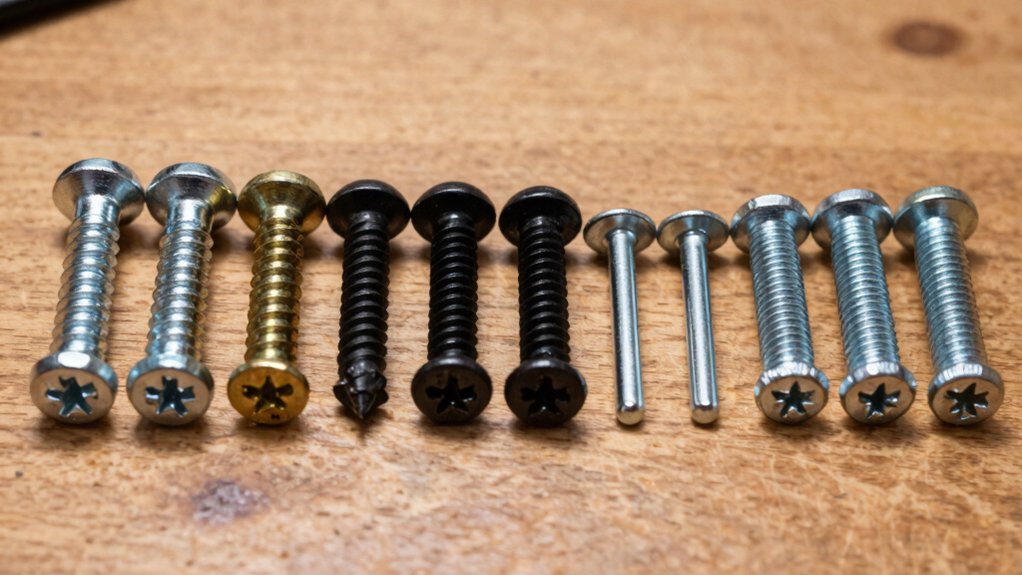
Size and gauge determine how a fastener behaves under load and how it fits the material across joints. You assess diameter, thread pitch, and length to ensure load paths align with material strength and edge distances.
Remember that higher gauge numbers aren’t always stronger; their purpose is to fit the target hole and shear expectations without inducing brittleness. Choose gauge and length that maintain adequate embedment, avoid material separation, and prevent thread stripping.
Consider fastener materials to match corrosion resistance, stiffness, and magnetic properties to your project. Evaluate fastener color options if visibility matters for aesthetics or coding standards.
Precision selecting reduces failure risk, improves joint rigidity, and streamlines installation. Your objective: predictable performance, repeatable results, and a fastener system that complements the surrounding structure.
Specialty Fasteners for Outdoor and Heavy-Duty Use
You need to contemplate how heavy-duty fasteners match environmental exposure, focusing on corrosion resistance and load longevity.
We’ll compare outdoor-grade types for reliability under moisture, temperature swings, and UV exposure, with attention to material science and protective coatings.
This discussion sets the framework for selecting fasteners that sustain performance in harsh outdoor and structural applications.
Heavy-Duty Corrosion Resistance
Corrosion resistance is paramount for heavy-duty fasteners used outdoors, where exposure to moisture, salts, and temperature fluctuations accelerates degradation. You seek proven performance, so you evaluate material choices and coatings that withstand harsh environments, maintain strength, and minimize routine replacement.
Galvanized steel provides sacrificial protection, but stainless steel delivers superior corrosion resistance in aggressive conditions, reducing maintenance cycles. The right combination depends on load, exposure, and budget; you balance initial cost against lifecycle durability.
Selection hinges on a quantified understanding of galvanic compatibility, coating integrity, and fastener geometry under load tests. Consider environmental conditions, contact with dissimilar metals, and rigidity requirements to avert stress corrosion cracking.
Align with standards, verify warranty terms, and choose products designed for outdoor, heavy-duty use.
- Use galvanized steel for economical outdoor applications with moderate exposure
- Prefer stainless steel when moisture, salts, or chlorides dominate service life
- Verify coatings, coatings integrity, and resistance ratings under real loads
Outdoor-Grade Fastener Types
When you’re selecting fasteners for exterior, high-load applications, specialty outdoor-grade options balance corrosion resistance, strength, and installation practicality. In practice, you’ll choose stainless steel, coated carbon steel, or engineered polymers tailored to environment, load, and access constraints.
Fastener durability hinges on alloy composition, protective finishes, and head design that resists stripping and galling under torque. For outdoor fastener selection, consider salt spray exposure, humidity, and thermal cycling, then weigh stainless options for longevity against cost and ease of installation.
Heavy-duty assemblies benefit from corrosion-resistant coatings and lock mechanisms engineered to prevent loosening. Avoid undersizing; maximize pullout strength with correct thread engagement.
Document maintenance intervals and inspect for substrate degradation. Precision selection, aligned with environmental demands, guarantees sustained performance and minimizes maintenance burden over time.
Quick Guide to Load Types and Fastener Strength
Understanding load types is essential to selecting the right fastener, because different forces—static, dynamic, shear, and pull-out—determine how much strength a fastener must provide. You’ll match load types to fastener material and geometry to maximize load capacity, minimize creep, and prevent failure under real-world use.
Assess how mounting surface, anchorage, and applied load influence performance, then select a fastener with appropriate yield and tensile margins. Precision matters: specify fastener material, coating, and head style to align with environment and load case.
Consistent verification through manufacturer charts ensures your choice meets required strength without over-engineering. Your goal is predictable performance under designed loads, with durable, high-utility connections that resist deformation and fatigue over time.
- Prioritize load type awareness for material and design compatibility
- Confirm load capacity aligns with anticipated stresses
- Verify environmental compatibility and durability
Installation Tips to Prevent Failure
You should verify secure anchor points, ensuring fasteners engage solid substrate and avoid shear failures.
Confirm proper drill depth to prevent premature loosening or sequence errors, using depth gauges or staged drilling as needed.
Match load and material compatibility to prevent corrosion, pullout, or embrittlement, and document any compensating factors for repeated loads.
Secure Anchor Points
Secure anchor points are the foundation of a safe, reliable installation; selecting and preparing them properly prevents detachment under load. You must evaluate substrate, load path, and redundancy to ensure load transfer is clear and predictable.
Confirm that anchor points meet design specs for the chosen fastener types, then verify that fasteners seat flush and resist withdrawal. Pre-clean, pre-assemble, and use appropriate hardware to avoid slippage or fatigue.
Document torque targets and inspection intervals to maintain integrity over time. Avoid overdriving, which can weaken the point of engagement, and monitor for corrosion or movement after initial loading.
Plan for fail-safes and alternative routes if a point fails.
- Confirm substrate compatibility and load path
- Choose compatible fastener types and secure points
- Establish torque targets and inspection cadence
Proper Drill Depth
Proper drill depth guarantees fasteners seat correctly and transfer load as intended. You control depth by matching fastener length to substrate and fixture needs, preventing pullout or over-penetration.
Measure anchor thickness, base material density, and the safe entry point, then select a drill bit size that yields a snug pilot hole without wallowing. Too shallow a hole compromises grip; too deep invites misalignment and reduced shear capacity.
When drilling, maintain a steady bit axis and stop at the precise depth marked on the fastener’s threaded portion or via groove indicators. Use a depth stop or tape reference to avoid drift.
Confirm the resulting engagement length provides full thread engagement for maximum clamping force. Remember: precise drill depth underpins reliable performance and long-term fastener integrity.
Load and Material Compatibility
When selecting fasteners, guarantee the load and substrate materials are compatible to prevent failure modes such as pullout, crush, or shear misalignment. You assess load paths, embedment depth, and substrate strength to ensure fastener durability and reliable performance.
Material compatibility governs corrosion resistance, galvanic reactions, and fatigue life, so you select coatings and alloys that suit the environment and load. Verify compatible threadforms and engagement lengths to preserve shear and pullout resistance under cyclic loads.
Document expected service conditions, including humidity, temperature, and vibration, to avoid premature failure. You optimize installation to maintain clamp and load transfer without inducing substrate cracking.
- Verify environment-driven material compatibility
- Match embedment depth to load path
- Inspect fastener durability under expected service conditions
Environment First: Moisture, Temperature, and Exposure
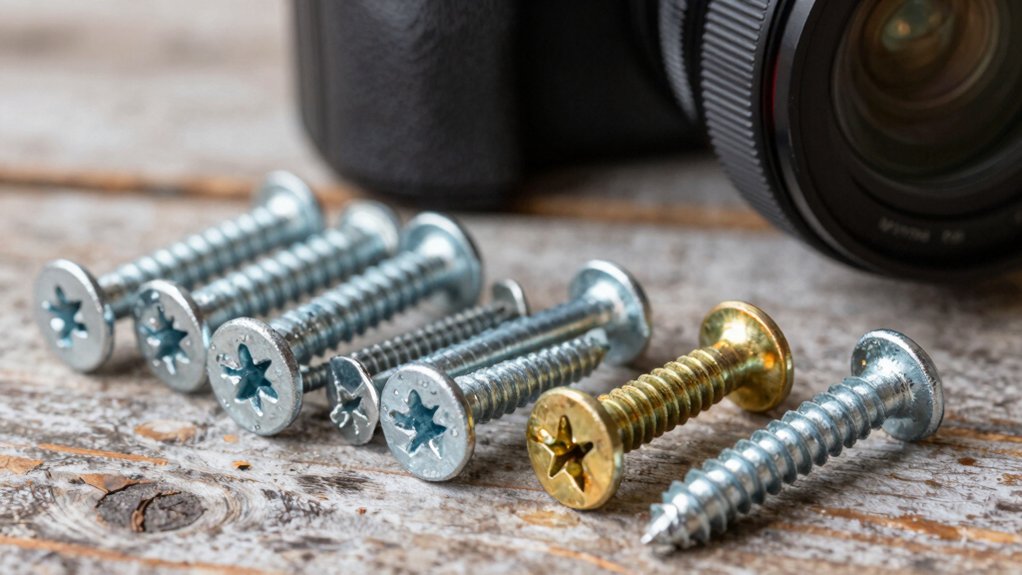
Moisture, temperature, and exposure are the primary environmental factors that determine fastener performance in home improvement projects. You assess how moisture ingress drives corrosion, wood rot, and gasket failure, and you select coatings, sealants, or metals that resist those effects.
You monitor moisture barriers and ensure proper ventilation to maintain predictable conditions across cycles of wetting and drying. Temperature fluctuations alter material properties, so you favor compatible expansion rates, tensile strength, and creep resistance for long-term integrity.
You verify environmental classifications align with service conditions, avoiding mismatches that cause premature loosening or fracturing. Precision selection minimizes differential movement and stress concentrations.
You demand data-backed comparisons, classify performance by exposure type, and prioritize fasteners with proven stability under dynamic weather and indoor humidity.
Budget-Smart Picks That Don’t Compromise Strength
Budget-smart picks don’t have to mean cutting corners on strength. You’ll choose fasteners that balance cost and performance, focusing on load ratings, material, and installation method.
For high value, consider decorative fasteners that combine aesthetics with adequate shear and pull-out resistance, so you don’t trade strength for look.
Eco friendly fasteners can meet performance specs without sacrificing durability, thanks to optimized alloys and coatings.
Target standardized, proven products with documented test data and compatible finishes for longevity under typical home conditions. You gain predictable performance, easier retrofit, and lower lifecycle cost, ensuring secure assemblies without overpaying.
Precision selection matters: prioritize load charts, corrosion resistance, and installation requirements to maximize safety and budget impact.
- Prioritize documented load ratings and compatibility
- Choose decorative fasteners that meet strength and finish goals
- Favor eco friendly fasteners with proven durability
Common Mistakes and How to Avoid Them
Common fastener mistakes often stem from mismatched load, material, or screw type, so start by identifying the expected forces and selecting the correct fastener accordingly.
Make certain you use proper drill and pilot holes to prevent binding, cracking, or torn-out threads, and verify that the drill size matches the fastener’s shank.
Common Fastener Mistakes
One of the most common fastener mistakes is choosing the wrong type or size for the job, which can lead to weak joints, failure under load, or damage to the material. You must evaluate load, shear, and material compatibility before selecting fasteners.
Misjudgments about thread engagement, coating, or pitch increase the risk of fastener fatigue and corrosion, undermining performance over time. Be aware of manufacturing defects that can compromise strength, such as mis-taps or surface defects, and verify supplier quality data.
Precision installation matters; overtightening or under-tightening distorts components and reduces pullout resistance. Consider context-specific standards and test assemblies when appropriate to confirm fit and load paths.
- Ensure proper size, thread, and material match to the load
- Inspect for defects and verify supplier quality data
- Calibrate torque to prevent distortion and fatigue
Proper Drill And Pilot
Before drilling, select the correct bit size and drill pilot to match the fastener and material, then verify alignment and depth to prevent misdrilling and premature failure.
You refine drill bit selection by matching diameter to fastener shank and material density, avoiding under- or over-penetration. Establish a pilot hole size that controls load distribution and reduces splitting risk, especially in hardwoods or brittle substrates.
Maintain steady pressure, use a center punch for accurate start, and avoid wandering. If your pilot proves undersized, enlarge with successive bits rather than forcing one; if oversized, redo with the correct drill.
Check depth stop or mark, and confirm flush seating before final fastener installation. Precision in prep minimizes failures and maximizes performance.
Material And Load Matching
When selecting fasteners, guarantee the material and load ratings match the application to prevent failure. You assess fastener durability and material compatibility to ensure sustained performance under load, vibration, and environmental exposure. Misalignment here leads to premature wear, corrosion, or catastrophic shear.
You want a direct match between substrate, coating, and fastener type, plus appropriate torque to avoid embedment loss or overstress. Verify shear and tensile capacities, head style, and thread engagement for the service conditions. Inconsistent choices undermine structural integrity and warranty coverage.
Plan for long-term reliability by selecting corrosion-resistant alloys in corrosive environments and compatible coatings for dissimilar metals. Avoid over-engineering; optimize weight, cost, and strength with precise specifications.
- Align material compatibility with environmental exposure
- Confirm load ratings and engagement length
- Choose durable finishes for longevity
How to Read Manufacturer Specs for Fasteners
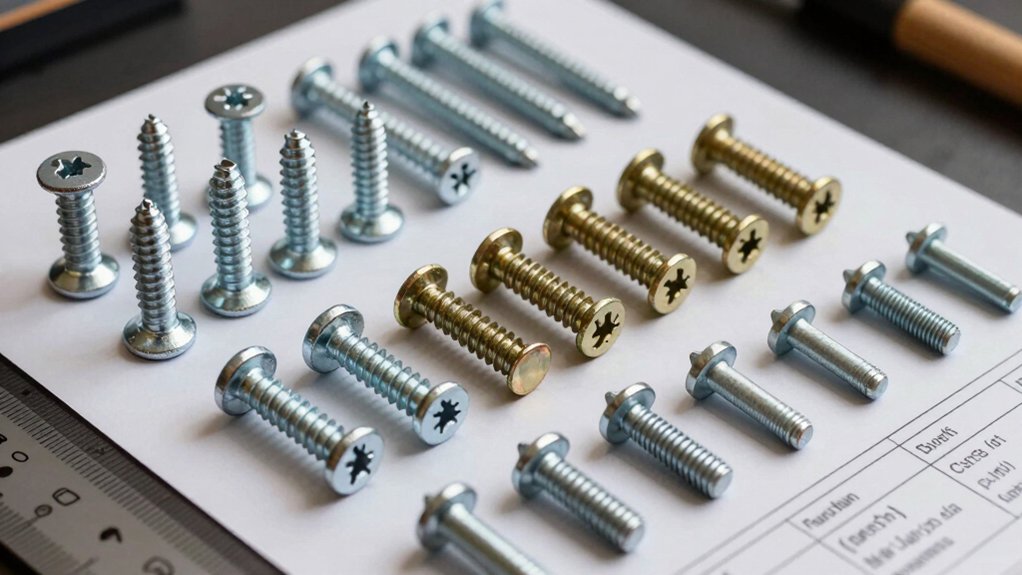
To read manufacturer specs for fasteners effectively, start by identifying the key standards and material grades used in the spec sheet, such as ISO, ASTM, or SAE, and confirm how they apply to the fastener’s intended application.
You’ll then map the spec to your load path, verifying tensile, shear, and corrosion requirements align with the project.
Read the material designation, heat treatment, and surface finish as core indicators of performance.
Examine tolerance zones, thread form, and drive type to ensure compatibility with tools and assemblies.
This demands precision: assess fastener chemistry alongside chemical compatibility with surrounding materials, and confirm conformance to manufacturing standards.
Scrutinize provenance, lot controls, and revision histories to guarantee traceability and reliability under expected service conditions.
Conclusion
When you pick the right fastener, you gain reliability; when you ignore specs, you invite failure. You’ll balance strength against cost, durability against ease, precision against speed. Juxtapose wood and metal: a screw’s bite versus a bolt’s clamp. Compare moisture risk to load demands, and you’ll see the paradox—lighter hardware for heavy duty tasks, expensive coatings for harsh climates. In short, thoughtful choice saves time, prevents damage, and makes every project feel engineered rather than improvised.