
For home improvements, you’ll reach for 3/8″ and 1/2″ combo wrenches for general tasks, plus adjustable and ratcheting kinds for tight spots. Classic sets cover common metric sizes like 6–14 mm, while larger jobs benefit from 12–14 mm or 9/16″. Add flare-nut or tube-bending wrenches only if you tackle those fittings. Expect durability, comfortable grips, and balanced leverage as key differentiators. If you want more details, you’ll find practical guidance ahead.
How to Pick Your First Gearwrench Set
Choosing your first Gearwrench set starts with evaluating tasks you’ll tackle most often and matching them to the basics: ratchet drive size, SAE vs. metric, and the included sockets or wrenches. You’ll want a driver that fits your most common fasteners while offering broad compatibility, so compare ranges and included pieces.
Prioritize ergonomic grips for repeated use, as comfort boosts precision and speed under load. Assess storage solutions that keep edges protected and organized, enabling quick access without clutter.
Decide between a compact, portable set and a more expansive kit based on project scope, frequency, and space. Seek clear labeling, sturdy materials, and proven brand reliability.
In short, choose a balanced mix of core sizes, practical variety, and durable construction for lasting power.
Classic Combination Wrenches: Must-Have Sizes and Uses
Classic combination wrenches sit at the core of any home toolkit, pairing an open end with a 12-point box end on a single handle for fast, versatile turning.
You’ll compare sizes by task: 6, 7, 8, and 10 mm (or 1/4, 3/8, 1/2 inch) handle most everyday fasteners, while 12 and 14 mm/9/16 inch cover larger jobs.
Precision matters for torque control, so prioritize wrenches with consistent flats and snug fits.
Wrench ergonomics and handle grip design influence fatigue during sustained use, making thicker, cushioned grips advantageous on longer sessions.
Choose sets that provide both metric and SAE ranges, and consider hollow-ground profiles for reduced slipping.
In short, balance reach, leverage, and comfort to maximize efficiency and power without compromising control.
When an Adjustable Wrench Is Your Best Bet
An adjustable wrench shines when you need quick, on-the-fly fits across a range of fasteners without swapping tools. You gain versatility with ergonomic grip and adjustable features that adapt to bolts, nuts, and odd sizes, making it a core choice for on-site fixes.
Precision control, proven leverage, and compact storage matter when you’re pushing through tasks efficiently.
- It delivers rapid size changes without hunting for a socket set.
- The ergonomic grip reduces fatigue during long sessions.
- Adjustable features let you press, turn, and seat with confidence.
- It serves as a reliable, space-saving all-rounder for varied projects.
Are Ratcheting Wrenches Worth It for Home Projects?
Ratcheting wrenches can save time on home projects by letting you loosen or tighten fasteners with a single hand motion, without swapping sockets. In practice, they boost efficiency when you’re dealing with multiple bolts in tight spots or awkward angles.
You’ll notice faster cycle times and fewer tool swaps, but you pay for this convenience with cost and potential stiffness linkages. A solid ergonomic grip improves control during extended sessions, preventing fatigue and slips.
When you compare brands, look for tooth count, reversal switch reliability, and overall build quality rather than price alone. Brand comparison shows some models offer smoother ratcheting and longer handles for leverage.
Decide if the time saved justifies the premium, especially for frequent, DIY-heavy workflows.
Specialty Flare-Nut and Tube-Bending Wrenches: When to Reach for Them
When you’re tackling flare-nut fittings or tight-tan tube bends, standard open- or box-end wrenches often fall short, making specialty tools worth considering. These wrenches offer better grip, reduced rounding, and precise torque control, essential for stubborn flare-nut and delicate tube-bending tasks.
Compare their reach, angle, and jaw design to decide which model suits your power needs without overkill.
1) Choose flare-nut wrenches with wider jaws for superior grip and leverage under stubborn resistance.
2) Opt for angled or offset variants to access cramped spaces and prevent slippage.
3) Prioritize compatibility with metric and SAE flare-nut sizes for versatile repairs.
4) Pick tube-bending wrenches that align with your tubing diameter, minimizing deformities and preserving flow.
Metric vs. SAE: Which Suits Your Home Repairs?
When you’re choosing tools for home repairs, you’ll weigh metric suitability for repairs against SAE sets for home projects.
Consider which measurements you already encounter most and how each system affects fit and availability.
In practice, you’ll likely mix both, prioritizing the set that covers your frequent tasks with clear, portable options.
Metric Suitability For Repairs
Choosing between metric and SAE tools depends on the tasks you’re most likely to tackle at home. In general, metric wrenches fit most modern appliances and vehicles, while SAE sizes cover many older machines and common hardware.
When evaluating metric suitability, focus on efficiency, precision, and form. Metric sets streamline repairs, reduce guesswork, and speed up bolt engagement. You’ll notice improved torque control with properly sized wrenches, plus fewer slips in tight spaces.
For comfort, consider wrench ergonomics and handle grip design, which impact fatigue on long sessions.
- Faster repairs with precise sizing
- Smoother engagement, fewer rounded bolts
- Lower fatigue through ergonomic handles
- Clearer, more consistent torque outcomes
SAE Sets For Home Projects
SAE sets for home projects offer a practical alternative when you’re tackling older equipment or hardware that hasn’t adopted metric sizing. When you compare SAE to metric, you gain clarity on compatibility, torque expectations, and tool selection.
SAE sets excel for legacy fixtures, automotive repairs, and premium fasteners common in older home renovations, delivering solid grip and predictable measurements. Yet, you’ll want to assess your projects’ common sizes and future needs; mixing sizes can create gaps in efficiency.
Prioritize durability for high-torque tasks and include a few fractional adapters if needed. Track safety precautions to prevent slips and pinched fingers, and maintain storage organization so your SAE bits stay with their set.
A concise, purpose-driven approach keeps you ready, fast, and in control.
What Makes Wrench Materials and Build Quality Last?
When you weigh wrench materials, you’ll focus on material durability standards and how they translate to long-term use.
Compare alloy strength characteristics and how construction quality factors—like fit, finish, and edge retention—hold up under real jobs.
In short, stronger alloys and tighter construction typically mean greater reliability and value over time.
Material Durability Standards
Wrench durability hinges on material strength, heat treatment, and the precision of fabrication, all of which determine how long a tool keeps its accuracy under real-world use. You want standards that translate into real value: repeatable torque, minimal wear, and lasting corrosion resistance.
Compare builds by how they resist deformation under load and how well surfaces endure exposure to solvents and humidity. Ergonomic handles contribute to control, while robust joints prevent slip. Material choices matter as much as coating quality, and factory QA reveals true durability.
- Higher alloy content reduces fatigue failures and sustains grip over time
- Consistent heat treatment tightens tolerances and stabilizes hardness
- Protective coatings curb corrosion without sacrificing torque
- Precision machining minimizes play and maintains calibration
Alloy Strength Characteristics
Alloy strength is the backbone of a wrench’s durability, determining how well it resists bending, cracking, and fatigue under repeated torque.
In practical terms, you compare alloys by toughness, hardness, and ductility, not just price. Higher alloy properties usually deliver better resistance to tool-induced fractures and maintained torque accuracy over time.
You’ll notice that engineered alloys balance hardness with impact resilience, reducing micro-cracks from cyclic loading and preventing sudden failure.
Material fatigue varies with grain structure, heat treatment, and alloy composition, influencing life under high-repetition use.
A tougher alloy may feel stiffer but lasts longer, while softer mixes can deform earlier under load.
Choose based on expected torque cycles and maintenance needs, prioritizing consistent performance and predictable wear.
Construction Quality Factors
Construction quality hinges on how materials are chosen, processed, and joined to resist wear and deformation in real use. You compare steel grades, heat treatment, and forging methods to ensure strength, toughness, and dimensional stability. Then assess finishes that resist corrosion without adding play.
You’ll notice how ergonomic design and a secure handle grip influence control, leverage, and fatigue over time. Precision tolerances reduce slop and slip under load, while reliable joints prevent loosening in demanding tasks. You’ll favor components that balance cost with long-term reliability, avoiding lightweight substitutes that fail early.
- Higher-grade alloy selection drives lasting strength and edge retention
- Consistent heat treatment minimizes distortion and wear
- Ergonomic design and handle grip reduce fatigue and enhance control
- Robust joints and finishes resist corrosion and loosening
Reading a Wrench Set: Teardrop vs. Compact Formats
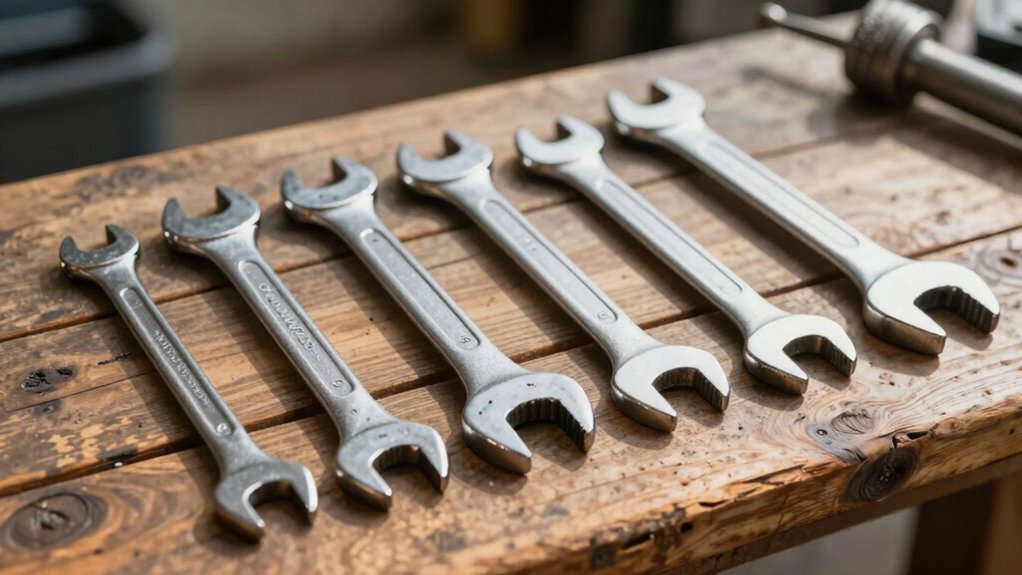
When reading a wrench set, teardrop metrics are typically easier to scan quickly than compact formats, because the size labels are larger and arranged along a single axis. You’ll notice teardrop wrenches prioritize legibility and quick cross-checks, reducing mental load during a tight job. Compact formats trade some readability for portability and a slimmer profile, which helps you reach cramped spaces but slows size确认. In practice, teardrop sets shine for frequent tool changes and precise torque planning, while compact sets excel where space is at a premium. Consider wrench ergonomics and how hand size affects grip stability, especially under load. Also weigh wrench storage options to keep labeling visible and accessible, preserving speed on the job. Choose based on your dominant projects and preferred workflow.
Storage Solutions That Keep Your Wrenches Handy
Keeping your wrenches organized is key after choosing between teardrop and compact sets, and the right storage keeps that choice working for you. When you compare options, magnetic organizers offer quick access and secure hold, cutting search time.
Wall mounted racks maximize visibility and leverage vertical space, freeing bench real estate for projects.
- Magnetic organizers: strong, fast, and scalable for clear labeling.
- Wall mounted racks: orient, rotate, and grab without bending down.
- Modular trays: expand as your collection grows with minimal clutter.
- Hoops and hooks: flexible, inexpensive, and retrofit-friendly for odds and ends.
Budget Picks That Last: Value Without Compromise
If you’re choosing budget wrenches, prioritize value that lasts by sizing up build quality, material choice, and warranty rather than chasing the lowest price. You’ll notice that solid steel, heat-treated components, and thicker bars deliver torque without flex, even when you push hard.
Compare budget tools by grip comfort and wrench ergonomics, since a comfortable handle reduces fatigue over long sessions. Look for standard sizing, reliable finish, and a reasonable lifetime warranty to guard against defects.
In practice, choose mid-range options from trusted suppliers rather than ultra-cheap sets that skimp on components. The goal isn’t novelty but durable performance you can depend on, project after project.
Balance cost, resilience, and ergonomic design to maximize value without compromise in your workshop. budget tools, wrench ergonomics.
Brands DIYers Trust for Longevity
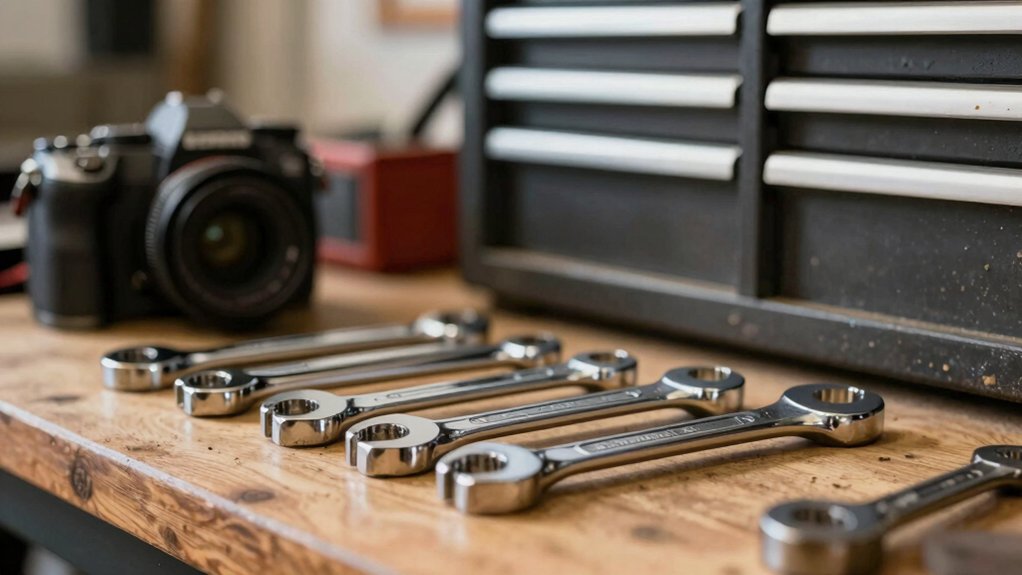
Among the most reliable names are those that pair solid materials with proven manufacturing practices, delivering wrenches that hold up under years of use. You want brands that back durability with clear guarantees, prioritizing wrench ergonomics and strong brand warranty.
Compare options by material quality, finish, and fit in tough tasks, then weigh long-term costs over initial savings.
- Brand A: exceptional durability, ergonomic handle, 5-year warranty.
- Brand B: tough steel, optimized grip, solid warranty terms.
- Brand C: balanced leverage, corrosion resistance, generous coverage.
- Brand D: reliable reuse, precise tolerances, exhaustive warranty.
How to Maintain Wrenches to Prevent Slippage
Maintaining your wrenches properly helps prevent slippage and guarantees safer, more efficient use on tough tasks. To avoid slip, compare grip styles and adopt a firm, consistent pressure with your dominant hand while keeping tools perpendicular to fasteners.
Wrench grip techniques matter: switch to a lighter, controlled bite for high-torque jobs and a fuller wrap for stubborn bolts, ensuring even contact across the jaw.
Prioritize lubrication maintenance: keep joints clean, lightly oil moving parts, and wipe away excess to prevent gunk buildup that dulls operation.
Inspect for burrs, rust, or warped teeth regularly and replace worn tools promptly.
Store wrenches in a dry, organized rack to reduce corrosion risk and expedite access during demanding projects.
Consistency beats improvisation in performance and safety.
Common Home Projects and the Right Wrench Choice
When you tackle common home projects, choose a wrench that matches the task and the fastener size to avoid stripping or slipping.
Compare options by grip comfort, torque range, and accessibility in tight spaces, then pick the tool that offers steadier control and better leverage.
This practical approach keeps you efficient across tasks like assembly, repair, and basic maintenance.
Common Home Use
Cutting through the clutter of DIY projects, choosing the right wrench boils down to the task at hand and the fastener type. You’ll benefit from gearwrenches that balance torque with comfort, delivering steady, decisive turns.
For common home use, prioritize models with an ergonomic grip and durable alloy that resist slipping under load. When comparing, factor in reach, precision, and storage solutions that keep your kit organized and ready.
- Precision-driven torque for fast, clean installs
- Ergonomic grip reduces hand fatigue during long sessions
- Compact profiles fit tight spaces and corners
- Robust storage solutions keep wrenches accessible and protected
Wrench Selection Tips
Choosing the right wrench for common home projects comes down to matching fastener type, space, and comfort. For common nuts and bolts, adjustable wrenches offer quick adaptability, but they sacrifice torque precision.
An open-end wrench delivers fast, direct engagement with fewer moves, though you’ll limit reach in tight spaces. A box-end or flare-nut wrench provides superior grip on hex heads and minimized rounding, ideal for hardware that sees vibration.
Consider set sizes that cover standard imperial and metric ranges, so you’re not swapping tools mid-project. Ergonomic grip matters: choose handles that reduce hand fatigue during long sessions.
Also weigh corrosion resistance, opting for chrome-vanadium or stainless variants for durability in moisture-prone environments. Prioritize tools that balance leverage, comfort, and accuracy to maximize performance.
Safety Tips When Using Gearwrenches
Gearwrenches can speed up work, but you should prioritize safety to avoid slips and injuries. You’ll reduce risk by choosing the right size, maintaining a steady grip, and keeping your workspace orderly. An ergonomic grip improves control, while proper storage organization prevents missteps and tool misplacement.
Stay alert to torque limits and avoid using damaged wrenches. Never substitute a cheater bar for power; apply steady force and align joints to minimize slips. Wear eye protection and gloves when needed, and inspect tools before use.
- Check torque specs and avoid overloading joints.
- Maintain an ergonomic grip, securing your stance and balance.
- Keep the workspace tidy to prevent trips and tool clashes.
- Inspect gearwrenches for wear and damage after every session.
Upgrading Your Kit: When It Actually Makes Sense
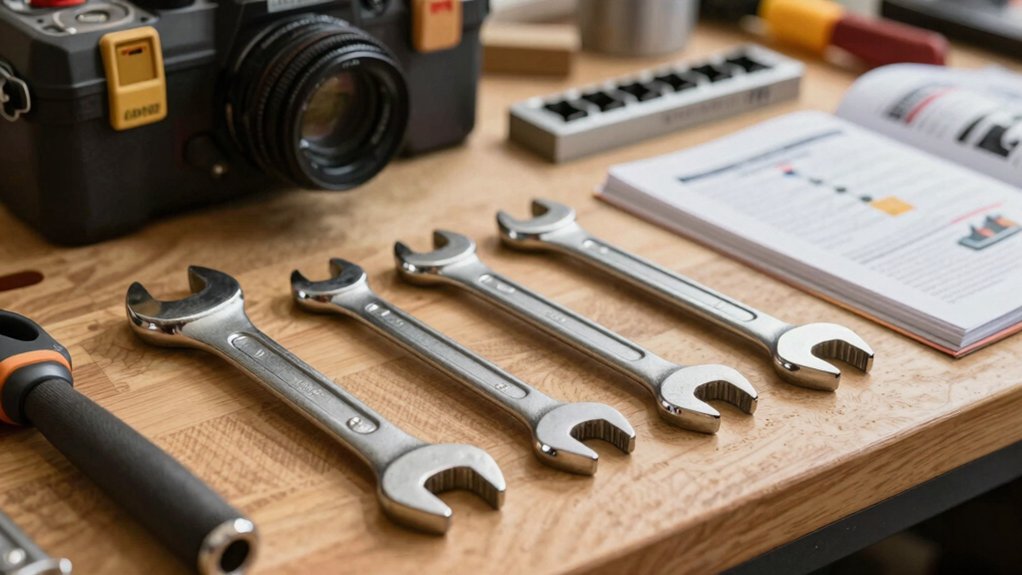
Upgrading your kit only makes sense when the current tools meet the job or when a new task demands capabilities you don’t yet have. You weigh performance against cost, durability, and return on time saved.
Compare models by grip, balance, and reach, since wrench ergonomics directly affect fatigue and accuracy. If you reach for tools too often or struggle to torque tightly, upgrade to a higher-grade set with better leverage and a comfortable handle.
Consider tool storage: a compact, modular system reduces clutter and speeds access, ensuring you don’t waste minutes hunting parts. Don’t overbuy—target core tasks first, then expand with specialized wrenches as needed.
In short, upgrade when improved control, efficiency, or safety outweighs price and space constraints.
Quick-Reference: Most-Used Wrench Sizes
For quick reference, these are the wrench sizes you’re most likely to reach for on common home-improvement tasks: 3/8 inch and 1/2 inch for general fasteners, wrenchs in the 6- to 14-mm range for metric hardware, and a few specialty sizes like 1/4 inch, 9/16 inch, and 3/4 inch for specific jobs.
You’ll prioritize control, efficiency, and comfort, focusing on wrench ergonomics and hand grip to sustain momentum. Compare size, reach, and torque: bigger isn’t always better, but grip, leverage, and fit matter for power projects.
Target the sizes you use most, then expand judiciously as you encounter tight spaces or high-torque demands.
- Core sizes first, less wrist strain, faster outcomes
- Metric and SAE mix, tuned for versatility
- Ergonomic grips trump raw length in tough spots
- Specialty sizes handle unique fasteners without compromise
Conclusion
You’ll know what to reach for by project: a classic combo set covers most basics, while a single adjustable wrench keeps you flexible. Ratcheting wrenches are worth it if you handle lots of tight spots; otherwise, they’re a splurge. Don’t overbuy—start with essentials, upgrade as you encounter gaps. If you doubt the need, remember you can borrow specialty tools for rare tasks, but a solid, well-chosen kit saves time and hassle every project.