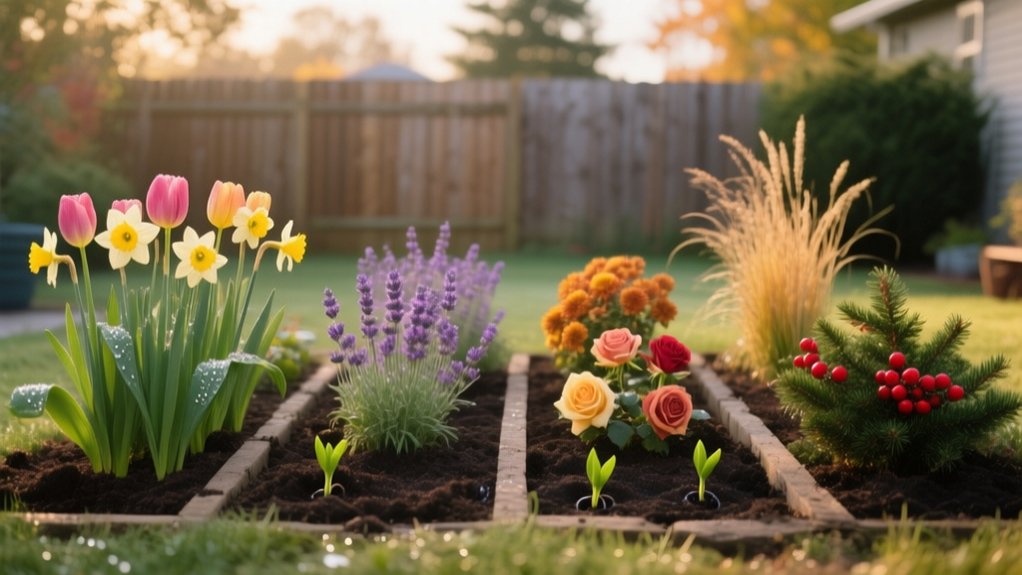
Start by mapping sun, shifting shade, and soil moisture so you can match plants to each microzone, then confirm your USDA zone and frost dates with a 7–14 day buffer. Stick to 2–3 core colors and echo them with foliage tones for cohesion. Build winter structure first with evergreens, then add bark and berries for cold-season drama. Layer bulbs, perennials, and quick-sown annuals for nonstop bloom windows, and use containers to swap seasonal accents fast. Keep going to refine timing, flow, and plant picks.
Build a 30-Minute Four-Season Garden Plan
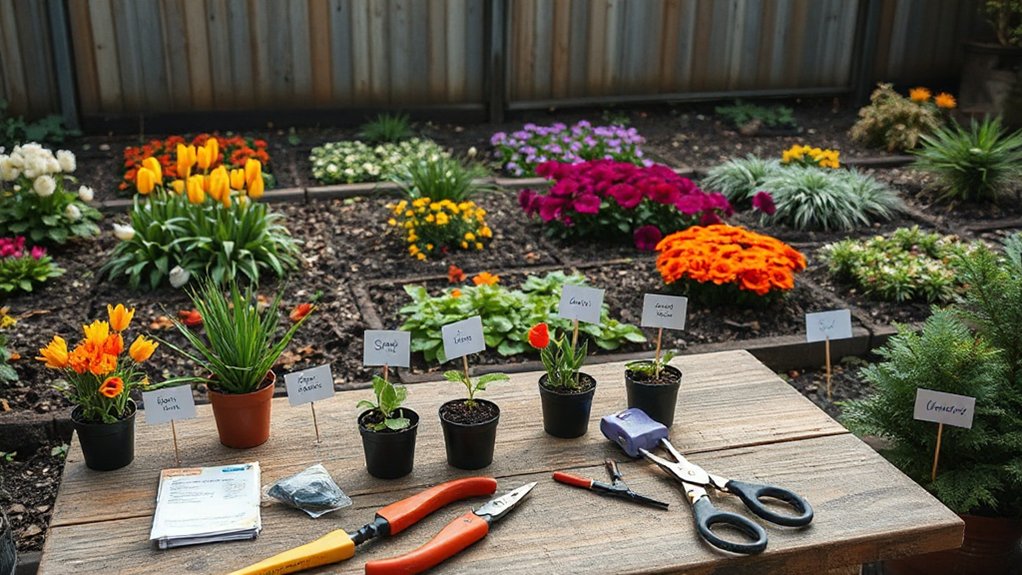
If you only have 30 minutes, you can still map out a four-season garden by choosing one sunny bed (or a few large containers), noting its sun and moisture patterns, and assigning each season a simple plant “cast”: early bulbs and cool-season greens for spring, heat-tolerant herbs and pollinator annuals for summer.
Late-season perennials and ornamental grasses for fall, and evergreen structure plus winter-interest stems and seedheads for winter. Next, you’ll sketch a tight layout: tall anchors in back/center, mid-layer bloomers, then edging plants for a clean, modern finish.
You’ll stagger bloom times and repeat 2–3 core species for cohesion. For Garden maintenance, you’ll add drip irrigation, 2 inches of mulch, and a monthly deadhead-and-divide note.
For pest control, you’ll plan weekly scouting, hand removal, and beneficial-insect habitat plantings.
Map Sun, Shade, and Soil Moisture
Where does the sun actually land—and where does it linger—across your bed or containers? Do quick Sun mapping for a full day, noting morning, midday, and late-afternoon exposure, plus reflected heat from walls and paving. Track shade shifts from trees, fences, and nearby buildings so you don’t misplace “full-sun” bloomers.
Next, read moisture like a pro: after irrigation or rain, check how fast spots dry, and flag puddling zones. Pair that with soil testing to confirm texture, pH, and organic matter so your amendments aren’t guesswork.
- Mark hourly sun patches and hot edges on a sketch.
- Probe 2–4 inches down; log damp, average, and dry areas.
- Match plants to microzones; adjust mulch and drip lines accordingly.
Check Your Zone and Frost Dates
Before you buy seedlings or set a sowing schedule, lock in your USDA hardiness zone and your average last-spring and first-fall frost dates, because they dictate what survives outdoors and when growth actually starts.
Use updated Zone Maps (USDA plus your local extension) and cross-check with microclimates: south-facing walls, low spots, and wind corridors can shift effective conditions by half a zone.
Treat Frost Dates as probabilities, not promises; plan with a buffer of 7–14 days, and watch 10-day forecasts for late cold snaps that can wipe tender starts.
If you’re pushing the season, rely on row cover, cloches, and hardening-off schedules.
Record first/last frost in your garden journal so your timing gets sharper each year.
Pick a Simple Year-Round Color Palette
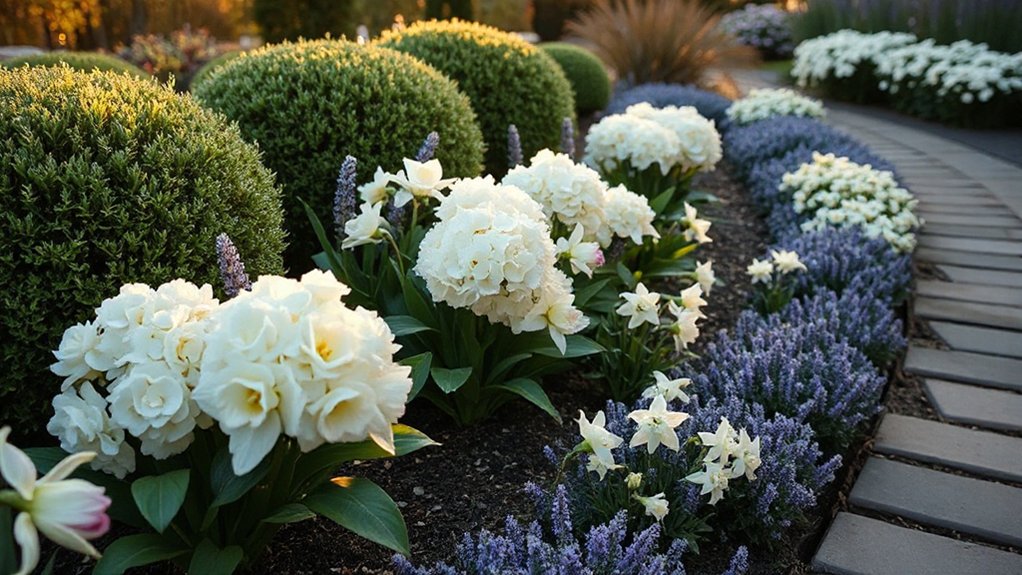
Pick two to three core colors you’ll repeat from spring through winter, then use one accent shade sparingly to keep the look current and cohesive.
You’ll get more consistency by pairing bloom colors with foliage that echoes or softens them—think silver, burgundy, chartreuse, or deep green as your backbone.
Balance the ratio so flowers provide the punch while leaves carry the palette between flushes, and your beds won’t look empty when blooms fade.
Choose Core Colors
Ever wonder why some gardens look intentional in every season while others feel scattered by midsummer? You can fix that by choosing two to three core colors that stay consistent across beds and containers.
Start with one dominant hue, add a supporting hue, then pick a neutral that ties everything together. Strong color contrast keeps the design crisp, while garden textures make the palette feel rich even when color is subtle.
Use your hardscape as a guide: stone, fencing, and pots should reinforce your choices, not fight them.
- Pick a dominant color you’ll repeat throughout the yard.
- Add one accent color for focal points and pathway rhythm.
- Choose a neutral (white, silver, deep green) to unify plantings.
Balance Blooms And Foliage
When you balance blooms with foliage, your garden keeps its color story intact even after peak flowering fades. Anchor your palette with dependable leaf tones—charcoal heuchera, silver artemisia, blue fescue, and variegated sedge—then layer seasonal flowers as accents.
Stick to three hues: one base (greens/greys), one cool or warm dominant, and one pop color for repetition. Use shrubs and evergreens to hold structure, and place flowering perennials where foliage still reads when petals drop.
Treat Garden art like a fourth color: matte black steel or stone echoes dark leaves and won’t compete.
For Pest control, favor aromatic foliage (lavender, rosemary) and interplant alliums; you’ll protect blooms without breaking the palette. Prune routinely for crisp contrasts.
Choose Backbone Shrubs for 4-Season Structure
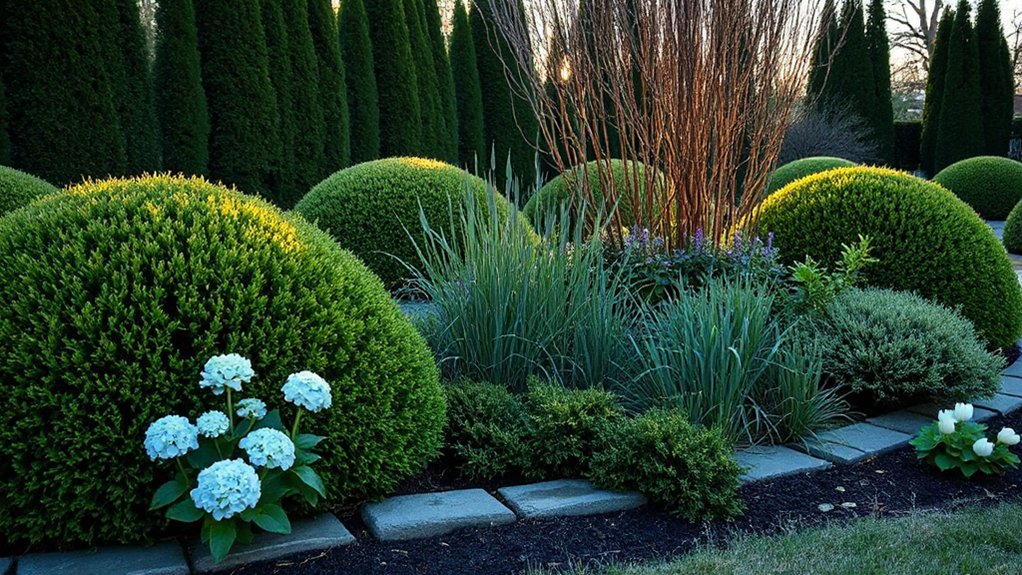
To lock in four-season structure, you’ll start with evergreen shrubs that hold crisp form through winter and anchor every bed line.
Then you’ll layer in multi-season flowering shrubs that carry spring bloom, summer texture, and fall color without blowing up your maintenance schedule.
Choose cultivars with proven cold-hardiness and clean habit so your garden reads intentional in every month.
Evergreens For Winter Form
Where does your garden’s shape come from once perennials collapse and deciduous branches go bare? You get it from backbone evergreens that hold line, mass, and rhythm through snow and low light.
Prioritize winter foliage and evergreen form that reads clean from the house and street, then layer smaller plants around it.
- Anchor views with upright conifers (columnar juniper, narrow spruce) to create strong verticals and windbreak structure.
- Use broadleaf evergreens (boxwood, inkberry) for clipped geometry or soft mounds; site them out of drying winter sun.
- Add textural contrast (dwarf pine, hemlock) and repeat them in drifts to reinforce design continuity.
Plant in early fall, water deeply, and mulch to buffer freeze-thaw.
Multi-Season Flowering Shrubs
Although perennials and bulbs steal the spotlight, multi-season flowering shrubs give your garden its reliable 4-season architecture—while also delivering bloom, fragrance, fall color, and winter stem or bark interest in one plant.
Choose “backbone” shrubs that earn space every month: oakleaf hydrangea for summer panicles and burgundy fall leaves, witch hazel for late-winter ribbons and perfume, and summersweet (Clethra) for midsummer scent enhancement and pollinator traffic.
Build foliage contrast by pairing dark-leaved ninebark with chartreuse spirea or variegated dogwood.
Place fragrant shrubs near paths and seating, not at the back border.
Prune with intent: shape right after flowering, and preserve winter interest by leaving some stems uncut until spring.
Mulch, then water deeply to establish resilient roots.
Layer Plants by Height and Spread
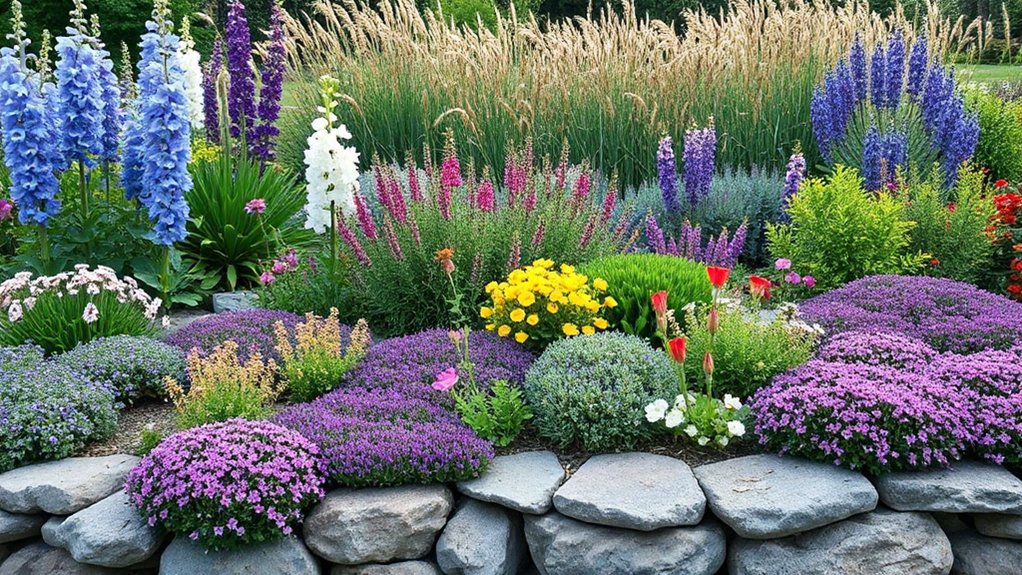
- Anchor with upright shrubs or grasses; space for full spread and easy pruning access.
- Add mid-layer perennials; repeat groups for rhythm and pair with Companion planting partners that deter pests.
- Finish with groundcovers; knit soil, reduce splash, and cool roots while leaving paths clear.
You’ll get fewer disease issues, cleaner maintenance, and beds that read lush, not crowded.
Stagger Bloom Times With Succession Planting
To keep your seasonal garden in continuous color, you’ll map bloom windows the way you’d schedule a calendar—by week, not by guesswork.
You’ll layer early-, mid-, and late-season performers so one flush hands off to the next without gaps.
Then you’ll replant in timed waves (every 2–4 weeks, as conditions allow) to refresh blooms and maintain a polished, on-trend look all season.
Plan Blooming Windows
When you map your garden by bloom windows instead of by plant lists, you’ll keep color and pollinator activity rolling from early spring through frost. This garden planning method treats blooms like a calendar: you assign each bed a job, then fill gaps with succession planting. Track your local frost dates, then pencil in two-week windows for sowing, transplanting, and deadheading so plants hand off seamlessly. Use trend-forward combos—natives plus long-blooming cultivars—to stabilize nectar flow and reduce maintenance.
- Audit what’s already blooming weekly; note start, peak, and fade.
- Backfill empty weeks with fast annuals and repeat-bloom perennials.
- Set reminders to sow a second wave before the first one slows.
Layer Early Mid Late
Because a single flush rarely carries a bed for long, you’ll get steadier color and nectar by layering early-, mid-, and late-season performers and then stitching the seams with succession planting. Map bloom windows, then build Layer combinations: spring bulbs under early perennials, midsummer salvias with coreopsis, and late asters with sedums.
Keep Plant height intentional—groundcovers front, clumping fillers mid-bed, and structural backbones (ornamental grasses, shrubs) in the rear—so fading foliage stays hidden.
Use repeat anchors (same salvia, echinacea, or allium) every few feet to keep the design cohesive as different plants take turns.
Leave small “gap zones” for quick-sowing annuals or plug-in perennials that bridge pauses without disrupting your layout.
Replant In Timed Waves
Even if you’ve layered early-, mid-, and late-season plants, you’ll still hit lull periods unless you replant in timed waves. Succession planting keeps color and texture consistent, and it lets you respond fast to heat spikes, pest pressure, or a washed-out bed.
Treat Seasonal planting like a calendar, not a one-time event, and use garden timing to rotate short-duration performers into prime spots.
- Re-sow quick bloomers (zinnias, cosmos, calendula) every 2–3 weeks for continuous buds.
- Replace fading spring annuals with summer heat lovers, then swap again for fall staples.
- Keep “plug” trays ready; you’ll transplant instantly after deadheading or pulling spent plants.
Track dates, not guesses, and you’ll smooth every gap.
Plant Spring Bulbs for the First Color
As winter loosens its grip, you can lock in your garden’s earliest color by planting spring bulbs—tulips, daffodils, crocus, hyacinths, and species varieties—right now. Choose firm, mold-free bulbs and match bloom times for a long sequence, a trend designers use to create “color runs” from snowmelt onward.
Plant in drifts, not dots, and tuck smaller bulbs along path edges for close-up impact. Set bulbs point-up, 2–3 times their height deep, in well-drained soil amended with grit or compost. Water once to settle soil, then let winter moisture do the rest.
Add mesh where rodents browse. Leave foliage to yellow, then cut stems for a simple floral arrangement.
Add Spring Perennials for Reliable Rebloom
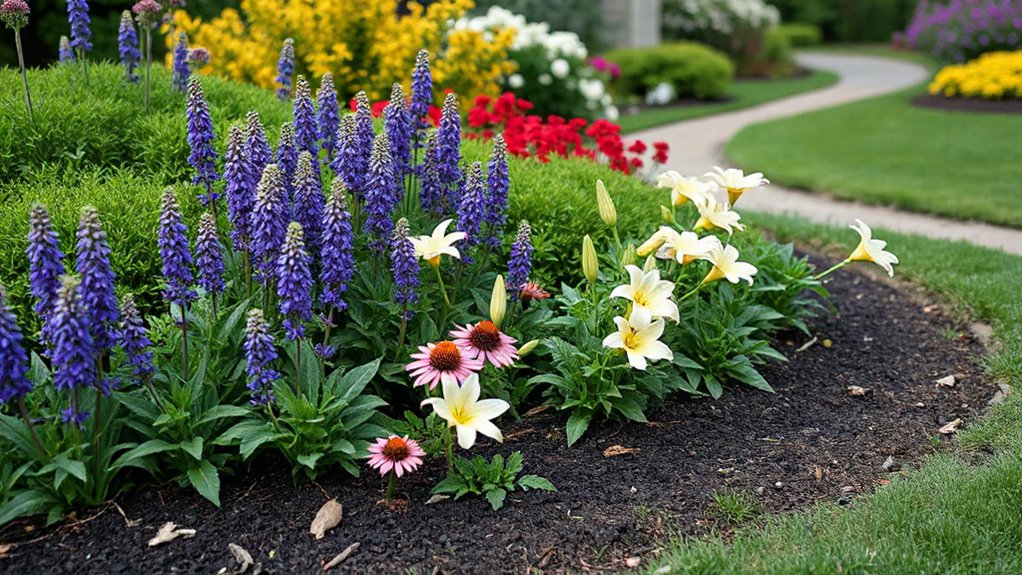
Spring bulbs kick off the show, but spring perennials keep it going—and they return with less replanting and more predictable performance year after year. To extend that early color, you’ll want cultivars bred for perennial rebloom and tidy growth, then site them where they can mature undisturbed.
- Choose proven rebloomers: hellebores, primroses, and select irises or daylilies labeled for repeat bloom.
- Plant for longevity: loosen soil 10–12 inches, add compost, and keep crowns at grade to prevent rot.
- Trigger repeat cycles: deadhead promptly, water during dry spells, and feed lightly after flowering—not heavily.
Pair perennials behind fading Spring bulbs so foliage hides yellowing leaves while your border stays crisp and intentional.
Use Summer Annuals for Peak-Season Punch
For peak-summer impact, you’ll rely on heat-tolerant annuals that keep blooming through high temps and humid nights, from zinnias and vinca to lantana and angelonia.
You’ll pair and layer colors like a pro—bold hot hues up front, cooler tones as a buffer, and airy fillers to keep the look modern and breathable.
You’ll lock in performance with early-morning watering, consistent moisture (not soggy soil), and steady deadheading to push nonstop flowers.
Choosing Heat-Tolerant Annuals
When temperatures spike and beds start to look tired, heat-tolerant annuals keep your garden vivid through peak season. Start by matching plants to microclimates: reflective walls, windy corners, and baking containers demand tougher picks than open borders.
Choose drought tolerant performers like lantana, zinnia, vinca, portulaca, and globe amaranth; they shrug off heat and rebound fast after missed waterings. For filtered light or north-facing patios, go with shade loving options such as coleus, torenia, impatiens, and begonias bred for better sun tolerance.
- Prioritize thick leaves, silver foliage, or deep roots for resilience.
- Buy compact, budded plants; skip stretched, tender starts.
- Water deeply at planting, then mulch to stabilize soil moisture.
Color Pairing And Layering
Heat-tough annuals keep blooming through the worst of summer, but smart color pairing and layering make those plantings look intentional instead of merely surviving. Start with a tight palette: pick one dominant color, one accent, and one neutral foliage tone (silver, chartreuse, or deep green) to modernize the bed.
Use Complementary hues—purple with yellow, coral with teal-blue flowers—to create high-contrast “summer pop” that reads from the curb.
Layer by height and texture, not just color. Place upright zinnias or salvia behind mounding vinca, then edge with spilling sweet potato vine or trailing verbena.
Add Shadow layering by tucking dark-leaved coleus or oxalis behind bright blooms, so highlights look brighter and the whole planting gains depth.
Repeat groupings for rhythm.
Watering And Deadheading Tips
How do you keep summer annuals looking like a designed “peak-season punch” instead of a tired, crispy filler? You treat water and spent blooms like weekly maintenance, not emergencies. Use smart watering techniques: soak the root zone early, skip nightly sprinkles, and let containers drain fast. In heat waves, water twice—morning and late afternoon—so foliage dries before dark.
- Water deeply, less often: Aim for 6–8 inches of moist soil; mulch to slow evaporation.
- Feed and flush pots: Alternate fertilizer with plain water to prevent salt buildup and burnout.
- Practice precise deadheading methods: Pinch at the first leaf node, shear mass bloomers, and remove seedheads to keep buds coming nonstop.
Keep Summer Blooms Going in Heat
As temperatures climb and nights stay warm, your summer bloomers can fade fast unless you adjust care for true hot-weather conditions.
Mulch 2–3 inches to cool roots and slow evaporation, keeping it off stems.
Water early, deeply, and less often so roots chase moisture; use drip lines or soaker hoses to cut losses.
Feed lightly with a low-nitrogen bloom booster, but don’t push soft growth that scorches.
Pinch back leggy stems and remove spent flowers promptly to redirect energy into new buds.
Swap stressed annuals for drought-resistant plants like lantana, vinca, and portulaca in sun.
In bright shade, rely on shade-tolerant species such as torenia and coleus for dependable color.
Add afternoon shade cloth during heat waves.
Plant Fall Perennials for Late Color
Wondering where your garden’s color will come from once summer annuals start to stall? Plant fall perennials now so they root before frost and bloom when days shorten. Choose cultivars bred for compact habit and disease resistance, and site them in full sun with sharp drainage to prevent crown rot.
- Layer late bloomers: asters, mums, sedum, and Japanese anemone for reliable color through first freezes.
- Support Autumn foliage: pair blooms with heuchera and hardy geranium for rich leaves that carry the display.
- Plant for easy fall cleanup: group by water needs, mulch lightly, deadhead early, then leave sturdy stems until spring for protection.
Water weekly for six weeks, then taper as temperatures drop.
Add Ornamental Grasses for Fall Movement
Even after late-season blooms start to fade, ornamental grasses keep your garden looking intentional by adding motion, sound, and warm, backlit color through fall. Layer them behind perennials or along paths so every breeze reads as designed fall movement, not garden decline.
Choose varieties that hold structure: switchgrass, feather reed grass, little bluestem, and pink muhly are current favorites for upright form and luminous seedheads. Plant in odd-numbered drifts, spacing for mature width to avoid crowding and flop.
Cut back staking; instead, site grasses in full sun and lean soil for stronger stems. Let plumes stand, but remove tattered blades to keep edges crisp.
For containers, use compact sedges to echo the same fall movement at eye level.
Anchor Winter Beds With Evergreens
When winter strips your beds down to stems and soil, what keeps the design from collapsing into emptiness? You do—by planning evergreen structure as the backbone. Use broadleaf evergreens for mass, conifers for silhouette, and low mounds to stitch edges together. This isn’t old-fashioned foundation planting; it’s the current, layered look that reads crisp all season.
- Place anchors first: set one or two strong forms (spruce, pine, holly) at key sightlines.
- Build mid-layer rhythm: repeat medium shrubs (boxwood, inkberry) to guide the eye.
- Finish with ground-huggers: add creeping juniper or heaths to reduce bare mulch and boost winter color.
Group in odd numbers, vary textures, and keep spacing tight for immediate impact.
Add Winter Interest With Bark and Berries
Evergreens give your winter beds their framework, but bark and berries supply the close-up drama that keeps the garden looking intentional in gray light. Choose Bark textures that read well from a path: paperbark maple’s peeling cinnamon curls, river birch’s tawny exfoliation, and red-twig dogwood’s lacquered stems. Site them where low sun can backlight color and emphasize sheen after rain or frost.
Then layer Berry varieties for reliable winter hold. Plant inkberry holly for matte black beads, winterberry for vivid red clusters, and beautyberry for saturated purple drifts; include both sexes where needed for fruit set. Prune selectively so you don’t strip next year’s berries, and net lightly if birds raid early. Keep stems visible by editing nearby perennials and grasses.
Use Containers for Fast Seasonal Updates
How do you refresh a bed’s look without replanting the whole border? You rely on containers as your quick-change artists. Container versatility lets you swap color, texture, and height in minutes, so your planting reads intentional across the year.
Place pots at entry points, along paths, or in bare winter gaps, then rotate them as light and temperature shift. Keep a stash of lightweight planters and matching saucers so moves feel seamless, not improvised.
For trend-forward Seasonal updates, build sets you can switch like outfits:
- Spring: bulbs over moss, finished with trailing ivy.
- Summer: heat lovers like lantana, salvia, and coleus.
- Fall/winter: mums, ornamental cabbage, then evergreens with berry picks.
Fix Common Four-Season Garden Flow Mistakes
Although you can plant for four seasons, the garden won’t feel cohesive unless you correct the flow breakers that make it read like a series of disconnected moments. Start by repeating a tight palette of three to five anchor plants across beds, then layer seasonal “spark” perennials in drifts, not singles.
Connect spaces with a consistent edging material and a simple path line so the eye keeps moving.
Next, fix timing gaps: pair early bulbs with later-emerging host plants, and mix evergreen structure with winter-interest stems. Don’t let Garden pests dictate your design—rotate vulnerable species, diversify genetics, and use targeted controls before damage creates visual holes.
Finally, do soil testing per zone; uneven pH and drainage cause patchy growth that breaks continuity. Adjust with compost, sulfur, or lime, then replant confidently.
Frequently Asked Questions
How Do I Keep Deer and Rabbits From Eating Seasonal Plantings?
Use deer deterrent strategies: install 8-foot fencing, motion sprinklers, and rotate repellents after rain. Choose rabbit resistant plants like lavender and salvia, and add low wire mesh around beds; remove hiding cover too.
What’s the Best Low-Cost Way to Start a Four-Season Garden?
Like a thrifty Victory Gardener, you’ll start with soil: build beds, save seeds, and plant succession crops. Do Garden composting, top-dress with Organic fertilizers, choose hardy natives, and use row covers to stretch seasons.
How Can I Reduce Watering Needs While Maintaining Year-Round Color?
Cut watering by grouping drought tolerant plants, installing drip irrigation, and watering deeply at dawn. Maximize mulch benefits with 2–3 inches composted bark, plus winter groundcovers and seasonal natives for steady color, fewer refills.
Which Plants Are Safest for Pets and Small Children in the Garden?
Choose Pet safe plants and Child friendly garden plants like marigolds, sunflowers, snapdragons, zinnias, and nasturtiums; you’ll avoid common toxins. You should also fence bulbs, skip foxglove, oleander, lilies, and castor bean.
How Do I Handle Common Pests and Diseases Without Harsh Chemicals?
Spot chewed leaves like lace at dawn; you’ll scout daily, prune infected growth, and boost airflow. Use Natural remedies—neem, insecticidal soap, garlic spray—plus Organic controls like beneficial insects, sticky traps, and healthy soil to outcompete pathogens.
Conclusion
You’ve sketched a four-season garden that performs like a well-rehearsed stage crew—shifting sets without missing a cue. Keep your sun and moisture map handy, lean on evergreen anchors and structural shrubs, and let berries, bark, and containers deliver the seasonal “wow” on demand. When gaps appear, adjust your palette and spacing before you add more plants. With your zone and frost dates guiding timing, your beds will stay runway-ready year-round.