
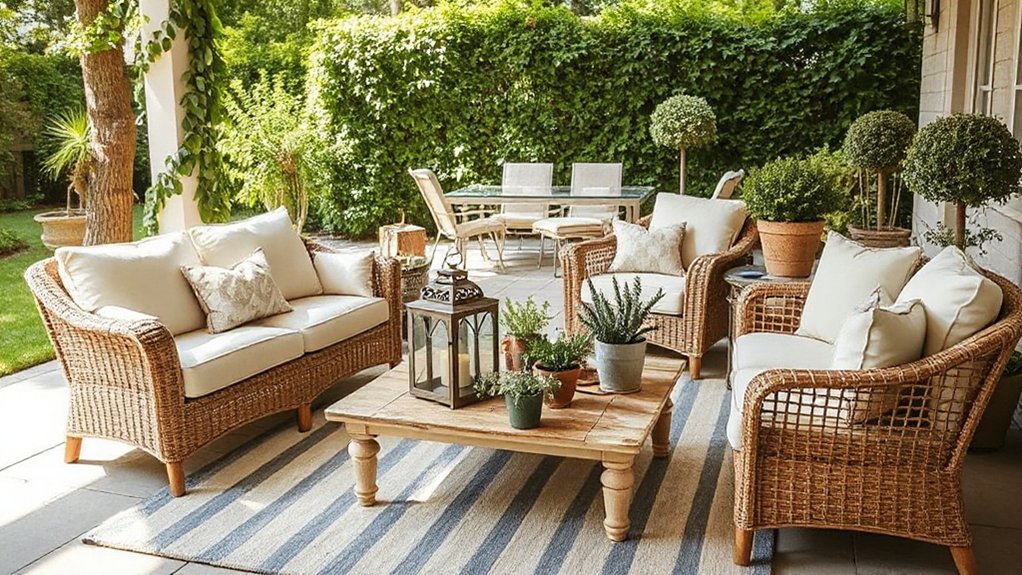
To design stylish garden seating, prioritize space-aware, modular furniture you can reconfigure for any gathering. For small patios, choose low-profile frames, slim arms, and stackable pieces; large spaces benefit from defined zones for conversation, dining, and sunning. Layer texture with fade- and mildew-resistant fabrics, tight weaves, and removable, washable cushions. Build depth with a restrained 3–4 color base, bold accents, and varied textiles; add layered lighting and evergreen greenery to preserve contrast after dark. You’ll discover how these elements come together for lasting impact.
How to Choose Patio Furniture by Space: Small vs Large
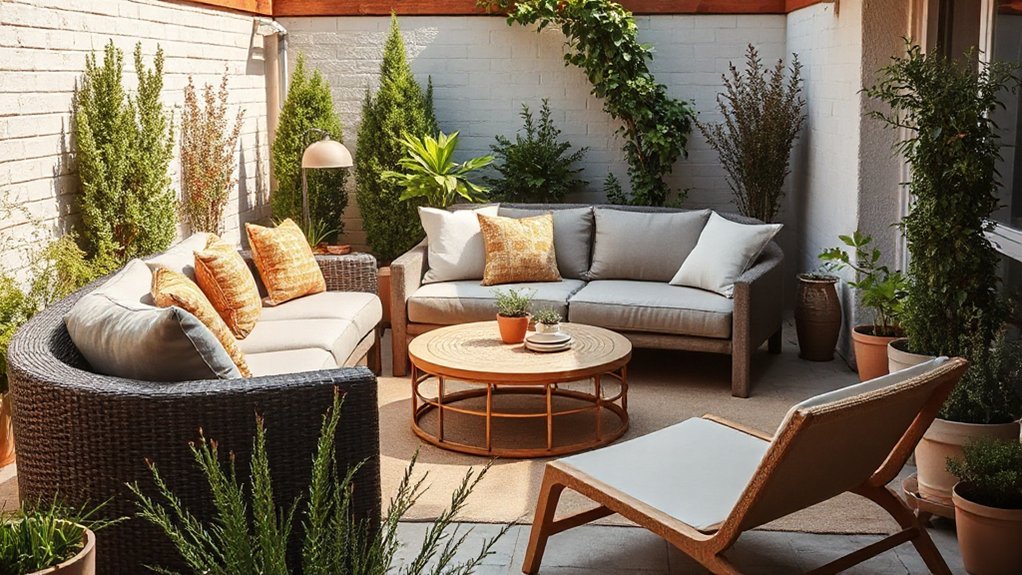
When space is limited, prioritize compact, modular seating that can reconfigure for different gatherings. You evaluate footprint, sightlines, and circulation, then translate those metrics into a scalable furniture plan.
For small areas, select low-profile frames, slim arms, and stackable or nesting pieces to maximize floor space without sacrificing function.
In contrast, large patios benefit from zoning: define conversation, dining, and sunning zones with distinct furniture arrangements and consistent design language. Choose modular sofas, extendable tables, and movable chairs to preserve flexibility while maintaining an outdoor decor aesthetic.
Prioritize durable materials, neutral bases, and weather-ready textiles that endure exposure.
Guarantee sightlines to focal points, optimize access to the grill and storage, and align anchoring points with pathways for efficient furniture arrangement.
Layer Texture for Comfort: Fabrics, Cushions, and Materials
Textural layering anchors comfort and durability in outdoor spaces: select fabrics that resist fading, mildew, and abrasion while inviting touch. You assess textile textures by grip, density, and weight, favoring tightly woven bases and weather-ready blends for high-traffic seating.
Cushion layering should balance support with quick-drying performance; use foam cores with permeable covers and removable, washable covers for maintenance.
Choose fabric categories—synthetic performance fabrics for longevity, natural blends for tactile warmth—to achieve stable color and crease resistance. Consider seam construction, UV-stable dyes, and backing materials to minimize stretching over time.
For materials, opt for powder-coated frames and rot-resistant woods, ensuring joints stay tight after exposure.
Document compatibility between cushions, fabrics, and frame finishes for cohesive, resilient outdoor seating that maintains form and function.
Color and Layering for Depth: Schemes That Shine
Color and layering set the stage for depth and energy in outdoor spaces. You establish depth through a base palette, then build emphasis with midtones and accent hues that read as a cohesive system.
Target color harmony by picking three to four related tones, then introduce visual contrast with one or two opposing points for focus.
Balance warm and cool values to prevent flatness, and use texture shifts to amplify perception without adding clutter.
- Use a restrained triad for overall harmony, with a bold accent to draw attention
- Pair matte and glossier finishes to enhance visual contrast
- Layer hues across textiles, planters, and cabinetry for cohesive depth
Evening Ambience: Lighting, Greenery, and Accessories
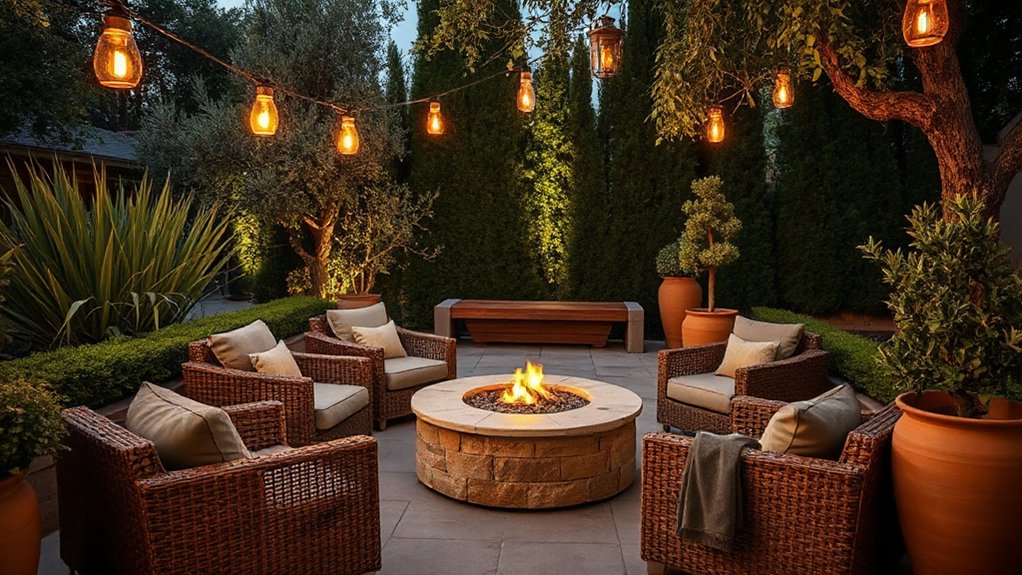
Evening ambiance hinges on a precise trifecta: lighting, greenery, and accessories that together extend usability and mood after sundown. You optimize this trio by aligning light levels with task zones, accenting focal plantings, and selecting durable, glare-controlled fixtures.
Aim for layered illumination: ambient wall wash, task lighting at seating, and subtle path lights to guide movement without overpowering the scene. Greenery should maintain structure after dark, with evergreen silhouettes and reflective foliage that catch light.
Accessories anchor the composition; choose garden sculptures and outdoor rugs that resist fading and wear while reinforcing scale and rhythm. Prioritize color temperature around 2700–3000K for warmth, and calibrate brightness to preserve contrast, clarity, and legibility of surrounding details.
Durable Layouts and Maintenance You Can Trust
Durable layouts start with a robust framework that remains functional year after year, resisting shifting soils, weather, and heavy use. You design with modular components that interlock, spreading loads evenly and minimizing settlement. Choose weather resistant materials and fasteners rated for outdoor exposure to reduce maintenance cycles.
Precision spacing and level planes ensure drainage, reduce trip hazards, and support furniture without sagging. Routine surface inspection detects microcracks before they propagate, while ground cover or underlayment prevents weed growth and moisture retention that could undermine structure.
Implementation emphasizes simple, repeatable maintenance, not cosmetic shortcuts.
- Weather resistant materials and corrosion-resistant hardware
- Scheduled maintenance tips focusing on joints, drains, and reinforcements
- Visual checks for movement, rubbing, or uneven surfaces and prompt remediation
Frequently Asked Questions
How to Protect Furniture From Patio Weather Year-Round?
Yes—store furniture indoors during extreme seasons and use Weatherproof cushions, protective covers, and breathable, waterproof fabrics. You’ll seal seams, elevate frames, and apply UV-blocking finishes, ensuring year‑round protection, simple maintenance, and lasting design integrity.
What Are Budget-Friendly Eco-Friendly Material Options?
You’ll find budget-friendly eco-friendly options: recycled plastics and bamboo furniture, offering durability and low maintenance. You might worry about aesthetics, but these materials translate into crisp, design-focused forms. They perform well, resist weather, and reduce environmental impact.
How to Maximize Privacy Without Blocking Light?
You maximize privacy without blocking light by installing privacy screens that use light-filtration materials, like perforated metal or lattice with translucent panels; position them to intercept sightlines while preserving ambient brightness and airflow, ensuring precise, design-focused light filtration.
Which Plants Deter Pests Naturally for Patios?
You’ll cut pests by up to 40% using companion planting and natural repellents. Choose marigolds, lavender, and rosemary near seating. Pair with pest-despairing herbs; design with spacing guidelines to maximize airflow and visual appeal for guests.
How to Incorporate Outdoor Seating for ADA Accessibility?
You design wheelchair friendly layout by widening paths and ensuring thresholds are level; implement accessible seating arrangements with firm, stable chairs at varied heights, shade, and clear sightlines. Prioritize circulation radius, turning space, and non-slip surface for safety.
Conclusion
You’ve scoped space, layered textures, and tuned color to create a cohesive outdoor room. Focus on durable layouts, weather-ready fabrics, and thoughtful maintenance so your patio sustains form and function. Precision in scale, attachment, and flow matters as much as aesthetics. Do you feel how the furniture, lighting, and greenery now work as a single, resilient system rather than isolated elements? With consistent care and modular choices, your stylish garden remains inviting, functional, and timeless year after year.