Smart homes that meet energy goals can cut bills by up to 30% or more, yet many builders miss this by skipping planning. If you rush design, skimp on insulation or air sealing, or pick materials without climate, durability, and lifecycle in mind, you’ll pay later in comfort and maintenance. You’ll want to see how to measure true savings, tighten the envelope, and balance budget with performance—before you commit to decisions that lock in costs for decades. The path to a genuinely green home starts here.
Assess Realistic Green Savings: How to Measure Impact
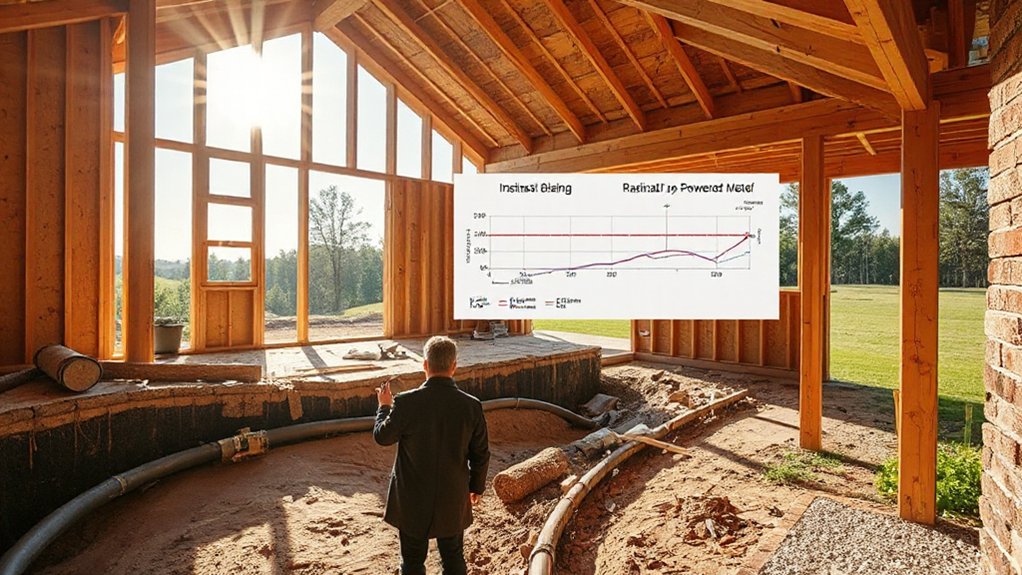
To gauge real green savings, start with a clear baseline of your current energy use and costs. You’ll measure progress by tracking monthly utility bills, after accounting for seasonal swings, to avoid misleading spikes.
Next, define realistic targets for energy, water, and material choices, then map those to concrete actions: upgrading to Renewable energy sources, installing efficient appliances, and prioritizing Water conservation features.
Use a simple, repeatable method: log consumption, compute percent change, and compare against a defined performance window (12 months).
Include both capital costs and operating savings to determine payback. Beware booked incentives and maintenance needs that can skew results.
Validate savings with independent benchmarks, and adjust practices as you verify real-world performance rather than theoretical potential.
This disciplined approach prevents overestimating impact and guides smarter design decisions.
Air Sealing Essentials: Targets, Techniques, and Tests for a Tight Envelope
Set clear targets for air sealing performance and align them with your climate and building code. Use proven techniques—targeted gaps, joints, and seams disclosure—paired with standardized testing protocols to verify tightness.
This approach keeps your envelope efficient, avoids wasted effort, and provides measurable, actionable benchmarks.
Targeted Air Sealing Metrics
Where should you start when targeting air sealing metrics for a tight envelope? Begin with measurable, site-specific goals that reflect your climate, home design, and energy targets. Set clear metrics for envelope tightness, infiltration rate, and continuous sealing integrity, then track progress with simple tests and documentation. Use concrete thresholds to guide decisions, not guesses. Remember that practical steps now save more energy later than grand plans.
- Define baseline air leakage (ACH50 or CFM50) and establish a realistic reduction path through prioritized sealing measures.
- Map critical junctions (windows, doors, electrical penetrations, attic-to-ceiling connections) and verify continuity with field checks.
- Schedule periodic rechecks after upgrades and seasonal shifts to ensure sustained performance, aligning with indoor plants and Renewable energy considerations.
Techniques and Testing Protocols
Mapping the right techniques and tests starts with clear targets and practical methods. You’ll set airtight goals, then apply proven methods: sealing gaps with appropriate materials, using continuous application around penetrations, and testing with blower door and pressure diagnostics.
Target a tight envelope by prioritizing major leakage paths first, then fine-tune with targeted caulks, tapes, and sealants. Use thermal imaging to verify performance and document findings for ongoing improvements.
Tests should occur after installation changes and before finishing, so you can demonstrate real gains in comfort and energy use. In practice, align air sealing with renewable energy strategies and a smart home platform to monitor envelope integrity automatically.
This disciplined approach minimizes drafts, reduces load variability, and supports long-term efficiency.
Climate-Friendly Materials: Choose by Region, Performance, and Budget
Are regional climate, performance needs, and budget the key filters for selecting climate-friendly materials? You’ll optimize choices by balancing regional sourcing, anticipated durability, and cost over time.
Prioritize materials that perform under local conditions, reducing energy use and maintenance. Focus on verifiable durability and low embodied energy to maximize long-term value. Avoid one-size-fits-all selections; tailor decisions to your climate zone and budget realities.
- Compare regional sourcing options to minimize transport and emissions while supporting local economies.
- Match material durability to expected service life and maintenance requirements within your climate, budget, and performance goals.
- Verify performance data, life-cycle costs, and supplier transparency to ensure you’re choosing genuinely climate-friendly materials.
Design for Durability: Structural, Moisture, and Low-Maintenance Details
You’ll start with durable structural details that stand up to climate and shifting loads.
Prioritize moisture-resistant construction and sealants, so you minimize maintenance and avoid costly repairs down the line.
Choose low-maintenance finishes and detailing that perform reliably, year after year.
Durable Structural Details
- Guarantee continuous foundation insulation to minimize thermal bridging and curb moisture migration.
- Use durable roofing assemblies with proper underlayment, ventilation, and flashing at penetrations.
- Detail connections with corrosion-resistant, maintenance-friendly hardware and sealants for long-lasting performance.
Moisture-Resistant Maintenance Aspects
Moisture-resilient maintenance starts with designing for durability: you should specify materials and details that resist water intrusion, tolerate humidity, and stay easy to service over time. Start with durable envelope components, sloped surfaces, and rain screens that keep bulk water out while allowing drying.
Use moisture barriers at seams, joints, and connects, and install robust flashing around windows, doors, and penetrations to prevent leaks. Choose low-maintenance, rot-resistant framing and exterior finishes that resist staining and weathering.
Implement clear drainage systems that move water away from the foundation, with properly pitched roofs and continuous edge gutters. Plan for accessible cleanouts, inspection ports, and serviceability.
Regular inspections catch aging seals before failures, reducing costly repairs and sustaining long-term performance.
Indoor Air Quality That Pays Off: Ventilation, Filtration, and Comfort
Indoor air quality pays off when you prioritize ventilation, filtration, and comfort from day one. You’ll reduce contaminants, support health, and improve daily living in your green home. Focus on balanced airflow, high-efficiency filtration, and stable humidity to prevent mold and odors. Integrate easy, proven strategies like indoor plants for subtle air purification and aesthetic value. Choose systems that are sized for your space and operate quietly, reliably, and with predictable costs.
- Optimize ventilation with outdoor air exchange and controlled exhaust to minimize draft and energy waste.
- Select filtration with low pressure drop and high capture efficiency, plus regular maintenance reminders.
- Prioritize comfort via dew-point management, humidity control, and quiet operation to sustain wellness and performance.
Budgeting for Value: Payback, Lifecycle Costs, and Practical Tradeoffs
Budgeting for value isn’t about choosing the cheapest option; it’s about measuring payback, understanding lifecycle costs, and weighing practical tradeoffs up front.
You’ll succeed by framing a clear financial plan that aligns with long-term savings, not just upfront price. Start with accurate payback calculations for energy upgrades, insulation, and system upgrades, then map total cost of ownership over its expected life.
Consider maintenance, replacement intervals, and resale impact alongside initial expense. Material selection matters: choose durable, efficient components that reduce replacement cycles and energy use.
Don’t neglect financing terms, tax incentives, and cash flow timing; favorable terms can alter value dramatically. Balance short-term cash constraints with long-term benefits, and document assumed performance in writing.
This disciplined approach minimizes missteps and optimizes overall project value. Financial planning informs decisions; material selection anchors them.
Frequently Asked Questions
How Do I Compare Green Home Certifications Reliably?
To compare green home certifications reliably, you’ll align with independent, transparent standards and verify data sources. Start by checking certification standards from reputable programs, then confirm third-party verification and project specifics like system sizes and performance claims.
Compare renewable energy credits, energy use intensity, and lifecycle assessments. Look for consistent measurement methods, ongoing post-certification monitoring, and clear scope definitions.
Demand accessible criteria, recent updates, and cross-program equivalencies to guarantee you’re evaluating like-for-like, not marketing claims.
What Overlooked Trades Impact Energy Performance Most?
You’ll find insulation gaps and ventilation flaws have the biggest, often overlooked, impact on energy performance. Prioritize tight envelope construction and continuous insulation to minimize gaps.
Then verify airflow with balanced, properly sized ventilation. Don’t skip bypass sealing around windows, doors, and penetrations.
Guarantee ductwork is sealed and runs with minimal bends. Consider attic hatch insulation and air barrier continuity.
Can Retrofit Options Improve Existing Homes Significantly?
Yes, retrofit options can markedly improve your home’s performance. Picture sunlight diffusing through well-sealed walls as you upgrade windows and insulation.
Retrofit cost varies, but energy savings often justify it through lower bills and comfort. You’ll target air leaks, efficient heating, cooling, and moisture control, then monitor improvements with simple metrics.
Actively plan each upgrade, prioritize high-impact areas, and you’ll see meaningful energy savings while extending your home’s life and value.
Which Indoor Plants Boost IAQ Without Added Risk?
You should choose indoor plants that minimize indoor air pollutants while avoiding added risk from plant toxicity. Spider plant, philodendron, and snake plant are practical options; they moderate indoor air and generally pose low toxicity for humans and pets when used appropriately.
Be mindful with monstera or pothos if you have curious pets.
Regularly monitor for dust, guarantee proper drainage, and avoid overwatering to keep air quality steady and plant health high.
How Do Local Climate Quirks Affect Material Durability Choices?
Your climate quirks steer your choices, shaping durability like night and day. You’ll balance thermal expansion with safe joints, choosing materials that tolerate temperature swings and seasonal moisture.
When summers heat and winters chill, go for moisture resistance in exterior sheathing and fasteners, yet avoid over-sealing. You’ll test for differential movement, dimensioning joints accordingly, and specify breathable membranes where needed.
In contrast, neglecting these adjustments risks cracks, warping, and costly repairs.
Conclusion
Building a green home is about solid planning, disciplined execution, and honest tracking of results. You’ll avoid costly missteps by validating savings, sealing targets, and choosing regionally appropriate, durable materials. Prioritize ventilation and moisture control to sustain IAQ and comfort, while weighing lifecycle costs over upfront price. Example: a near-term retrofit cut energy use 40% in a humid climate by sealing leaks and upgrading ducts. Stay disciplined, measure outcomes, and adjust strategies for long-term value.