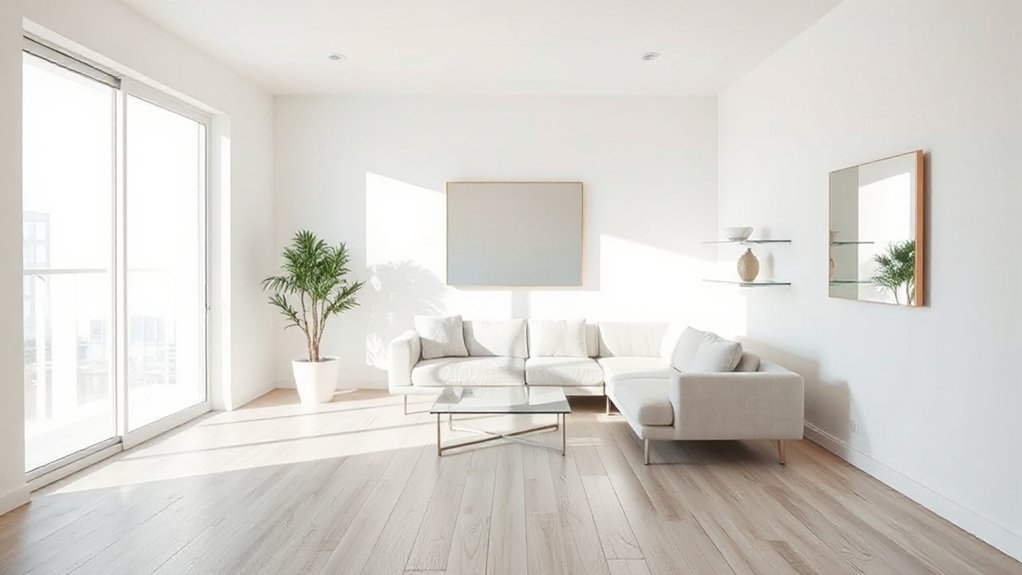
To make a small flat feel bigger without structural changes, boost light, sightlines, and flow. Use light walls and reflective surfaces, plus a single bold accent wall to add depth. Arrange furniture to keep routes open, favor low-profile pieces, and create inviting angles toward focal points. Add mirrors opposite windows, layer lighting, and use texture to add dimension. Define zones with rugs, screens, and vertical elements. Want more tips that actually work? Keep going.
Understand the Crammed Effect : Quick Fixes to Open Up a Small Flat
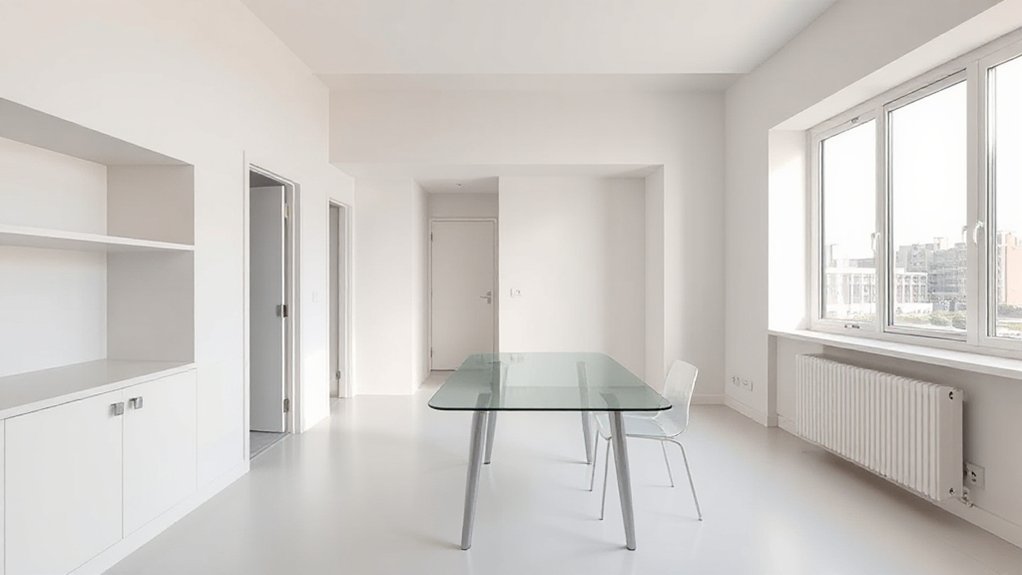
If a room feels cramped, the culprit is often perception—so you can fix it with quick, smart tweaks. You’ll reframe the space by prioritizing light, open sightlines, and purposeful placement.
Begin with color contrast: light walls against darker furniture creates depth, instantly expanding the feel of a room. Choose a restrained palette and let accents do the talking.
Next, trim clutter, because every item competes for attention. Add decorative accessories strategically—one sculptural piece, a few meaningful textiles—so the eye travels smoothly rather than stopping on junk.
Mirror the room’s best features to multiply light, not mass.
Finally, define zones with subtle contrasts in texture and height, not walls. You’ll cultivate belonging by shaping a calmer vibe—together, you can live larger with intent.
Build Flow With Zone-Based Layouts (No Structural Changes)
Zone-based layouts guide flow without structural work by carving purpose into the space. You map zones that align with your daily routines, guiding movement and attention with intention.
Keep rooms distinct yet connected through shared color, texture, and furniture scale that respects architectural proportions. Separate zones via furniture anchors, rugs, and subtle lighting cues rather than walls, so you preserve openness while signaling function.
This approach creates intuitive pathways: cooking feels adjacent to dining, lounging ties to entertainment, work seats you near natural light without isolation.
Embrace structural concealment—hide cables, mounts, and storage behind slim panels so clutter stays out of sight. The result is a cohesive, breathable rhythm where you belong, moving confidently through a home that reads as larger because every zone earns its edge.
Brighten Walls and Ceilings to Create Airiness
Bright walls and ceilings bathe a room in light, instantly amplifying perceived space. You’ll choose paint shades that reflect daylight, not absorb it, so ceilings feel higher and walls expand outward. Opt for near-whites or soft neutrals with a hint of warmth, and avoid heavy contrast that traps the eye.
Color contrast can still work strategically if reserved for a single feature wall or architectural nooks, framing light rather than overpowering it. Pair light walls with minimal decor to sustain airiness.
Window treatments matter: sheer fabrics or light linen let daylight filter through, while clean lines keep sightlines uninterrupted. Elevate the effect with consistent trim and ceiling paint, reducing visual clutter.
This approach reinforces belonging by inviting ease, openness, and calm throughout your space.
Use Mirrors for Space With Minimal Clutter
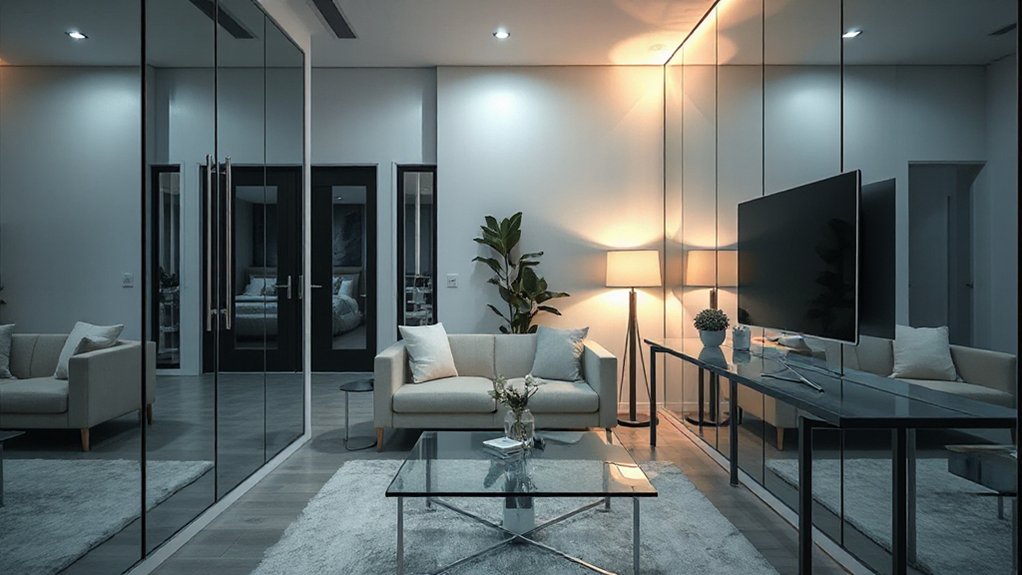
Position mirrors strategically to expand space without adding clutter, so you reflect more light and open sightlines. Consider mirror placement techniques that amplify corners and avoid busy frames.
Keeping surfaces clean and simple is important. By optimizing reflected light and minimizing visual noise, you gain a brighter feel with less clutter.
Mirror Placement Techniques
Mirrors are your stealth upgrade: they reflect light and double the apparent space without adding clutter. You map mirror placement like a game plan, not a decoration afterthought.
Position tall mirrors opposite windows to bounce daylight across rooms, or mirror a seating area to double its perceived size. Place a long, narrow mirror along a hallway to visually extend transit space without crowding it.
Use furniture arrangement to guide reflections toward open zones, avoiding dead angles that trap clutter in corners. Consider color contrast: a frameless or slim-framed mirror blends, while a bold frame anchors a focal wall.
Keep scale in harmony with room proportions to preserve flow. With purposeful placement, you feel included in a brighter, more organized home.
Reducing Visual Clutter
Balance your space by using mirrors to curb visual clutter instead of amplifying it. You tighten sightlines by selecting a few, well-placed mirrors that reflect the room’s best features rather than multiply surfaces.
Keep decorative accents purposeful: choose 2–3 pieces that tell your story without competing with the architecture.
Color coordination matters, so stick to a cohesive palette across textiles, furniture, and wall art to create calm echoes rather than chaos.
When arranging, group objects in threes and place mirrors to bounce light toward unused corners, not to double up on distractions.
Store seasonal or unsightly items out of sight, so surfaces stay clean and intentional.
With restraint and intention, your space feels welcoming, organized, and subtly expansive.
Reflected Light Benefits
By leveraging reflected light, you can instantly brighten dark corners and make the room feel larger without adding clutter. You’ll see bold, practical gains when mirrors do the heavy lifting, not you.
Use mirrors to bounce daylight from fixed windows across walls, doubling the perceived space with minimal effort. Place panels opposite light sources to create balance, and choose frameless or slim-framed styles to maintain clean lines.
Think strategically: one tall mirror near the entry reflects hallway light, another above a sofa widens the seating area. This approach delivers reflected light benefits without crowding surfaces.
Keep patterns simple, avoid over-mirroring, and align reflections with architectural rhythm. Mirror placement techniques matter; intentional angles unlock spacious vibes and belonging in a compact flat.
Smart, Non-Structural Storage That Frees Floor Space
Smart, non-structural storage keeps your floor clear by using vertical and hidden solutions that you can install in minutes. You’ll reclaim space without bulky furniture, using wall shelves, peg systems, and under-bed drawers that slide out smoothly.
Think modular units that stack, nest, and disappear when not needed, so rooms breathe. Choose options that blend with your walls, so your space feels calm and cohesive.
This approach supports innovative decor and personalization touches, letting you curate a look that says you belong. Go discreet with magnetic strips for small items, and hanging organizers in closets to maximize depth.
The goal is efficiency with style: tidy essentials visible, surface clutter minimized, and flow preserved for everyday living.
Textiles and Textures to Create Perceived Space
Light-reflective textiles bounce more light around, making walls feel farther apart.
Layered texture techniques add tactile depth without crowding floor space.
Color-field fabric tricks create visual calm and a sense of open, uninterrupted surfaces.
Light-Reflective Textiles
To make a small flat feel bigger, choose light-reflective textiles that bounce natural and artificial light around the room. You’ll amplify brightness with glossy finishes, pale tones, and airy weaves that don’t absorb space.
Prioritize fabric selection that behaves like mirrors without glare, so walls read wider and corners feel farther away. Use Textile layering to introduce depth without heaviness, layering sheer sheers over opaque textiles to diffuse light softly.
Opt for reflective surfaces beyond curtains, like cushions with satin or silk blends, to ping light through the space. Keep color cohesive, allowing a single reflective thread to unify the scheme.
This strategic approach helps you belong in a brighter, more expansive home, while avoiding clutter and maintaining tactile, inviting comfort.
Layered Texture Techniques
Layered texture creates perceived space by letting light travel through and bounce around your room. You’ll boost openness with a deliberate mix of fabrics, surfaces, and throws, so every texture earns its place.
Layered textures create depth without crowding the eye, guiding traffic and focus to where you want it. Start with a neutral base and add a tactile punch—a woven rug, a linen throw, a velvet cushion—then balance scale so patterns don’t shout.
Textural layering feels intentional, giving rooms personality while preserving flow. Use varying sheens, from matte to subtle shine, to create subtle contrasts that reflect light instead of absorbing it.
Embrace cohesion through color echoes and consistent motifs, so your space feels curated, inclusive, and truly yours.
Color-Field Fabric Tricks
Texture isn’t just surface—it’s space. You can use color-field fabric tricks to sculpt perception, not walls.
Embrace color harmony across cushions, rugs, and throws to unify rooms and reduce visual clutter. Choose solid blocks or large-scale fabric patterns with restrained contrast; they read as plane fields that expand the eye rather than fracture it.
When you select textiles, consider proximity: lighter tones approach the ceiling, darker tones ground the floor, creating a balanced vertical rhythm. Repeat a single hue with variations in value for cohesion and spaciousness.
Avoid busy patterns near small vistas; instead, let generous swatches anchor seating and surfaces. With intentional color harmony and deliberate fabric patterns, you cultivate belonging while making a compact space feel larger.
Fine-Tune Furniture Orientation for Open Sightlines
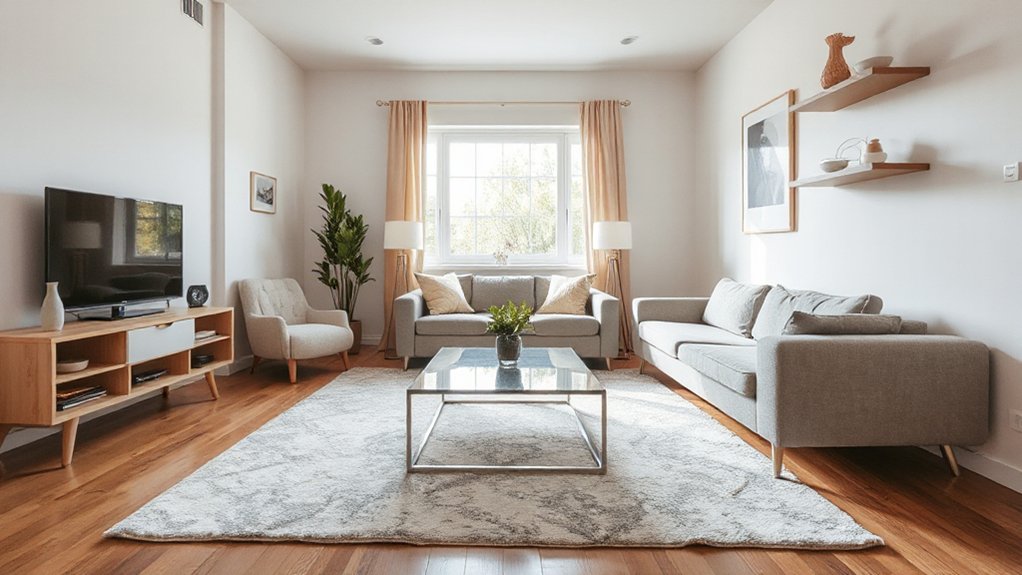
Strategically position sofas, chairs, and tables to create clear sightlines that make the room read larger. You’ll gain confidence by aligning furniture to emphasize openness, not obstruction.
Begin with a low, unobtrusive core: keep bulky pieces away from primary walkways and sightlines, so views aren’t blocked. Prioritize central sightline optimization—anchor with a slim console or low-profile seating to guide the eye toward the far wall or window.
Rotate pieces to avoid parallel blocks that trap space; angle seating slightly toward focal points to invite conversation without crowding. Use symmetry where it matters and asymmetry where it frees space.
Consistency in height and color boosts cohesion, reinforcing a sense of flow. This furniture arrangement sharpens perception of size while fostering belonging and ease.
Visual Tricks With Rugs, Partitions, and Vertical Emphasis
Rugs, partitions, and vertical emphasis can visually stretch a space in seconds. You’ll steer attention with color contrast that sharpens edges and defines zones without bulk.
Pick a rug that lengthens a pathway or anchors seating, and choose a hue that echoes accents from furniture arrangement. Place furniture to create clear, open sightlines: a low-profile sofa opposite a slim console, chairs angled to invite conversation, and plenty of negative space between pieces.
Use partitions strategically—slim screens or bookcases segment areas without blocking light, signaling purpose without closing the room. Vertical emphasis, like tall shelves or art, draws the eye upward, making ceilings feel higher and spaces steadier.
Color contrast and thoughtful furniture arrangement amplify cohesion, making you feel included and at home.
Lighting Plans to Make Rooms Look Taller and Wider
You’ll use tall wall lighting to lift the eye and visually stretch ceilings.
Pair it with lighting that widens the space using brighter, evenly distributed glare-free tones.
This approach sets the stage for a room that feels taller and more expansive.
Tall Wall Lighting
When you want a taller, airier feel, tall wall lighting draws the eye upward and widens the room. You’ll use wall mounted sconces positioned high on the walls to create vertical rhythm, not crowd corners.
Choose fixtures with narrow profiles and soft, diffused light to avoid glare and harsh shadows.
Aim for lighting layers: ambient base, accent highlights, and a subtle glow along the ceiling line. This approach preserves ceiling height perception while adding depth.
Mount sconces in pairs at strategic intervals to balance walls and maintain flow, especially near entryways or behind seating.
Keep cords discreet or wired-in for a clean, intentional look.
Tall wall lighting makes a small flat feel cohesive, modern, and welcoming, inviting belonging without overwhelming the eye.
Wider Space Illusion
Wider space illusion starts with lighting that stretches perception: use a mix of bright ambient, selective task, and soft ceiling highlights to draw the eye outward and upward. You’ll extend ceiling height visually by creating a clean, continuous light field that avoids sharp contrasts at eye level.
Place ambient sources from walls or coves to bounce light across surfaces, and add narrow, focused task lighting where needed without cluttering sightlines. Favor cooler tones that recede, not warm, heavy ambiences.
Consider window treatments that maximize natural glow during the day and rest clean when dark. Choose ceiling heights-friendly fixtures, and keep furniture low and streamlined to preserve openness.
This strategy reinforces belonging—your space feels taller, wider, and more inviting.
Quick-Build Budget Tricks That Deliver Real Gains
Smart budget tricks punch above their weight: you can gain real space and light without tearing down walls. You start by prioritizing light sources: a single bright floor lamp and a mirror opposite a window multiply daylight without cost.
Color psychology guides you: crisp neutrals with bold accent hues create depth and perceived space. Next, define zones with inexpensive rugs and lighting layers, so each area feels intentional, not cluttered.
Acoustic treatment matters for comfort; soft textiles and a slim wall panel dampen echo, boosting calm and perceived size. Use multi-functional furniture: a sofa with hidden storage, a dining desk that doubles as a work surface.
Finally, declutter ruthlessly—every item earns its place, reinforcing belonging and control.
Frequently Asked Questions
Can Color Psychology Alter Perceived Room Height Quickly?
Yes, color illusions can boost visual height quickly. You’ll feel taller rooms when you use lighter tones on ceilings and cool, darker shades along lower walls. Strategic contrasts sharpen depth, creating belonging through bigger-perceived space and coherence.
Do Air Fresheners Impact Spatial Perception in Small Flats?
Air fresheners perception can subtly alter your space, yes. Spatial scent influence makes rooms feel larger by guiding your attention and mood, so you instantly feel more grounded and connected when you enter, strengthening belonging in your flat.
Can Furniture Weights Influence Room Openness Without Moving Items?
Sure, your furniture weights don’t change openness, but clever furniture arrangement and lighting techniques do. You’ll feel bigger rooms as you align pieces, reduce clutter, and brighten corners—belonging grows when you claim space with confident, ironic flair.
Are There Quick Decor Swaps That Make Ceilings Feel Higher?
Yes—use lighting techniques to lift the space and mirror placements to reflect height. You’ll feel taller instantly, as bold, strategic choices cue belonging and openness, inviting you to enjoy brighter, airier rooms without structural changes.
How Do Scent and Sound Affect Spatial Spaciousness?
Imagine stepping into a quiet room where a soft hum feels like distance. You’ll notice Aromatherapy illusions and Acoustic illusions reshape perceived space, guiding you to feel larger and calmer, connected, and belonging as you tune scent and sound.
Conclusion
You can transform a tiny flat without tearing seams or walls—just think strategically. By mastering flow, light, and scale, you’ll carve lounge-worthy space out of almost nothing. Fun fact: mirrors and light-colored walls can double perceived room size, instantly boosting openness. Start with a zone-based layout, nix clutter, and choose vertical emphasis to pull the eye upward. Stay bold, stay practical, and every square inch will feel brighter, calmer, and surprisingly expansive.