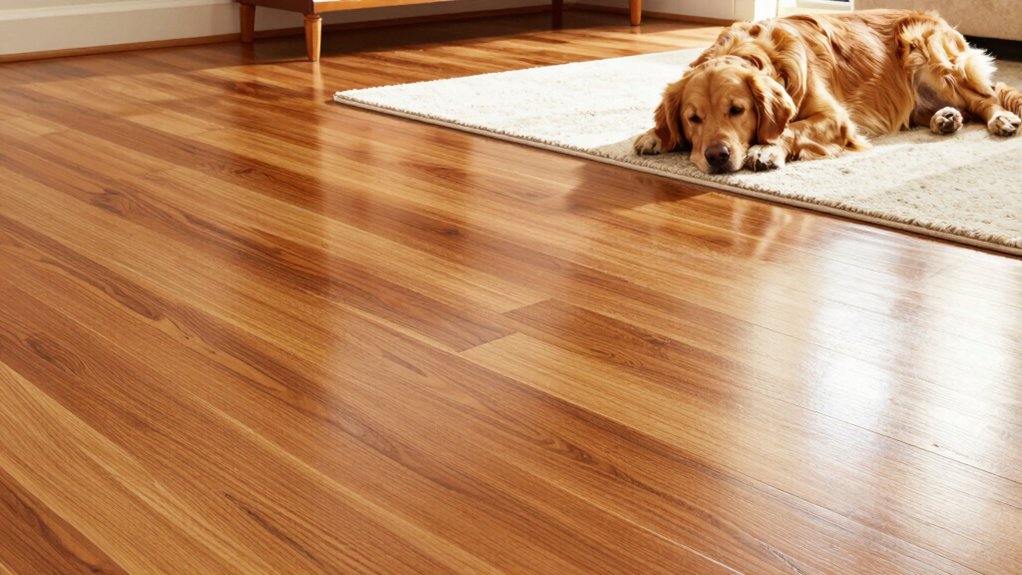
For a dog-friendly hardwood finish, pick a durable, low-VOC option with strong scratch resistance and easy touch-ups. Water-based polyurethane or penetrating hardwax oils offer low odor, quick cure, and good surface durability, while aluminum oxide-based finishes on prefinished floors resist wear but are tougher to repair. Consider satin or semi-gloss for practicality, and pair with pet-safe sealants and routine maintenance. With the right setup, you’ll minimize paw prints and dents, and you’ll uncover more tips ahead.
Understanding Dog-Friendly Finishes
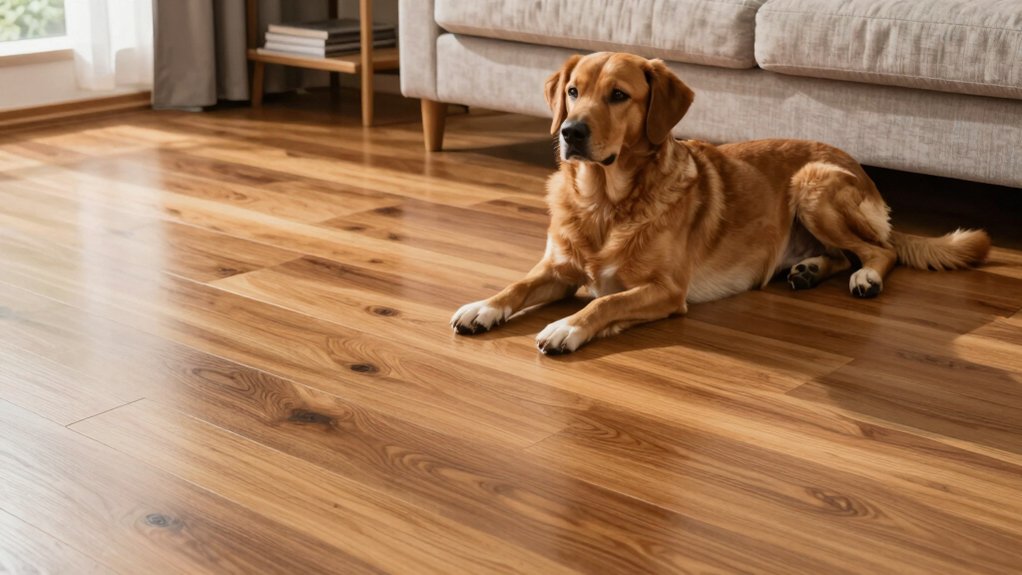
Dog-friendly finishes are designed to resist scratches, stains, and odors while staying low in odor during application. You’ll value finishes that tolerate daily wear without masking your home’s air. When choosing, consider how each option handles dog nail care and pet odor control. Look for products with durable top coats and low VOC formulas to minimize sniffing irritants.
Penetrating finishes can reduce surface scratches, but may require careful maintenance to avoid dulling. For smoother maintenance, select items labeled for pet-friendly use and check that they resist scuffing from claws. Apply with proper ventilation and follow curing times to prevent lingering smells.
Ensure compatibility with your floor type, and document manufacturer guidance for cleaning methods and frequency. Your goal: reliable protection without compromising air quality or pet comfort.
Oil-Based Vs Water-Based Finishes for Durability
Oil-based and water-based finishes each offer distinct durability profiles for hardwood floors with dogs. You’ll weigh hardness, cure time, and odor, then pick what fits your daily routine.
Oil-based options typically yield deeper, amber-toned protection with excellent wear resistance, making scratches less obvious over time. They dry slower, require ventilation, and can impart a longer curing period, which means temporary inconvenience.
Water-based finishes cure quickly, stay clearer, and emit lower odors, helping you complete projects sooner.
For durability, consider pet safe sealants layered on top or mixed approaches, but ensure compatibility with your base finish.
If environmental impact matters, seek eco friendly coatings and check label claims.
Either route supports durability when you maintain prompt cleaning, avoid standing moisture, and follow manufacturer recoat intervals.
Aluminum Oxide and Polyurethane Options
Aluminum oxide and polyurethane finishes offer different paths to durable protection for homes with dogs. You’ll find aluminum oxide in some prefinished floors, offering strong scratch resistance and quick installation, but less facile repair if damaged.
Polyurethane finishes, especially two-component or penetrating varieties, provide excellent wear layers you can buff or recoat, extending floor life with repeated dog traffic. In practice, choose based on your priorities: aluminum oxide for durable, low-maintenance boards you won’t refinish often; polyurethane for higher build, easier spot repairs, and more color choices.
When you apply either option, prioritize even coats and proper curing times. For dog paw print prevention, ensure a smooth, sealed surface and clean regularly.
For ongoing safety, use pet safe sealants during any touch-ups or refinishing.
Hardwax Oils: A Natural Alternative
Hardwax oils offer a natural alternative that combines a penetrating oil with a durable wax layer, giving you a balanced finish you can maintain with simple care. You apply a single product that penetrates, seals, and adds surface protection without a thick film. This approach preserves wood’s color while resisting moisture and wear, making routine maintenance straightforward.
Because the finish is natural, it often highlights grain and hides minor imperfections, offering a warm, understated look. When selecting, prioritize products labeled as dog safe sealants to reduce potential irritation for pets and households.
The natural finish benefits include easier touch-ups and renewals versus hard coatings, plus fewer harsh fumes during application. For homes with dogs, this option delivers practical protection alongside a healthier indoor environment.
Scratch Resistance: What to Look For
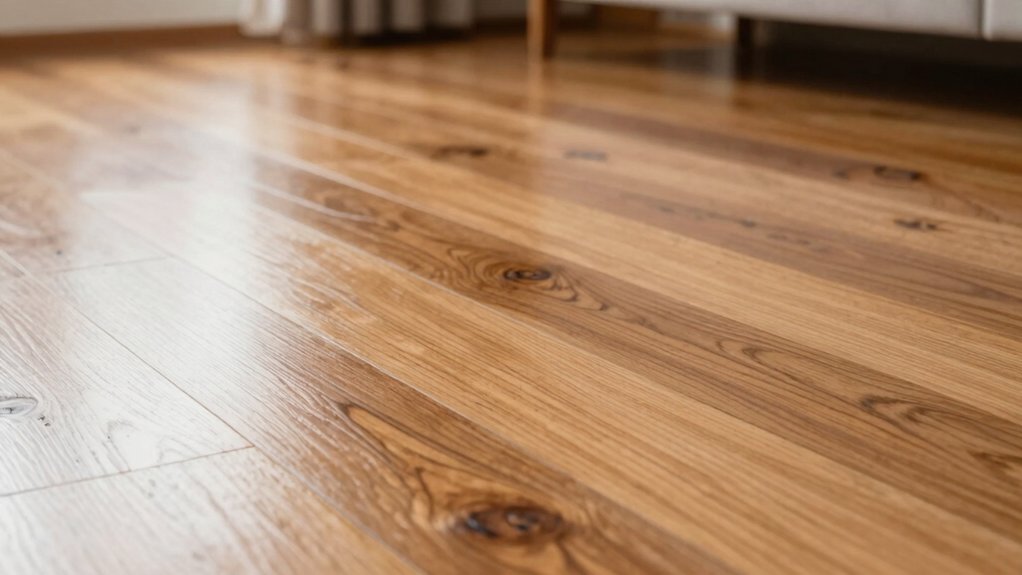
When choosing a finish, look for scratch-resistant options and the real-world durability metrics that matter, like hardness ratings and resistance to gouges.
Check how finishes score on abrasion and scratch tests, and compare how they hold up under pet-related wear.
I’ll help you translate those metrics into practical choices for your home.
Scratch-Resistant Finishes
Scratch-resistant finishes matter because dogs can quickly dull or gouge unprotected wood. You want a finish that resists scratches from claws while staying easy to maintain. Look for hard-wearing binders, like polyurethane or aluminum oxide-enhanced layers, and check the topcoat’s abrasion rating.
Waterborne formulations reduce odor buildup and drying times, helping you avoid long-off scent issues after pet accidents. Higher solids and thicker coats generally offer better wear, but guarantee you don’t trade gloss for protection.
For ongoing care, pair finishes with regular maintenance: vacuum, damp mop, and quick-dry touch-ups. Also plan routine tasks that support surface life, such as dog nail trimming and prompt pet odor removal to prevent dirt embedment and finish fatigue.
Durability Metrics to Watch
Durability metrics for scratch resistance tell you how well a finish holds up under daily dog activity. You’ll want to compare hardness ratings, wear layers, and scratch tests rather than relying on hype.
Look for finishes with high abrasion resistance and a durable topcoat, which translate to fewer visible marks after paws and claws rake across floors. Consider the maintenance cycle: how often you’ll need refinishing or recoat, and whether the product resists gouges from nails.
Prioritize products featuring pet safe sealants and avoid actually including eco friendly coatings. Also verify cured film integrity against moisture exposure and UV wear, since sunlight and spills accelerate scratching.
Ask for third‑party toxicity data and easy reapplication options to minimize disruption while preserving a smooth, safe surface.
Stain and Water Resistance for Paw Prints
Stain and water resistance matters for paw prints, especially with dogs tracking in mud or spills. You’ll want finishes that resist both penetration and staining, so spills wipe up quickly without leaving a mark. Choose products labeled pet safe stains to minimize chemical exposure around pets and family.
Look for coatings with low water absorption and rapid curing times to reduce tracking during the first hours after application. Waterproof sealants create a barrier that helps prevent liquid intrusion into the grain, making cleanup more predictable.
Apply a compatible topcoat over a proven stain system to maintain color integrity. Follow manufacturer directions precisely, and allow full cure before heavy use. This approach balances durability, appearance, and pet safety.
Maintenance and Cleaning of Durable Finishes
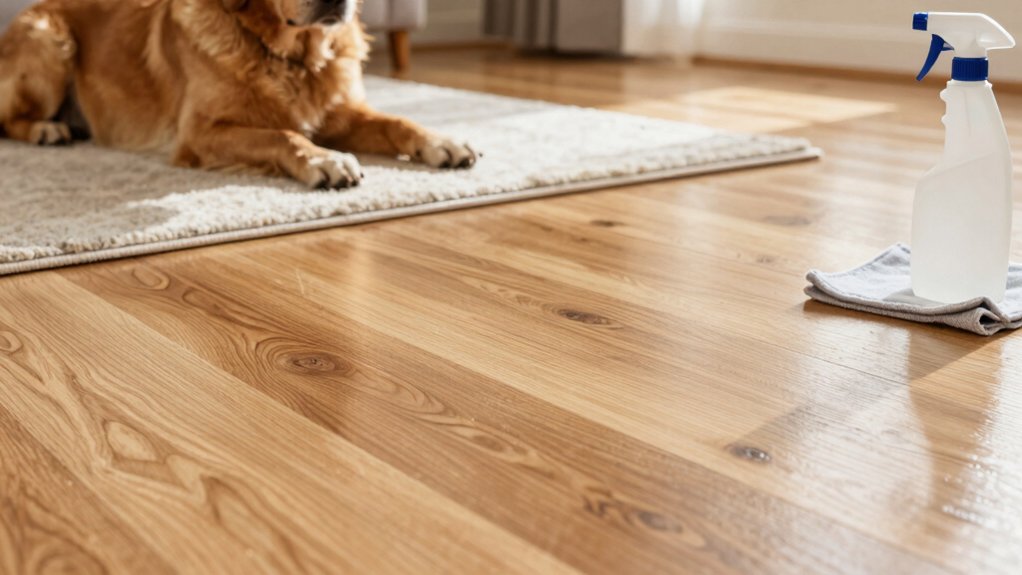
Maintaining durable finishes on hardwood floors with dogs is straightforward if you keep a simple routine and use the right products. Establish a daily wipe-down of high-traffic areas with a microfiber pad and a neutral cleaner, preventing grime buildup that wears finishes. Follow manufacturer directions for any cleaner, and never mix chemical types.
For pet nails, trim regularly to reduce scratches and surface wear; smooth out any rough edges to minimize impact on the finish. When spills occur, blot promptly and resume light cleaning after the area dries. Use pet friendly cleaning products certified safe for floors, avoiding wax buildup that can dull luster.
Schedule periodic, deeper cleanings with a compatible polish or sealer as recommended by the finish’s guidelines.
Color and Sheen Choices That Hide Scratches
Choosing the right color and sheen can hide scratches on hardwood floors, making wear less noticeable in daily life. You’ll want finishes that minimize contrast between scuffs and the floor, so select tones near your existing wood color. Lighter scratches vanish on mid tones; darker scratches blend with deep stains.
When choosing sheen, gloss versus matte matters: matte hides micro-scratches better and emits fewer reflections, while low-gloss may show dust but keeps a softer look. Consider a satin finish as a practical compromise, offering moderate reflectivity and easier touch-ups.
Look for pet safe stains that resist scratching and staining from paws, claws, and accidents. Test patches in high-traffic zones before committing to a full floor.
Prioritize color depth, even tone, and durable top coats for longevity.
Application Tips for Busy Pet Homes
Busy homes with dogs demand a practical approach to applying finishes that withstand daily wear. Start with a clean, dry surface and repair scratches before finishing. Choose a low-VOC, pet friendly product and apply thin, even coats using a quality brush or roller. Maintain a steady pace to avoid lap lines and dust imperfections; allow proper cure time between coats.
Protect adjacent areas with tape and ventilation, and keep pets away during the full cure. Plan for quick touchups by labeling cans and storing leftovers safely. After finishing, implement pet friendly cleaning routines to prevent residue buildup. Regular dusting and damp mopping minimize particles that dull gloss.
Use stain prevention techniques, like mats at entrances and routine fur removal, to extend protection.
Frequently Asked Questions
How Long Before Pets Can Re-Enter After Finishing?
Pet-proof your space: wait 24–72 hours, then re-enter with pets. You’ll apply pet stain removal tips and follow hardwood cleaning tips, avoiding foot traffic until the finish cures. You’ll test, air out, and recheck for odors and residue.
Do Finishes Off-Gas Harmful Fumes for Pets?
Yes, some finishes can off-gas harmful fumes, but you’ll minimize risks by selecting VOC emissions low products and non toxic options, ensuring proper curing, good ventilation, and following manufacturer timelines before pets re-enter.
Can Finishes Be Repaired Easily After Scratches?
And did you know 90% of homeowners report quick scratch fixes save time? Yes—scratches can be repaired easily. You’ll use scratch repair and finish maintenance steps, feathering, and microfiber touch-ups for a near-seamless result.
Which Finishes Resist Claw Marks the Best?
Claw resistant coatings resist marks best, especially when paired with durable sealants. Opt for oil- or water-based polyurethanes and aluminum oxide blends, then maintain with regular cleaning; you’ll seal, protect, and extend floor life against dogs’ claws.
Are There Vegan or Non-Toxic Options for Dog Owners?
Yes, you can choose vegan finishes and non toxic sealants. You’ll protect floors and pets by selecting low-VOC, plant-based options, avoiding heavy solvents, and following application instructions carefully for durable, safe results.