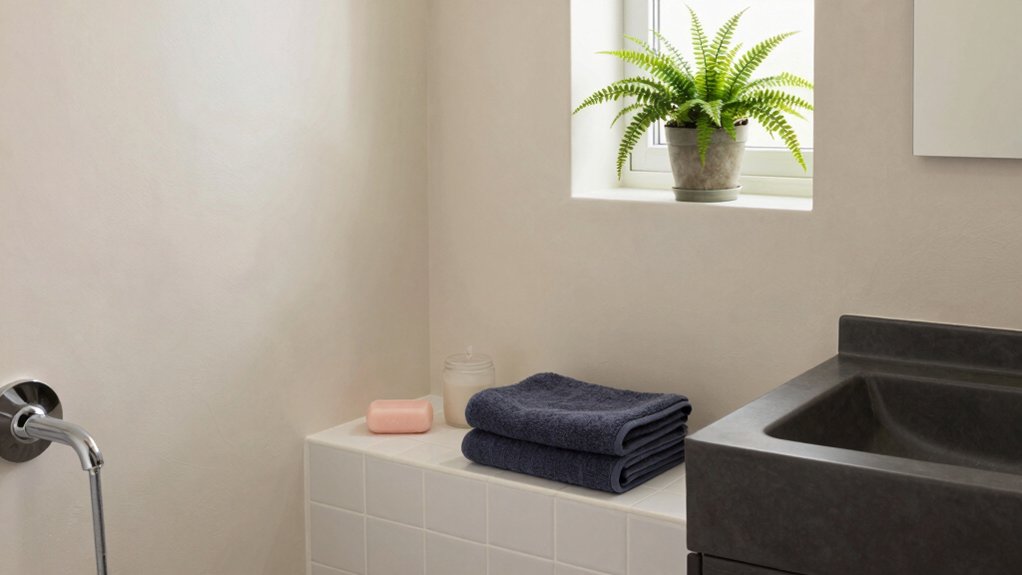
Brighten a small, windowless bathroom with light-reflecting paints in pale neutrals like soft whites, minty grays, or cool beiges. Choose satin walls for even illumination and glossy trims for a controlled sparkle. Use color blocking and vertical lines to heighten height perception, and keep textures subtle to avoid clutter. Layer ambient and task lighting to guide the eye. Make sure moisture resistance and airflow to maintain brightness over time. If you keep exploring, you’ll uncover more practical tricks.
Brighten Up: Light-Reflecting Paint Colors for Dark Bathrooms
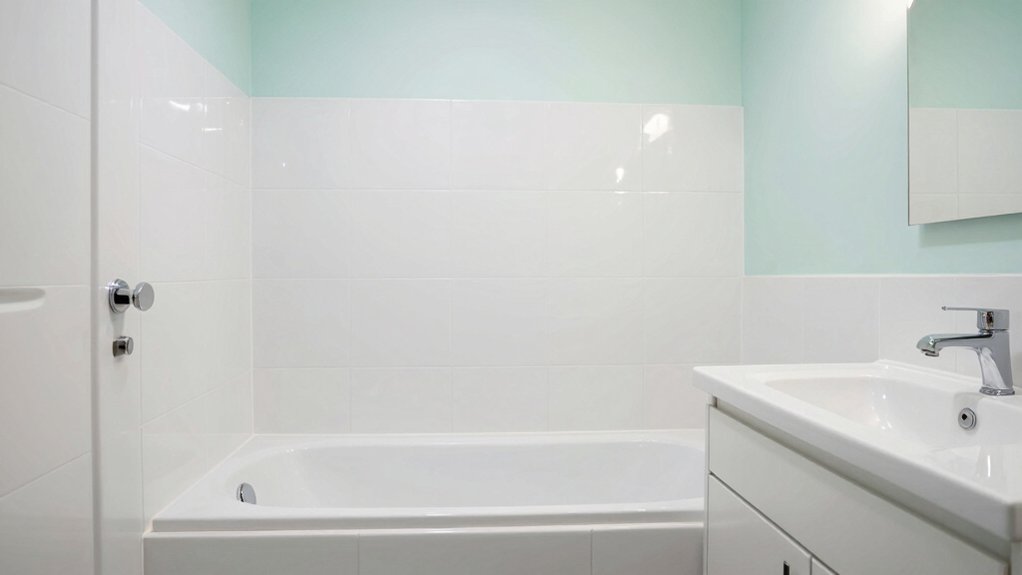
If your bathroom feels cramped and dingy, choosing light-reflecting paints can instantly amplify brightness. You’ll want semi-gloss or satin finishes that bounce light without glare, keeping lines clean and walls visually extended.
Opt for pale neutrals like soft whites, cool beiges, or minty-gray tones that read airy rather than clinical. Balance warmth with a touch of color on accents to prevent a sterile vibe.
Consider wall textures that catch light subtly—matte panels, micro-textured plaster, or a faint vertical grain—to add depth without absorbing glare.
Plan ceiling colors slightly lighter than walls to heighten height perception and unify the space. Keep trim crisp and simple, allowing the paint’s luminance to dictate the room’s perceived scale and airflow.
Gloss Vs Satin Sheens: Which Finish Maximizes Light?
Gloss vs satin finishes shape how light behaves on bathroom walls, so picking the right sheen can make a room feel brighter without glare. You’ll maximize glow by selecting a semi-gloss or satin for walls near lighting fixtures, where reflections sharpen perception of space.
Gloss reflects more, boosting brightness but risking hotspots. Satin offers softer, even illumination with less specular glare. Consider wall-to-ceiling continuity to avoid harsh contrasts, using paint application techniques that preserve a smooth surface.
In tight layouts, pair glossy trims with a satin wall for controlled sparkle around mirrors. Align sheen with fixture style—metallics pair well with higher sheens, while matte-adjacent textures minimize bounce.
Test swatches under actual lighting to confirm the balance between illumination and visual comfort.
Warm Whites Meet Cool Neutrals: Harmonious Pairings
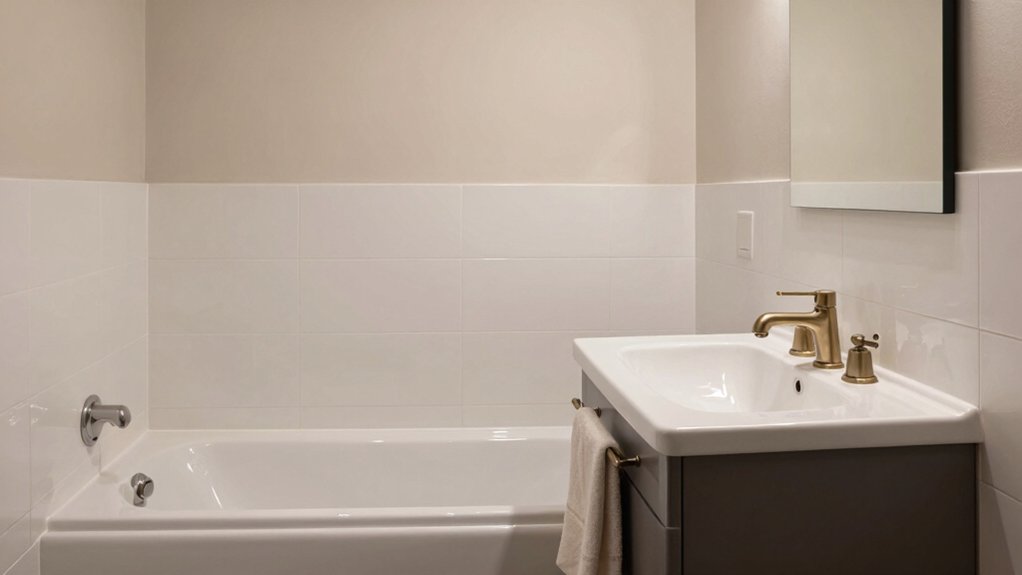
You’ll balance warm whites with cool neutrals to create a calming, tactile contrast in a small bathroom. Start by pairing creamy whites with icy or gray-tinged tones to add light depth without crowding the space.
This harmony guides your palette choices, keeping surfaces visually crisp while still feeling inviting.
Warm-Cool Harmony
Warm whites and cool neutrals pair with deliberate restraint to create a bathroom that feels calm yet polished. You’ll notice how soft, warm whites keep the space inviting while cool neutrals ground the mood, preventing glare in a room without natural light.
Aim for a restrained palette: one dominant warm shade offset by a cooler accent, then introduce texture through matte finishes and subtle contrast. In this harmony, lighting fixtures become the punctuation marks that guide perception—think layered lighting that ranges from ambient to task without shouting.
Storage solutions should stay sleek and unobtrusive, preserving sightlines and contributing to a serene field. Allow your fixtures and cabinetry to echo the same tonal balance, ensuring a cohesive, breathable, small-bathroom identity.
Light-Depth Balance
Light-Depth Balance: warm whites and cool neutrals combine to create a bathroom that feels spacious yet intimate. You’ll pair soft, warm whites on walls with cooler neutrals on built-ins to carve depth without shrinking the space.
Let lighting fixtures guide the perception of depth: a bright ceiling light layered with task lamps near the mirror draws the eye inward and expands the room. Contrast becomes a design tool when you introduce varied wall textures—matte panels beside glossy tiles or a tactile plaster against slick ceramic—adding dimension without clutter.
Keep edges crisp with precise trim and consistent grout tones to maintain visual calm. This balance helps your small bath read as larger, brighter, more intimate.
Accent Strategies: How Small Accents Create Illusion of Space
Accent accents aren’t about loud color but clever scale. In a small, lightless bathroom, you use tiny design moves to read space, not overwhelm it. Start with color blocking on narrow walls: a pale base with slightly deeper bands at eye level to visually elongate the room. Keep blocks restrained to avoid busy chaos, letting negative space breathe.
Keep fixtures sleek and streamlined so the eye travels smoothly from wall to wall. Use wall murals sparingly, choosing subtle, high-contrast images that draw the gaze upward or laterally without multiplying clutter. Reflective surfaces help—glossy tile or a polished vanity mirror bounces existing light, multiplying perceived depth.
Finally, emphasize vertical lines in storage or towels to pull the ceiling higher and feel more expansive.
Maintenance Tips: Keeping a Dim Bathroom Fresh and Moisture-Friendly
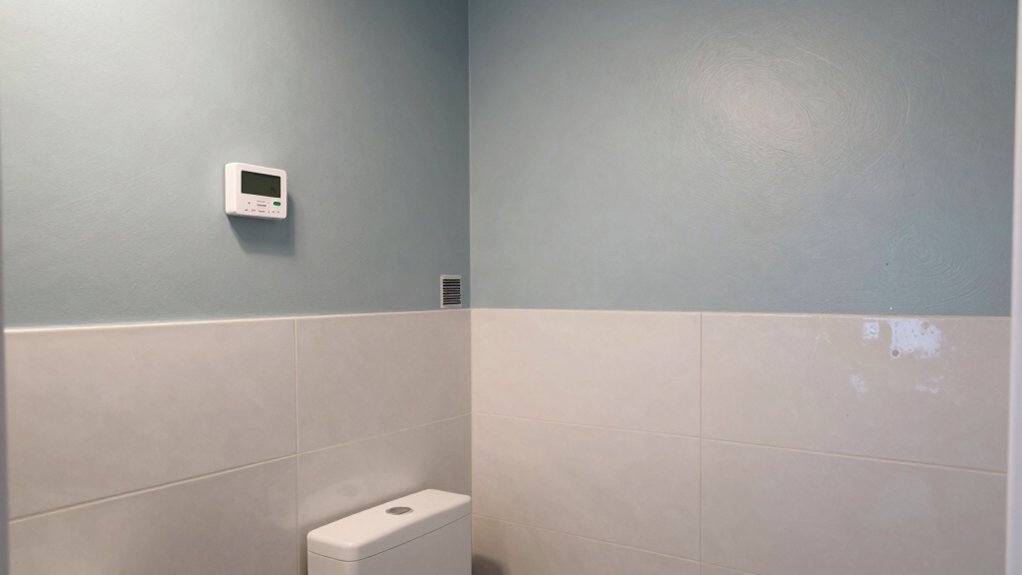
Keeping a dim bathroom fresh and moisture-friendly starts with smart airflow and steady moisture control. You optimize the layout for air movement: a exhaust fan that runs long enough after showers, and a vent placement that promotes cross-ventilation.
Pair this with a consistent ceiling-height curtain or frosted glass, reducing steamy hotspots. Choose mold resistant paints on walls and trim to deter lingering humidity; their inhibitors keep pigment bonds intact and washability high.
Maintain a steady cleaning cadence focused on corners where moisture collects, using a quick wipe-down after every use. For storage, keep towels to a minimal, breathable rotation and avoid overstuffed cabinets.
Incorporate ventilation tips into daily routines, and you’ll sustain a brighter, healthier bathroom with less mildew risk.
Practical Palette Ideas That Energize Without Overwhelming
You’ll brighten a small bath by pairing warm neutrals with crisp whites for a cozy, airy vibe. Add depth with reflective finishes that bounce light off mirrors and glossy tiles without shouting.
This balance keeps the space energizing yet calm, so you feel awake without overwhelm.
Brighten With Warm Neutrals
Warm neutrals create a bright, inviting bathroom without overpowering the space, so you can enjoy a clean, cohesive look that reads warm and airy. You’ll lift the room with soft ivory, warm beige, and pale gray tones that reflect available light from fixtures you choose.
Pair them with lighting fixtures that cast an even, flattering glow, avoiding harsh shadows. Keep wall art minimal and cohesive to preserve openness while adding personality.
Use matte finishes on walls and bright accents on accessories to prevent flatness. Consider a shallow color gradient from vanity to shower that adds depth without crowding.
Balance warmth with crisp whites in trim and cabinetry to sharpen edges. Subtle texture, like linen or plaster, enhances depth without noise.
Reflective Finishes for Depth
Reflective finishes bounce light around a small bathroom, creating depth without adding clutter. You’ll want surfaces that subtly glow without glare, so choose paints with a soft sheeny finish or a satin glaze on cabinetry. Use it strategically: a light wall color with a glossy countertop edge mirrors brightness, while matte tiles keep balance.
Introduce decorative trim sparingly to frame mirrors or niches, letting their shine draw the eye upward and add architectural interest. Pair reflective walls with compact wall art featuring clean lines to avoid visual noise. Consider a glass or acrylic shower panel to bounce more light, not block it.
Keep clutter down, allow negative space, and let the reflective accents guide the eye through the room’s scale.
Conclusion
You step into a compact bathroom and feel the space expand like a breath of light. With gleaming white walls catching every hint of glow, color whispers instead of shouting. Satin finishes reflect softly, shadows soften, and warm whites dance with cool neutrals to carve calm corners. A few bright accents pirouette on the tile, while moisture stays tucked in check. Your design, precise and practical, turns a tiny room into a bright, breathable haven.