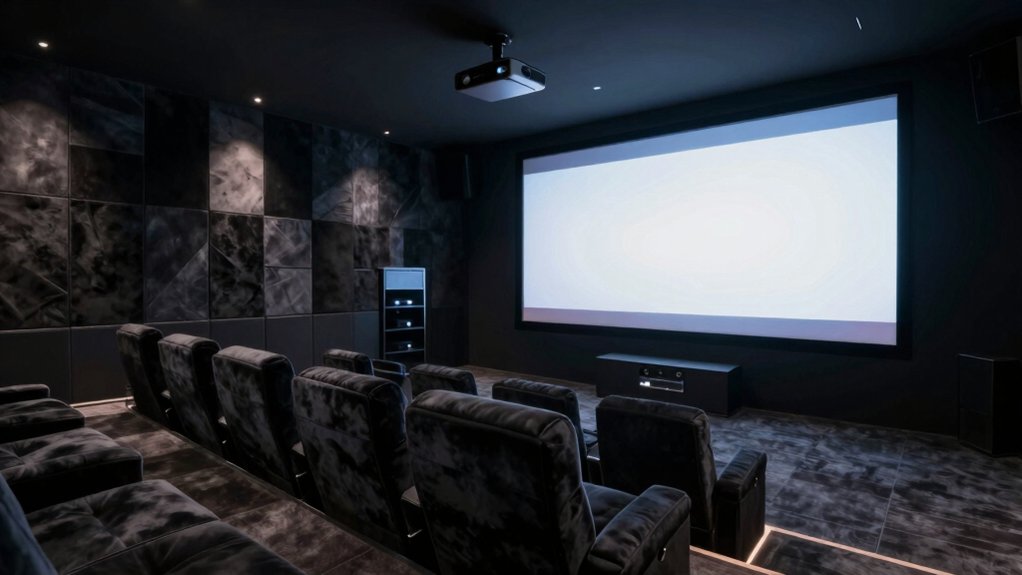
Designing your home theater starts with a precise plan that aligns room geometry, seating, acoustics, and display placement for immersive, distortion-free cinema. You’ll optimize sightlines with tiered seating and firm, comfortable chairs, while panels, diffusers, and absorbers shape the acoustic space. Choose a display and projector that match brightness, contrast, and throw distance, then wire for clean upgrades and scalable sound. Layered lighting guides attention without glare, setting the stage for future enhancements and cinematic realism you’ll access as you proceed.
Planning Your Space for a Home Theater
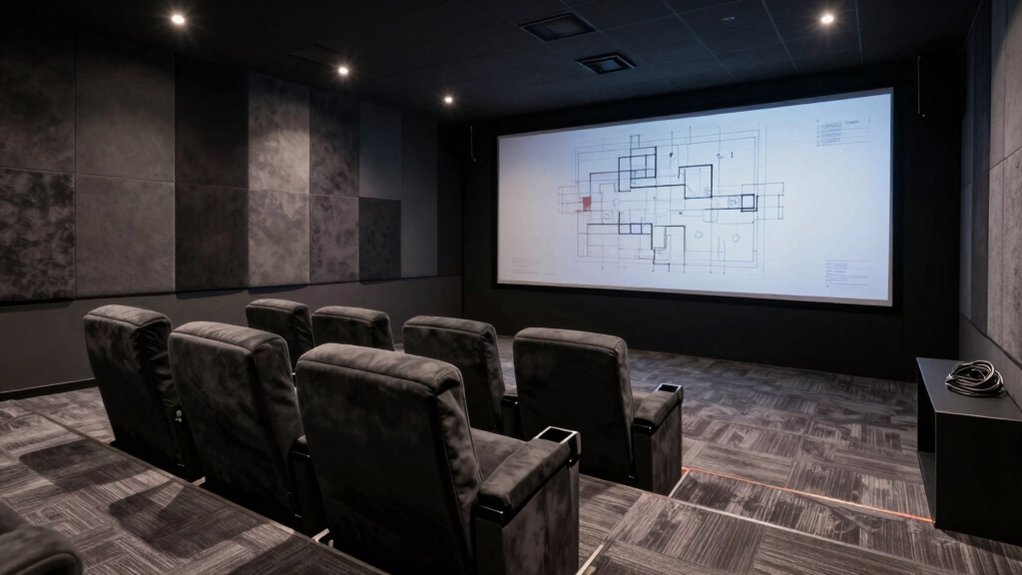
Planning your space for a home theater means aligning room geometry, seating, acoustics, and sightlines upfront so you can maximize immersion without costly retrofits. You design around fixed dimensions, doorways, and stair access to minimize disruption later.
Start with speaker and screen placement that preserve natural listening angles and center-image alignment, ensuring even coverage across the seating area. Choose acoustic panels to manage reflections without creating dead zones, and specify projector screens with gain, curvature, or masking that suits your room’s brightness and contrast targets.
Define airflow, cable routing, and isolation strategies to reduce vibration transfer. Document reference measurements for future upgrades, keeping scalability in mind as you adopt brighter sources, higher contrast optics, and modular components.
This proactive planning slash-optimizes performance and flexibility.
Seating and Sightlines for Comfort and Immersion
Seating and sightlines are the backbone of immersive home theater design: the right chairs or sofas, aligned precisely with the screen, guarantee your eyes stay centered and your ears stay in the sweet spot. You enhance comfort by selecting seating with firm support and clear sightlines, avoiding encumbrances from armrests or legroom constraints.
Reclining chairs offer personalized elevation, preserving critical vertical angles without distracting motion. Position seating to achieve ideal angles: primary viewer, secondary seats, and boundaries that prevent glare or head turns. Use a tiered array when space permits, ensuring line-of-sight remains uninterrupted for every seat.
This approach aligns ergonomics with acoustically stable sightlines, delivering consistent immersion while maintaining accessibility and rapid reconfiguration for future content.
Acoustics, Lighting, and Room Treatment
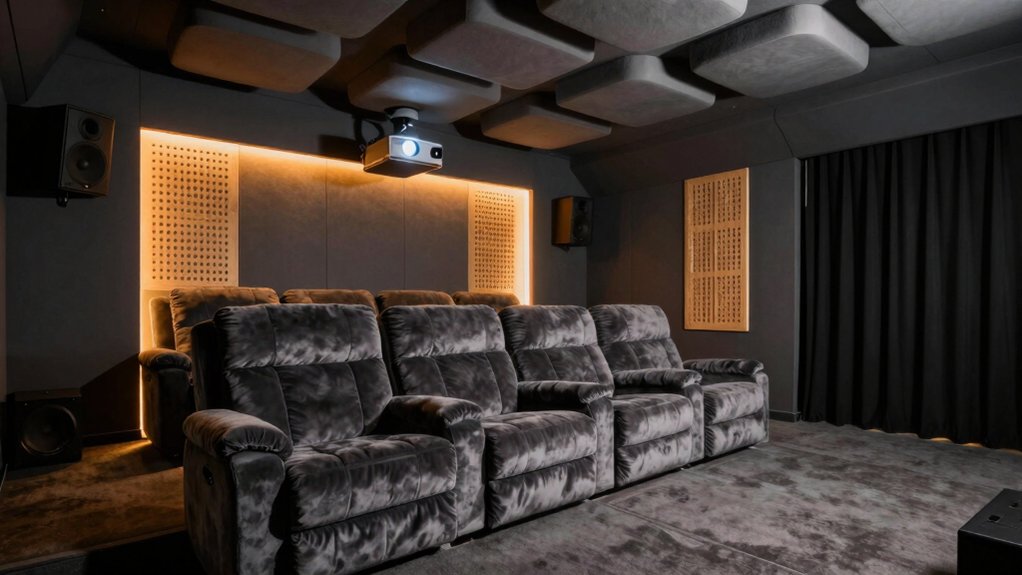
Acoustics, lighting, and room treatment form the technical core that transforms a room into a cinema. You shape sonic space by defining boundaries with soundproofing techniques, minimizing external transfer without compromising comfort.
Consider wall, floor, and ceiling details that reduce reflections while preserving intelligibility, so dialogue stays clear and immersive. Strategic acoustic panel placement becomes your primary tool: place absorbers where early reflections threaten immersion, and deploy diffusers to maintain a natural sound field across the spectrum.
Lighting should reinforce focus without creating glare or flicker, using layered cues that guide attention and preserve contrast. Control the room’s reverberation time to support film dynamics, music, and effects, ensuring consistent, studio-grade clarity.
Intentional treatment delivers stability, realism, and cinematic depth.
Choosing Equipment: Display, Sound, and Source
Choosing equipment for a home theater means matching display, sound, and source to your room’s dimensions and your viewing priorities, so you get immersive detail without waste. You’ll align display brightness, contrast, and throw distance with seating layout, ensuring pixel integrity and minimal eye strain.
For display, consider projector screens that fit your viewing angle and ambient light, then select a projector with color accuracy and native resolution that honors your source content.
Sound demands proper channeling: choose a surround sound layout that fills the room without overhang or distortion, and pair speakers with a compatible AVR for dynamic range and room calibration.
Source selection should preserve image fidelity and streaming reliability, enabling easy, high-quality access to content. End-to-end harmony access cinematic realism.
Budget-Friendly Upgrades and Smart Trade-Offs
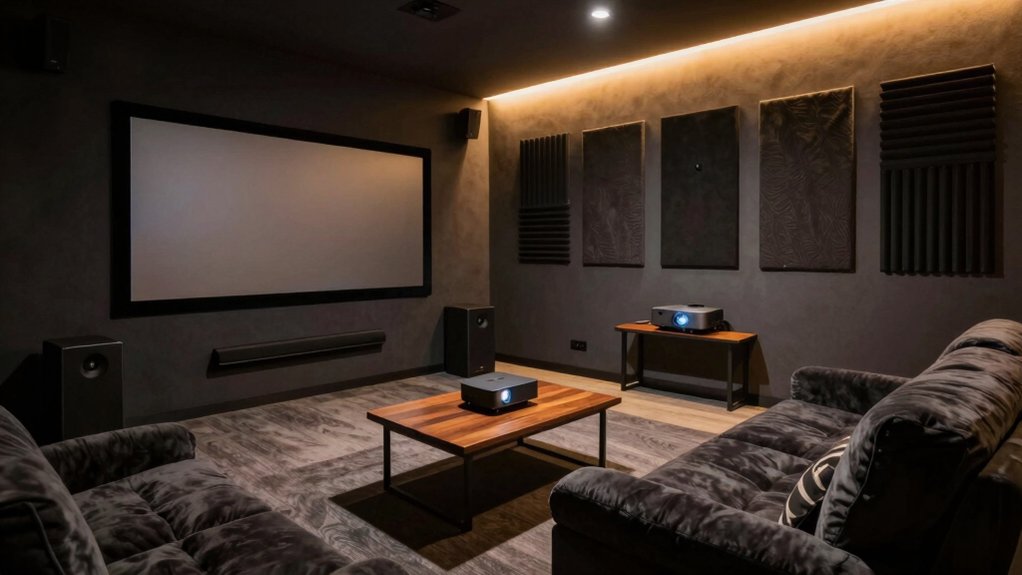
Smart, budget-smart upgrades let you elevate immersion without overhauling your room. You’ll optimize impact by prioritizing core components first, then layering efficiency through selective enhancements.
Focus on firmware updates, cable management, and calibration routines to squeeze performance from existing gear, reducing waste and downtime.
Leverage decorating accents to reinforce the room’s theme without distracting from the image, soundstage, or comfort.
Embrace technology integration thoughtfully: pair smart lighting with HDR-aware scenes, and use ambient sensors to auto-adjust brightness and color warmth.
When considering upgrades, compare cost-per-improvement, and pursue modular pieces you can rehome or reconfigure.
Trade-offs matter: accept smaller screens in favor of higher refresh consistency or better room acoustics.
In practice, document your decisions, measure results, and iterate for consistent, cinematic returns.
Conclusion
You’ll finish with a room that feels engineered for immersion, not just decorated for cinema. As you tune seating sightlines, you’ll notice acoustics aligning with lighting, like gears in a precise clock. The display and source converge, delivering crisp motion and rich detail. Coincidentally, the budget-friendly tweaks you adopted—smart, targeted, temporary—become long-term assets once you value space as sound, light, and art. In design, the coincidence is this: your theater isn’t a room; it’s an evolving system.