Looking for the best patio door security bar? Choose a top-rated option built from heavy-duty aluminum or steel with reinforced brackets to resist prying and lifting. Make sure it fits your track width and door type, offers solid locking points, and is easy to install without gaps. Opt for corrosion-resistant finishes and a clear installation guide. Regular maintenance keeps it strong. If you want more tips and a quick setup checklist, you’ll find them here.
Top-Rated Patio Door Security Bar Options
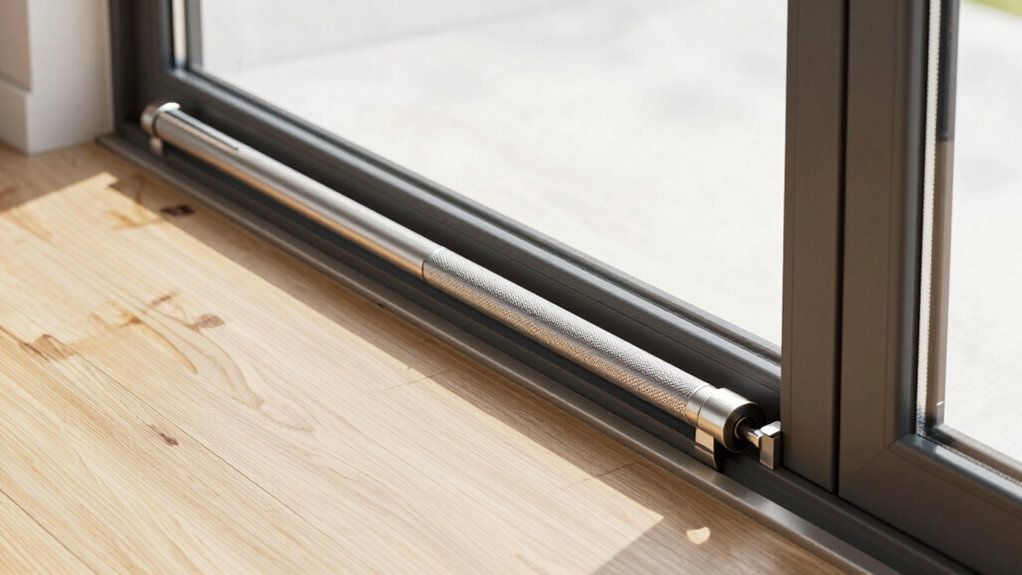
There are plenty of reliable options for securing a patio door, so you can choose a model that fits your door type and budget. Top-rated picks emphasize reliability, ease of use, and solid construction.
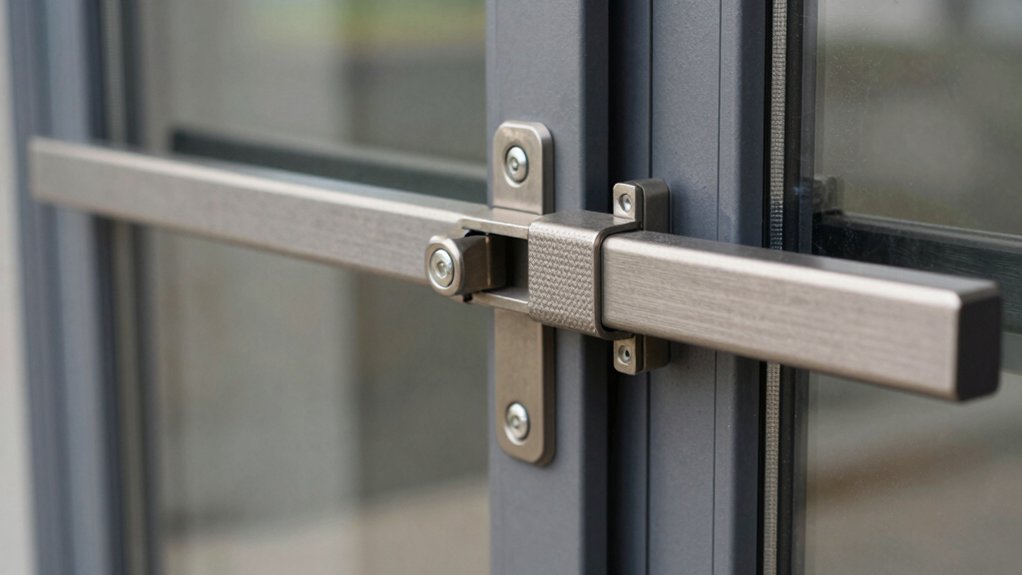
Look for materials like heavy-duty aluminum or steel, protected against corrosion, with reinforced brackets that resist prying. Consider plugs, anti-lift designs, and compatibility with your track system to ensure a snug fit.
For practical security, integrate window locks on nearby panes and a door reinforcement plate where the wall framing meets the door frame. This combination reduces leverage and long-term wear.
Prioritize models offering clear installation guides, tested performance, and a straightforward warranty to support durable, consistent protection.
How to Choose the Right Security Bar for Your Door
Choosing the right security bar starts with your door type and track system. First, confirm compatibility: measure track width, door height, and glass pane thickness, then match to a bar design (sliding, hinged, or removable).
Consider mounting options—surface-mounted for quick install, or flush-fitting for cleaner appearance. Evaluate installation ease, tool needs, and whether you’ll need additional hardware for secure anchoring.
Prioritize safety considerations: a bar should resist lifting, prying, and forceful entry while remaining operable from inside. Check adjustability to accommodate seasonal changes or different door configurations.
For aesthetic appeal, choose a finish that complements your door frame and patio area. Finally, assess warranty and replacement parts availability to ensure long-term reliability.
Key Features to Look for in Security Bars
Key features to look for in security bars include robust material, solid fasteners, and reliable locking mechanisms. You want bars that resist leverage attempts, resist corrosion, and maintain performance over time.
Prioritize steel or forged components with corrosion resistance and a proven attack-rated design. Look for multiple locking points or a high-security latch that won’t easily bypass.
Material thickness and weld quality matter, as does finish durability. Consider ease of use: smooth operation, minimal play, and clear signs of alignment when engaged.
For households with children, prioritize child safety—bars should deter tampering yet not pose pinch hazards.
Aesthetic appeal matters too, so choose a discreet finish that blends with your door frame while delivering security you can trust.
In short, balanced strength, reliability, and user-friendly design.
Installation Tips for Maximum Security
To get maximum security from your patio door bar, start with a solid install that minimizes gaps and leverage points. Align the bar firmly against the door frame and floor, and test each joint for tight fit before tightening. Use the correct mounting hardware for your door type, and verify screws seat cleanly without gap disruption.
Check that the bar’s extension is cinched to remove play, then chamber it against the door edge for a solid lock. Maintain consistent pressure across the bar to prevent shifting during impact.
Consider decorative designs or color options that blend with your décor without compromising strength. Remember, replace worn components promptly and avoid over-tightening, which can strip fittings and reduce security.
Maintenance and Longevity of Patio Door Bars
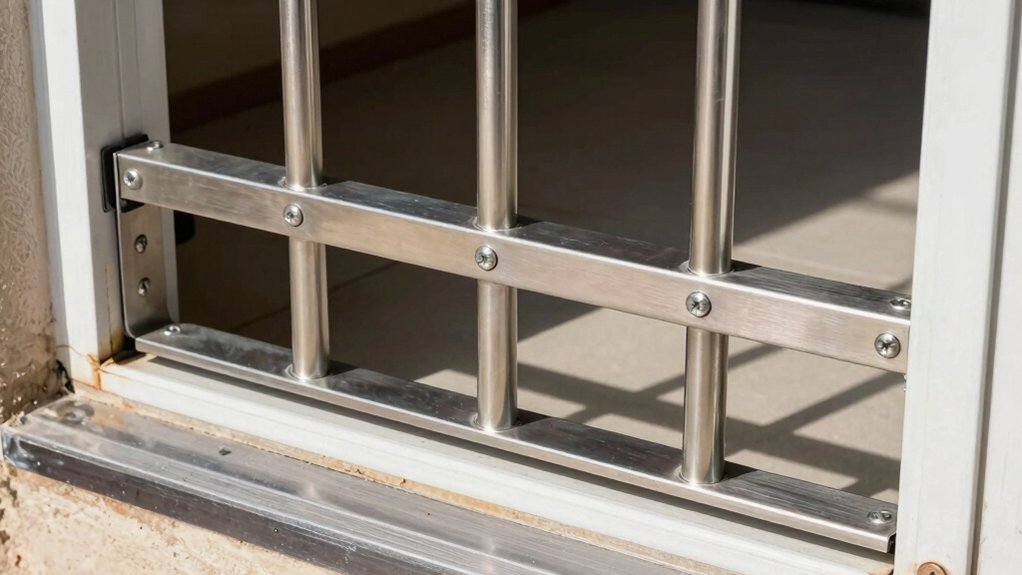
Regularly inspect your patio door bar for wear and looseness, and address any rust or deformation before it affects security.
Follow a maintenance schedule that includes cleaning, lubrication, and tightening fasteners to maximize durability.
Durability Tips
Durability starts with proper installation and routine checks. When you bolt the bar correctly and test its fit, you’ll reduce wear and prevent looseness over time. You should confirm the bar aligns with the door frame, and verify the locking mechanism engages fully without binding.
Inspect mounting screws and brackets for corrosion or bending after heavy use, and tighten as needed. Choose hardware that tolerates daily stress and temperature shifts, rather than cheap components that fail early.
Weather resistance matters; select finishes that resist rust and fading, and ensure seals stay intact to prevent moisture intrusion. Material quality influences longevity, so prefer reinforced steel or high-grade alloys with corrosion-resistant coatings.
Regularly clean tracks and contact points to maintain smooth operation and maximize overall durability.
Maintenance Schedule
Establish a simple, proactive routine to keep your patio door bar effective and long-lasting. Schedule monthly checks to verify alignment, tighten any loose screws, and confirm that the bar still fits securely under the handle plate.
Wipe down the bar with a damp cloth to remove dust, grime, and corrosive residues, then dry completely to prevent rust.
Inspect the locking mechanism for smooth operation; lubricate with a silicone-based lubricant if needed, and avoid oil-heavy products that attract dirt.
Track wear on contact points and replace components before failure.
Consider patio door aesthetics when positioning the bar for minimal visibility, and compare security bar pricing to balance cost with performance.
A disciplined maintenance schedule extends longevity and preserves reliability.
Security Bar Safety and Performance Verification
You’ll start with safety verification methods to confirm that your security bar performs as claimed under real-world conditions.
We’ll outline clear performance testing metrics, including load, impact, and endurance thresholds, so you can compare products confidently.
This discussion sets the foundation for practical checks you can perform before, during, and after installation.
Safety Verification Methods
Safety verification methods guarantee a security bar actually holds up under real use. You validate performance by simulating typical door strains: applied force, leverage attempts, and slider impact at sundry angles. You should document consistent engagement across door frames of different materials and weathered thresholds.
Use standardized tests that mirror home conditions, then compare results against manufacturer specs and safety standards. You check for hardware integrity, corrosion resistance, and ease of installation under repeated use, noting any looseness or misalignment.
You also assess supplementary features, like alarms and indicators, to ensure reliable signaling without nuisance activations. Alarm sensors and Glass breakage considerations are reviewed to confirm alerts trigger promptly when abnormal events occur.
Conclude with a concise, audit-ready report highlighting verified strengths and any residual risk.
Performance Testing Metrics
To quantify how a security bar performs in real use, you’ll apply standardized testing metrics that mirror door strain, leverage attempts, and impact scenarios across typical home conditions.
You’ll measure static load tolerance, dynamic force during a lever pull, and misalignment resistance to reflect door/frame flex.
Track cycle durability by repeated application and withdrawal to simulate daily use without degradation.
Assess intrusion indicators under variable temperatures and humidity to ensure consistent performance.
Include alarm sensors that respond to excessive movement and tamper alarms that trigger if mounting hardware is loosened or displaced.
Document pass/fail criteria for each metric, and establish a clear safety margin above expected household loads.
Consolidate results into a concise verification report you can reference during product selection and installation checks.
Conclusion
You’ll notice how the right security bar quietly reinforces your routine, almost like a trusted neighbor keeping an eye on things. When you skip the fancy claims and focus on fit, ease of use, and solid materials, peace of mind shows up right where you live. Coincidence nudges you: a sturdy bar fits your door, a simple install saves time, and reliable performance prevents surprises. Choose practical, prioritize safety, and your home feels safeguarded, day after day.