Sustainable landscaping lowers your water bills, chemical use, and plant replacements by matching site-adapted native plants to your sun, soil, and drainage. You’ll irrigate by hydrozones and evapotranspiration, often with drip and smart controllers, so plants get only what they need. Compost and 2–3 inches of mulch improve infiltration, reduce evaporation, and suppress weeds. Layered, dense plantings extend bloom and boost beneficial insects, cutting pest pressure. Next, you’ll see how to start quickly.
What Is Sustainable Landscaping?
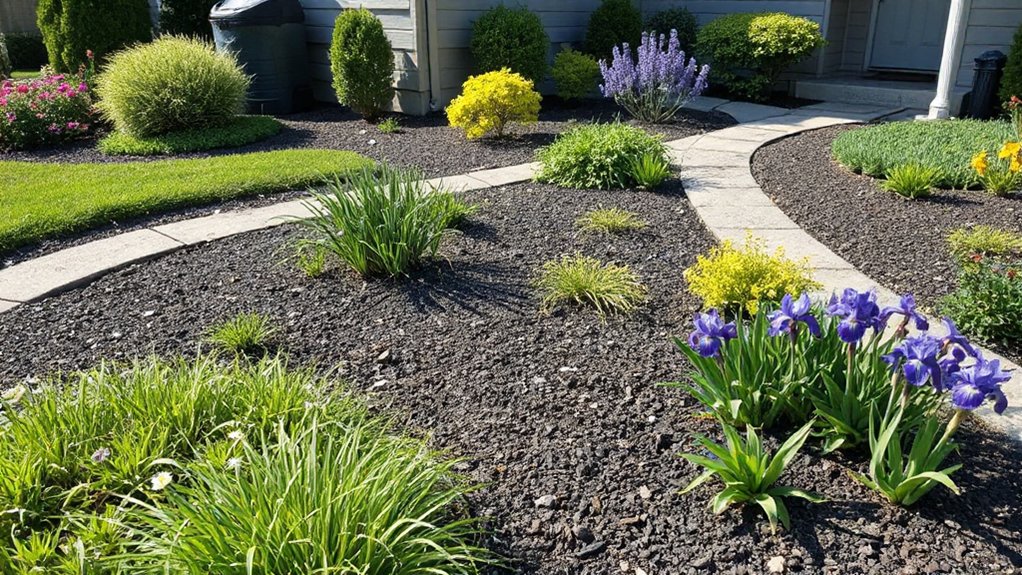
Although “green” landscaping can mean different things in different climates, sustainable landscaping has a specific goal: you design, install, and maintain an outdoor space that meets your functional needs while minimizing water use, chemical inputs, and energy demand.
You start with a site assessment—sun, soil texture, drainage, and existing vegetation—so plant selection and irrigation match actual demand rather than habit. You specify native or well-adapted species, increase soil organic matter, and use mulches to reduce evaporation and suppress weeds.
You right-size turf and apply mowing techniques that keep blades higher to shade soil and cut runoff. You choose targeted, least-toxic pest controls and schedule maintenance around growth cycles.
Even Garden decor fits: you select durable, low-impact materials that don’t require frequent replacement.
A Quick Checklist of Core Principles
Use this quick checklist to verify your landscape plan meets measurable sustainability criteria:
Prioritize native plant selection to reduce inputs while supporting local habitat.
Implement efficient water management with hydrozoning, drip irrigation, and ET-based scheduling so you cut demand without sacrificing performance.
Maintain healthy soil practices—compost integration, mulching, and minimal disturbance—to improve infiltration, nutrient cycling, and long-term resilience.
Native Plant Selection
When you choose plants that evolved in your region’s soils and climate, you reduce irrigation demand, stabilize long-term performance, and support higher local insect and bird biomass compared with non-native palettes. Build your shortlist from local ecotype sources, then match species to site constraints: light, soil texture, pH, compaction, salt, and heat exposure.
Prioritize structurally diverse layers—canopy, understory, shrub, forb, and bunchgrass—so you increase habitat function and resilience to pests. Specify staggered bloom windows and seed/berry set to extend seasonal color while maintaining pollinator continuity.
Use garden art as focal structure, then let native masses provide texture and phenology rather than high-input annuals. Verify mature size, root architecture, and maintenance tolerances, and document substitutions to prevent “near-native” swaps in procurement.
Efficient Water Management
Native plant palettes cut baseline water demand, but you’ll still get the best performance by managing water with the same rigor you apply to species selection.
Start with a site water budget: map hydrozones, note sun/wind exposure, and match irrigation to actual plant needs. Install high-efficiency delivery (dripline, pressure regulation, check valves) and schedule by evapotranspiration, not the calendar; add smart controllers and flow sensors to catch leaks fast.
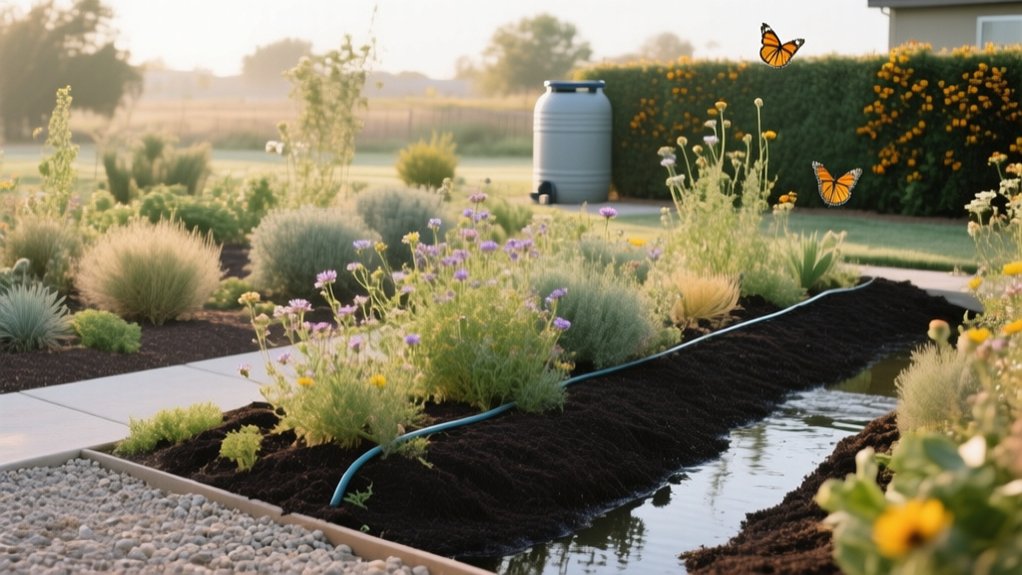
Use Rainwater harvesting via cisterns or rain barrels to offset potable use and buffer peak demand.
Apply Xeriscaping essentials: minimize high-water turf, prioritize dense planting in low-demand zones, and direct runoff with grading and swales to reduce loss.
Track meter data monthly and recalibrate seasonally.
Healthy Soil Practices
How do you keep a “sustainable” landscape from backsliding into constant irrigation and fertilizer inputs? You start with soil: it’s the control point for water holding, nutrient cycling, and root resilience. Use this quick checklist to keep performance high and costs predictable.
- Soil testing: Sample by zone, track pH, EC, OM, and key nutrients; base inputs on targets, not habit.
- Organic amendments: Add screened compost or biochar as indicated; calibrate rates to OM deficit and salt risk.
- Compaction control: Limit traffic, aerate when needed, and protect with mulch to improve infiltration and gas exchange.
- Living cover: Use deep-rooted plants or cover crops to feed microbes, reduce erosion, and stabilize structure year-round.
Homeowner Benefits: Less Work, Lower Bills
A well-designed sustainable landscape cuts your ongoing workload and operating costs by reducing irrigation demand, fertilizer dependency, and frequent mowing. You’ll spend less time troubleshooting stressed turf because drought-tolerant plantings and thicker mulch slow evaporation and suppress weeds.
Drip irrigation and smart controllers deliver water at the root zone, trimming waste and lowering utility bills. Slow-release, organic amendments stabilize nutrient availability, so you don’t need frequent applications or corrective treatments.
You’ll also reduce labor by swapping high-input lawn areas for groundcovers and native beds that require fewer cuts and less edging. Durable hardscape and strategically placed Garden art limit trampling and replanting.
Choose reusable seasonal decorations that don’t disturb soil, so maintenance stays predictable year-round.
Start With a Simple Site Check (Sun, Slope, Soil)
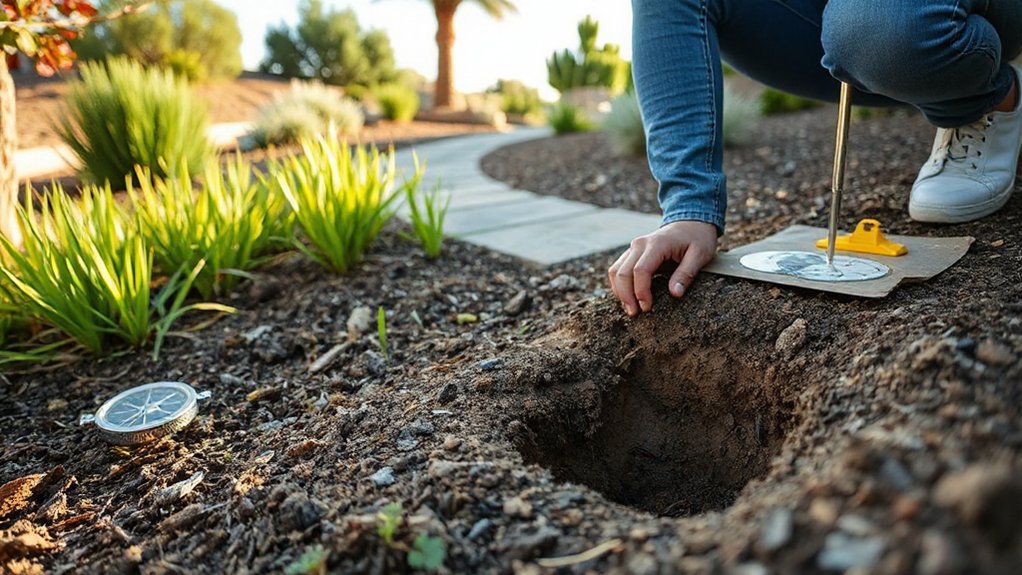
Before you buy plants or adjust irrigation, run a quick site check that maps sun exposure, slope-driven drainage, and soil condition, because those three factors predict most landscape successes and failures. You’ll reduce waste, prevent runoff, and protect Garden aesthetics through seasonal shifts by matching inputs to actual site limits. Document findings and use them to set realistic maintenance expectations and performance targets.
- Sun: Track hours of direct light by zone; note summer vs. winter shadows from buildings and trees.
- Slope: Identify flow paths, ponding areas, and erosion points after rain; flag hardscape edges that channel water.
- Soil: Perform a jar test for texture and a simple infiltration test; check compaction with a screwdriver.
- Constraints: Mark utilities, root zones, and high-traffic areas to avoid costly rework later.
Choose Native Plants That Fit Your Yard
Next, you’ll choose native plants that match each yard microclimate—sun and heat exposure, soil moisture, wind, and drainage—so they establish faster and need fewer inputs.
When you prioritize species native to your region, you’ll typically reduce irrigation, fertilizer, and pesticide demand because they’re adapted to local conditions and pests.
You’ll also support local pollinators and improve long-term landscape resilience with less maintenance.
Match Plants To Microclimates
Where does your yard hold heat, trap moisture, or stay windy—right up against a south-facing wall, in a shaded swale, or along an exposed corner? When you align plants to these micro-conditions, you reduce irrigation demand, winterkill, and replacement costs.
Start with Microclimate mapping: track sun hours, reflected heat, drainage rate, and prevailing winds across seasons. Then select species by Plant adaptability so each zone gets the right tolerance range, not a “one-size” palette.
Use this quick workflow:
- Measure soil moisture after rain at 24 and 72 hours.
- Log summer afternoon surface temps near hardscape.
- Note frost pockets and snowmelt timing.
- Group plants by water, light, and wind thresholds.
You’ll get higher survival rates and steadier performance.
Prioritize Regional Plant Species
Because regional native plants evolved under your area’s temperature swings, rainfall patterns, and local pest pressure, they typically establish faster and need less supplemental irrigation, fertilizer, and chemical intervention than non-adapted ornamentals.
When you prioritize Regional flora, you’re aligning plant physiology with local soils, photoperiod, and drought cycles, which lowers replacement rates and maintenance costs.
You’ll also improve habitat function: native host plants support local fauna such as pollinators and beneficial predators, helping stabilize pest populations without broad-spectrum sprays.
Choose species with documented local provenance, then cluster by water use and sun exposure to keep irrigation zones efficient.
In your planting plan, mix grasses, forbs, and shrubs to build layered structure, boost infiltration, and reduce erosion while keeping year-round resilience.
Design for Pollinators, Birds, and Beneficial Bugs
Although pollinators, songbirds, and predatory insects thrive in different niches, you can support all three by specifying layered, diverse plantings that deliver season-long nectar and pollen, seed and berry resources, and safe nesting or overwintering habitat.
You’ll get measurable gains in visitation, pest suppression, and breeding success when you connect patches and reduce disturbance.
- Map Pollinator corridors that link sunny beds, meadows, and flowering shrubs within typical flight ranges.
- Specify staggered bloom windows (spring ephemerals to late asters) and include host plants for larvae.
- Add Bird friendly nesting structure: thorny shrubs, dense evergreens, and snag-safe perches, away from foot traffic.
- Reserve “beneficial zones” with leaf litter, hollow stems, and minimal night lighting to protect nocturnal insects and bats.
Build Healthier Soil (and Why It Matters)
When you build healthier soil, you upgrade the entire landscape system—from root growth and nutrient cycling to water infiltration and drought tolerance. You’ll see stronger plants because aggregated soil improves oxygen diffusion, supports mycorrhizae, and buffers pH swings that limit nutrient uptake.
You also cut Soil erosion by increasing stable structure and surface roughness, which slows runoff and helps particles stay put during storms. Instead of relying on quick-fix fertilizers, you can monitor organic matter, compaction, and infiltration rate, then adjust irrigation and traffic patterns to protect pore space.
For biological performance, apply Compost tea strategically to inoculate leaf and rhizosphere surfaces, supporting competitive exclusion and faster residue breakdown. The payoff is measurable: fewer disease flare-ups, tighter water budgets, and landscapes that recover faster after heat or heavy rain events.
Compost and Mulch: The Easiest Upgrades
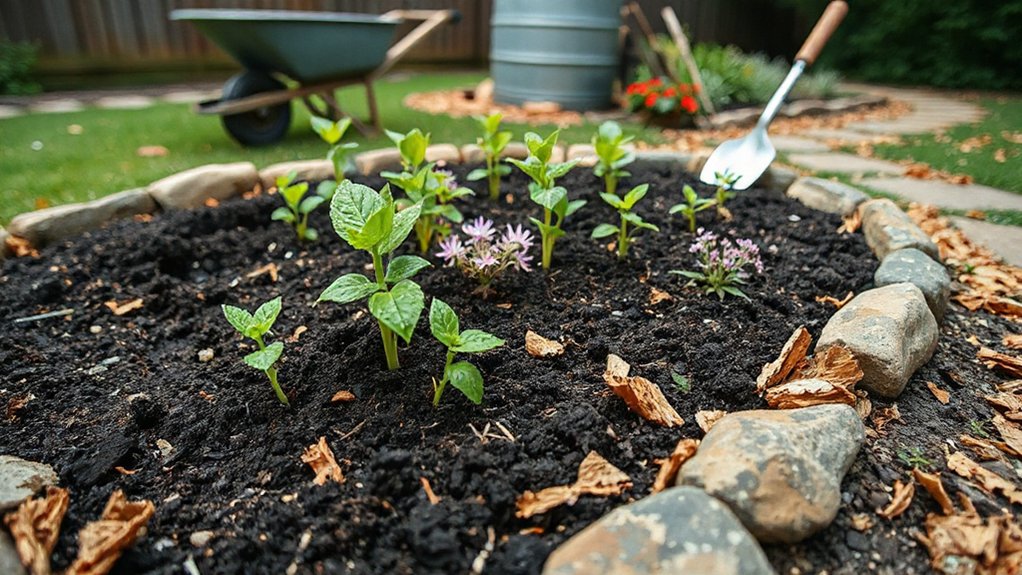
You can upgrade your landscape fast by adding nutrient-rich compost that increases soil organic matter and improves nutrient availability for stronger root growth.
You’ll also get measurable water savings when you top-dress with mulch, which reduces evaporation and stabilizes soil temperature for better moisture control.
With the right mulch depth, you suppress weed germination and protect soil structure from erosion and compaction.
Nutrient-Rich Compost Benefits
Because compost delivers slow-release nutrients while improving soil structure, it’s one of the highest-ROI upgrades you can make in a sustainable landscape. You strengthen nutrient cycling by returning stabilized organic matter and balanced minerals to the root zone, which supports steady growth without fertilizer spikes. Compost quality matters: you’ll get better results when inputs are mature, screened, and free of herbicide residues and plastics.
- Increases cation-exchange capacity, improving nutrient retention and reducing leaching.
- Feeds microbial communities that mineralize nitrogen and phosphorus on demand.
- Buffers soil pH and salinity, lowering plant stress and improving uptake efficiency.
- Adds humic substances that improve aggregation, aeration, and root penetration.
Apply a thin layer and incorporate lightly to avoid smothering crowns and to target active roots.
Mulch For Moisture Control
Although irrigation schedules can compensate for dry weather, mulch controls moisture at the soil surface more efficiently by reducing evaporation, moderating temperature swings, and improving infiltration during heavy rain.
When you apply a 2–3 inch layer of coarse, organic mulch, you create a porous cap that slows vapor loss and buffers soil heat, so roots experience steadier moisture conditions. These mulch benefits translate to measurable moisture retention: soil stays within a tighter water-potential range, which reduces plant stress and improves nutrient uptake efficiency between watering cycles.
You’ll also see less surface crusting and better infiltration rates because mulch dissipates raindrop impact and keeps soil aggregates intact. Use arborist chips, shredded bark, or leaf mulch, keep it off stems, and refresh annually to maintain performance.
Weed Suppression And Protection
Moisture stability from a proper mulch layer also changes weed dynamics at the soil surface. You’ll block light, reduce germination pulses, and protect aggregate structure from crusting and erosion.
Pair mulch with finished compost to improve cation exchange and support competitive, deep-rooted ornamentals, so weeds lose niche space. Use compost as a slow-release input alongside Organic fertilizers, reducing soluble nitrogen spikes that favor annual weeds.
Keep mulch off stems to prevent rot and maintain gas exchange; 2–3 inches is typically effective in managed beds.
- Sheet-mulch over moist soil to smother existing seedlings.
- Edge beds to stop rhizome creep from turf.
- Spot-hand-weed before seed set; you’ll cut the seedbank.
- Leave mulched strips as wildlife corridors, but monitor invasives.
Shrink the Lawn Without Losing Curb Appeal
Even if you’re aiming for a more sustainable yard, you don’t have to keep a wall-to-wall turf lawn to maintain strong curb appeal. Start by mapping how you actually use the space, then keep turf only where it supports play, pets, or clear sightlines.
Replace low-function strips and hard-to-mow corners with Lawn alternatives such as native groundcovers, clumping grasses, or mulched planting beds to cut mowing time, fuel use, and fertilizer demand.
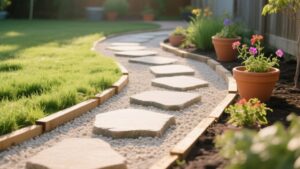
Define edges with steel, stone, or brick so the design reads intentional from the street. Use repetition—one to three plant palettes—so smaller lawns still look cohesive.
Add focal points like Garden art, boulders, or a bench to anchor views and distract from reduced turf.
Water-Wise Landscaping Basics (Planting + Timing)
When you match planting choices to seasonal rainfall and local heat patterns, you can cut irrigation demand dramatically without sacrificing performance. Schedule installation for fall or early spring so roots establish before peak evapotranspiration, improving survival rates and reducing replanting costs.
- Select region-adapted natives and climate-matched cultivars; they maintain turgor longer under heat stress and need less supplemental water.
- Group plants by moisture tolerance and exposure (sun, wind, reflected heat) to prevent chronic overwatering of low-demand species.
- Build soil water-holding capacity with compost and a 2–3 inch organic mulch layer to reduce evaporation and moderate soil temperature.
- Place Garden art and landscape lighting in low-planting zones so you don’t force high-water ornamentals just to “fill” focal areas.
Smart Irrigation: Drip, Zones, and Controllers
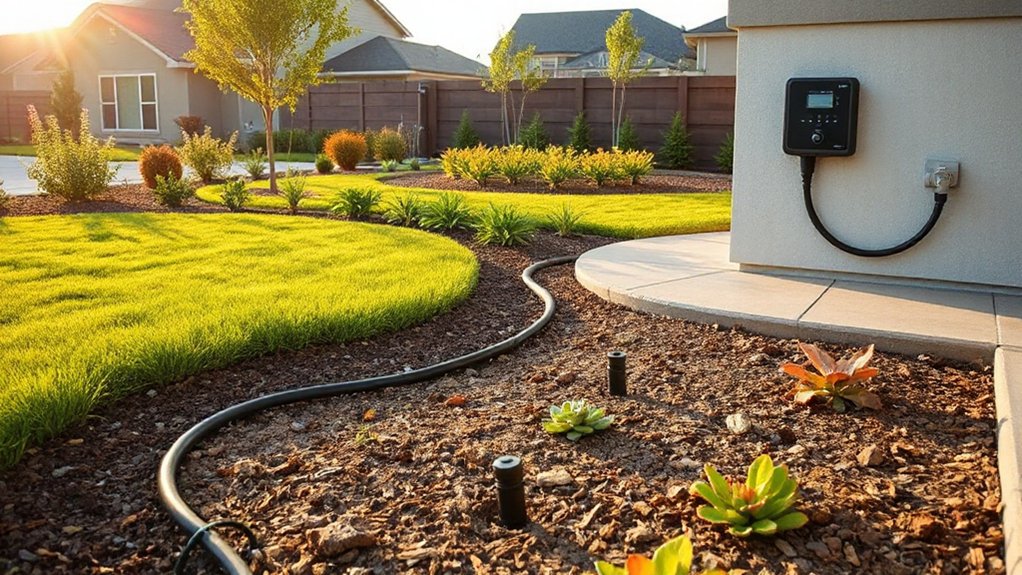
Although plant selection and soil prep reduce baseline demand, smart irrigation controls the remaining water budget with precision. You’ll get the best results by pairing drip lines with hydrozoned valves, so turf, shrubs, and beds receive different runtimes matched to root depth and soil infiltration.
Drip delivers water at low flow directly to the root zone, cutting evaporation and overspray, and it supports consistent soil moisture that reduces plant stress. Add Smart technology controllers that use local weather data, soil sensors, and flow monitoring to adjust schedules automatically and flag leaks.
You’ll meet Water conservation targets by setting cycle-and-soak, seasonal adjust, and pressure regulation, then verifying distribution uniformity with periodic catch-cup tests and emitter audits. This trims costs and protects plant performance year-round.
Rain Gardens and Bioswales to Slow Runoff
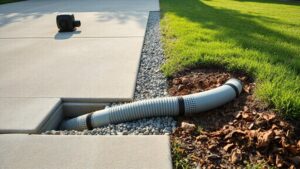
Because stormwater can overwhelm hardscapes and carry sediment, nutrients, and hydrocarbons into drains, you can use rain gardens and bioswales to slow, spread, and infiltrate runoff at the source.
With Rain garden design, you’ll size the basin to your contributing area, specify an engineered soil mix, and set an overflow to protect foundations.
With bioswale installation, you’ll shape shallow grades that convey water safely while promoting infiltration and sediment capture.
You can improve performance by:
- Conducting a simple infiltration test to confirm drawdown within 24–48 hours.
- Using check dams or level spreaders to reduce flow velocity.
- Selecting deep-rooted natives for pore formation and resilience.
- Adding pretreatment (gravel forebay) to intercept grit and simplify maintenance.
Cut Fertilizers and Pesticides With IPM
With integrated pest management (IPM), you cut fertilizer and pesticide use by monitoring pests strategically—tracking thresholds, scouting hot spots, and documenting trends before you treat.
You then match the response to the risk, prioritizing cultural and mechanical fixes and reserving targeted, low-toxicity products for verified problems.
You’ll protect plant health while reducing runoff pollution, non-target impacts, and long-term maintenance costs.
Monitor Pests Strategically
When you track pest pressure instead of reacting to every chewed leaf, you can cut pesticide and fertilizer use without sacrificing plant performance. Pest monitoring anchors an Integrated pest management program by showing whether pests are increasing, stable, or below action thresholds, so you don’t “treat the calendar.”
You’ll also document beneficial insects and plant stress signals that mimic pest damage, preventing unnecessary inputs. Build a repeatable field protocol:
- Scout on a fixed schedule and after weather shifts; record counts per plant or per trap.
- Map hotspots and note host species, irrigation issues, and nutrient symptoms.
- Use degree-day models and phenology cues to time inspections to vulnerable life stages.
- Report trend lines to clients, tying decisions to thresholds, aesthetics, and budget.
Use Targeted Low-Toxicity Controls
After your scouting data confirms a pest exceeds an action threshold, you can shift from broad, preventive sprays to targeted, low-toxicity controls that protect turf and ornamentals while reducing fertilizer and pesticide loads.
You’ll select the least disruptive tool first: sanitation, pruning, mulching, and irrigation tuning to remove favorable habitat and strengthen plants.
For insects, you can spot-treat with soaps, oils, or microbials (Bt) and conserve beneficials by treating only hot spots and timing applications to vulnerable life stages.
For weeds, you’ll prioritize mechanical removal, pre-emergent timing, and dense turf to improve Pest prevention.
You’ll also refine fertility using soil tests and slow-release inputs to avoid lush, pest-prone growth.
When needed, you’ll use Chemical alternatives and reduced-risk chemistries with calibrated equipment.
Prevent Weeds and Pests Through Plant Density
Although it may seem counterintuitive, increasing plant density is one of the most reliable ways to suppress weeds and reduce pest pressure without relying on routine chemical inputs. When you close canopy gaps, you limit light at the soil surface, disrupting weed germination and reducing evapotranspiration swings that stress ornamentals.
You’ll also stabilize microclimate, which can lower outbreak risk for some piercing-sucking insects by supporting predators.
- Set spacing to achieve 80–90% soil coverage within one growing season.
- Use Plant diversity to interrupt host-finding and slow pest movement.
- Apply Companion planting to recruit beneficials (e.g., alyssum for syrphids).
- Mulch lightly only where plants can’t yet shade soil.
You’ll get fewer invasive flushes and more resilient beds.
Design Tricks That Cut Weekly Upkeep
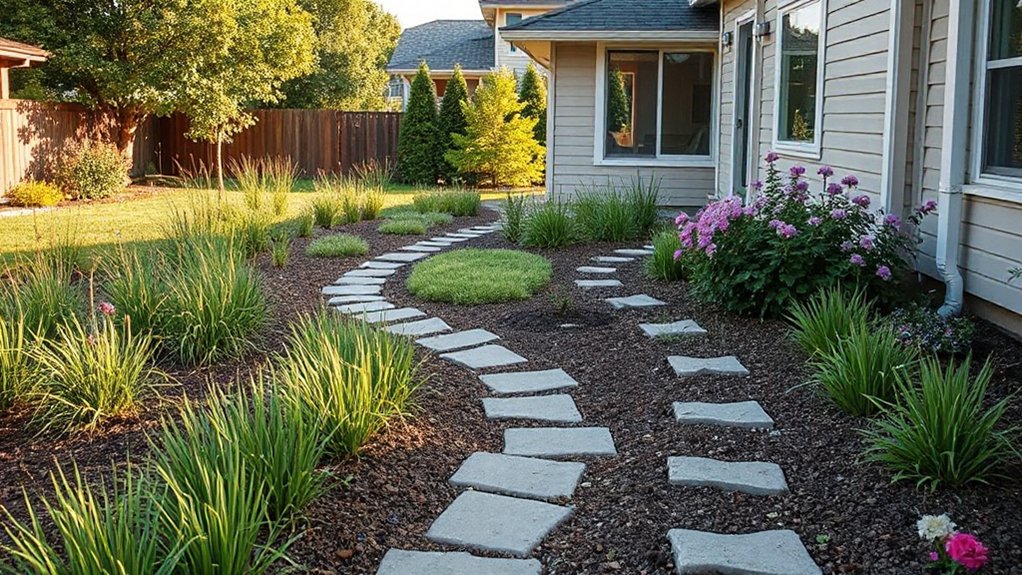
Dense planting already lowers weed pressure and pest flare-ups, but smart layout choices can cut your weekly labor even further. You’ll save minutes by widening primary paths to wheelbarrow width and edging them with steel or stone so turf can’t creep in. Specify drip irrigation with flush valves and zone by hydrozones, so you adjust one controller, not ten sprinklers.
Limit high-input turf to functional rectangles; avoid narrow strips that demand trimming. Place mulch rings and hardscape borders to eliminate string-trimmer work around trunks and beds.
Use slow-growing, drought-adapted perennials near entries where you notice clutter first. Anchor focal points with durable garden art so you don’t “fill gaps” with needy annuals.
Install outdoor lighting on timers to reduce hand-watering errors and nighttime trips.
Where the Savings Show Up Over Time
When you track costs across seasons instead of weeks, sustainable landscaping pays you back in lower water bills, fewer replacement plants, and reduced contractor hours. Your ROI becomes visible in utility data, plant survival rates, and labor logs, not just in how “tidy” beds look on Friday.
You also protect Landscaping aesthetics by stabilizing canopy cover, mulch depth, and edge definitions that reduce stress and bare soil.
- Irrigation efficiency improves as drip zones and soil organic matter increase infiltration and cut runoff.
- Plant losses drop when you match species to microclimates and use seasonal planting windows.
- Pruning and mowing hours decline with slower-growth natives and right-sized turf areas.
- Long-term inputs shrink because compost cycling reduces fertilizer demand and pest pressure.
A Weekend Plan to Get Started (Step-by-Step)
Those lower water bills and reduced labor hours don’t require a full yard overhaul—you can set up the foundations in a single weekend with a simple, measurable plan.
Saturday AM: run a 10-minute irrigation catch-can test, then fix leaks and set zones to water at dawn; you’ll cut evaporation losses.
Saturday PM: top-dress 2–3 inches of compost and mulch exposed soil to reduce runoff and suppress weeds.
Sunday AM: replace the thirstiest 10% of turf with region-native perennials; cluster by water need to simplify scheduling and support urban wildlife.
Sunday PM: install one rain barrel, label it, and add a simple garden art marker so you can track capture volume and maintenance dates.
Document inputs and compare bills monthly.
Frequently Asked Questions
What Permits or HOA Approvals Might Sustainable Landscaping Require?
You’ll often need Permitting requirements for grading, drainage changes, irrigation retrofits, tree removal, retaining walls, and rainwater systems. Navigate the HOA approval process for visible plant palettes, turf removal, hardscapes, fences, and landscape lighting.
How Does Sustainable Landscaping Affect Home Resale Value?
You’ll often boost resale value by lowering operating costs and signaling low-maintenance quality. Buyers notice Landscaping aesthetics and plant diversity, which can improve curb appeal and appraisal comps, especially where water-efficient designs reduce bills.
Which Sustainable Practices Work Best in Cold or Drought-Prone Climates?
In cold or drought-prone climates, you’ll get best results by prioritizing native plants, drip irrigation, and mulch for water conservation. You should reduce turf, improve soil organic matter, and capture runoff with rain barrels.
Are There Grants, Rebates, or Tax Credits for Eco-Friendly Yard Upgrades?
Yes—you can tap grants, rebates, or tax credits; they’re a funding compass. Check local water utilities and state energy offices; Eco friendly fertilizers and native plant selection often qualify. Document purchases, permits, and before/after photos.
How Can I Retrofit a Sustainable Landscape Around Existing Mature Trees?
Start with Tree preservation: fence the dripline, avoid grade changes, and keep compaction low. You’ll add Soil enhancement using 5–8 cm arborist wood chips, targeted aeration, and drip irrigation; plant shade-tolerant natives.
Conclusion
When you switch to sustainable landscaping, you’ll see measurable, month-to-month gains: reduced runoff, lower irrigation demand, and fewer chemical inputs. Start with your site scan, then select natives suited to sun, slope, and soil; plant densely to suppress weeds and stabilize soil moisture. These smart, seasonal systems deliver predictable performance with less mowing, minimal maintenance, and decreased utility costs. Stick with simple, science-backed steps, and your yard becomes resilient, resource-wise, and reliably refined.