Start by setting a clear budget that includes materials, fixings, delivery, and a 10–15% buffer, then list your non‑negotiables (safe paths, low‑maintenance beds, seating, bins/bike space). Measure your garden in metres, note sun and shade, and check drainage after rain. Tackle high-impact areas first: clear clutter, edge borders, loosen soil, and mulch 5–7cm. Add low-cost bedding, fast annual seeds, and a few hardy perennials, then finish with solar lights and simple DIY decor—keep going to see exactly what to prioritise next.
Set Your Garden Makeover Budget and Must-Haves
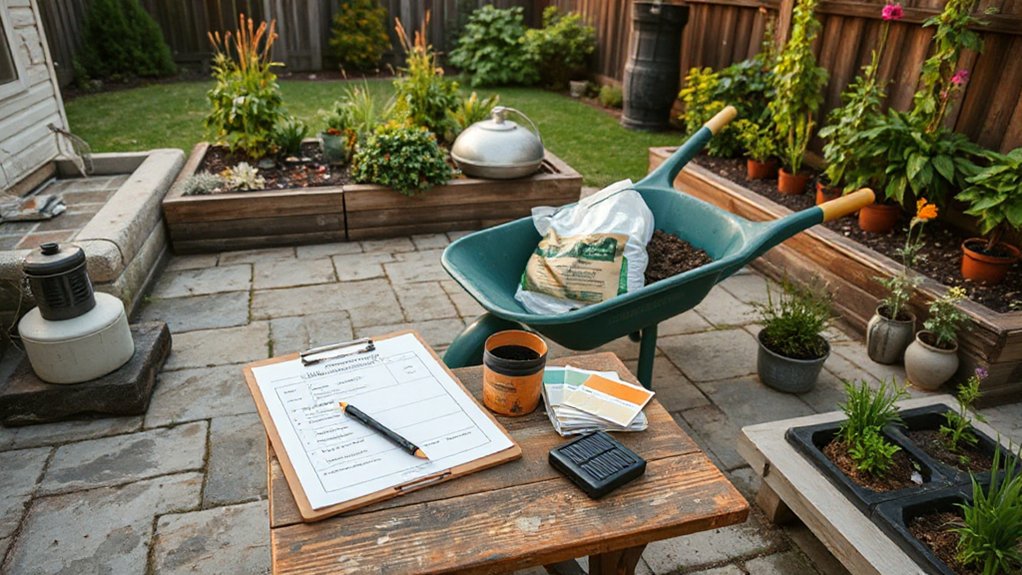
Before you buy anything, set a clear budget and decide what the garden must deliver for your household. List non-negotiables: safe paths, low-maintenance beds, a small seating spot, or space for bins and bikes.
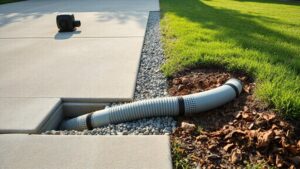
Measure the area in metres, note sun and shade, and check drainage after rain. Price up materials using UK retailers and local garden centres, then add 10–15% for screws, fixings, and delivery.
Track every line in a simple spreadsheet for solid garden budget planning.
Next, audit what you already own and borrow where possible. Prioritise essential garden tools: spade, hand trowel, secateurs, watering can, and a sturdy rake.
Confirm storage, green waste disposal, and any council rules before spending.
Pick High-Impact Garden Makeover Fixes First
Now that you’ve set your budget, measured up, and listed your must-haves, start with the fixes that change how the garden looks and works straight away. Focus on upgrades you’ll notice from the kitchen window and when you step outside, and choose options that suit UK weather and small plots. Prioritise value over volume, and buy second-hand where possible (Facebook Marketplace, Gumtree, local reclaim yards).
- Define a focal point: paint the fence, hang a mirror, or add a bold pot to draw the eye.
- Improve evening use: install solar garden lighting along paths and seating zones.
- Add movement and sound: try compact water features with a recirculating pump.
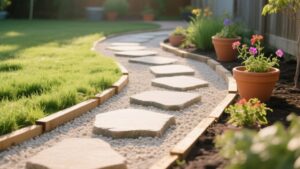
- Upgrade comfort: create a simple seating nook with gravel, slabs, and a windbreak.
Clean, Edge, and Refresh Soil for Instant Impact
Where can you get the biggest visual win for the least cash? Start by clearing clutter: lift fallen leaves, dead stems, and stones, then hose or sweep paths and patios.
Cut crisp edges along lawns and borders with a half-moon edging tool or sharp spade; it instantly makes beds look intentional.
Next, refresh the soil. Loosen the top 5–10cm with a hand fork, remove weeds by the roots, and break up compaction.
Do simple soil testing with an affordable kit from a UK garden centre so you don’t waste money on the wrong amendments; adjust pH with garden lime or sulphur only if needed.
Finish with tidy mulch application: spread 5–7cm of composted bark or well-rotted compost, keeping it off stems.
Choose Low-Cost Plants for Fast Fill and Color
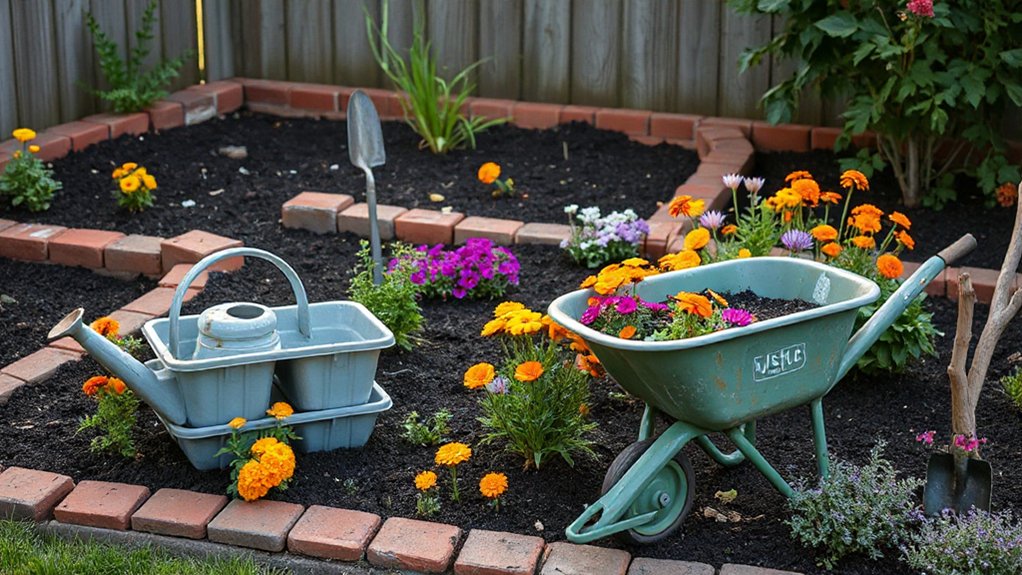
Fresh edges and a clean mulch layer make the garden look sharper straight away, but plants provide the quickest “wow” for the least money by filling gaps and adding colour at eye level. Focus your Plant selection on cheap, reliable fillers you can buy in small pots and bulk up over the season, keeping your Color schemes tight so it looks intentional, not random.
- Pick bedding multi-packs (violas, marigolds) for instant colour in borders and pots.
- Use fast annuals from seed (cosmos, nasturtium) to cover bare soil quickly.
- Add hardy perennials on offer (geranium, heuchera) for repeat value next year.
- Split and swap: divide clumps from friends’ gardens, then plant in drifts for impact fast.
Finish With DIY Garden Decor Using What You Have
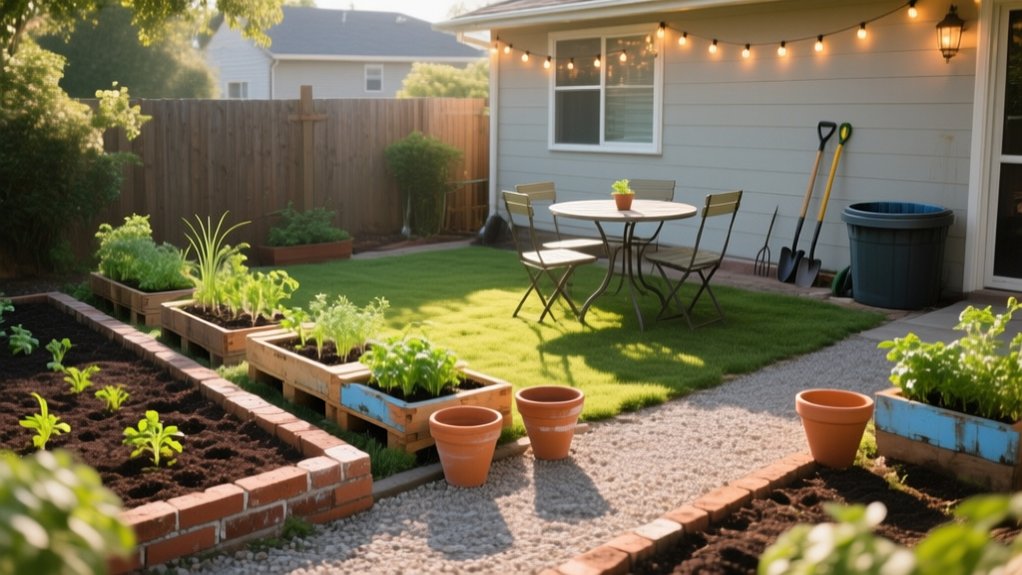
Once the planting’s in, you can lift the whole space with DIY decor made from things you’ve already got, rather than buying pricey “garden accessories”. Start by raiding the shed: spare terracotta pots become lantern holders, and old bricks edge beds neatly. Paint offcuts of exterior timber into simple signs, or mount a broken rake head as quirky garden art on a fence.
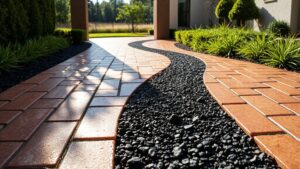
Use decorative stones from old planters or driveway gravel to define paths, top pots, or make a small dry stream; lay a membrane first so weeds don’t push through. Turn jam jars into tea-light holders with garden wire, and hang them from a pergola.
Finally, refresh tired furniture with leftover fence paint and a quick sand.
Frequently Asked Questions
What Are Common Gardening Mistakes That Waste Money During a Makeover?
You waste money by buying poor plant selection for your UK climate, skipping soil preparation, overwatering, ignoring drainage, planting too close, impulse-buying tools, and replacing plants instead of improving compost, mulch, and proper edging.
How Can I Reduce Water Bills While Improving My Garden’s Look?
Like a sponge catching every drop, you’ll cut bills by Rainwater harvesting with a water butt, mulching beds, and choosing drought tolerant plants. Add drip irrigation, water at dawn, and group pots by thirst.
Do I Need Permits or HOA Approval for Major Garden Changes?
You might need planning permission or HOA approval for major garden changes, especially walls, decking, or drainage. Check your council’s planning portal and HOA rules early, then align garden layout and plant selection accordingly.
What Tools Should I Rent Instead of Buying for a One-Time Project?
You should rent a rotavator, turf cutter, stump grinder, mini-digger, and plate compactor for one-off jobs. These Tool rental options provide Cost effective equipment; hire from UK shops like HSS, Jewson, or local yards.
How Do I Keep Pests Away Without Using Expensive Chemicals?
You’ll keep pests away like a fortress against invaders by using Natural pest control: hand-pick slugs at dusk, net brassicas, and encourage ladybirds. Try Companion planting—marigolds, nasturtiums, and chives—plus beer traps and copper tape.
Conclusion
You’ve proved a garden makeover doesn’t need a big spend—just a clear budget, a few high-impact fixes, and smart plant choices. If you’re thinking, “But UK weather will ruin it,” don’t worry: focus on hardy perennials, refresh soil with compost, and mulch well to lock in moisture and suppress weeds. Reuse pots, pallets, and edging to finish the look. Keep tweaking little by little, and your garden will stay fresh for less.