
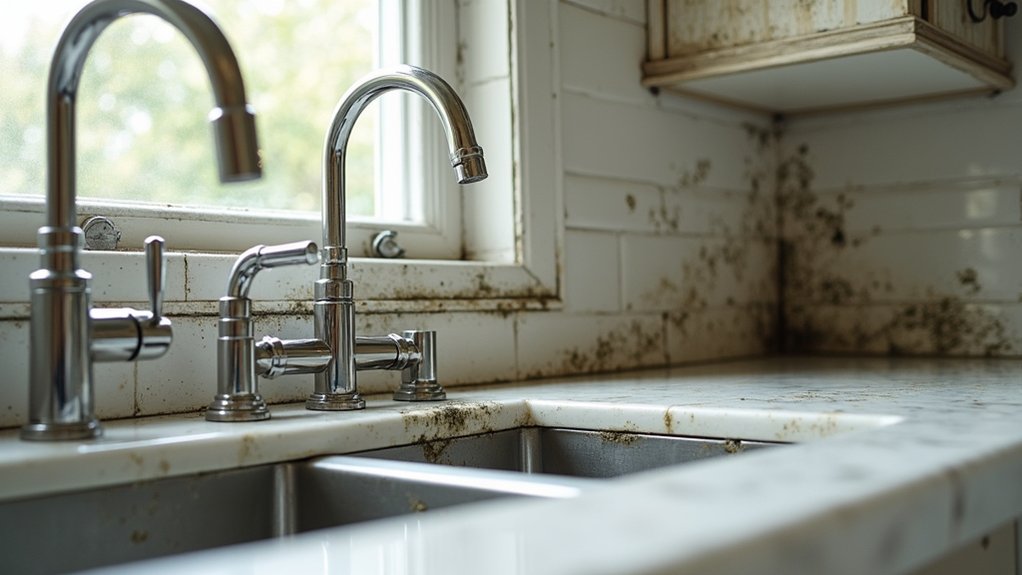
You’ll want to know what counts as a kitchen mold problem. Look for fuzzy or discolored patches on walls, ceilings, or grout, plus water stains or peeling surfaces, and note if you smell a persistent musty odor. Hidden damp spots behind appliances and under sinks are common clues, especially with leaks or condensation. If health symptoms pop up—sneezing, headaches, or irritation—you should investigate further and decide what steps to take next.
Am I Dealing With Kitchen Mold? Quick Symptom Checklist
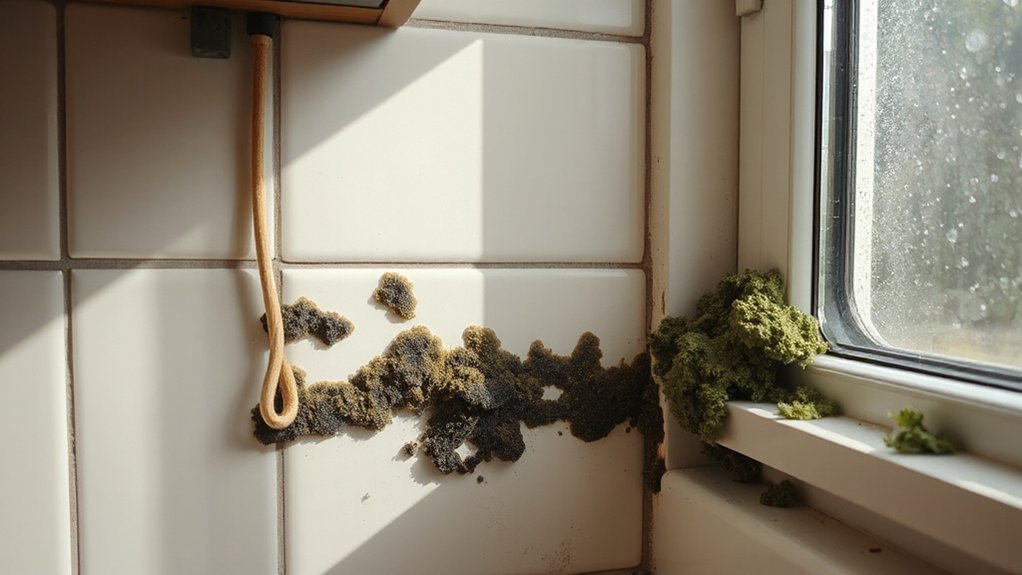
If you’re unsure whether you’re dealing with kitchen mold, start with a quick symptom check. You’ll notice consistent musty odors, visible spots, or staining on walls, cabinets, or grout, especially after cooking or with high humidity.
Pay attention to repeated sneezing, coughing, or throat irritation in a space you use daily. Mold may appear fuzzy, dark, or colored and can spread to sealants or behind appliances.
Note persistent moisture, condensation buildup, or leaks from sinks and pipes. If symptoms persist or growth expands, consider professional Mold remediation and air purification to reduce spores.
Track humidity levels and clean visible areas with appropriate products, then re-evaluate. Prompt action limits spread, protects health, and preserves kitchen integrity.
Hidden Damp Spots Behind Appliances You Should Check
Hidden damp clues often hide behind appliances, so you should check areas immediately adjacent to refrigerators, dishwashers, and under sinks for moisture and staining.
Moisture behind walls can indicate leaks or condensation that invites mold growth, even if you can’t see it.
Start with a careful visual scan, then test for hidden dampness near plumbing connections and vented lines to confirm signs before proceeding with further inspection.
Hidden Damp Clues
Hidden damp spots behind appliances are common in kitchens and can silently fuel mold growth. You’ll notice subtle odors, discolored grout, or warped cabinet seams near ranges, dishwashers, and refrigerators. Behind-panel access may reveal condensation, mineral deposits, or standing moisture after spills.
Your goal is early detection to support mold prevention. Inspect seals, drip pans, and vent gaps monthly, especially in warm, humid seasons. If you detect moisture, dry surfaces thoroughly and improve air flow with a fan or dehumidifier.
Maintain clean surfaces using non-irritating cleaners, avoiding bleach on porous materials. Document findings to track patterns and address structural leaks promptly.
Prioritize cleaning techniques that minimize residue and prevent recurring dampness, then implement targeted interventions to reduce hidden moisture before growth starts.
Behind Appliances Check
Behind appliances, where damp spots often go unseen, you’ll want to inspect the areas that trap moisture during use and after spills. Hidden seams and backs of boxes, under sinks, and behind refrigerators can harbor condensation, mold spores, and residual dampness that slip past casual checks.
Prioritize evidence of staining, musty odor, or softened materials, which signal ongoing moisture. Regular appliance maintenance supports prevention, while deliberate kitchen ventilation reduces humidity that fuels growth.
- Check seams, connectors, and caulking for leaks or pooling water.
- Inspect back panels and drip trays for staining or dampness and clean promptly.
- Verify exhaust fans and range hoods vent properly to the outdoors and run during and after cooking.
Moisture Behind Walls
Look for subtle signs like musty odors, peeling wallpaper, or discolored panels, which signal moisture intrusion and potential mold growth. Focus on gradual changes rather than single events, as repeated exposure accelerates wall deterioration and compromises structural integrity.
If you notice persistent dampness after running water, immediately check for leaks at joints, valves, and connectors, and consider professional tracing if the source isn’t obvious.
Addressing moisture promptly protects indoor air quality, minimizes remodeling costs, and reduces the risk of hidden mold spreading into living spaces.
Visible Signs of Kitchen Mold: Stains and Discoloration
Visible signs of kitchen mold often appear as stains and discoloration on walls, ceilings, grout, and under sinks. You’ll notice irregular patches that won’t wipe away with routine cleaning, sometimes accompanied by a musty odor. These indicators signal moisture issues and potential growth behind surfaces.
- Stains that persist after cleaning and spread over time
- Discoloration in grout or caulk, especially near water sources
- Dark spots under sinks or along cabinet edges
Address these signs promptly to protect air quality and surfaces. Implement targeted actions: perform kitchen cleaning with molds-safe products, fix leaks, improve ventilation, and control humidity.
If signs persist, consult a professional. Regular upkeep reduces resurgence risk and supports mold prevention, preserving the integrity of your kitchen environment.
Odors From Kitchen Mold That Won’T Go Away
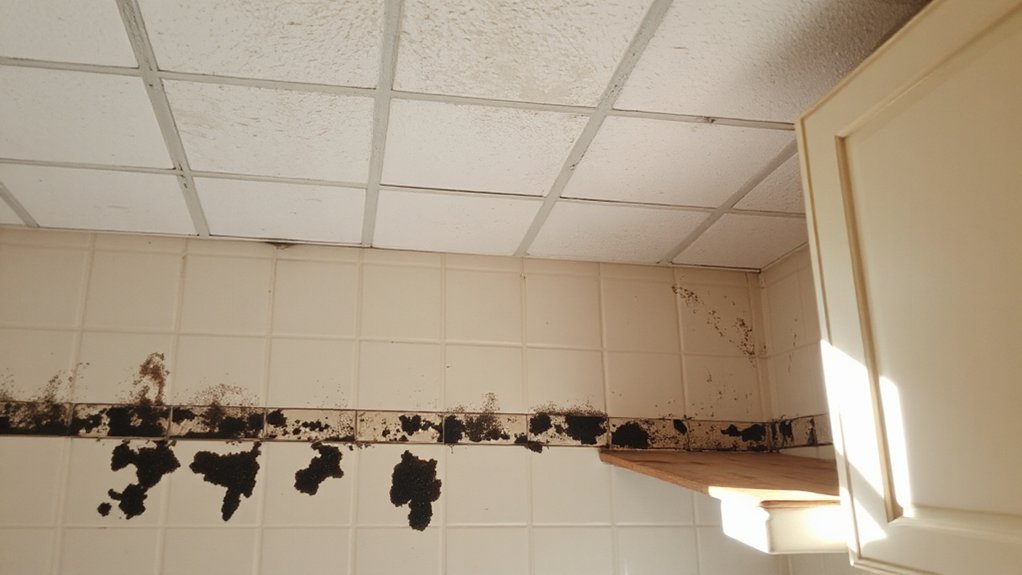
Persistent odors in the kitchen aren’t just unpleasant—they signal ongoing mold activity behind walls or under cabinets. When you notice persistent musty smells, you’re likely dealing with a hidden moisture source that sustains mold growth.
Address the odor by locating leaks, damp areas, and compromised seals, then restore ventilation to prevent recurrence. Use a professional-grade mold test kit only if you must confirm spores beyond a visual check; otherwise, treat suspected areas promptly.
Implement mold resistant paint on affected surfaces after proper cleaning and drying, which helps reduce odor rebound without masking underlying moisture.
Integrate consistent kitchen cleaning routines that target damp zones, debris buildup, and porous materials. Timely remediation minimizes odor persistence and protects your kitchen’s integrity and airflow.
Health Signs Mold Exposure in the Home: What to Watch for in the Kitchen
Here are the health signs of mold exposure you should watch for in the kitchen. You may notice respiratory irritation, coughing, wheezing, or throat soreness after kitchen activities or near damp areas.
Eye irritation, headaches, or skin rashes can also appear, especially if you spend extended time cooking or cleaning in a mold-prone space.
If you or others in the home experience allergy-like symptoms that improve when away from the kitchen, treat this as a warning sign. Address mold promptly to protect vulnerable individuals and preserve air quality.
- Persistent coughing, wheezing, or throat irritation occurring in the kitchen
- Frequent headaches, facial pressure, or eye irritation linked to kitchen exposure
- New or recurring skin rashes tied to kitchen environments
Mold prevention and air purifiers can reduce risks.
How to Verify Kitchen Mold vs. Other Issues
Visual indicators, such as damp-looking patches and visible mold colonies, can point to a mold issue beyond ordinary kitchen grime.
Listen for distinct odors and note any screeching sounds from vents or appliances, which may signal underlying moisture problems.
Use these visual cues, odor clues, and any unusual appliance noises to help distinguish mold from other kitchen issues, and plan a targeted verification approach.
Visual Indicators Screeching
If you’re wondering whether a “screeching” sensation or sound signals kitchen mold or something else, start with a precise check of visual cues, odors, and moisture patterns. You’ll distinguish mold by color, texture, and growth halos around corners, not by sound alone.
Visual indicators point to moisture sources, which mold thrives on, rather than random screeches from appliances. Maintain overall kitchen decor with symmetry and clean lines to reduce hidden damp pockets, and ensure appliance maintenance is up to date to avoid false alarms.
- Inspect for fuzzy or splotchy patches near sinks, moldy grout, and leaky seals.
- Verify that odor patterns match damp areas rather than mechanical noises from idle devices.
- Check for persistent condensation and water stains that align with airflow and ventilation.
Odor Clues Validate Mold
Odor is a decisive telltale in distinguishing kitchen mold from other issues. When you notice a musty, earthy, or damp scent near moisture sources, treat it as a credible warning rather than a mere irritation.
Air testing isn’t always required, but persistent odors that intensify with humidity strongly suggest hidden growth behind walls, under cabinets, or in the pantry. Don’t ignore smells that linger after cleaning or ventilation.
To verify, track odor intensity across rooms and correlate with visible leaks, condensation, or water damage. If mold is suspected, pursue mold remediation promptly and safely, prioritizing containment and personal protection.
Pair odor cues with evidence from inspections, and employ targeted cleaning techniques to reduce spores while planning professional remediation if warranted.
First Steps to Safely Address a Kitchen Mold Problem
First, assess the scope of the mold problem in your kitchen by identifying visible growth, any musty odors, and areas with moisture, such as leaks, condensation, or standing water. Then, follow controlled steps to safely address contamination and prevent recurrence.
- Inspect all problem areas and plan containment to stop spread during cleaning.
- Use appropriate PPE and follow label directions for cleaners, prioritizing non-bleach options where possible.
- Implement immediate moisture control and routine kitchen cleaning to support mold prevention.
Afterward, document findings, isolate affected zones, and schedule professional assistance if growth exceeds a few square feet or shows extensive ventilation issues.
Maintain clear air turnover, dry surfaces promptly, and review anti-moisture measures to sustain ongoing mold prevention.
Frequently Asked Questions
Can Mold in the Kitchen Trigger Asthma Symptoms in Children?
Yes, mold in the kitchen can trigger asthma symptoms in children. Mold spores act as allergy triggers, provoking coughing, wheezing, and chest tightness, especially in those with sensitivities.
You should remove the mold promptly, improve ventilation, and fix moisture sources to reduce exposure.
Regular cleaning with appropriate products helps.
If symptoms persist, consult a clinician for evaluation, and consider air quality testing to identify specific allergy triggers and tailor treatment.
Do Plants Nearby Affect Mold Growth in Kitchens?
Plants nearby can influence mold growth in kitchens, though effects vary. Plant placement matters; keep pots off countertops and away from vents.
You’ll curb excess moisture by monitoring indoor humidity, aiming for 40–60%. Avoid overwatering and maintain good air circulation to reduce damp surfaces.
Regularly inspect corners and under sinks.
Can Mold Exposure Cause Food Spoilage or Contamination?
Yes, mold exposure can indicate contamination risks and may co-occur with spoiled foods. You should assess both environmental and food safety factors, discard visibly moldy items, and clean surfaces to prevent cross-contamination.
Watch for off smells, slime, or unusual textures, and avoid tasting questionable items. Prioritize food safety, store perishables properly, and implement mold prevention strategies, such as moisture control and regular cleaning.
If symptoms appear, seek medical advice promptly.
Are DIY Mold Tests Reliable for Kitchen Mold Problems?
Can DIY testing truly be trusted for kitchen mold problems? DIY testing isn’t fully reliable for determining extensive contamination or hidden growth. You should treat results with caution, confirm positives with professional mold detection methods, and consider air and surface sampling by licensed experts.
While DIY testing can hint at presence, it’s best used as a preliminary step. For accurate guidance and remediation, rely on professional assessments and follow documented safety protocols.
How Long After Remediation Until Air Feels Fresh Again?
Air should feel fresh within a few hours to a couple of days after remediation, depending on the extent of contamination and proper containment.
During this remediation timeline, you’ll notice improved air quality as odors fade and visible dust diminishes.
Use ventilation, HEPA filtration, and keep doors closed to accelerate it.
If symptoms persist after 72 hours, reassess with a pro, because lingering moisture or hidden mold can extend the air quality recovery.
Conclusion
You’ve spotted the red flags, so act now. Treat mold like a quiet invader, not a stubborn stain you can ignore. Confirm damp spots, fix leaks, and improve ventilation before it spreads. If symptoms or odors persist, call a professional to assess and remediate. Don’t gamble with health or your kitchen’s integrity—address it promptly, or the problem grows roots you’ll regret. Your safest, strongest move is decisive, informed action today.