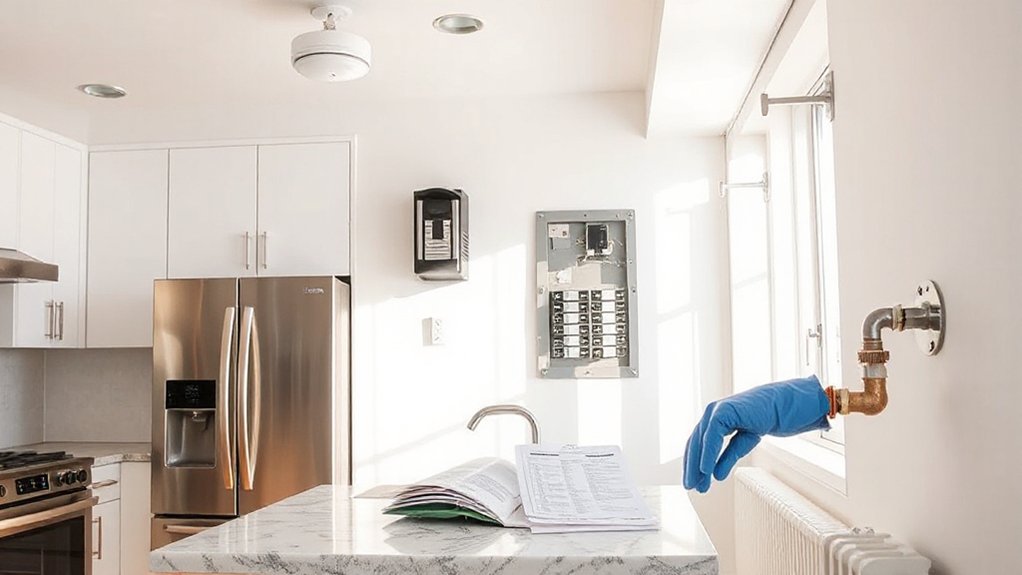
To guarantee tenant safety and minimize risk, implement a rigorous baseline of essential checks: fire alarms tested monthly and interconnected, clear evacuation plans posted, and routine extinguishers, blankets, and escape routes maintained. Add gas safety inspections, CO detectors on every level, electrical system testing (outlets, panels, GFCI/AFCI), and regular ventilation checks. Schedule everything in advance with documented results and tenant notifications. Maintain centralized records and quarterly audits to prove compliance. If you keep going, you’ll master the full safety framework.
Identify Your Safety Gaps: Core Standards Every Landlord Must Meet
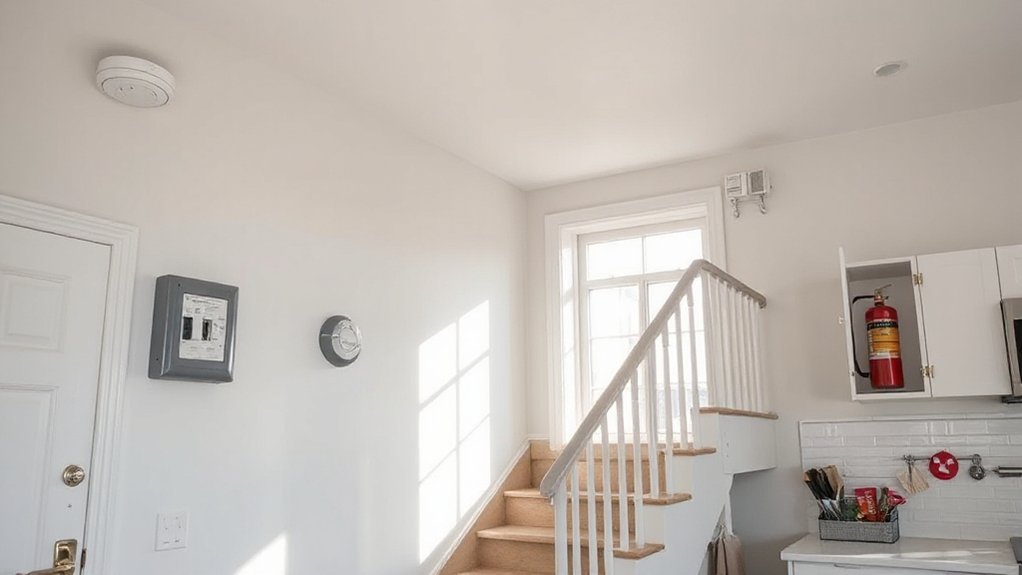
To identify your safety gaps, start with a clear, concrete baseline of core standards every landlord must meet. You create a defensible framework by detailing essential practices that align with local codes and best practices.
You assess tenant screening to guarantee fair, consistent processes that minimize risk and uphold non-discrimination laws.
You review lease agreements for clarity, enforceability, and compliance, confirming disclosures, remedies, and maintenance responsibilities.
You map required inspections, documentation, and response timelines, then compare current practices against those benchmarks.
You identify gaps in record-keeping, screening criteria, and lease terms, prioritizing fixes by impact and feasibility.
You assign owners, set timelines, and establish metrics to verify improvement.
You document changes, communicate updates to tenants, and maintain an auditable trail for accountability.
Fire Safety Essentials: Working Alarms and Clear Evacuation Plans
Fire safety starts with reliable alarms and clear, practiced evacuation plans. You verify that every rental unit has a functioning fire alarm tested monthly and interconnected across levels so activations are unmistakable. You document testing results, replace batteries, and address audible gaps without delay.
You establish an evacuation plan that’s simple, accessible, and posted in common areas and units. You guarantee routes are unobstructed, exits are clearly marked, and assembly points are known to all occupants.
You conduct regular drills or walkthroughs to confirm familiarity and identify bottlenecks. You provide written instructions for tenants with disabilities and ensure accommodations are feasible.
You review compliance after changes in occupancy or layout, maintaining a concise record for inspections and audits.
Carbon Monoxide Basics: Placement, Testing, and Maintenance
Carbon monoxide (CO) safety hinges on correct placement, reliable testing, and ongoing maintenance. You must install carbon monoxide detectors on every level where people sleep, near bedrooms, and in spaces with fuel-burning appliances or garages.
Use detectors that meet current standards and follow manufacturer directions for mounting height and density. Regularly verify batteries or power sources, and replace devices according to the manufacturer’s timeline.
Conduct simple visual checks monthly and perform formal testing procedures at least twice a year, or as recommended. Test after any relocation, power interruptions, or equipment changes, and document results in a maintenance log.
Never disable alarms or rely on single detectors in large homes; place additional units for comprehensive coverage and early warning.
Gas Safety Checks: When to Inspect and What Happens During
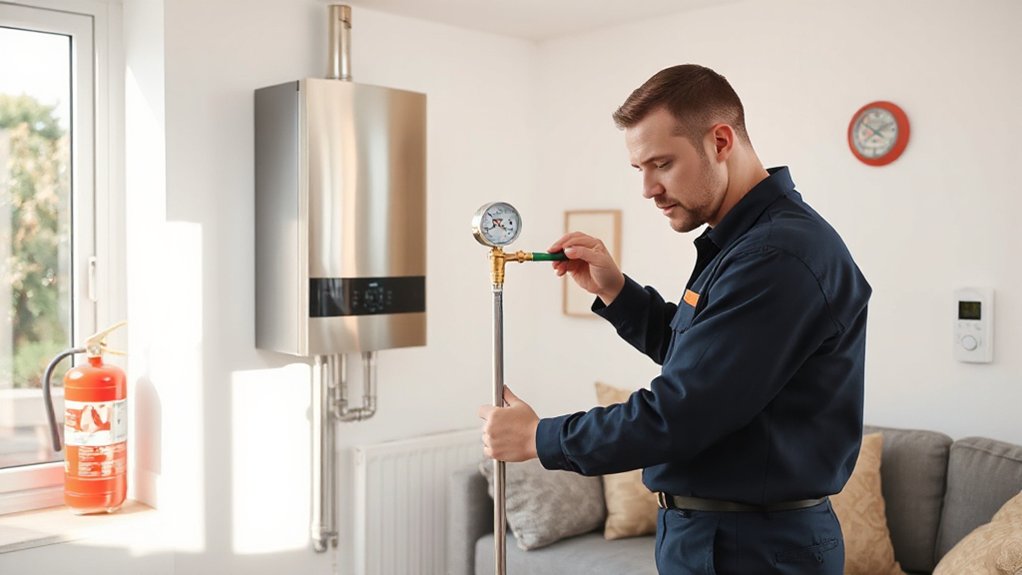
You should schedule gas safety inspections at the required intervals and communicate the timeline to your tenants.
During the inspection, the technician will verify appliance operation, ventilation, flue integrity, and the presence of working gas shut-offs.
You’ll receive the results and any recommended actions to assure ongoing safe, compliant gas usage.
When To Inspect
Gas safety checks must be conducted at specific intervals and documented promptly; landlords should schedule the inspection within the required timeframe and guarantee access for the Gas Safe registered engineer. You’ll know exactly when to book based on your tenancy type and local regulations, so you avoid penalties and assure compliance.
Prepare by confirming current gas appointments, updating contact details, and communicating timelines to tenants to minimize disruption. Remember, timely checks protect tenants and property value, supporting tenant engagement and maintaining strong property marketing.
- Schedule promptly within the legally prescribed window to prevent delays and fines
- Notify tenants in advance, clarifying access and any required actions
- Keep records organized, including test results and certificate issuance, for audits
During The Inspection
The engineer documents readings, confirms venting and flue integrity, and notes any corrosion or wear that could impact performance. Expect clear communication about findings, potential risks, and required remedial actions.
Tenant engagement matters: you’ll be informed about what was checked, why it matters, and how to report concerns between inspections.
While safety takes priority, the visit also considers property aesthetics—maintaining clean, accessible equipment areas and minimizing disruption to tenants.
You’ll receive a definitive, actionable plan, with timelines for repairs and rechecks, ensuring ongoing compliance and peace of mind.
Electrical System Inspections: Key Tests Landlords Should Schedule
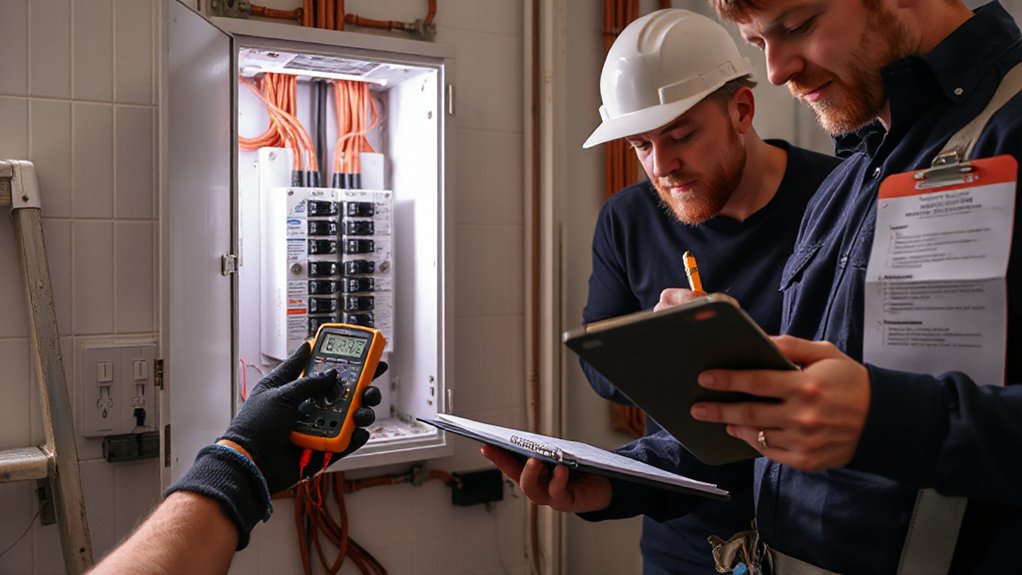
Electrical system inspections are essential to protect tenants and limit liability, so landlords should schedule a clear set of key tests that verify safety and code compliance.
You should perform a documented sequence of inspections, focusing on measurable outcomes and regulatory standards. Emphasize landlord responsibilities by establishing compliance baselines, recording results, and addressing deficiencies promptly.
Maintain tenant communication throughout, explaining findings and expected remediation timelines to minimize disruption and disputes.
- Schedule professional testing with licensed electricians, verifying RCD/GFCI protection, overcurrent protection, and service grounding.
- Require thermal imaging and insulation assessment where applicable to detect overheating risks and hidden faults.
- Confirm panel labeling, surge protection readiness, and documentation of corrective actions with clear deadlines.
These steps create a repeatable process, promoting safety, accountability, and transparent landlord-tenant relations.
Electrical Safety at a Glance: Outlets, Wiring, and Panel Must-Dos
You should guarantee outlets, wiring, and the electrical panel meet clear safety standards, because consistent attention to these elements reduces fire risk and protects tenants.
You’ll conduct a standardized assessment: verify proper outlet grounding, ensure GFCI/AFCI protection where required, and inspect visible wiring for wear or overheating signs.
Document panel labeling, breaker conditions, and accessibility, and promptly address any double-tapped or overloaded circuits.
Communicate findings clearly to tenants, outlining immediate risks and scheduled repairs.
As landlord responsibilities, schedule professional inspections when needed and maintain a log of fixes.
Prioritize tripping hazards and tamper risks, replacing damaged components without delay.
Maintain transparent tenant communication about safety improvements and timelines, reinforcing expectations for reporting electrical anomalies and honoring compliance deadlines.
Regular reviews minimize incidents and uphold housing standards.
Annual Smoke Alarm Compliance: Track, Test, and Remediate
You must track smoke alarm compliance year by year to stay ahead of failures. Regular testing should be scheduled and documented.
Immediate remediation of any chirps or non-responsive units is essential. This approach keeps residents safe and aligns your oversight with best-practice standards.
Track Compliance Yearly
To track compliance year by year, establish a formal annual smoke alarm check that documents all tests, results, and remedial actions. You’ll maintain a centralized log, timestamped and signed, to prove ongoing adherence during Tenant screening and Lease renewal processes.
Schedule tests for every unit, verify batteries, and replace alarms that fail. Record failures, corrective steps, and dates of remediation, then review trends to identify recurring issues.
Guarantee records are readily accessible to inspectors and tenants, while preserving confidentiality where required. Use the data to support lease decisions, inform prospective tenants, and demonstrate responsible management.
Periodically audit your process to close gaps before renewals.
- Centralized documentation and accessibility
- Consistency across units and units’ histories
- Proactive remediation and renewal-ready records
Test And Remediate Regularly
Because annual smoke alarm compliance hinges on regular verification, implement a formal schedule that tests every unit, records results immediately, and triggers remedial action for any failure.
You’ll conduct tests on a fixed cadence, document pass/fail statuses, and assign responsibilities to qualified personnel.
When a detector fails, replace or repair promptly, and verify the corrective action with a re-test within 24 hours where feasible.
Maintain an auditable trail for inspections and potential compliance audits.
Regular remediation reduces tenant risk, supports property valuation, and reinforces safety culture.
Integrate findings into tenant screening by informing applicants about safety standards and historical maintenance.
Use standardized reporting to identify patterns, prioritize capital work, and justify investment.
Communicate changes to tenants, document disclosures, and close loops with updated maintenance schedules.
Fire Safety Equipment: Extinguishers, Blankets, and Escape Routes
Fire safety equipment is essential for every rental property, and proper placement, maintenance, and usage prevent small incidents from becoming emergencies. You guarantee extinguishers are accessible, inspected monthly, and rated for common fires.
Blankets stay unobstructed, clearly labeled, and ready for use while you document dates and replacements.
Escape routes remain unlocked, clearly signed, and free of clutter, with exits tested during tenant orientation and drills.
You integrate tenant communication into your plan, sharing how-to use devices and reporting damage promptly.
Emergency preparedness hinges on routine checks, documented logs, and clear responsibilities for occupants.
- Accessible placement and monthly inspection routine
- Clear labeling, usage guidance, and replacement scheduling
- Regular evacuation practice and occupant briefings
Safe Gas Appliances: Operation Tips and Risk Mitigation
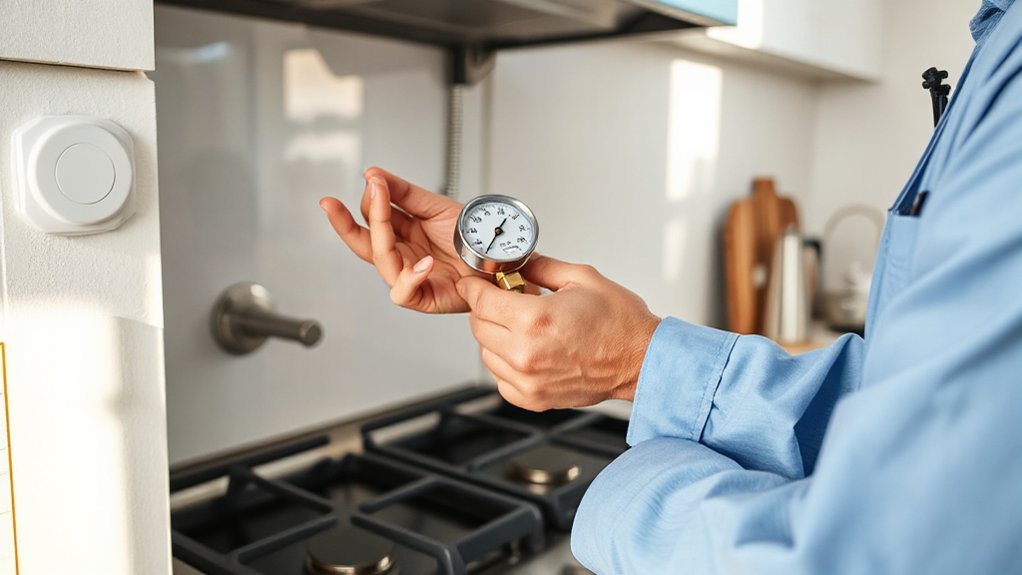
Gas appliances require disciplined operation and proactive risk mitigation to keep tenants safe. You’ll verify installation accuracy, confirm venting is clear, and verify proper clearance from combustibles before use.
Regularly inspect ignition systems, seals, and vent pipes for signs of wear, corrosion, or misalignment. Schedule timely appliance maintenance, documenting service dates and outcomes for each unit.
Instruct tenants on how to recognize early warning signs, such as intermittent flames, unusual odors, or pilot light outages, and establish a simple reporting protocol.
Establish a gas leaks response plan, including immediate shutoff procedures and emergency contact access.
Maintain detectors and verify carbon monoxide alarms are functioning across properties.
Document compliance measures, maintain logs, and review procedures after any incident to reduce risk and safeguard residents.
Cost‑Effective Safety Upgrades: Balancing Investment and Compliance
You’ll assess cost-efficient safety upgrades that meet code while minimizing disruption and expense.
Prioritize fixes with clear compliance impact, reliable ROI, and practical timelines, so your investments stay aligned with long-term safety goals.
This approach highlights how prudent spending now yields durable protection and steady, compliant operations.
Cost-Efficient Safety Upgrades
What’re the most cost-efficient safety upgrades landlords should pursue first to stay compliant without overspending? You’ll prioritize high-impact, low-cost measures that reinforce safety without triggering budget strain.
Begin with essential system checks, basic detectors, and verifiable maintenance schedules, then target area-specific protections that reduce risk and liability. Use a concise, evidence-based approach to decide what yields the best return on investment, prioritizing clear compliance outcomes over flashy upgrades.
Apply practical standards to everyday operations, ensuring consistency across properties. Integrate garden landscaping considerations where they support drainage, visibility, and risk reduction, and plan tenant screening to prevent unsafe occupancy.
Maintain documented records to demonstrate diligence and preserve budget discipline.
- Prioritize high-impact, low-cost safeguards
- Schedule verifiable maintenance and documentation
- Align safety measures with practical, property-wide standards
Balancing Compliance And Budget
Balancing compliance with budget starts with a clear, prioritized plan that prioritizes high-impact, low-cost safety upgrades and verifiable maintenance. You assess regulatory requirements first, then map upgrades to risk reduction and tenant safety outcomes.
Allocate resources by cost-benefit, focusing on items with measurable impact and rapid implementation. Use a phased approach: immediate fixes, then short-term improvements, and finally efficient long-term measures that comply without overreach.
Maintain documentation for audits to prove due diligence and avoid duplicate work. Integrate tenant screening and maintenance protocols into routines, ensuring safety standards are upheld without compromising budget.
Align marketing strategies to reflect strong safety performance, attracting responsible tenants. Monitor, review, and adjust spending quarterly to sustain compliance while preserving financial flexibility.
Prioritize clarity, accountability, and verifiable results.
Long-Term Investment Benefits
Investing in long-term, cost-effective safety upgrades yields durable compliance and measurable tenant protection without sacrificing financial health. You’ll focus on high-impact improvements that reduce risk, lower ongoing costs, and preserve property value.
Prioritize items that align with insurance requirements and risk reduction, so you strengthen your bottom line while protecting residents. When planned thoughtfully, upgrades support smoother renewals, clearer documentation, and stronger tenant trust.
Evaluate returns through resilience, not just price tag, and document every step for audits and property insurance reviews. Pair safety upgrades with robust tenant screening to minimize liabilities and optimize occupancy stability.
This integrated approach delivers steady compliance, predictable insurance costs, and sustained profitability for your portfolio.
- Strategic prioritization drives measurable ROI
- Documentation enhances insurance confidence
- Integrated safety and screening reduces liabilities
Documentation That Passes Audits: Records, Logs, and Access Notes
Documentation that passes audits hinges on clear, complete records, logs, and access notes. You maintain a centralized vault of securely stored files, each labeled with date, party, purpose, and retention period.
Rental agreements sit alongside amendment histories, clearly showing signatures, terms, and renewal options.
Logs track maintenance requests, safety inspections, and access events, with timestamps and’s who, what, and why.
Access notes summarize permission scopes, authentication methods, and any compliance constraints, ensuring you can verify who entered units and when.
Tenant communication is archived alongside correspondence, confirmations, and responses.
Regular reconciliation of documents prevents gaps; you conduct quarterly audits to verify consistency between digital and paper copies.
This disciplined approach reduces risk, supports regulatory compliance, and simplifies incident reviews.
Safe Maintenance Protocols: Scheduling, Notifications, and Tenant Access
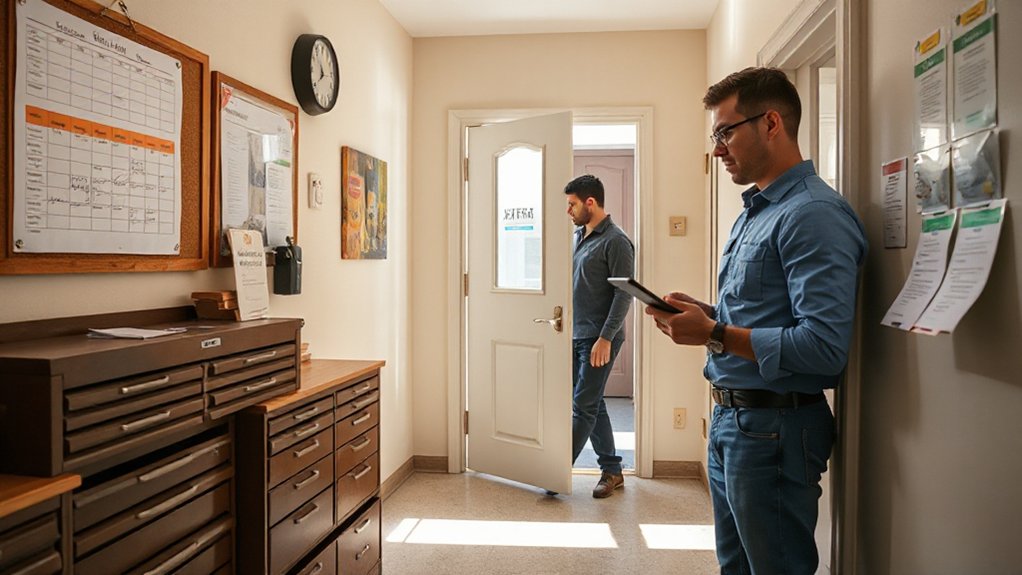
Safe maintenance is scheduled with precision to minimize disruption and risk. You control timing, notify well in advance, and document all steps to preserve tenant trust and compliance.
You align service windows with lease terms and property needs, ensuring access routines respect tenant rights. As you plan, consider tenant screening to verify responsible access and confirm eligibility for in-unit work.
Reference lease agreements to define access limits, notice periods, and emergency procedures. Maintain a centralized calendar and draft standardized notices to reduce confusion.
Keep records of confirmations, rescheduled visits, and any consent obtained. This disciplined approach protects health, safety, and property value while supporting smooth tenancy operations.
- Standardized advance notices and confirmations
- Access windows aligned with lease agreements and duties
- Documentation of consent, changes, and follow-up actions
Indoor Air Quality for Safety: Ventilation and Combustion Safety
Indoor air quality directly affects tenant safety and property condition, so we’ll focus on ventilation effectiveness and combustion safety as you plan maintenance and access. You’ll verify exhaust systems and fresh air supply meet code, inspect for blockages, and assure balanced airflow across rooms.
Confirm operability of carbon monoxide detectors and guarantee proper clearance around furnaces, water heaters, and stoves. Schedule tests after any major renovations and with disruptions minimized for occupants.
Address indoor plants placement to avoid moisture buildup or blocked vents, and consider air purification where needed to reduce particulates.
Document findings, corrective actions, and follow-up dates. Maintain clear communication about safety steps, timing, and access, reinforcing that reliable ventilation and combustion safety protect both tenants and the property.
Post-Visit Follow-Ups: Fixes, Rechecks, and Tenant Communication
After a visit, you’ll outline the fixes, schedule rechecks, and communicate clear next steps to tenants, ensuring accountability and minimal disruption. You present a concise action plan, confirm responsibilities, and set realistic timelines.
You track progress for each issue, document decisions, and monitor verification of completion. You balance urgency with quality, prioritizing safety-critical repairs and ongoing maintenance scheduling to protect property value and tenant satisfaction.
You establish a transparent communication channel, so tenants understand expectations, follow-up dates, and how to report new concerns. You close with a firm, professional recap and a record of agreed milestones.
- Clear timelines and owner/tenant responsibilities
- Confirmation of completed fixes and recheck dates
- Methods for ongoing feedback and maintenance scheduling
Penalties and Legal Compliance: What Failing a Safety Check Really Costs
Failing a safety check isn’t simply a minor setback—it triggers concrete, enforceable consequences for you as a landlord. Penalties vary by jurisdiction but generally include fines, license suspensions, and orders to halt rent collection until compliance is achieved.
You may also face increased scrutiny in future inspections and potential civil claims from tenants for unsafe conditions. This is where Landlord responsibilities become non-negotiable: you must correct deficiencies promptly, document actions, and prove ongoing compliance.
Noncompliance can escalate to criminal charges in extreme cases, especially where harm occurs. Clear tenant communication helps avert dispute and demonstrates diligence.
Establish a formal timeline, assign remediation tasks, and maintain records for inspections, notices, and corrective work. Adhering to standards protects your property, finances, and reputation.
Frequently Asked Questions
How Often Should I Renew Safety Check Certificates?
You should renew safety check certificates annually, ensuring Fire alarm and Gas safety compliance. Keep records, schedule reminders, and verify certificates before each tenancy start or renewal, preventing gaps and safeguarding occupants through timely inspections and prompt renewals.
Who Is Legally Responsible for Safety Documentation?
You’re the captain steering responsibility for safety documentation; you, not tenants, are legally responsible. Embrace risk assessment and a maintenance schedule, diligently maintaining records, updating certificates, and proving compliance through precise, methodical, authoritative documentation.
Can Tenants Perform Safety Checks Themselves?
Tenants can perform basic DIY inspections for personal safety, but you should not substitute professional checks. Your involvement should supplement, not replace, landlord-led essential safety audits; document findings carefully and notify your landlord promptly.
What Records Must Be Kept for Audits?
You must keep thorough records for audits, including maintenance schedules and emergency procedures, with dates, responsible parties, and actions taken, so you can demonstrate compliance, traceability, and accountability during inspections or inquiries.
What Penalties Apply for Non-Compliance?
Non-compliance penalties can be severe, sometimes devastating. You’ll face fines, orders to remedy, and potential license revocation. You must adhere to fire safety and maintenance schedules, otherwise authorities will escalate enforcement and audit scrutiny relentlessly.
Conclusion
You’ll keep tenants safe when you treat safety as non-negotiable, not optional. Think of your responsibilities as a shield you steadily strengthen—fire, CO, gas, and electrical checks aligning like a well-tuned instrument. When you schedule, notify, and follow up, you create trust and minimize risk. Like a lighthouse keeper, you illuminate the path, guiding everyone home. Stay precise, stay consistent, and the outcomes will speak for themselves. Safety isn’t a moment; it’s a practice.