Refresh your UK garden for spring by starting with a thorough inspection, map bloom windows, and test soil pH. Amend with compost and well-rotted manure if needed, mulch to conserve moisture, and loosen borders for better drainage. Choose hardy, UK-first plants, prioritizing natives for pollinators, and group by early to late bloom. Prune after flowering, tidy tools, and install shallow water dishes for wildlife. With careful planning, you’ll discover ongoing color and resilience—more practical tips await if you keep going.
UK Spring Garden Essentials

Spring is the perfect time to refresh your UK garden, and the essentials you need are simple and practical: clean, inspect, and plan.
You start by surveying borders, noting which plants survived winter and which need attention.
Focus on soil prep: loosen compacted beds, add compost, and check drainage so roots prosper.
For plant care, set up a routine that matches your space and sun exposure, prioritising drought resistance and pollinator-friendly varieties.
When you notice garden pests, act early with targeted, gentle controls and beneficial insects, avoiding broad sprays that harm neighbors and wildlife.
Regarding watering techniques, water deeply at soil level—early mornings work best—to strengthen plants and reduce waste.
These steps build belonging through shared, attentive garden care.
Prune for Health and Shape in March–April
As the garden wakes, you should prune for health and shape in March–April to set plants up for a thriving year. You’ll start with calm, decisive cuts, removing dead wood and crossing boughs to improve airflow.
Target Flower pruning on perennials and spring-flowering shrubs after blooms fade, guiding new growth without removing next season’s buds.
For shrubs, practice shrub shaping by light, rhythmic pruning that preserves natural habit yet tidies silhouettes. Use clean secateurs and sharp loppers to avoid ragged edges; disinfect between species.
Aim to open centers, encourage sun on leaves, and prevent disease from damp, crowded interiors.
Record what you prune, then monitor regrowth weekly. This careful routine supports resilience, pace, and a shared sense of belonging in your garden family.
Soil Revival: Test, Amend, Mulch
Soil revival starts with a quick test, then practical amendments and mulch that lock in moisture and feed roots. You’ll begin with soil testing to gauge fertility, structure, and pH, guiding targeted choices.
If tests show low organic matter, add compost and well-rotted manure as organic amendments to feed soil biology and improve crumb. Use an “a-by-earth” approach: mix amendments evenly, avoiding bare patches, so young roots can establish quickly.
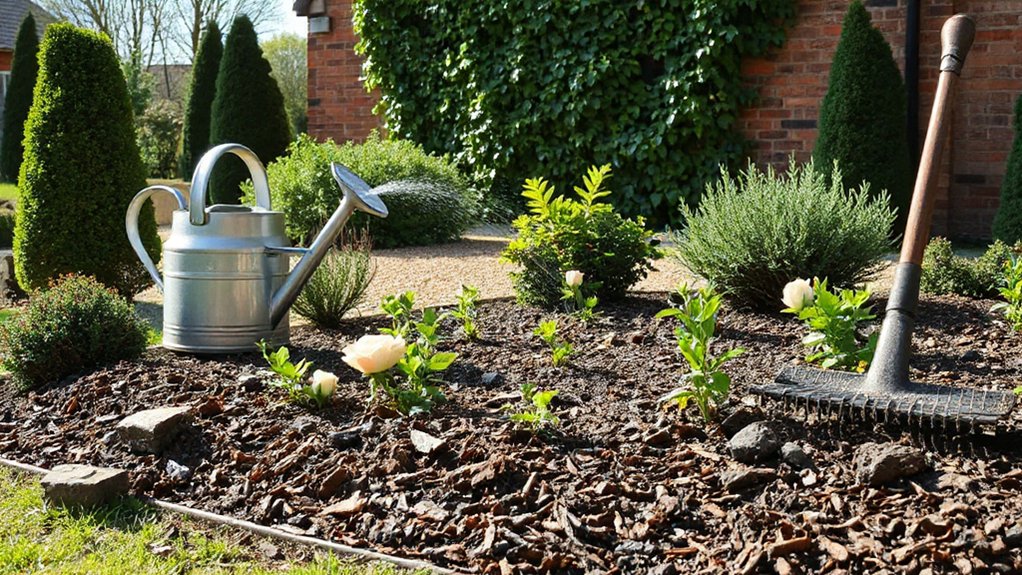
Mulch with untreated bark or leaf mold after you’ve amended; a two to three inch layer conserves moisture, suppresses weeds, and moderates temperature.
Recheck moisture weekly in spring and adjust watering to keep consistent, not soggy.
Involve family or neighbors in the process to cultivate belonging and shared pride in a thriving, resilient soil.
Low-Cost Spring Cleaning: Tools and Quick Tasks
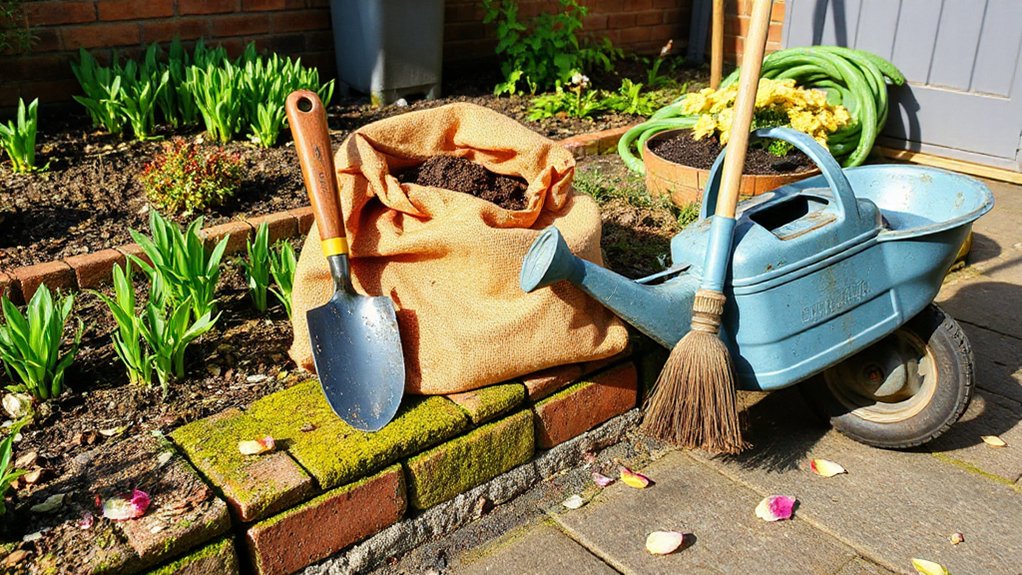
Grab a quick-clean kit for every tool you use most—wipe blades, sharpen pruners, and oil hinges so they slice through stems without pinching.
Create a budget-friendly task list that prioritizes pruning, weed control, and mulching touch-ups, focusing on plants that benefit from early season attention.
Tackle fast tweaks like checking irrigation, brushing leaves off crowns, and tidying borders to boost growth without breaking the bank.
Quick-clean Garden Tools
With a quick sweep and a rinse, you can revive every essential tool for the season ahead. You’ll start by removing soil with a stiff brush, then scrub blades with dish soap and warm water to lift grime without corroding metal. Dry thoroughly to prevent rust, especially on spades and hoes, and oil moving parts to keep them smooth.
Wipe handles with a damp cloth, inspecting for cracks, splinters, or loose ferrules. Sharpen blades where needed, testing balance as you go. Store tools off the ground in a dry, ventilated shed and group them by use for easy access.
While you’re tidying, consider where garden furniture or outdoor lighting will sit, ensuring pathways stay clear and inviting for everyday gardening moments.
Budget-Friendly Task List
Now that your quick-clean tools are ready, you can tackle a budget-friendly task list that keeps spring prep affordable and effective. You’ll prioritize simple, low-cost chores that protect plants and maximize space.
Inspect borders for fallen leaves or debris, then compost or mulch to suppress weeds and nourish roots.
Treat garden pests with targeted, non-toxic methods—hand-picking aphids, using soap spray, and inviting beneficial insects through diverse plantings.
Clean and sharpen shears, pruners, and hoses to extend their life between uses.
Re-route watering to conserve moisture, and set up a basic, unobtrusive outdoor lighting scheme to deter nocturnal pests while highlighting focal beds.
Plan with your family or neighbors in mind, inviting shared tasks and a sense of belonging.
Fast Seasonal Tweaks
Spring cleaning doesn’t have to be costly or time-consuming; a few fast tweaks can refresh beds and boost growth. You’ll start by decluttering spent stems and debris, reducing overwintering pests and disease pressure.
Quick snips to leggy shoots stimulate sturdy, leafy growth, while a light forkful of compost refreshes the topsoil without overfeeding roots. Targeted mulching with a thin, even layer helps conserve moisture and suppress weeds between early plantings.
Keep tools sharp and ready; a clean, well-labeled shed speeds future tasks. For garden pest control, install basic monitoring traps and seal entry points, preventing invasions.
Add decorative garden accents to guide eye flow and create welcoming spaces. With these moves, you’ll see healthier plants and a greener, more cohesive garden.
Choosing Hardy UK-First Varieties
Look for Hardy UK-First Picks that resist frost, drought, and wet winters, so your spring bulbs, perennials, and shrubs get a reliable start.
Favor Native-Friendly Varieties to boost local pollinators and soil health while keeping maintenance low.
Consider Winter-Harvested Resilience to guarantee plants perform through late-season cold snaps and still reward you come spring.
Hardy UK-First Picks
Choosing hardy UK-first varieties is your best bet for a reliable, low-fuss spring reset: these plants withstand Britain’s unpredictable early-season weather, establish quickly in local soils, and give you dependable blooms with minimal protection.
You select sturdy perennials and short, repeat-blooming shrubs that tolerate damp springs and sporadic frost. Prioritize compact forms that suit borders and containers, with deep root systems for drought resilience.
Think in terms of bloom windows, not just color—group species by early, mid, and late-season interest to maintain ongoing structure.
Clip lightly after flowering to encourage fresh growth, and mulch to suppress weeds.
Consider garden pests and wildlife habitats when placing beds; a simple, layered layout minimizes intrusion while maintaining visual cohesion. This approach keeps your garden inviting and cohesive all season.
Native-Friendly Varieties
Native-friendly varieties are a smart extension of hardy UK-first choices, focusing on natives or locally adapted species that support wildlife while still delivering reliable spring interest. You’ll select options that thrive in your soil and climate, reducing maintenance and watering needs.
Prioritize native plants that bloom in early spring and late winter to feed pollinators when gap years hit. Combine flowering natives with a few adaptable cultivars to balance texture and color, then place them where they’ll catch daily sun or gentle shade.
This approach enhances ecological benefits and strengthens your garden’s sense of place. Expect natural, cohesive growth that invites birds and butterflies.
Winter-Harvested Resilience
Winter-hardy plants that suit UK conditions save you time and effort by thriving with minimal protection once established. When choosing hardy UK-first varieties, you prioritise winter resilience and garden durability that support steady performance through cold snaps and wind.
Look for compact, low-maintenance options with proven adaptation to coastal and inland sites, and select cultivars offering strong root systems to weather early frosts. Pair evergreens with deciduous staples to maintain structure, color, and shelter for wildlife.
Prioritize disease-resistant types and avoid overreliance on annuals that demand frequent reinvestment. Install mulch for moisture retention and guarantee drainage to prevent winter rot.
Plan staggered planting beds so you enjoy early spring interest while maintaining lasting resilience throughout the season. This approach reinforces belonging through reliable, garden-tested choices.
Seed and Bloom: Timing Spring Colour
When should you plan for spring colour? You map your palette based on bloom windows, soil type, and light. Start with a core bed of late-ware planting, then fill gaps with early bloomers for continuity.
Choose color coordination that echoes your garden’s mood and your home’s exterior—soft pastels for a calm, cohesive look or bold mixes for energetic borders. Place taller stems behind shorter foliage to maintain visibility and accessibility.
Prepare containers with well-draining compost, then stagger sowings or plug trays to avoid peak-season gaps. Observe flower symbolism to tell a story: cheerful yellows for optimism, pinks for grace, purples for poetry.
Water consistently as roots establish, mulch lightly, and document what thrives for next season’s refined plan.
Wildlife-Friendly Spring Additions

To attract and support local wildlife this spring, choose plants that offer nectar, pollen, berries, and shelter throughout the season. You’ll create long-lasting Wildlife habitats by mixing nectar-rich perennials with sturdy shrubs and a few evergreen accents.
Prioritize Native plantings that suit your soil and sun, then layer height from groundcover to small tree. Plant in drifts to form predictable foraging paths, ensuring continual bloom from early spring to late summer.
Include a sheltered corner with native grasses for hiding and roosting. Add a shallow, wide dish with water and a log pile for insects.
Regularly deadhead spent blooms to encourage steady nectar flow, and avoid broad-spectrum chemicals. Your garden gains resilience, biodiversity, and a welcoming, communal feel.
Water and Drainage Tweaks for Early Growth
After wildlife-friendly plantings, you’ll want to make certain those new edges and beds stay welcoming as spring growth kicks in. Start with drainage solutions that prevent soggy roots in rainier weeks and drought stress in dry spells.
Gently loosen soil in borders to improve infiltration, then lay a shallow trench or install a simple French drain where water pools. For beds, add organic mulch to stabilize moisture without suffocating roots.
Pair this with mindful watering techniques: water deeply once or twice a week rather than light daily sprinkles, letting the soil breathe between sessions. Use rainwater where possible, and monitor seedlings closely—early growth shows sensitivity to overwatering.
Small adjustments now nurture robust roots, sturdier stems, and a thriving, belonging-filled garden.
Spring Garden Calendar and Checklist
Spring is the ideal time to chart a practical garden calendar and checklist that keeps beds tidy, plants healthy, and momentum steady. You’ll map weekly tasks: soil tests, seed starts, and mulch applications, so nothing slips.
Align pruning windows with local frost dates to protect tender growth, and set a recurring inspection for garden pests, replacing stressed plants before problems spread.
Create a simple rotation plan to reduce disease risk and keep beds vibrant.
Record composting techniques and materials, aiming for a balanced mix of greens and browns to accelerate decomposition without odors.
Build a compact tool kit: labels, scissors, pruners, and a notebook for notes on milestones.
Stay connected with fellow gardeners for sharing tips and a sense of belonging.
Frequently Asked Questions
How Can I Refresh a Neglected Container Garden Quickly?
You can refresh a neglected container garden quickly by replanting with resilient options. Focus on container planting, layer soil rejuvenation, add fresh compost, mulch lightly, and water consistently; choose perennials and annuals that thrive together for belonging.
Which Bulbs Establish Best in Windy UK Locations?
In windy locations, select sturdy bulbs like crocus, tulip, allium, and narcissus to establish well. You plant bulbs with deep, firm soil contact, mulch lightly, and provide windbreaks; you’ll feel connected to neighbors sharing garden resilience and blooms.
What Are Budget-Friendly Drought-Tolerant Plant Options?
You’ll save water by choosing xeriscape principles and drought resistant shrubs, so your garden feels resilient and welcoming. Imagine sunlit paths; you plant thoughtfully, mulch thickly, and you choose resilient, budget-friendly options that thrive with less irrigation.
How Do I Prevent Slug Damage During Spring Flush?
To prevent slug damage during spring flush, use slug control methods like placing copper barriers and beer traps, and apply Organic repellents around vulnerable plants; keep foliage dry, monitor nightly, and group plants to create a pest-aware, welcoming garden.
When Should I Rotate Crops in a Mixed Border?
You should rotate crops in a mixed border every 2–3 years to maintain soil health. With 60% soil tests ideal, you’ll guide companion planting and soil testing, ensuring plants share nutrients and feel you belong in your garden.
Conclusion
Spring is your cue to act with intent: prune for vigor, test soil, mulch, and tidy tools so nothing stunts new growth. Pick hardy UK-first varieties and sow at the right time for a continuous bloom. A striking stat to tuck away: shade-loving perennials expand their coverage by up to 40% in a mild UK spring when soil stays consistently moist. With a calm, practical routine, you’ll see stronger plants, clearer edges, and a welcoming garden in just weeks.