
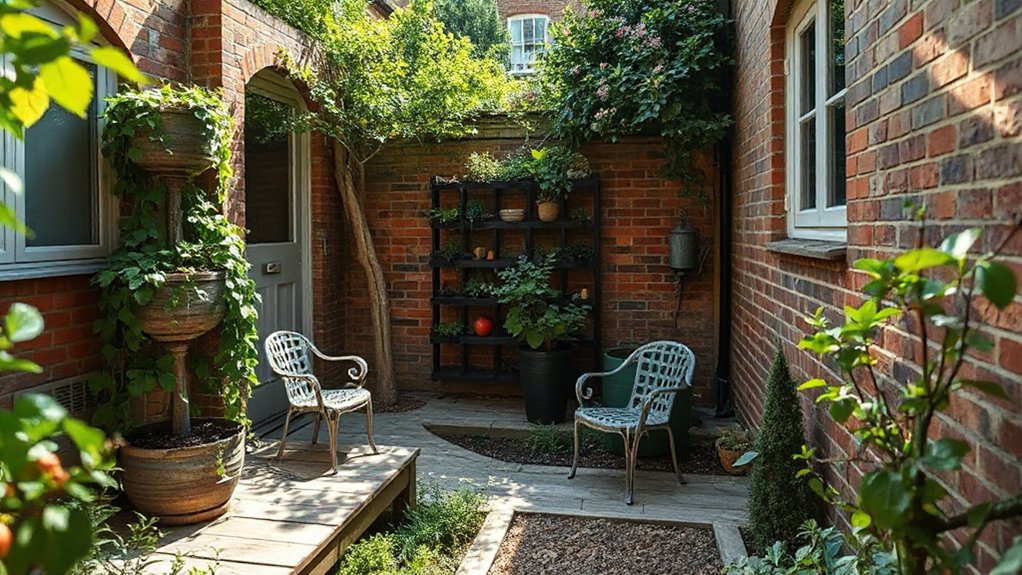
London-sized outdoor spaces demand smart layers: vertical planting walls, modular containers, and compact zones for seating, planting, and storage all in one footprint. You’ll want durable, low-maintenance materials, drought-tolerant natives, and discreet lighting to extend usability. Plan for narrow pathways, hidden storage, and weatherproof furniture that doubles as storage. It’s practical design with a bold payoff, but the specifics will depend on your space and constraints—so you’ll want to evaluate constraints and opportunities as you proceed.
Key Factors for London-Friendly Small Gardens
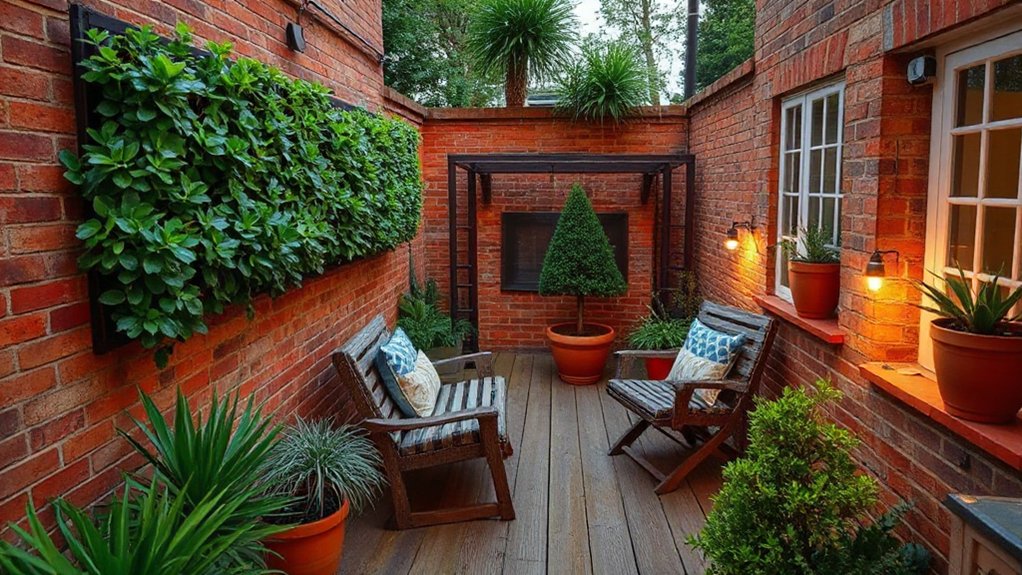
Small urban plots demand smart planning. In London, you optimize space by prioritizing light, soil, and utility routes. Start with layout: measure available area, then map zones for seating, cultivation, and access.
Consider microclimates, wind exposure, and noise buffering when locating beds and containers. Garden maintenance should be integral: choose materials and positioning that reduce upkeep, and plan irrigation to minimize waste.
When selecting plants, focus on compact varieties, dwarf forms, and self-cleaning species to ease maintenance. Prioritize plant selection that tolerates local conditions and seasonal shifts; group species with similar water and sun needs to simplify care.
Use vertical and container strategies to maximize yield without overextending footprint. Document care schedules and seasonal tasks to maintain consistency throughout the year.
Create Vertical Planting Walls for Balconies and Walls
Vertical planting walls maximize green space on balconies and exposed walls by turning vertical surfaces into productive living gardens. You implement vertical gardens to maximize growth area without expanding footprint, using wall planters that mount or hang securely.
Start with structural assessment: confirm walls can bear moisture, weight, and wind loads; confirm drainage paths and waterproofing.
Select a scalable system with modular planters and integrated irrigation for consistent watering.
Choose lightweight substrates, like coconut coir or lightweight soil, to reduce load while maintaining retention.
Install a drip or capillary irrigation loop with a timer to maintain even moisture.
Position plants with staggered heights for phenology diversity and easier maintenance.
Regularly prune, monitor pests, and replace species as light conditions shift.
This approach delivers dense, low-maintenance vertical gardens on limited London spaces.
How to Mix Budget-Friendly, Climate-Smart Containers
To keep the momentum from building vertical gardens on London homes, focus on cost-effective, climate-smart containers that deliver reliable growth without breaking the bank. You’ll mix budget container options with durable materials such as recycled plastics, lightweight composites, and breathable fabric pots to balance weight and water retention.
Guarantee containers have drainage, enough root depth, and compatibility with your chosen plants. Use eco-friendly composting practices to enrich the soil mix without overreliance on synthetic amendments.
Select self-watering features or add irrigation to reduce evaporation in warm months. Pair inexpensive liners with sturdy external sleeves to extend life and cut replacement costs.
Consolidate smaller pots into modular groupings for microclimate control, and rotate crops seasonally to maximize nutrient use and minimize waste. This approach keeps systems resilient and scalable.
Flexible Seating Ideas and Cozy Nooks for Tiny Terraces
You’ll optimize tiny terrace space by pairing flexible seating hacks with compact, multi-use components. Consider cozy nook ideas that maximize comfort without sacrificing flow, using modular pieces and weather-ready fabrics.
This discussion centers on practical, space-efficient solutions for tiny terraces in London homes.
Flexible Seating Hacks
Flexible seating can transform tiny London terraces by maximizing floor area without sacrificing comfort. You’ll optimize layout with modular pieces that tuck beside walls and beneath railings, freeing center space for movement and access.
Choose compact lounge furniture with slim profiles and hidden storage to keep clutter low while preserving usability. Select stackable chairs or foldaway stools that deploy for outdoor dining when needed, then stow away.
Use multi-function benches that double as planters or display surfaces, increasing perceived room without expanding footprint. Favor weather-resistant fabrics and easy-clean finishes to reduce maintenance.
Install built-in or portable side tables for drinks or devices, enhancing usability without crowding. Prioritize calm colorways and cohesive textures to unify the terrace visually.
Cozy Nook Ideas
Cozy nook ideas hinge on smart seating and compact, inviting layouts that make tiny terraces feel larger. You design with purpose: select garden furniture that folds, stacks, or tucks into corners without blocking access.
Use verticals—trellises, slim shelves, and hooks—to free floor space while adding function. Opt for low-profile benches with integrated storage and cushions that resist dampness.
To maintain flow, group seating in a single plane and keep narrow aisles clear. Choose outdoor decor that doubles as utility, like modular tables that swap from dining to work surfaces.
Color and texture unify the space; choose weatherproof fabrics in subtle neutrals with a single bold accent. Prioritize lighting for usability after dark, and test sightlines at eye level to avoid crowding.
Tiny Terrace Solutions
When space is tight, maximize function with modular seating that folds, stacks, or tucks away, and pair it with compact, cozy nooks that invite use without crowding pathways.
Tiny terrace solutions rely on multi-functional furniture to free floor area, enabling easy circulation and adaptable layouts. Opt for low-profile benches with hidden storage and lightweight, weatherproof cushions to reduce bulk while maintaining comfort.
Use vertical planters and slim trellises to add greenery without sacrificing space, supporting urban wildlife without clutter.
Select garden art that doubles as focal points or sculpture-scale accents, guiding sightlines and defining zones.
Maintain durable finishes and discreet hardware to minimize maintenance.
Finally, coordinate textures and colors to unify seating, greenery, and art for a cohesive, usable terrace.
Low-Water, Britain-Friendly Plant Picks That Thrive
Low-water gardening suits London’s climate by prioritizing drought-tolerant perennials and smart soil practices. You select drought resistant plants that perform well with limited irrigation, then group by sun exposure and soil type to minimize watering cycles.
Focus on compact, low-maintenance choices that tolerate periodic dryness without decorative sacrifice. Favor native British flora where possible, as its adapted traits enhance resilience and local pollinator support.
Soil preparation matters: incorporate organic matter, mulch to conserve moisture, and avoid excessive fertilizer that spurs rapid, die-back growth.
Use containers with well-draining mix and conserve water through strategic positioning, drip irrigation, and rainwater harvesting.
Regularly monitor humidity, leaf color, and growth rate; replace underperforming specimens with proven performers to sustain year-round health.
Lighting Tricks to Extend Outdoor Use and Mood
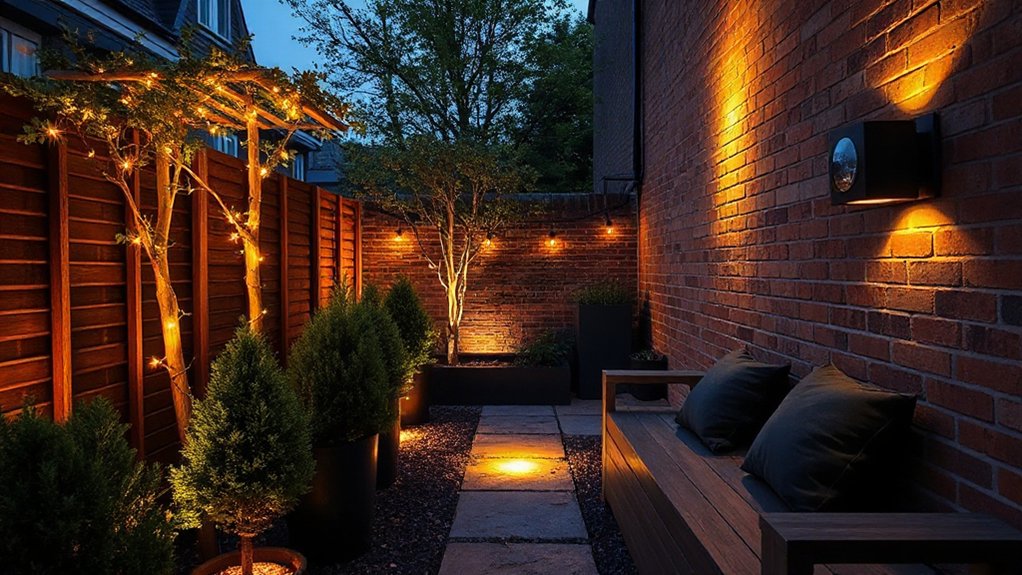
You’ll set up ambient lighting layers to extend outdoor use and mood, choosing task, accent, and ambient fixtures that work with London weather.
Weatherproof mood lighting should be integrated with switches or timers for reliable, low-energy performance.
This approach keeps the space usable after dark while maintaining a clean, technical feel.
Ambient Lighting Layers
Ambient lighting layers create a functional, flexible atmosphere for outdoor spaces, letting you shift mood and extend usability after dark. You’ll pair primary task lighting with secondary accents to define zones without clutter. Use a dimmable, warm white baseline to guarantee visibility while preserving ambience.
Add string lights overhead or along fences to create a soft canopy effect, evenly distributing glow across seating areas. Introduce lanterns ambiance on tabletops or steps for micro-scene focal points and safe navigation.
Integrate recessed or ground-level uplights to highlight textures, plants, or architectural features without glare. Control layering with a smart switch or app, enabling presets for dining, reading, or socializing.
Favor energy efficiency, weather-rated fixtures, and moisture shields to maintain performance through London’s damp conditions.
Weatherproof Mood Lighting
Weatherproof mood lighting lets you push outdoor use later into the evening without sacrificing atmosphere. You’ll choose weatherproof bulbs and fixtures rated for exterior exposure, ensuring reliable performance across London’s wet seasons.
Prioritize low-profile, high-efficiency options that illuminate pathways, seating zones, and plant beds without glare. Position solar powered fixtures along borders for hands-free operation, and pair with a timer or smart switch to taper brightness as night progresses.
Use warm color temperatures (2700–3000K) to maintain a cozy mood while preserving visibility. Seal connections with waterproof enclosures and gaskets, and mount fixtures away from direct rain spray.
Test after installation, confirming consistent charging during winter daylight. This approach extends outdoor use while maintaining safety, energy efficiency, and visual harmony with surrounding architecture.
Practical Planning for Renting or Owning a Compact Garden
Planning a compact garden for a rental or small home means prioritizing usable space, durable materials, and flexible layouts. You assess constraints, then map zones for seating, planting, and storage to maximize every square meter.
Choose modular planters and weatherproof surfaces to reduce maintenance, and prefer low‑height borders to keep sightlines open.
For growing, select compact fruiting varieties and vertical trellises to free ground area.
Favor durable, rot‑resistant timber or recycled composites for benches and screens, paired with steel hardware for longevity.
Plan for outdoor storage that’s accessible yet discreet, such as wall‑mounted cabinets or under‑bench units to minimize clutter.
Integrate garden art as focal points without crowding; guarantee circulation paths remain clear and modular layouts allow reconfiguration as needs change.
Frequently Asked Questions
How Can I Maximize Privacy in a Small London Garden Without Bulk?
You can maximize privacy in a small London garden by layering screens and tall planters, then position garden furniture to create intimate zones, use outdoor lighting to highlight boundaries, and guarantee furniture placement maintains sightlines while privacy screens remain unobtrusive.
Which Affordable Plants Resist Urban Pollution and Thrive in Shade?
Pollution resistant plants thrive; shade loving greenery will suit you. You’ll select compact, affordable options like aechmea, hosta, or ferns, and you’ll place them where light is gentle, ensuring resilience against urban pollutants while you maximize shade.
What Are Legal Limits for Balcony Gardening in Rental Properties?
You should check your lease and local laws for balcony safety and rental restrictions, as limits vary. You may be restricted on weights, railings, and plant placements; stay compliant, document conditions, and consult your landlord before modifications.
How Do I Prevent Pests Without Heavy Pesticide Use?
You’ll minimize pests by using natural deterrents and companion planting, dismissing concerns about effectiveness. Establish diverse, pest-resistant beds, rotate crops, and deploy cedar mulch. Monitor weekly, trigger barriers early, and use traps only as a last resort.
Can Smart Irrigation Save Water on Tiny Balconies?
Smart watering can save water on tiny balconies by delivering precise amounts to each plant, reducing runoff. It enables water conservation through sensors and schedule automation, optimizing irrigation timing and intensity for limited outdoor spaces.
Conclusion
Small London gardens reward smart planning: verticals, modular containers, and tight circulation create lush, usable zones without crowding turf. One surprising stat: London rainfall averages ~600 mm annually, so drought-tolerant natives cut irrigation while thriving in humid summers. Prioritize weatherproof materials, hidden storage, and solar or smart lighting to extend use. Keep surfaces low-maintenance and modular—swap in a new container row or seating module as needs shift. With precise zoning, your compact outdoor becomes a durable, vibrant retreat.