
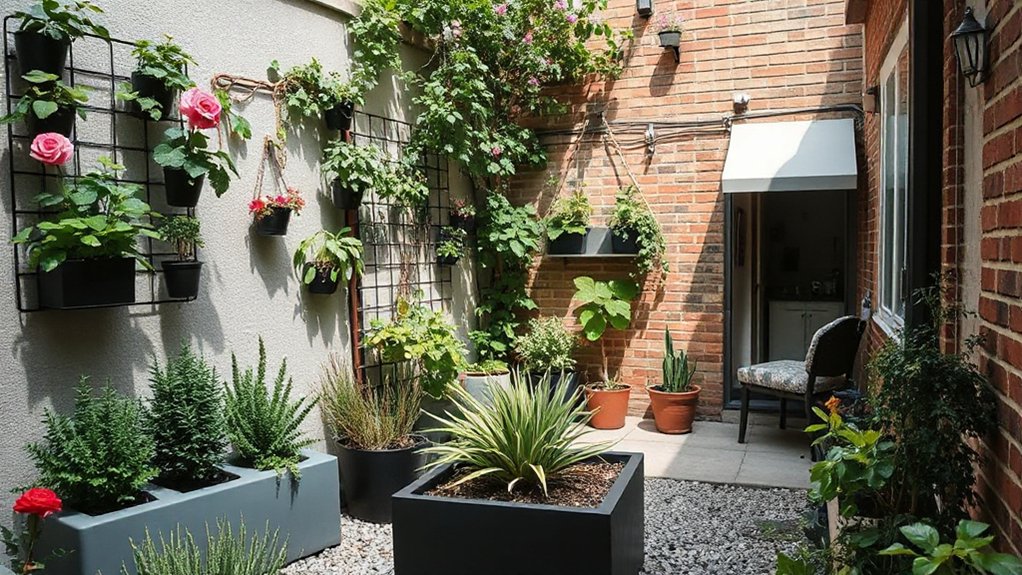
You can reclaim a cramped garden with vertical walls, multi-use furniture, and smart containers. Think wall planters, climbing greens, benches with storage, and tables that fold away. Define micro-zones to resemble rooms, and use lighting to carve depth. Each choice should free ground space while boosting function. Start with one bold upgrade and let the rest fall into place as you proceed. The right setup changes how you experience the entire space.
Vertical Garden Walls for Small Spaces
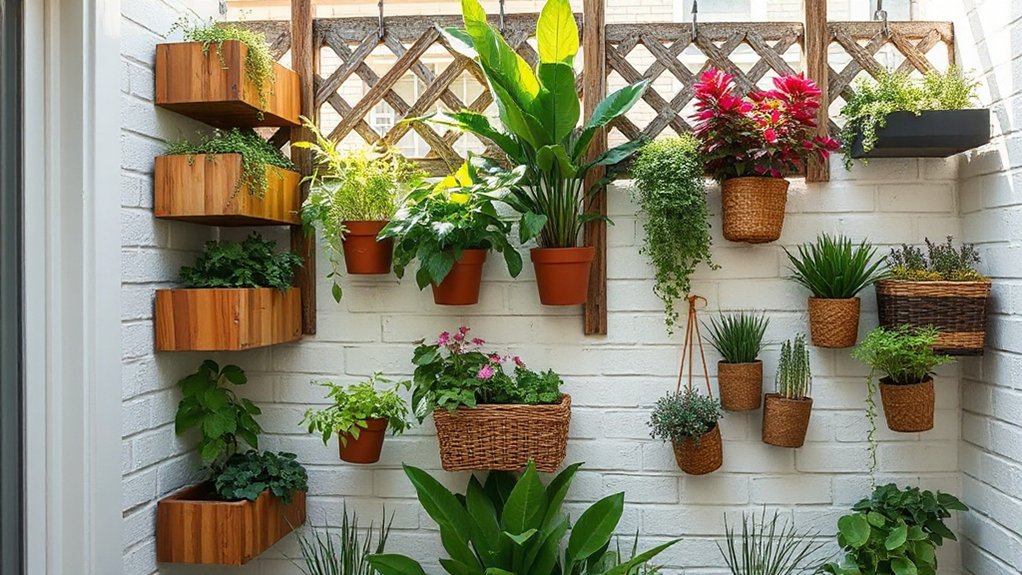
Vertical garden walls turn tight spaces into productive greenscapes. You install simple systems that save floor area and boost greenery without clutter. Choose wall mounted planters to keep weight balanced and accessible, then plan a vertical rhythm: rows of pockets, trays, or modular modules.
Select climbing plants to cover gaps quickly and add texture; vines like ivy or jasmine suit shaded spots, while flowering climbers brighten corners. Guarantee proper drainage and sturdy mounting, accounting for wind and sun exposure.
Water delivery should be efficient—drip lines or a small reservoir minimize maintenance. Label sections for easy care: pruning, feeding, and replacement. Maintain a clean line by aligning containers, cords, and irrigation.
Regularly inspect supports for stability to protect both plants and structure.
Choose Multi-Use Furniture to Save Floor Space
Multi-use furniture helps you keep floor space open while expanding what your garden can do. Choose pieces that serve dual purposes: a bench that hides storage, a coffee table that lifts to become a work surface, or a tea-table that doubles as a potting tray.
Opt modular designs you can rearrange as needs shift. Pick low-profile forms to preserve sightlines and air; avoid bulk that narrows pathways.
Integrate seating with planters to create micro-rooms without crowding. Select finishes that resist weather and simplify cleaning.
Add garden art and water features as focal accents rather than clutter; let them breathe between compact units.
Prioritize accessibility, durability, and ease of movement to keep your space practical and inviting.
Container Strategies for Dense Planting
Dense planting thrives in containers when you optimize spacing, soil depth, and drainage. You choose compact plant pairings, staggered layers, and rooted herbs beneath leafy greens to maximize sun exposure and harvests.
Use a grid layout to guide spacing and rotation, keeping roots from competing for moisture. Select plant container materials that suit heat, weight, and aesthetics, prioritizing lightweight plastics for mobility or concrete for stability, with breathable liners to prevent soggy roots.
Watering techniques matter: water deeply, less often, and adjust by container size and weather. Mulch the surface to reduce evaporation and monitor moisture with a finger test.
Confirm drainage holes stay clear, and refresh soil every season to sustain nutrients without overcrowding. Maintain tidy edges for easy access and ongoing productivity.
Create Micro-Zones to Shape a Mini Room
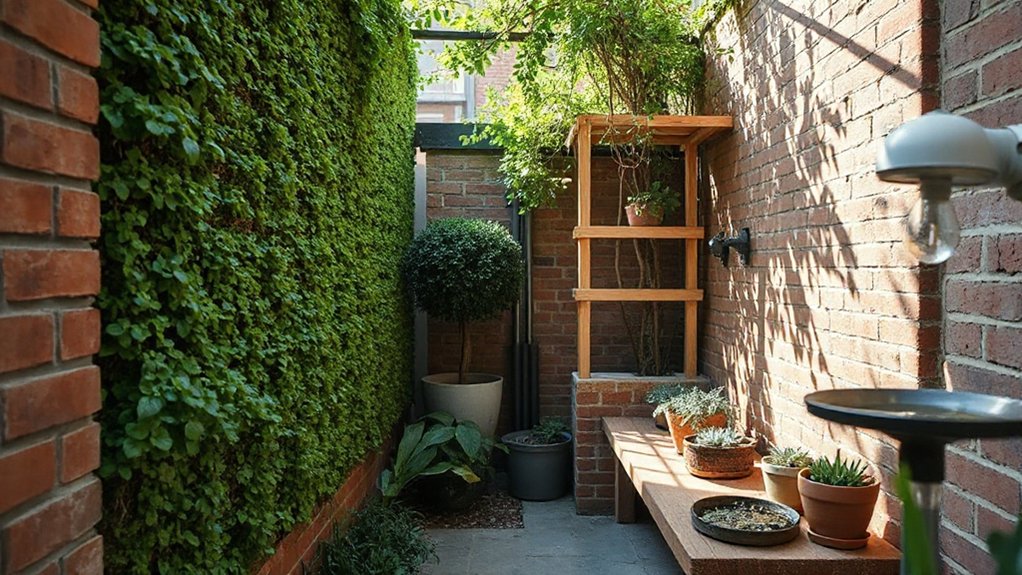
Create micro-zones to shape a mini room by assigning purpose-specific areas within a small footprint. You define paths, siting, and sightlines to prevent clutter and optimize flow. Zone boundaries are subtle: narrow gravel bands, pavers, or edge trims separate seating, dining, and planting without walls.
Use compact, multipurpose furniture to keep footprints light while functionality stays high. Place a dedicated corner for Garden art that doubles as a focal point, drawing the eye and guiding movement.
Incorporate a Wildlife habitat with native plants, a shallow water feature, or a bird perch to invite interaction without overwhelming space. Maintain restraint: repeat a limited palette, schedule routine pruning, and keep sightlines open.
Smart Lighting to Make a Small Garden Feel Bigger
Smart lighting can make a small garden feel bigger by shaping depth and guiding movement without adding bulk. You choose compact fixtures and place them along paths, corners, and planting beds to draw the eye deeper into the space. Use vertical clips or stake-mounted lights to create layered illumination, so shadows define boundaries without glare.
Favor warm, consistent color temperatures to preserve natural tones and avoid harsh contrasts. Solar power options simplify installation and reduce cords, while rechargeable units keep areas free of clutter. Ambient glow matters more than brightness; diffuse light softens edges and reveals texture in foliage.
Plan on a few strategically spaced spots rather than many scattered lamps. Involve timing, so light changes with the garden’s rhythm, extending usability after sunset.
Frequently Asked Questions
How Can I Prevent Plants From Overpowering a Tiny Space?
To prevent plants from overpowering your tiny space, manage Plant spacing and choose Compact varieties. You’ll prune regularly, group verticals, and use containers with proper drainage. Space wisely, rotate crops seasonally, and label beds for easy maintenance and airflow.
What Are Budget-Friendly Vertical Options for Balconies?
You can create budget-friendly balcony height with Container Gardening and DIY Vertical Planters. You’ll mount simple shelves or railing pots, reuse crates, and stack hanging pots, maximizing space while keeping maintenance minimal and accessibility practical for everyday use.
Which Irrigation Methods Suit Small Garden Setups?
You should use drip irrigation for precise watering in small setups, and supplement with spray watering for larger patches. This combo minimizes waste, reduces evaporation, and keeps your plants consistently hydrated without overwatering or frequent checks.
Can Height Variation Create the Illusion of More Space?
Yes. Like stepping into a quiet Renaissance garden, you’ll gain depth. Use plant layering to vary heights, achieving visual balance; height variation tricks the eye, making your space feel larger and more cohesive, efficiently organizing light and shade.
How Do I Protect Containers From Extreme Weather?
You protect containers from extreme weather by adding container insulation and weatherproof coverings. You’ll wrap, seal seams, and elevate pots off cold surfaces, ensuring airflow. You maintain insulation thickness, check vents, and shield from wind and sun exposure.
Conclusion
You’ll find a small garden can’t help but feel bigger when you tweak the basics. Avoid crowding, lean into verticals, and let clever furniture do the heavy lifting. If a space feels tight, ease it with light, layered planting, and defined little zones that invite you to linger. It won’t be cramped—just thoughtfully arranged. With gentle adjustments, you’ll enjoy a serene, multi-use retreat that quietly says yes to more outdoor life.