You might think low-maintenance means sacrificing design, but a deliberate layout actually reduces effort while boosting reliability. Start by mapping microclimates, grouping plants by care needs, and choosing drought-tolerant natives that fit your site. With cohesive textures, durable paths, and a smart irrigation plan, you’ll set a steady rhythm for upkeep. Curious how to turn plan into practice without constant tweaks? The next steps reveal the framework that keeps your garden poised and efficient.
Why a Low-Maintenance Garden Works for Busy Budgets
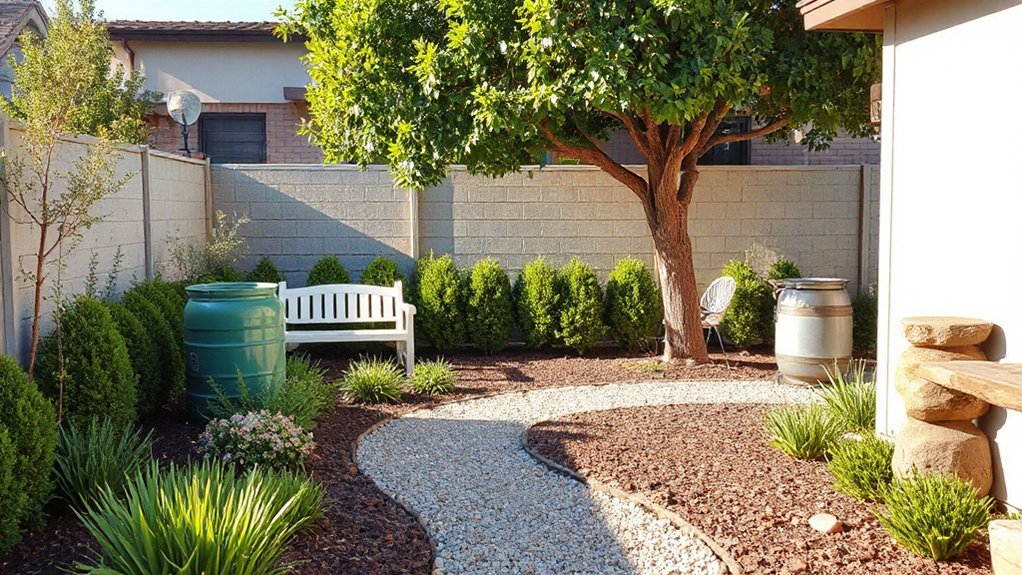
A low-maintenance garden saves time and money by reducing ongoing labor and replacement costs. You’ll see long-term value when you select resilient, native-leaning species and durable materials that minimize care needs.
Prioritize soil health and water-wise strategies to curb ongoing expenses, while maintaining functional performance. Garden aesthetics remain important, so you design with cohesive color, texture, and structure that reduce excessive pruning and replacements.
Choose plant groupings that support wildlife habitats, fostering ecological stability without increasing maintenance. Implement automated irrigation, mulch mulch, and targeted pruning calendars to limit labor spikes.
Map Your Space by Zones for Simple Care
Segment your garden into zones based on sun exposure, moisture, and activity to streamline care. Map each area by defining microclimates, drainage patterns, and traffic paths, then assign maintenance tasks to zones rather than individual beds.
Use a simple labeling system to track plant needs, irrigation, and mulching frequency, reducing routine checks. Plan for Plant containerization where feasible, placing pots in zones that require frequent watering or movable access for seasonal rotations.
Align irrigation design with zone priorities, installing drip lines or soaker hoses that serve multiple beds efficiently. Implement Pest management proactively by monitoring hotspots and integrating barrier plants or traps within each zone.
Review seasonal shifts quarterly, updating labels and maintenance intervals to sustain low maintenance without sacrificing plant health or productivity.
Choose Drought-Tolerant, Low-Input Plants
To reduce maintenance demands, select drought-tolerant, low-input plants suited to your zone’s sun and soil conditions. Prioritize species with deep or extensive root systems, minimal irrigation needs, and pest resistance.
Choose native species when possible to align with local climate, soil, and beneficial insect communities. Evaluate water-use efficiency, soil structure, and growth form to minimize mulch disruption and pruning.
Favor plants with low fertilizer requirements and resistance to common pests, reducing intervention needs. For insect attractors, integrate flowering natives that provide resources across seasons without boosting water demands.
Avoid high-maintenance ornamentals that demand frequent pruning or pest control. Group selections by sun exposure and drought tolerance to simplify irrigation planning.
Validate selections against long-term weather trends and pathogen risks to sustain low input performance.
Group Plants by Care Needs to Cut Your Chores
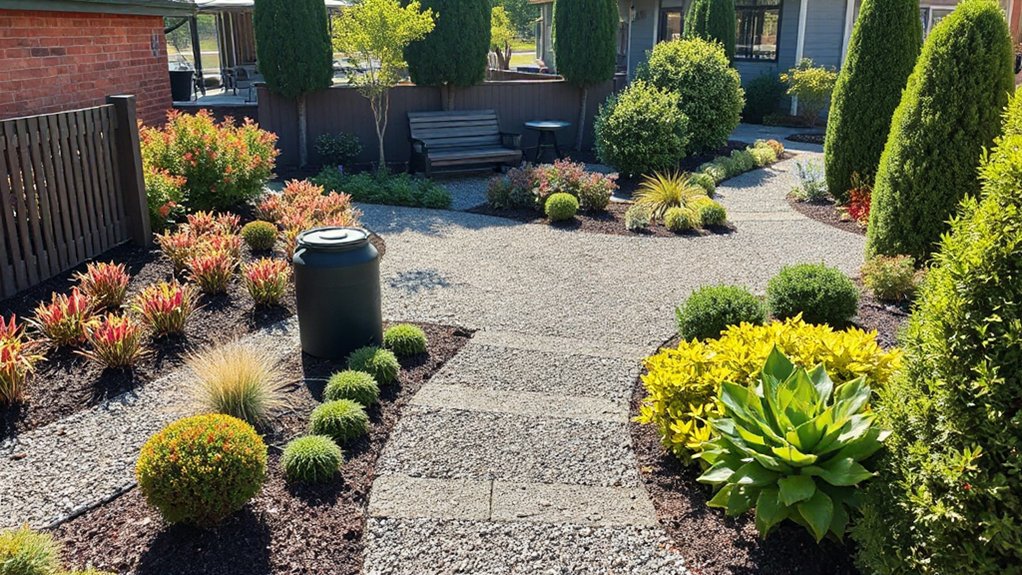
Grouping plants by similar care needs streamlines your chores. Use schedule-based maintenance to batch tasks, and pair species that support each other for fewer interventions.
This approach clarifies routines, reduces downtime, and keeps your landscape consistently low-maintenance.
Group by Care Needs
Grouping plants by similar care needs helps you minimize chores and maximize efficiency. You’ll categorize species by light, water, soil, and pruning requirements, then cluster them into maintenance blocks. This streamlines irrigation, feeding, and seasonal upkeep, reducing overlap and misfires.
Prioritize uniform drought tolerance in dry zones and consistent moisture needs in wetter areas to prevent overwatering or under-watering. When selecting companions, consider companion planting to enhance growth while simplifying care; pair compatible species within each block to minimize interventions.
Use a simple monitoring rhythm tailored to each cluster, recording signs of stress or pest activity only where needed. By aligning care schedules, you cut trips, stabilize routines, and improve reliability of pest control and overall plant performance without increasing complexity.
Schedule Based Maintenance
Switching from grouping by care needs, you’ll implement a schedule that aligns maintenance tasks with each block’s requirements. Schedule-based maintenance clusters plants by shared needs, reducing trips and resets.
You’ll assign tasks to specific windows—watering, pruning, fertilizing, and mulching—based on phenology and soil moisture metrics rather than calendar dates alone.
Track input rates and output results for each block to refine cadence over time.
Companion planting can inform task timing, as compatible species often share similar care intervals, enabling synchronized checks and pest suppression routines.
Integrate pest control within the schedule, prioritizing proactive monitoring, sanitation, and targeted interventions to minimize disruption.
Maintain concise logs, update blocks after major weather events, and review quarterly to preserve low maintenance while preserving yield and health.
Plant Pairing Strategies
Plant pairing strategies cluster species by similar care needs to minimize chores and improve efficiency. You group perennials and annuals by water, light, soil, and pruning requirements, aligning rotations to reduce labor and waste.
In practice, pairings should balance irrigation demand and fertilization timing, so you limit maintenance days and avoid overwatering or drought stress.
Use companion planting concepts to maximize positive interactions; select species that share pest resistance and habitat needs to streamline care routines.
Implement zoning that keeps high-frequency tasks—watering, weeding, monitoring—within the same area.
Favor combinations that support pest control through natural antagonists and ground cover that suppresses weeds.
Document outcomes, adjust plantings seasonally, and maintain a simple calendar to sustain low-maintenance performance without sacrificing garden health.
Layer Textures for Year-Round Interest (Easy-Care Edition)
Layer textures form the backbone of year-round interest with minimal effort, so you’ll want to map Layered Texture Basics to your plant palette.
Combine Seasonal Texture Variations to guarantee contrast across each season, while Low-M Upkeep Texture Tricks keep maintenance tight without sacrificing depth.
This approach guides your choices toward durable, contrasting textures that stay clear and varied with simple, repeatable patterns.
Layered Texture Basics
Layered texture is the foundation of a year-round, easy-care garden. In this section, you assess texture in three dimensions: leaf surface, stem structure, and form.
Textural contrast emerges when you pair glossy leaves with matte surfaces, rigid stems with soft foliage, and dense masses against airy growth. You’ll implement plant layering to create depth: a groundcover anchors the base, mid-height herbaceous stems fill the middle, and taller silhouettes rise above for vertical definition.
Prioritize species with complementary textures to maintain visual interest through all seasons without increasing maintenance. Avoid redundancy by selecting stable, drought-tolerant textures that retain shape in varying light.
Measure effect from multiple viewpoints, adjusting spacing to preserve contrast and guarantee seamless transitions between layers.
Seasonal Texture Combinations
Seasonal texture combinations extend year-round interest by pairing changing leaf surfaces, stems, and silhouettes to maintain contrast as conditions shift. You select plant pairs with differing textures—glossy, matte, fuzzy—so visual rhythm persists through seasons.
Use tall, narrow stems to extend form, then counter with broad, dense foliage to preserve silhouette changes without gaps. Aim for consistent soil health, since integrated texture relies on steadier moisture and nutrient access.
Favor species with complementary plant color across seasons, ensuring color shifts don’t homogenize texture. Space according to mature width to avoid crowding, which can dampen textural distinction.
Include a drought-tolerant accent for low maintenance, and monitor soil moisture to sustain texture integrity. Document outcomes to refine future year-round combinations and preserve easy-care performance.
Low-M Upkeep Texture Tricks
You can build year‑round interest with simple texture tricks that stay low maintenance. Layer textures by combining leaf shapes, bark, and stone to create visual depth without raising upkeep needs. Use a restrained palette of materials that weather similarly, reducing contrast that invites extra care.
Incorporate evergreen foliage with varied textures to maintain year-round silhouette. Select low‑maintenance perennials or grasses that hold form in different seasons.
Position garden furniture to create micro-textural zones, aligning surface roughness with adjacent plant textures for cohesion. Add outdoor lighting to emphasize vertical and sculptural elements after dark, enhancing texture perception without increasing maintenance.
Prioritize compact groundcovers under taller textures to suppress weeds and minimize mowing. Choose breathable, durable fabrics for seating and shade to reduce cleaning frequency.
Plan Efficient Pathways and Edging for Low Upkeep
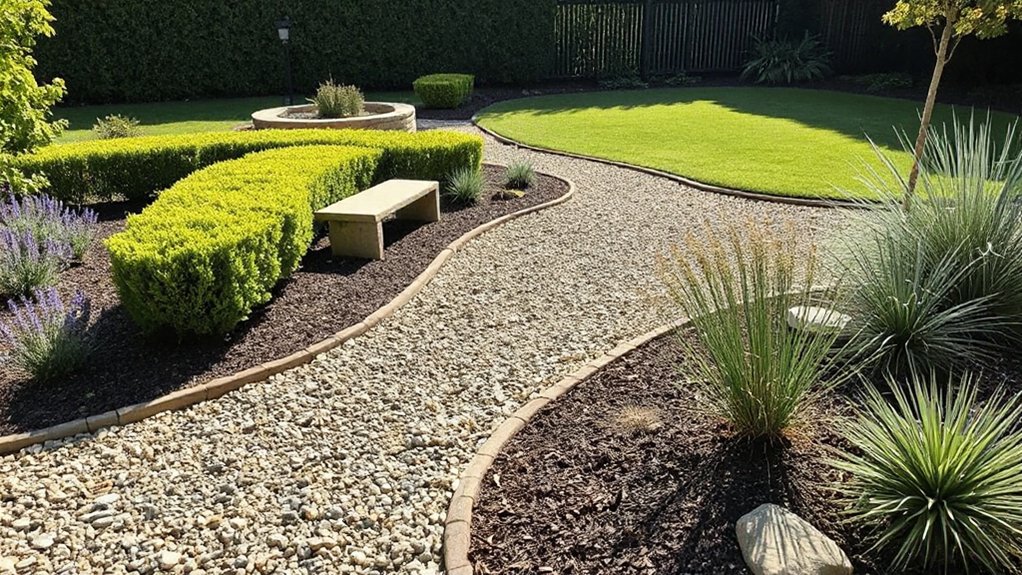
Efficient pathways and durable edging are the backbone of a low-maintenance garden layout. You plan routes that minimize turns, optimize sightlines, and reduce soil compaction.
Choose smooth, stable surfaces that shed mud and resist wear, enabling year‑round access without frequent repair. For pathway materials, favor permeable options that separate zones yet prevent washout and weed infiltration.
Align widths with task frequency: main routes wider, auxiliary paths narrower to discourage trampling. Edging styles should confine beds, prevent turf encroachment, and simplify mowing.
Select edging that requires minimal maintenance and resists weathering; install with a solid anchor to avoid movement. Integrate color or texture cues to guide navigation without additional signage.
Document layouts and update as plants mature, preserving flow and durability while reducing ongoing upkeep.
Water-Smart Irrigation to Minimize Waste
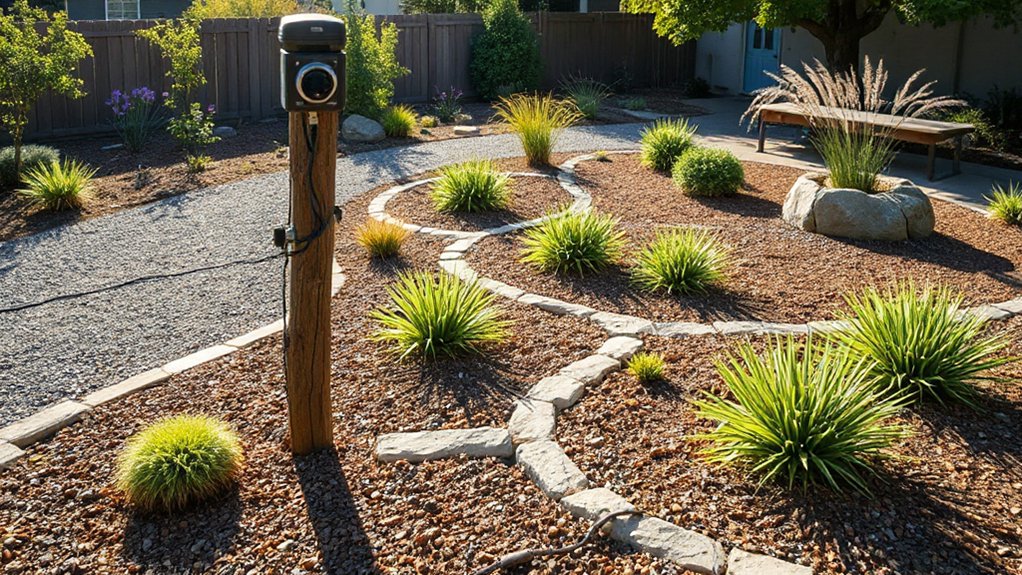
Smart irrigation minimizes waste by delivering water where it’s needed, when it’s needed, and in the right amounts. You’ll optimize controller schedules based on evapotranspiration data and soil-moisture readings, reducing runoff and evaporation losses.
Use zone design to group plants with similar water needs, and employ drip emitters or micro-sprays to target root zones precisely. Integrate rain sensors and weather-based controllers to pause irrigation during rainfall and adjust for changing conditions.
Collectively, these practices support Rainwater harvesting strategies by reducing dependence on municipal sources and facilitating stored-water use during dry spells. Favor drought-resistant plants in low-water zones to maintain landscape resilience with minimal input.
Regularly verify coverage and leaks, calibrate meters, and schedule seasonal adjustments to sustain efficiency.
Mulch, Weeds, and Pruning: A Simple Seasonal Routine
Mulch, weeds, and pruning form a straightforward seasonal routine that protects soil, suppresses competition, and preserves plant health.
You apply a mulch layer to conserve moisture, moderate soil temperature, and reduce erosion; select appropriate mulch depth and material for each bed.
Weeds receive timely removal before seed set, and you prune to maintain airflow, reduce disease pressure, and shape growth.
This routine minimizes maintenance by limiting weed spread and stabilizing the rooting zone.
After installation, monitor soil moisture and adjust mulch or irrigation accordingly.
Include composting tips within your routine to recycle plant material and enrich soil structure, ensuring nutrient balance.
For pest control, implement physical barriers and targeted interventions only when necessary, avoiding broad-spectrum treatments that disrupt beneficial organisms.
Plan seasonal adjustments based on rainfall and crop vigor.
Seasonal Maintenance Calendar You Can Stick To
A well-structured seasonal maintenance calendar keeps your low-maintenance garden on track without surprise tasks. You map key tasks to seasons, aligning soil prep, irrigation checks, and plant health assessments with predictable intervals.
In spring, you confirm soil pH, prune selectively, and refresh mulch borders to sustain garden aesthetics while minimizing disturbance.
Summer requires targeted irrigation audits, deadheading for vigor, and ongoing pest monitoring to prevent infestations before they escalate.
Autumn emphasizes compost inputs, edging revisions, and debris removal to maintain clean lines and reduce pest harborage.
Winter focuses on equipment maintenance, seed bed planning, and protection for vulnerable perennials.
Use a simple checklist and automatic reminders to enforce cadence. This approach preserves garden aesthetics and strengthens pest control by revealing issues early and maintaining consistent care.
Frequently Asked Questions
How Often Should I Check Soil Health in a Low-Maintenance Garden?
You should check soil health every 1–3 years for a low-maintenance garden, focusing on soil testing and health monitoring to guide amendments. You’ll notice changes in structure or nutrient needs, adjusting practices promptly for sustained balance and productivity.
What Is the Best Mulch Depth for Different Beds?
Rounding up the basics, you should aim for two to4 inches of mulch; adjust for bed type. Mulch types vary, and garden bed preparation affects depth. Maintain even coverage, avoiding piling at stems or trunks, to prevent moisture stress.
Can I Replace Lawn Space With Edible Plants for Less Upkeep?
Yes, you can replace lawn space with edible plants for less upkeep, using companion planting to optimize nutrient use and pest management to reduce interventions. This approach enhances yield, biodiversity, and resilience while minimizing maintenance and water use.
How Do I Choose Low-Care Trees for Shade and Structure?
You should prioritize native, low‑input species with deep roots and drought tolerance when selecting shade trees. Tree selection favors multi‑stem structure for resilience, moderate height, and disease resistance; evaluate soil, rainfall, and space to guarantee lasting shade and cohesion.
What Are Signs of Plant Stress in Drought-Tolerant Species?
Drought signs reveal themselves as leaf curl and wilting when roots suffocate; you’ll notice plant fatigue even in deeply watered zones. You observe juxtaposition: stubborn resilience vs. quiet decline, identifying trouble through rapid moisture shifts and stressed foliage.
Conclusion
In the garden, your plan is a quiet compass, guiding a landscape that breathes with minimal effort. Symbolically, water becomes trust—drip lines deliver steady care, mulch protects roots like a shield of patience, and drought-tolerant plants stand as resilient promises. Grouping, zoning, and scheduled routines turn chaos into system, like gears that turn with unseen precision. With durable paths and smart irrigation, you’re just maintaining a living blueprint that endures—efficient, reliable, and beautifully simple.