Did you know that your driveway’s drainage can be more about slope and outlets than size of the puddle? You’ll assess flow patterns, grade the pavement, and add swales or trenches to redirect runoff away from both the pavement and the foundation. We’ll cover surface textures, maintenance steps, and when to call in a pro for subsurface installs. Start with the basics, then explore options that fit your site and budget.
Identify Your Driveway Drainage Problem and What You’ll Learn
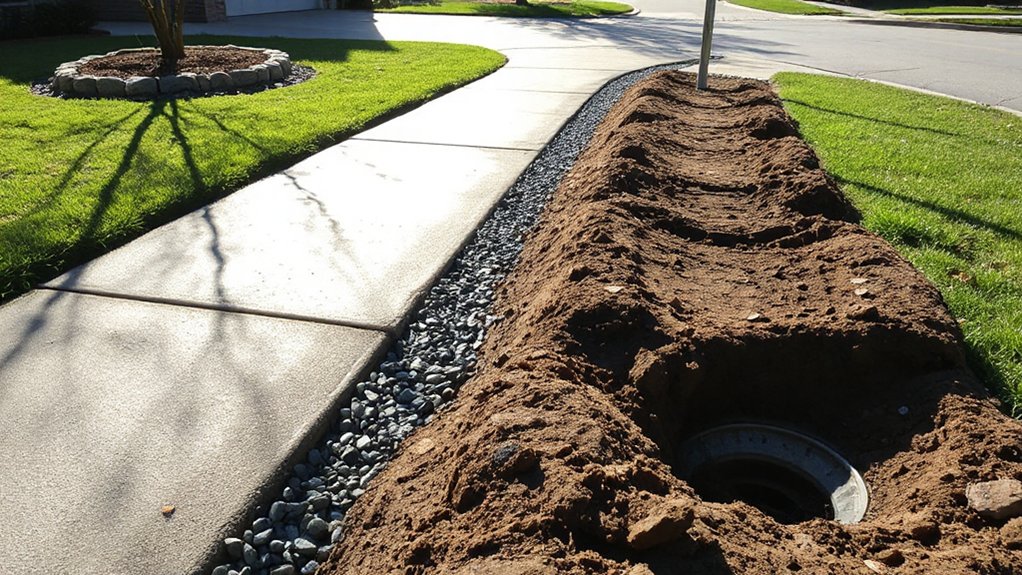
Identifying your driveway drainage problem starts with noting where water pools or flows abnormally. You’ll catalog surface runoff patterns, slope deviations, and grades that direct water toward the pavement edges.
Observe infiltration rates of adjacent soils and potential obstructions, such as compacted areas or fallen debris. Document precipitation response, including after storms of varying intensity, to differentiate temporary pooling from persistent issues.
Then translate findings into actionable steps: establish baseline drainage goals, align with landscaping design principles, and preserve driveway aesthetics while correcting inefficiencies.
Assess existing grading and crown conditions, ensuring water is redirected away from the structure. Prioritize solutions that minimize erosion and maintenance, while maintaining accessibility.
This assessment frames the scope, informs the design approach, and guides subsequent diagnostics and remediation decisions.
Quick Diagnostics: Is Standing Water or Ice Your Issue?
You’ll start by distinguishing whether you’re dealing with standing water or ice, using clear, observable cues.
Look for persistent surface pooling and slow drainage to flag standing water symptoms, or glossy, frozen patches and recurring freeze-thaw cycles to indicate ice formation.
This quick check guides your next diagnostic steps and informs targeted fixes.
Standing Water Symptoms
Standing water around a driveway signals drainage issues that require quick evaluation. You’ll observe persistent pooling after rain, slow evaporation, or water lingering along edges for hours.
Elevation differences, surface depressions, and adjacent slope failures indicate suboptimal runoff paths. Look for sediment buildup, mud, or fines blocking infiltrative soils, which reduce capacity.
If water migrates toward the foundation or undercuts pavement joints, prioritize action.
Distinguish standing water from surface icing by noting temperature, sun exposure, and duration; but avoid discussing ice indicators in this section.
Assess landscape design implications: improper grading, swales, or clogged outlets can exacerbate pooling.
Note how driveway materials respond: porous surfaces aid drainage but require maintenance, while rigid materials may channel water along margins.
Address drainage promptly to protect the structure and longevity of landscaping investments.
Ice Formation Indicators
Ice formation around a driveway can masquerade as standing water, but it behaves differently under similar conditions. In this subtopic, you diagnose by observing surface cues and subsurface signals.
When you see clear liquid pooling that refreezes with temperature dips, you’re likely dealing with standing water, not ice. If the surface remains hard and glazed despite moisture present, ice is forming.
Quick checks include noting the rate of change: ice stabilizes quickly and stays rigid, while water may thin or drain as ambient temperatures rise.
Subsurface moisture beneath the pavement influences frost depth and ice expansion, so you assess drainage paths and soil moisture readings carefully.
Foundation stability can deteriorate if frost heave repeats; identify and address moisture sources to protect structure.
Redirect Water Now: Simple Swales and Runoff Paths
Have you ever considered a quick, low-tech fix to redirect surface water away from your driveway? Simple swales and defined runoff paths offer immediate, practical relief.
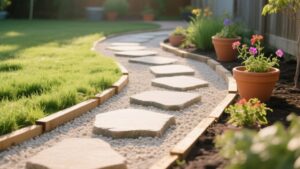
Construct a shallow, narrow trench slightly below grade, lined with compacted soil or grass to encourage infiltration. Position the swale to intercept overland flow from higher ground and channel it parallel to the driveway, terminating in a non-eroding outlet such as a shallow grass filter strip or rain garden.
Use a gentle slope, typically 1–3 percent, to maintain flow without speed. Align paths with existing landscaping aesthetics to blend with surroundings while preserving functionality.
Consider driveway materials and edge treatments to prevent erosion at the interface. Regularly inspect for sediment buildup and vegetation intrusion to sustain performance.
Grade It Right: How Slope Controls Water Flow
You set the slope to direct runoff away from the driveway, ensuring water doesn’t pool near the surface. Proper slope direction guides flow toward defined outlets, preventing erosion and damage to the pavement edge.
This discussion centers on controlling water flow through measured grade and consistent evaluation.
Proper Slope Direction
Proper slope direction guarantees runoff moves away from the driveway surface and toward surrounding drainage channels. You must determine the correct gradient to assure consistent flow, avoiding ponding at the pavement edge.
Establish a slope that directs water to the intended outlet without creating erosion at joints or shoulder areas. For drainage design, measure longitudinal and cross-slope components to maintain a stable discharge path under varying loads.
Maintain uniformity along the driveway to prevent localized surcharge, which can compromise surface integrity. Consider soil permeability when selecting backfill and surrounding materials; higher permeability enhances infiltration near the edge, while lower permeability may require extended drainage paths.
Document slope data, verify with spot checks after rainfall, and adjust as needed to sustain predictable, safe drainage performance.
Water Flow Control
Water flow control hinges on how slope guides runoff. You shape grading to steer water toward approved outlets, preventing erosion and pooling near the driveway. Channeling flow relies on precise elevations, cross-slope, and discrete swales that capture surface water before it reaches structures.
You’ll implement a consistent gradient that maintains velocity appropriate for drainage capacity without causing soil displacement. Design decisions align with Landscaping design considerations and guarantee compatibility with adjacent landscapes and utilities.
In parking lot planning contexts, you assess impervious area, runoff coefficients, and desired detention where needed, then integrate curb lines, trenches, or bioswales accordingly. Maintain clear flow paths, verify finishes, and schedule inspections after heavy rain.
This approach minimizes undermining loads and facilitates reliable drainage performance over time.
Subsurface Options: Gravel, Trenches, and French Drains for Driveways
Gravel, trenches, and French drains offer distinct subsurface options for driveways, each supporting drainage and stability in different soil conditions. You assess subgrade strength, permeability, and load requirements to select an approach.
Subsurface options focus on diverting water before it reaches the surface, reducing erosion and frost damage.
Gravel provides a porous aggregate layer that promotes infiltration and temporary storage, suitable for moderate slopes.
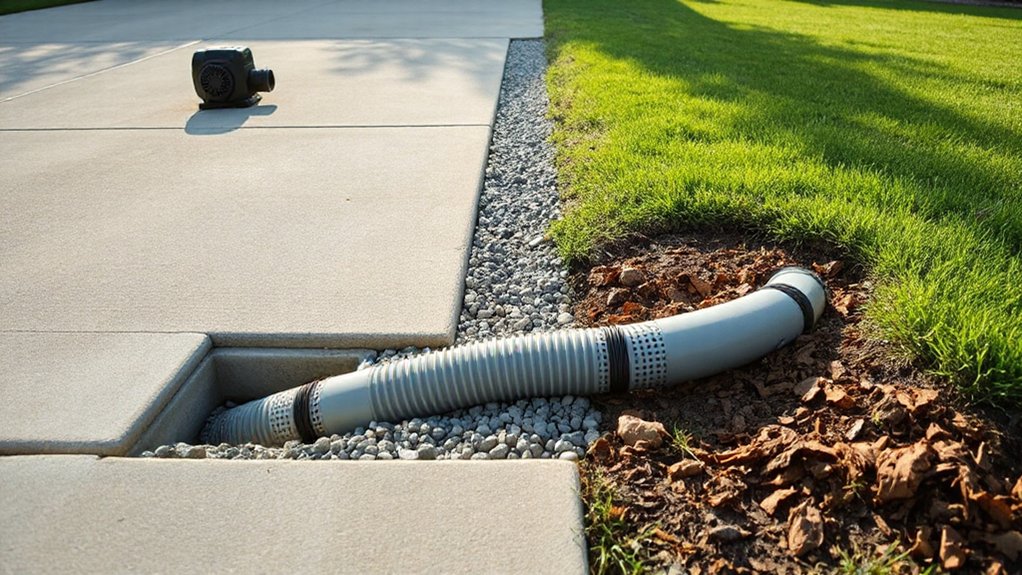
Drainage trenches channel water away via crushed stone backfill and perforated piping, effective in compacted soils with limited vertical drainage.
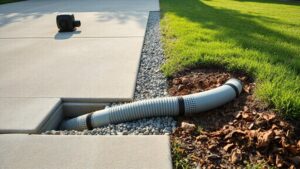
French drains combine perforated pipe with gravel, installed in a shallow trench to intercept subsurface flow.
Guarantee proper trench width, slope, and outlet placement to sustain long-term performance.
Verify code compliance and inspect bedding, filter fabric, and backfill for reliability.
Surface Treatments That Stop Puddles and Slippery Ice
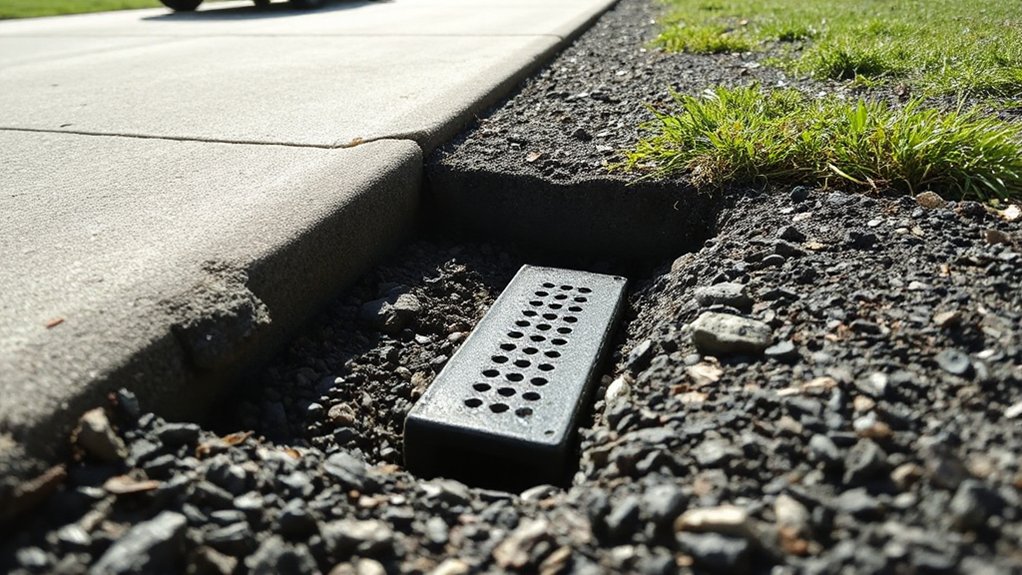
To prevent puddles and slippery ice on driveways, apply surface treatments that promote rapid water shedding and traction. You assess material options by porosity, skid resistance, and durability under freeze–thaw cycles. Use broomed or stamped finishes that minimize standing water, plus anti-slip aggregates or epoxy coatings designed for outdoor use.
Sealants should block water ingress yet remain breathable to avoid hydrostatic pressure. Choose products with high solid content and low volatile organic compounds to reduce maintenance intervals. Implement color-enhanced finishes that support driveway aesthetics without compromising traction.
For parking space organization, mark zones with durable, contrasting coatings to improve clarity and safety. Regular reapplication schedules and proper cure times guarantee long-term performance, while avoiding slick surfaces after rain or light snow.
Seasonal Maintenance and Budgeting for Long-Term Protection
Seasonal maintenance and budgeting for long-term protection require a disciplined, repeatable plan that aligns maintenance actions with climate expectations and cost controls. You establish a yearly calendar that matches seasonal risks—freeze-thaw cycles, heavy rainfall, and drought periods—to concrete tasks.
Schedule inspections of grading, drainage outlets, and culverts, then record results and corrective steps.
Tie budgeting to predictable costs, such as landscaping design adjustments, routine erosion fixes, and periodic resurfacing as needed. Prioritize durable driveway materials and proper sealing intervals to extend life and minimize replacements.
Use data from past seasons to forecast budgets, enabling proactive replacements before failures occur.
Integrate landscaping design principles with drainage goals, ensuring that any plantings support soil stability without compromising flow.
Maintain documentation for warranty compliance and future planning.
DIY vs. Pro: Choosing the Best Path for Your Home and Budget
Choosing between DIY and hiring a pro hinges on scope, safety, and total cost. You evaluate project complexity, required permits, and potential hidden risks before deciding.
DIY suits small-scale improvements, simple grading, and nonstructural fixes, provided you adhere to local codes and safety practices.
Pro involvement excels when the work affects structural support, drainage hydraulics, or long-term performance, ensuring professional-grade installation and compliance.
Consider Driveway aesthetics in the final result; a pro can preserve curb appeal while integrating seamless drainage.
Material durability matters, as improper materials or installation degrade quickly under freeze-thaw cycles or heavy loads.
Budgeting should include future maintenance and warranty coverage.
Weigh downtime, coordination, and disruption against reliability, then select the path that minimizes total lifecycle costs.
Frequently Asked Questions
Can Drainage Fixes Cause Foundation Issues if Misapplied?
Yes, misapplied drainage fixes can threaten foundation stability and accelerate soil erosion, especially if grading slopes wrong, drainage is overwhelmed, or components trap moisture near footings, causing differential settlement and cracks. Proper design mitigates these risks.
How Long Before Results Appear After Adding a French Drain?
French drains typically show improvements within a few days to weeks, depending on soil, rainfall, and system design. Drainage types vary; you’ll notice reduced pooling. Follow maintenance tips: keep inlets clear, inspect piping, and test flow after storms.
Are There Climate-Specific Drainage Solutions for Icy Regions?
Yes, climate adaptation shapes design: you use heated or insulated trenches for snow melt management, paired with slope and drainage precision. You implement snow fences or permeable surfaces, prioritizing controlled runoff and continuous performance in icy conditions.
What Permits or Codes Apply to Driveway Drainage Projects?
You must verify permit requirements and zoning regulations before starting. You’ll submit plans to your local building department, ensuring drainage aligns with municipal standards and stormwater rules, and obtain approvals or variances as needed for driveway drainage projects.
Can DIY Drainage Upgrades Affect Home Insurance Premiums?
Yes—DIY drainage upgrades can affect your insurance, leading to premium adjustments if risks rise. Insurance implications hinge on proper permits, code compliance, and documented contractor work; you may see higher rates or coverage alterations if the project isn’t vetted.
Conclusion
You’ll transform a puddle-prone mess into a peak-performance drainage system—almost overnight. With a precise plan, quick fixes, and long-term subsurface options, you’ll outsmart every leak, redirect every drip, and banish ice in supersonic fashion. Your driveway will drain like a high-tech moat, protecting your pavement and foundation from floods and freezes. Do it right, stay consistent, and watch water vanish before your eyes—clean, efficient, and dramatically improved.