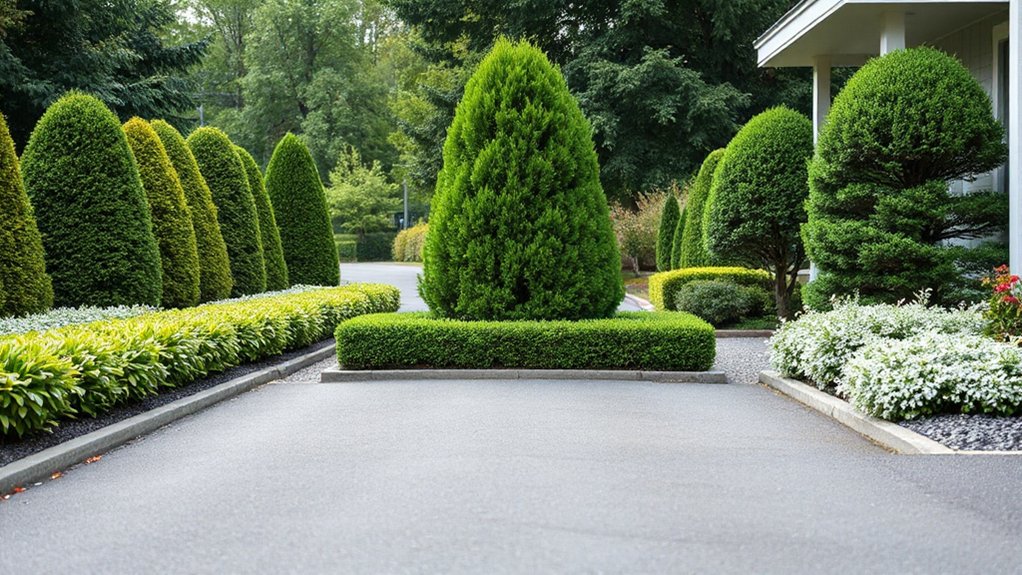
To achieve a polished driveway border, you’ll want a disciplined mix: evergreen backbone for year‑round structure, mid‑size accents to soften edges, and low groundcovers for texture and weed control. Plan for proper spacing, consider climate and soil, and layer plants from vertical to ground level. Keep maintenance predictable with native options and seasonal color pops. Get a clear layout that ties house to street, then you’ll see how the border evolves—and why the right choices matter.
Define Border Success: Form, Texture, and Upkeep
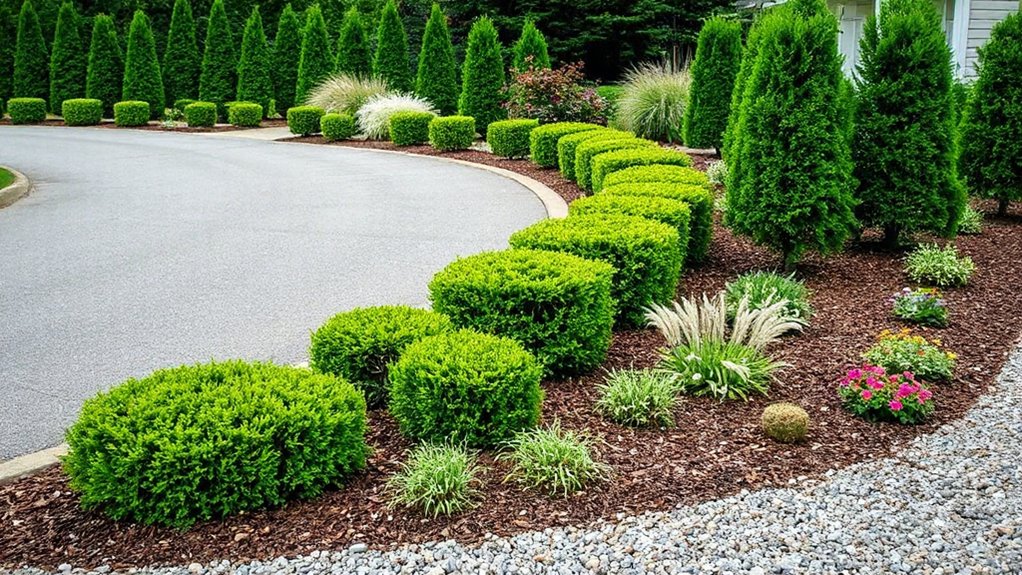
A successful driveway border balances form, texture, and upkeep in a way that enhances curb appeal without demanding constant attention. You evaluate border success by three criteria: form, texture, and upkeep.
Form defines a clear silhouette that remains legible from the street and footpath, avoiding abrupt changeovers.
Texture adds contrast between leaf, stem, and surface, supporting visual rhythm and depth.
Upkeep translates into maintenance cycles, irrigation efficiency, and soil resilience, reducing ongoing labor.
In practice, you select species that hold unique profiles through seasonal shifts, ensuring consistent presence of garden aesthetics while minimizing pruning workload.
Prioritize plant health, diagnosing stress indicators early to preserve stability.
The result is a border that harmonizes structure with plant vigor, delivering long-term visual clarity and reliable performance.
Evergreen Backbone Options for Year-Round Structure
You’ll establish a year-round backbone by selecting evergreen options that deliver consistent height, density, and structure.
Consider species with predictable growth forms and low-maintenance needs to support border planting, texture, and alignment across seasons.
This framework prioritizes reliable evergreen backbone, compatible underplanting, and scalable spacing for a polished border.
Year-Round Structure Backbone
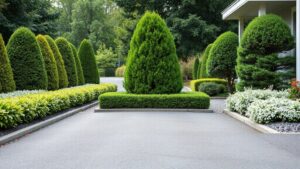
To establish a year-round backbone, select evergreen shrubs and trees with consistent foliage, reliable winter structure, and healthy growth habits. Your selection should prioritize architectural form, density, and disease resistance to sustain borders through harsh seasons.
Aim for a balanced mix of vertical accents and mid-height fillers that maintain sightlines and clipping efficiency. Informed pruning schedules preserve structure without sacrificing growth vigor, while soil awareness and mulching support root health and nutrient uptake.
For garden design, choose species whose seasonal silhouette complements neighboring plantings, ensuring winter interest without overwhelming margins. Consider pest management implications, selecting resistant cultivars and integrating monitoring practices to minimize chemical interventions.
Document growth rates, spacing, and maintenance tasks to sustain a crisp, durable border year after year.
Evergreen Plant Options
Evergreen backbone options emphasize shrubs and small trees with reliable winter presence, dense foliage, and architectural form that supports year-round borders. You select species that combine structure with subtle seasonal interest, ensuring a consistent canvas for edging, sight lines, and scale.
Prioritize plants that deliver predictable habit, durable bark, and compact form suitable for driveways. Emphasize plant diversity to create layered texture and varying leaf shapes, while maintaining cohesion in color and proportions.
Consider evergreen options that resist common pests and diseases, reducing maintenance and replacement needs. Assess growth rate, pruning requirements, and root behavior to avoid conflicts with paving.
Balance aesthetics with function: year-round screening, windbreak, and defined transition zones, all without sacrificing accessibility or border polish.
Border Planting Framework
A solid evergreen backbone for border planting begins with selecting species that deliver consistent structure, reliable winter presence, and compact form suitable for driveway edges. You want a framework that stacks height, texture, and color without gaps in cold months.
Choose pillars such as dense Thuja, Yew, and Boxwood for backbone roles, then bind with midground evergreens like Juniper or Berberis to soften passages. Confirm root zones stay clean with mulch and unobtrusive irrigation zones.
For year-round appeal, plan a layered rhythm: verticals, horizontals, and groundcovers that stay tight against drive glare. Integrate Garden decor accents and durable materials that echo the evergreen cadence.
Employ irrigation techniques that minimize evaporation, deliver even moisture, and support root health during dry spells. Regular pruning keeps a crisp, professional border.
Seasonal Color Accents for Curb Appeal
Seasonal color accents instantly elevate curb appeal by aligning plant choices with your driveway’s lines and surrounding architecture. You’ll select species that offer predictable seasonal bloom windows, ensuring consistent texture and color when viewed from the approach.
Focus on complementary contrasts—cool versus warm tones—and consider foliage as a prelude to bloom, so shift feel intentional. For spring, target plant color shifts that echo existing masonry or trim, while summer highlights should sustain form without overcrowding sightlines.
In fall, leverage saturated reds, oranges, and bronzes to extend visual interest into twilight hours. Winter interest comes from structural silhouettes and evergreen inclusions that preserve shape.
Balance mass and spacing to prevent crowding, and schedule regular pruning to maintain a crisp, maintenance-efficient edge. Seasonal bloom timing should be documented for predictable performance.
Height and Rhythm: Layering With Verticals
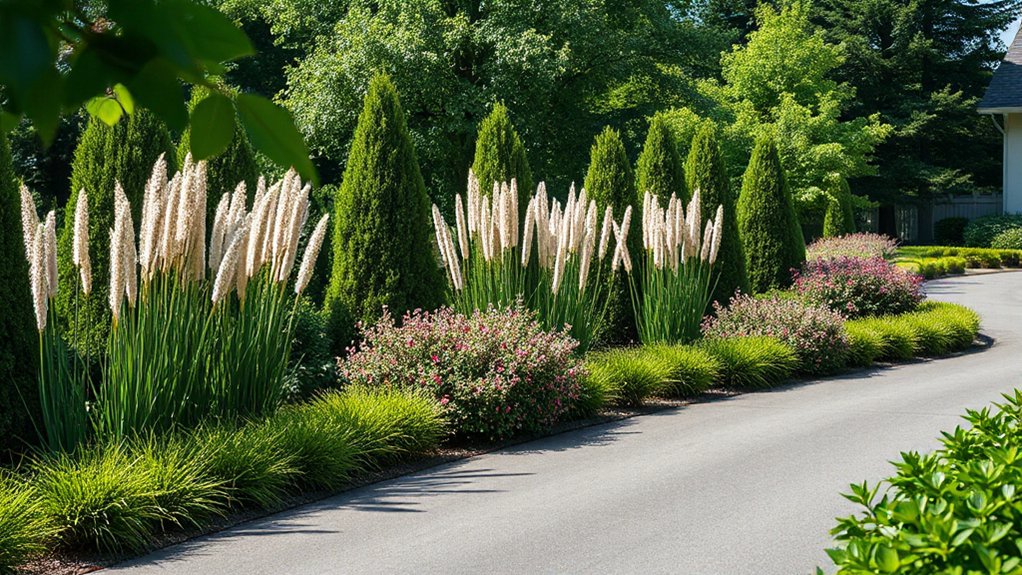
You’ll sequence plant heights to create a clear vertical rhythm, starting with lower bases and rising to focal spikes. The spacing and timing of bloom and foliage height establish a measured flow, guiding the eye along the border.
We’ll coordinate vertical timing across species to make certain of consistent structure without crowding or gaps.
Plant Heights Sequencing
Layering with verticals uses a deliberate height sequence to guide the eye and create rhythm along the driveway. You implement plant height sequencing by placing tall specimens at the rear edge, mid-height shrubs in the middle, and compact groundcovers toward the curb. This creates visual harmony, where each tier supports the next without crowding or gaps.
Choose species with reliable mature heights, known growth rates, and compatible textures to guarantee consistent progression. Consider seasonal behavior: evergreen backbone for year-round form, deciduous accents for seasonal interest, and careful pruning to maintain silhouette.
Align height increments with pathway width, notched turns, and drive alignment so sightlines remain clear. Document species, expected forms, and maintenance timelines to preserve the intended vertical cadence.
Rhythm Through Spikes
Rhythm Through Spikes: height and rhythm converge where vertical accents punctuate the drive with deliberate pauses. You guide the border with deliberate verticals, balancing grow-throughs and sightlines.
Use plant height variations to map the sequence: tall focal grasses at intervals, medium-stature perennials as transitional steps, and low groundcovers to soften edges. Precision in placement assures cadence—not chaos—so each spike reads as a beat in a composed line.
Choose taxa with reliable stem structure, strong season-to-season presence, and minimal maintenance. Consider Seasonal bloom timing to maintain year-round interest without disruptors in your rhythm; stagger blooms so peaking colors align with driveway approach, then recede gracefully.
This vertical layering yields a guarded, architectural edge that remains legible from curb to porch.
Layered Vertical Timing
Layered Vertical Timing integrates height, texture, and bloom cadence to sculpt a drive-border that reads as a competent sequence. You balance evergreen backbone with deciduous accents to maintain year-round form while introducing seasonal rhythm.
Use verticals of varying stature—tall focal columns, mid-range shrubs, and compact, spilling groundcovers—to create visual tiers that guide the eye along the border. Align bloom times so successive waves provide continuous interest without crowding; stagger flowering to avoid simultaneous peak, preserving space for each element.
Pruning and spacing should support airflow, reducing disease risk and promoting light penetration. Integrate garden art as architectural cues, not distractions, and consider biodiversity enhancement by selecting native or adapted species pollinators favor.
This precise layering yields a functional, aesthetically cohesive border.
Low-Maintenance Evergreens You Can Rely On
Evergreen borders offer reliable year-round structure, so you can count on your driveway edge looking intentional without constant upkeep. When you choose low-maintenance evergreens, you gain predictable growth habits, minimal pruning needs, and enduring color.
Favor compact to mid-sized forms with dense foliage to minimize light gaps and weed intrusion, while ensuring adequate lateral spread for curb appeal. Species selection matters: consider cultivars with slow growth, pest resistance, and drought tolerance to reduce inputs.
Evaluate soil, drainage, and sun exposure to prevent stress that invites decline. Monitor for garden pests and address issues early; healthy evergreens deter wildlife damage and reduce attractants.
Routine mulching and selective irrigation after establishment sustain vitality, preserving a clean, engineered look with minimal disruption.
Spacing and Layout Patterns That Fit Your Driveway
When planning borders along your driveway, deliberate spacing and layout patterns guarantee both definition and growth space. Start with a clear alignment: straight lines for formal borders, gentle curves for softer gradients, and a setback that allows access and mowing.
Vary plant heights in a tiered rhythm—short groundcovers at the edge, mid-height shrubs in the middle, and taller accents toward the corners—to create depth without crowding.
Use modular spacing measured in plant crown widths plus 20–30% to account for mature size.
Integrate Garden art as focal anchors and sightlines, not clutter, to reinforce structure.
Design for Wildlife habitat with native species placed to balance shade, bloom time, and pollinator access.
Maintain clear sight lines for safety and streamline maintenance.
Climate and Soil Considerations for Driveway Borders
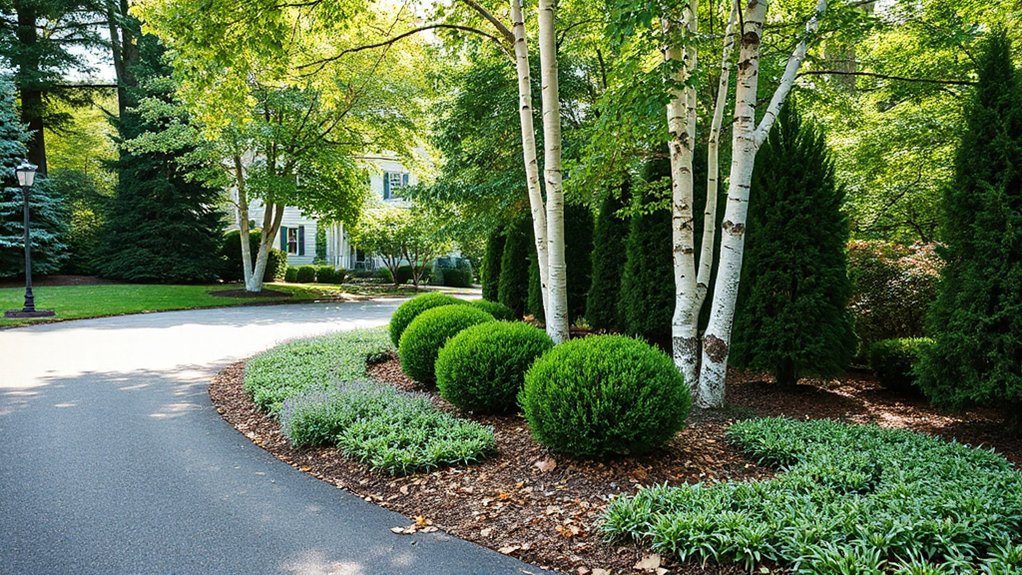
Because your driveway borders will face varying microclimates, start by evaluating climate data (average low/high temps, frost dates, wind exposure) and soil conditions (pH, drainage, texture) to select species that will establish quickly and persist with minimal maintenance.
Align plant choices with site-specific moisture bands, root depth, and heat reflection from pavement. Consider drought tolerance versus irrigation capacity, and flag species that tolerate compacted soils or seasonal inundation.
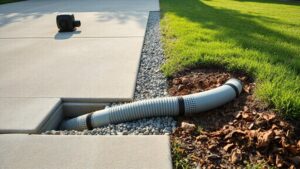
Emphasize soil enrichment through modest, targeted amendments, avoiding excessive matter that could alter soil structure. Guarantee consistent water drainage away from pavement to prevent erosion and icing.
Document nutrient needs and maintenance intervals to sustain color, form, and seasonal interest while minimizing inputs. Choose resilient, low-maintenance species with precise spacing to optimize growth per square meter.
Common Planting Mistakes and Fixes
Avoid common missteps by prioritizing root-friendly spacing, plant selection suited to microclimates, and consistent irrigation planning. You’ll encounter shallow-rooted species that crowd sidewalk edges; space accordingly to prevent heaving and maintenance headaches.
Choose plants with compatible growth rates to avoid annual pruning extremes, and align drought tolerance with your site’s rainfall pattern. Overlooking soil structure leads to nutrient imbalances and weak blooms, so amend for drainage and avoid heavy clay stacking.
Implement integrated Pest control strategies early, incorporating resistant cultivars and beneficials to reduce chemical reliance.
Garden art appears in deliberate texture contrasts, seasonal color, and vertical accents that define the border without crowding sight lines.
Monitor for pests and disease, substituting stressed stock promptly to preserve form and function.
Plan a Cohesive Border From House to Street: a Step-By-Step Guide
To create a cohesive border from house to street, start with a precise assessment of site conditions, then translate that into a linear planting plan that unifies color, texture, and scale. You’ll map sun exposure, drainage, and soil type, then select plant palettes that repeat across zones for rhythm.
Establish a clear sequence: foundation plantings, mid-height screening, and street-facing accents, ensuring line and proportion read as a single border.
Integrate irrigation techniques that minimize water loss while supporting plant health, with smart zones for seasonal needs and mulch to reduce irrigation demands.
Anticipate garden pests by choosing resilient species and appropriate cultural practices.
Finally, document maintenance tasks and pruning windows to preserve structure, spacing, and ongoing visual cohesion.
Frequently Asked Questions
How to Choose Plants for a Narrow Driveway Border?
To choose plants for a narrow driveway border, you prioritize plant height, select compact varieties, and maintain color coordination with your walkway. Consider linear forms, seasonal interest, and low maintenance to guarantee precision, aesthetics, and functional edge.
Which Low-Water Options Work Best Locally?
Sure, you’ll love the irony: locally, choose succulent varieties and drought tolerant shrubs; they survive with little water, require minimal maintenance, and look precise and functional along your driveway, delivering an aesthetic border you actually won’t regret.
Can Vines Invade Paved Surfaces or Foundations?
Vine containment matters: vines can invade paved surfaces or foundations if unmanaged. Use root barriers and install them correctly, dimensioned for anticipated growth, to protect structural integrity while preserving aesthetics and functional edging along your driveway.
What Are Budget-Friendly Border Planting Strategies?
You should prioritize budget-friendly border planting strategies by layering groundcovers and low shrubs for durability and weed suppression, enabling easy Garden maintenance and enabling Seasonal planting. You’ll mix hardy perennials with mulch, ensuring precision, aesthetics, and functional border results.
How to Integrate Hardscape With Living Borders?
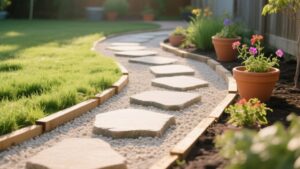
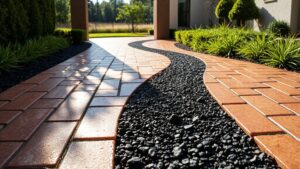
Blending hardscape with living borders strengthens your garden design and reduces plant maintenance by guiding foot traffic and creating defined zones. You couple textures, grip edges, and optimize drainage, while you precisely install edging, mulch, and irrigation for lasting function.
Conclusion
Your driveway border should read as a single, engineered composition. Choose an evergreen backbone for year‑round form, layer mid‑height shrubs for rhythm, and tuck low groundcovers and seasonal accents to soften edges without crowding views. Mind spacing, soil, and climate to prevent bottlenecks or gaps; prune with precision to preserve shape. Plan a cohesive arc from house to street, then walk the line visually, adjusting height and texture until the border feels like it’s carved from the landscape itself—astonishingly perfect.