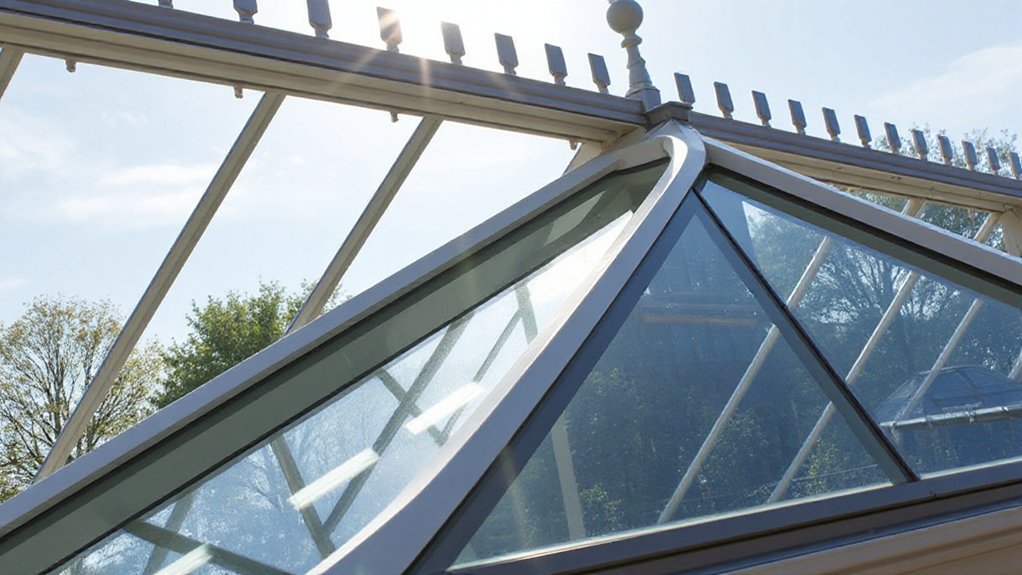
If you’re updating a conservatory, start by weighing goals like insulation, light, and airflow against cost and climate. Lightweight panel systems offer quick gains, while hybrid glass-solid roofs balance brightness with year-round comfort. Consider smart glazing and external shading to curb glare without sacrificing views. Think durability and low maintenance, then map timelines and warranties to your project. You’ll want a practical plan that keeps weatherproofing tight—and still leaves room for the look you want.
Why Replace a Conservatory Roof: Goals, Benefits, and Decision Criteria
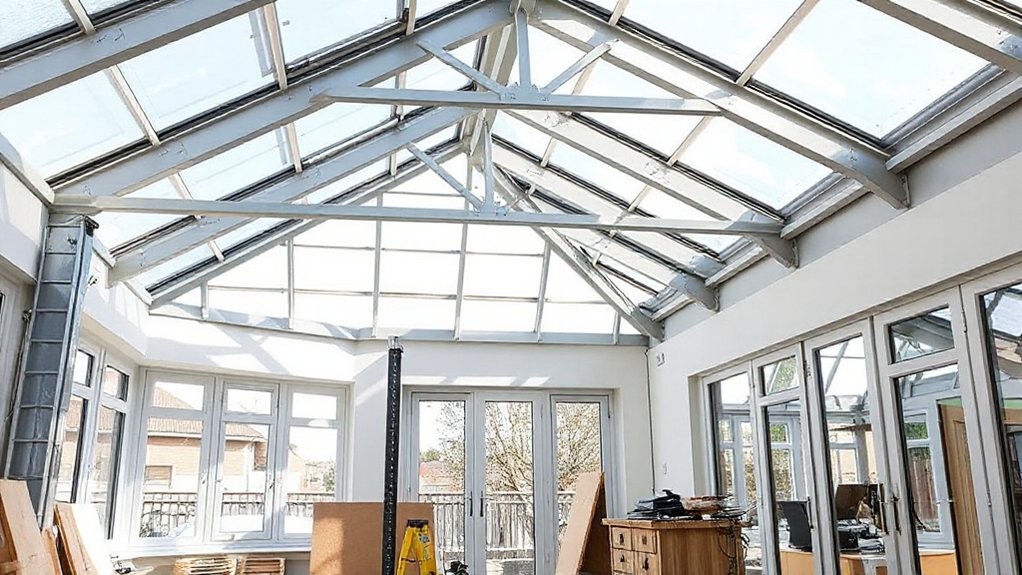
Upgrading a conservatory roof is often about turning a fickle, drafty space into a comfortable, usable room year-round. You replace to control temperature, reduce noise, and improve durability, so you can use the room in every season.
Goals guide your choice: comfort, energy efficiency, and value. Benefits include lower heating costs, fewer headaches from weather, and better lifespan for adjoining structures.
Decision criteria focus on climate, structural compatibility, and budget. Consider impact on room proportions, daylight, and acoustic performance.
Historical preservation may shape your approach if the conservatory is historic, ensuring changes don’t erase character.
Aesthetic cohesion matters too; you want the roof to blend with the exterior and interior if you value a unified look.
Choose options that meet functional needs while preserving your design integrity.
Lightweight Panel Systems: Fast Fit, Big Impact
Lightweight panel systems give you a faster fit with less disruption to your home. You’ll notice the benefits in shorter installation times and lighter components that don’t compromise strength or insulation.
This approach speeds up your update without sacrificing performance, so you can enjoy a bright, efficient conservatory sooner.
Lightweight Panel Benefits
Lightweight panel systems offer a fast-fit solution with a big impact on your conservatory roof project. You’ll notice a streamlined install, with fewer in-situ supports and reduced weight on existing structures.
These panels provide consistent insulation and tighter seams, helping you curb drafts without adding bulk. Color options let you tailor the look to your home, from neutral to bold accents, while maintaining a cohesive exterior.
Because panels are manufactured to precise tolerances, you’ll get fewer on-site adjustments and quicker completion.
Maintenance requirements are straightforward: clean with mild soap, avoid harsh abrasives, and inspect seals annually.
With durable materials and weather resistance, you gain long-term performance and a cleaner, low-maintenance roof upgrade you can trust.
Fast Fit Advantages
Fast fit isn’t just faster—it changes the project dynamic. You’ll see quicker roof removal and site turnaround, with less disruption to your daily routine.
Lightweight panel systems reduce weight, so structural prep is simpler and safer for crews. Because panels come pre-fabricated, on-site fitting is straightforward, with fewer trades required and shorter timelines.
The result is cleaner work, fewer weather delays, and predictable costs.
Color options let you tailor the finish to your home’s style, boosting curb appeal without custom machining.
Maintenance requirements are typically low, thanks to durable coatings and sealed joints that resist corrosion and leaks. Still, you’ll want a sensible inspection schedule and prompt repair of any punctures or exposed edges.
Insulated Glass Solutions for Year-Round Comfort
Insulated glass provides year-round comfort by reducing heat loss in winter and limiting heat gain in summer. You’ll notice steadier temperatures and fewer cold spots, thanks to multiple glazing layers and low-emissivity coatings.
Choose units with thermal breaks and gas fillings to maximize thermal performance, especially across large panes common in conservatories. For noise-sensitive spaces, opt for laminated glass or built‑in acoustic insulation to damp street and weather sounds without sacrificing visibility.
You’ll also gain improved condensation control, since better seals reduce interior humidity fluctuations. When specifying, balance pane thickness, frame compatibility, and long-term durability to avoid future maintenance.
This approach enhances comfort, supports energy efficiency, and preserves your year-round enjoyment of the space.
Energy-Efficient Tile Alternatives for Conservatories
Are you looking for flooring that stays warm and cuts energy use in your conservatory without sacrificing style? Consider energy-efficient tile options that complement modern roofs. Solar reflective finishes bounce heat away, reducing roof surface temperatures and indoor cooling loads during hot months.
Look for tiles with high thermal mass and low emissivity to moderate temperature swings, helping you maintain comfortable conditions year-round.
Clay alternatives, such as concrete-look tiles and engineered stone, can mimic traditional aesthetics while delivering improved insulation properties and durability.
When choosing, prioritize slip resistance and UV stability for exposure to sun.
Install with proper underlayment and a vapor barrier to prevent dampness and mold.
Pair these tiles with well-sealed joints to maximize efficiency and longevity.
Hybrid Roofs: The Best of Glass and Solid Panels
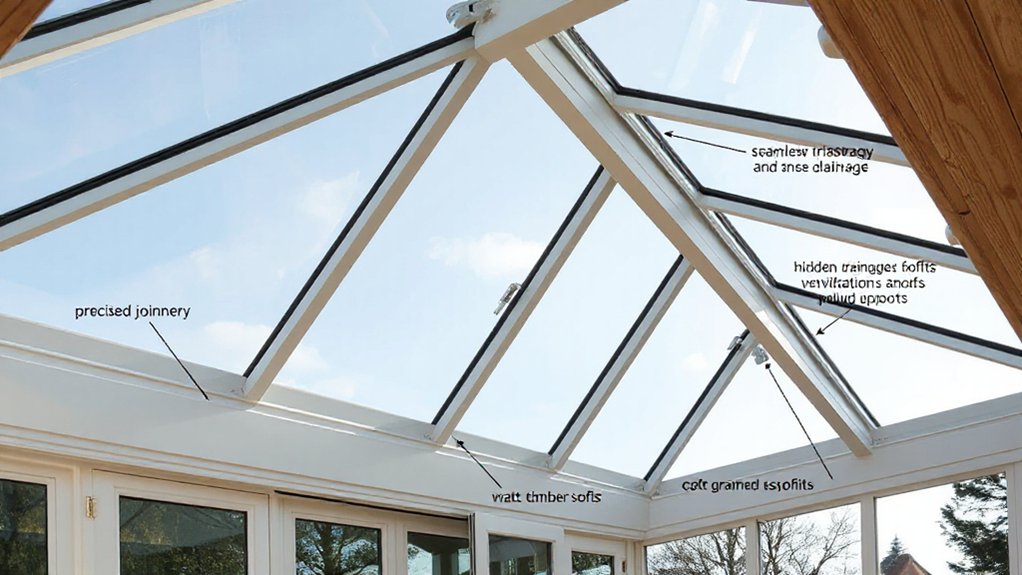
Hybrid roofs blend glass panels with solid sections to balance light, view, and insulation. You’ll compare glass-panel integration options, assess structural support needs, and weigh the energy efficiency benefits to determine the right mix for your conservatory.
This discussion sets the stage for practical choices that fit your budget and climate.
Glass-Panel Integration Options
Have you ever considered blending sunlight with solid shade? Glass-panel integration options let you tailor a conservatory’s feel without sacrificing security or insulation. You’ll combine smart glass, which adjusts transparency at a touch, with traditional solid panels for predictable performance.
For daytime brightness, align pitched glass sections with operable vents to manage heat and glare; at night, switch to opaque panels for privacy. Tinted panels reduce solar gain on hot days, helping maintain comfortable temperatures without overworking cooling systems.
Consider multi-layer glazing to boost insulation while preserving natural light. If you value simplicity, opt for a modular approach that swaps in different panel types as seasons shift.
This hybrid mindset delivers flexible light, energy control, and adaptable aesthetics.
Structural Support Considerations
To guarantee a hybrid roof performs reliably, you’ll need a solid structural plan that accounts for both glass and solid panels. You’ll assess how loads transfer through mixed materials, defining framing that maintains structural integrity under wind, snow, and thermal movement.
Select support members rated for varied stiffness and incorporate connectors that tolerate differential expansion without compromising performance. Prioritize continuous load paths from ridge to footing, ensuring load distribution stays predictable across supports and joints.
Use laminated or tempered glass with appropriate edge restraints, and pair it with solid panels that share compatible deflection characteristics. Include expansion gaps and drill-free clips where possible to reduce stress concentrations.
Document all calculations, tolerances, and maintenance access to sustain long-term, safe operation.
Energy Efficiency Benefits
What makes a hybrid roof truly energy efficient is how well the glass and solid panels work together to reduce heat transfer and manage sunlight. You’ll gain better temperature control by selecting glass with low-emissivity coatings and insulated solid panels that minimize thermal bridging.
During sunny days, solar shading options—bonded films, adjustable louvers, or external screens—cut glare and cut cooling loads without sacrificing daylight.
In winter, the reflective glass helps retain heat while solid sections trap warmth near living spaces, boosting overall comfort and reducing HVAC demand.
Privacy screens can be integrated discreetly, preserving openness while limiting sightlines.
Pairing smart shading with strategic panel placement yields consistent indoor conditions, lowers energy bills, and extends your conservatory’s usable season.
Design Considerations: Light, Aesthetics, Ventilation, and Weatherproofing
Design considerations for a conservatory roof should balance light, aesthetics, ventilation, and weatherproofing from the outset. You’ll choose glazing that maximizes daylight without overheating, and pair it with frames that suit the home’s overall look.
Prioritize color coordination to guarantee the roof reads as a seamless extension, not an afterthought. Ventilation should prevent condensation, so incorporate vents or trickle vents and consider skylight placement that avoids glare in living areas.
Weatherproofing demands robust seals, proper flashing, and proven roof membranes to handle rain and wind. Material durability matters: opt for tested components with warranties and compatible finishes.
Keep maintenance in mind; accessible cleaning routes help sustain appearance and function.
Balance light, aesthetics, ventilation, and weatherproofing to achieve a reliable, integrated upgrade.
Costs, Timelines, and Warranties: A Practical Guide
Costs, timelines, and warranties shape the project you’re considering for a conservatory roof upgrade. You’ll define costs by roof size, material choice, and any structural work needed, then set a realistic timeline with milestones.
Expect permit steps, supplier lead times, and potential weather delays to influence schedule.
Warranties hinge on installer credibility and product quality; read terms for coverage, exclusions, and claim process.
For roof venting, guarantee the chosen system matches your climate and ventilation goals, and confirm installation alignment with existing HVAC or ceiling fixtures.
Maintenance tips matter too: select durable materials, schedule seasonal inspections, and address sealants promptly.
Budget a contingency of 10–15% for unplanned issues, and keep records of invoices and warranties for future claims.
Choosing Materials by Climate and Use Case
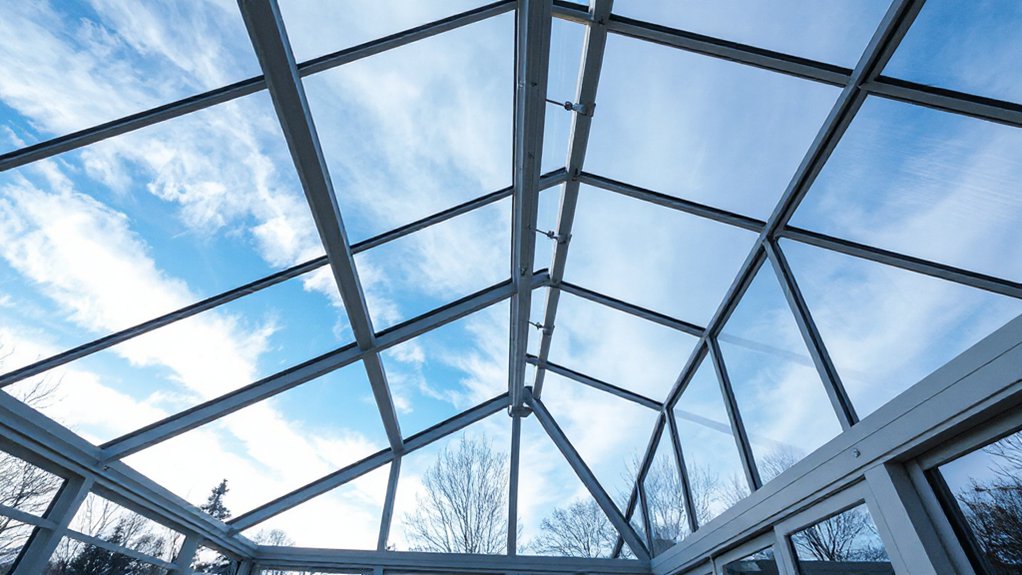
Choosing materials for your conservatory roof should directly reflect how you’ll use the space and the climate you live in; pick surfaces that handle heat, humidity, and seasonal temperature swings without sacrificing comfort.
When you match materials to climate, you reduce glare, regulate temperatures, and minimize condensation. For frequent sun, prioritize reflective or light-colored finishes with good thermal resistance; for damp regions, look for moisture resistance and sealed joints.
Use a practical approach: weigh installation cost, maintenance, and energy performance, not just price. Consider Material durability and aesthetic compatibility with your existing structure to guarantee long-term value.
Finally, align use case with type (vented skylights, insulation, or solid panels) to optimize comfort, efficiency, and peace of mind.
Frequently Asked Questions
How Long Does a Typical Conservatory Roof Replacement Take From Start to Finish?
A typical conservatory roof replacement takes about 1 to 3 days, depending on size and prep. You’ll guarantee roof insulation is upgraded and ventilation options are configured, minimizing disruption while you complete waterproofing, finishing, and final safety checks.
Will Replacement Affect Existing Plumbing or Electrical Systems?
Yes, replacement can affect systems you have, so expect Plumbing disruption and Electrical interference. You should plan with your contractor, isolate circuits and pipes, and verify protective measures are in place before work begins to minimize surprises.
Can I Install Solar Panels on a New Conservatory Roof?
Yes, you can install solar panels on a new conservatory roof. You’ll enhance energy efficiency, choose appropriate mounting systems, and guarantee roof structure supports the panels. Plan with guidelines for solar panel installation and consider potential shading or warranty impacts.
What Maintenance Is Required After a Roof Replacement?
After a roof replacement, you should inspect seals and gutters, top up insulation if needed, and clean debris regularly. Prioritize roof insulation and ventilation improvements; check for drafts seasonally, and maintain ventilation efficiency to prevent condensation and mold growth.
How Do Warranties Handle Remote or Regional Service?
Warranty coverage varies by provider, but you generally get regional service with documented timelines. You’ll need to verify travel limits, call-out windows, and any gaps in coverage, ensuring you understand regional service eligibility and required service authorization.
Conclusion
You’ll replace that roof and somehow gain all the benefits—energy efficiency, better light, fewer leaks—without turning your life into a full-time renovation saga. And yes, you’ll pay for it, because nothing says “smart investment” like a gleaming new panel system that pretends to be magic. But you’ll love the comfort, styling, and control, proving irony wrong: you can have a durable, beautiful conservatory without living in a constant construction zone. Enjoy your upgraded space.