
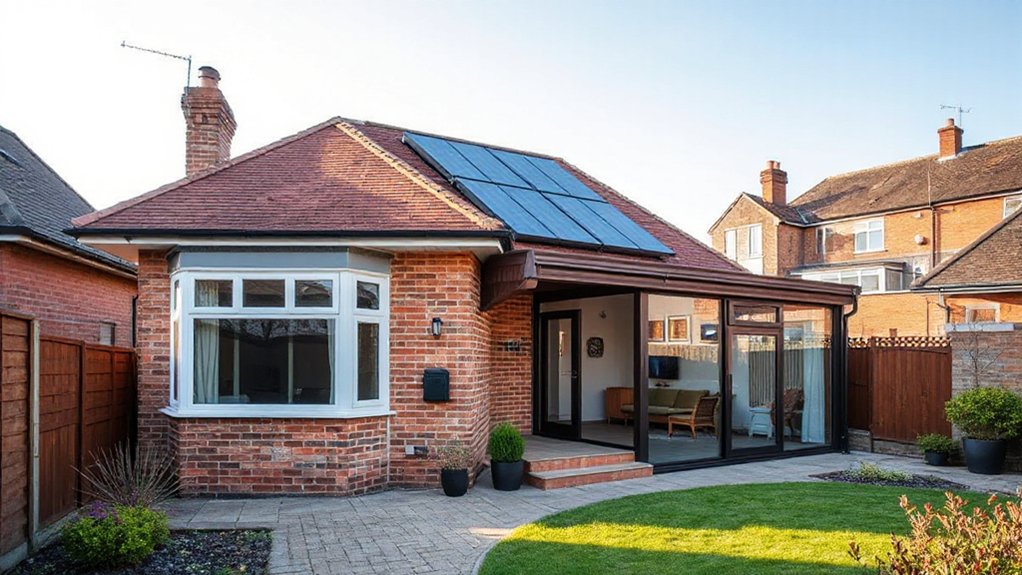
To modernise a Manchester or Leeds bungalow, you start by clarifying your design goals and regulatory constraints, then reconfigure layouts to maximise space and flow while prioritising energy efficiency with solid insulation, smart controls, and durable finishes suited to the local climate. Exterior upgrades should be low-maintenance and contextually appropriate, with future-proofed mechanicals. Consider permits, financing, and how comfort and resale value align with a flexible plan—the next decision could redefine your entire approach.
Define Your Vision for a Manchester/Leeds Bungalow
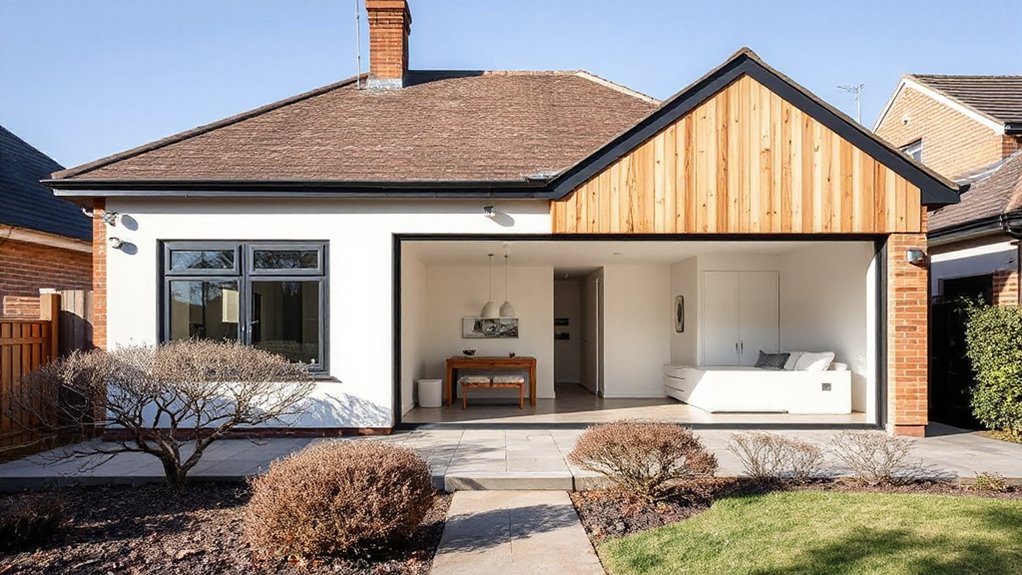
Define a clear target for your Manchester/Leeds bungalow renovation by articulating the functional and aesthetic goals upfront. You establish a measurable brief: room functions, daylight goals, material palettes, and budget bands, then align decisions with a cohesive concept.
Start with circulation logic—identify zones, access points, and entry statements that optimize flow without clutter. Translate your vision into a design brief that guides construction, finishes, and furniture choices.
Consider garden landscaping as a bridge between exterior and interior decor, ensuring progressions are seamless and weatherproofed. Specify light-control strategies, storage priorities, and acoustic performance to sustain comfort.
Document preferred materials, tactile qualities, and maintenance requirements so executions remain consistent. Revisit the concept at milestones, preserving focus while adapting to site realities.
Maximise Space With Smart Layout Tweaks
To free up floor area without expanding envelope, apply smart layout tweaks that prioritize circulation efficiency and multi-functional zones. You’ll shape your bungalow around a clear, usable flow, reducing dead space and visual clutter.
Emphasize Open floor plans to create perceived spaciousness while preserving defined zones for living, dining, and work. Integrate progressions with minimal thresholds and consistent material palettes to maintain sightlines.
Use Modular furniture to adapt rooms for changing needs—folding screens, nesting desks, and compact storage reclaim flexibility without sacrificing footprint.
Position primary circulation along logical axes, reserving open edges for social interaction.
Apply zone cues through lighting, texture shifts, and ceiling lines to delineate functions without walls.
Prioritize scalable furniture systems and future-proof layouts that accommodate evolving occupancy.
Save Money With Energy-Efficient Upgrades
Start with efficient insulation upgrades to tighten the envelope and reduce drafting. Then pair them with smart thermostat deployments to optimize heating and cooling loads.
Look for low-cost energy lighting options that maintain quality and coverage while lowering operating costs.
This approach keeps you focused on measurable savings, design impact, and simple, scalable improvements.
Efficient Insulation Upgrades
Efficient insulation upgrades cut heating and cooling costs by reducing thermal bridges and air leaks, delivering more comfort with less energy. You’ll target envelope performance through strategic material choice and placement, prioritizing continuous insulation and minimized junctions.
Focus on thermal barriers that hinder heat flow across walls, roofs, and floors, ensuring visible and measurable reductions in heat loss. Implement airtight sealing at all connections—perimeter interfaces, penetrations, and around fixtures—to prevent moisture-laden air from compromising insulation performance.
Select high‑R‑value batts, boards, and spray foams with appropriate vapor retarders for the local climate. Detail junction details in drawings, checking for compression gaps and wind-driven infiltration.
Measure improvements with blower-door tests to verify leakage reductions and sustain long‑term thermal efficiency.
Smart Thermostat Deployments
Smart thermostats cap those efficiency gains from insulation work by giving you precise control over when and how your bungalow uses heat or cooling.
In Manchester and Leeds homes, you’ll prioritize a clean, install-first approach that minimizes wiring clutter and preserves aesthetic lines.
Focus on smart thermostat installation that aligns with your HVAC zoning, ensuring each room’s load profile is respected without overcooling or overheating.
Prioritize devices with responsive sensors, open protocol support, and secure cloud access for updates.
Automation integration should map to your daily routines, weather shifts, and occupancy patterns, enabling adaptive scheduling rather than static presets.
Evaluate energy use dashboards to verify savings, and plan for future scalability as insulation performance or system mixes evolve.
Low-Cost Energy Lighting
Are you maximizing lighting efficiency with cost-conscious upgrades that don’t compromise ambience? You should adopt a layered approach to low-cost energy lighting that prioritises ambient lighting as the base.
Swap incandescent or halogen sources for LEDs with high Colour Rendering Index and suitable lumen output to maintain visual comfort. Implement dimmable drivers and smart controls to tailor scenes, reducing energy when rooms are unused.
Use targeted task lighting at work surfaces and reading zones to avoid over-illumination. In corridors and living areas, favour plug-in or recessed LED fixtures with efficient optics to minimize glare while sustaining depth.
Anticipate payback through energy savings calculations, and document lumen maintenance over time to sustain performance and design intent.
Choose Durable Finishes for Local Climate
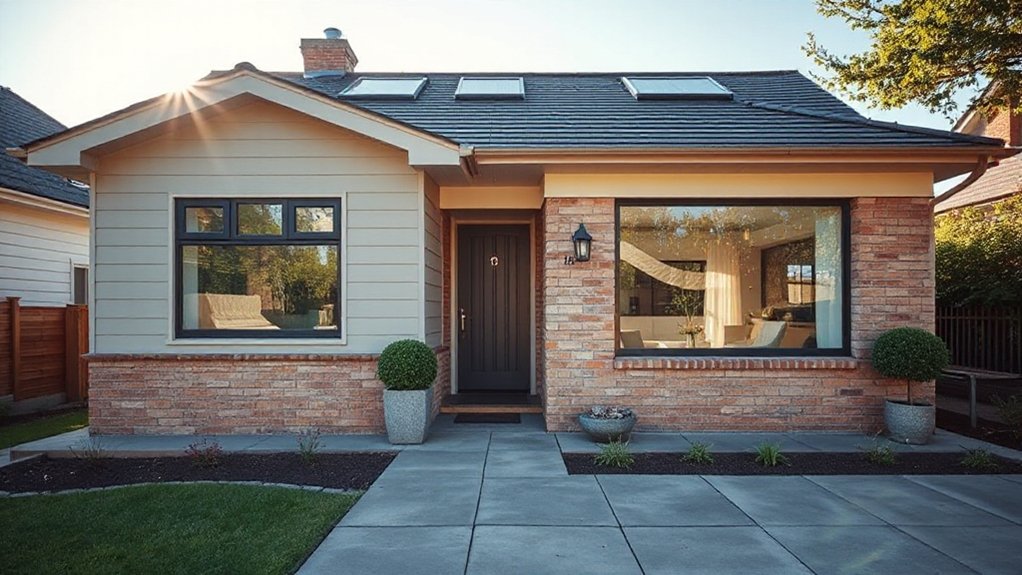
Choosing durable finishes tailored to your local climate minimizes maintenance and maximizes lifespan. You’ll select materials with proven resistance to Manchester or Leeds humidity, temperature swings, and seasonal moisture.
Prioritize low-porosity paints and sealants that resist mildew, while ensuring breathability to prevent trapped moisture.
For walls, opt for premium exterior and interior paints with UV stability and washability; consider elastomeric coatings where cracks are a concern.
Flooring options should balance moisture resistance and comfort underfoot; engineered wood with water-resistant cores, and porcelain or luxury vinyl planks offer durability and easy maintenance.
Pair finishes with proper ventilation and humidity control to reduce expansion and contraction.
Document finish warranties and installation tolerances to guarantee performance over time.
Modernise the Exterior While Keeping Local Character
A well-executed exterior refresh balances contemporary performance with the village or town’s distinctive silhouette, using materials and detailing that read as modern yet belong to the local vernacular. You prioritise proportion, scale, and roofline continuity to preserve a recognizable streetscape while introducing high-performance cladding and glazing.
Select durable, low-maintenance finishes that resist Leeds or Manchester weather without erasing character; timber, brick, or stone can be reimagined through restrained contemporary profiles. Emphasise detailing that signals management of sun, wind, and shade while respecting Historical preservation guidelines.
Focus on cultural integration: harmonise new materials with existing textures, patterns, and massing. Integrate unobtrusive ventilation, drainage, and insulation strategies that sustain energy targets.
Maintain setback rhythms and window rhythms to reinforce local identity.
Permits, Regulations, and Financing for Your Project
Before you begin the project, you’ll need to map the permitting landscape, regulatory constraints, and funding options that apply to a bungalow retrofit. You’ll assess Building permits, local planning authority thresholds, and any conservation-area implications in Manchester or Leeds.
Then, identify necessary notices, inspections, and post-completion verification. Align design decisions with legal compliance requirements—structural alterations, fire safety, energy standards, and ventilation codes—using a consolidated checklist.
Financing options vary from specialist retrofit loans to equity drawdowns; compare interest terms, draw schedules, and potential grants or tax incentives.
Engage early with your local authority’s planning and building control teams to clarify permit routes and exemptions. Document decisions, maintain traceable records, and anticipate delays.
Efficient permitting accelerates progress, reduces rework, and supports durable, compliant modernization.
Plan for Comfort, Resale Value, and Future Flexibility
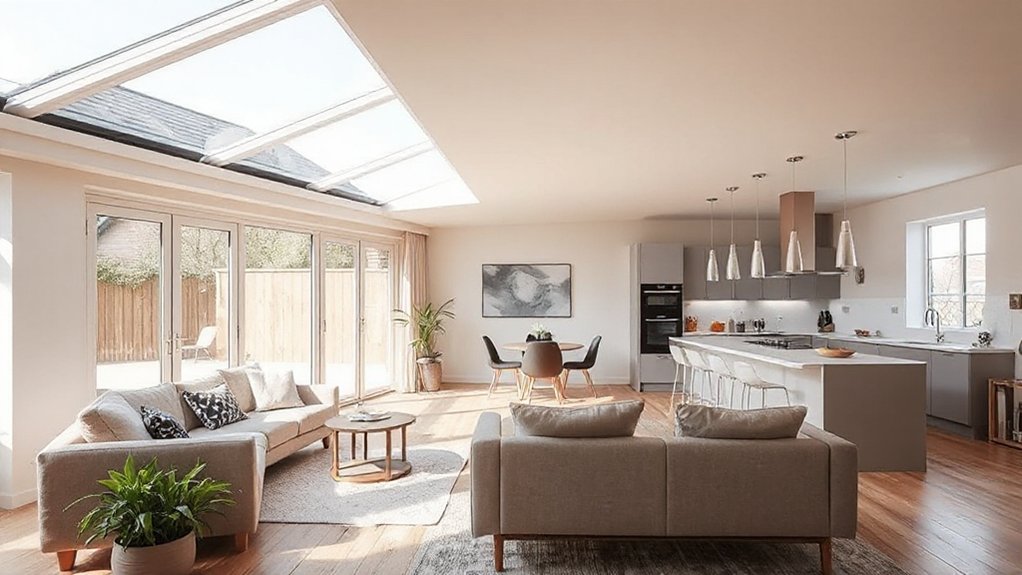
How can you guarantee comfort, maximize resale value, and preserve future flexibility when planning a bungalow retrofit? Start with a robust thermal envelope: airtight construction, high-performance glazing, and zoned underfloor heating to balance comfort with energy costs.
Prioritize universal design principles—step-free access, flexible room layouts, and adaptable storage—to retain value as needs shift.
Align interior aesthetics with durable finishes and low-maintenance materials to reduce lifecycle costs while preserving appeal.
Plan for phased upgrades that avoid cosmetic-only changes, ensuring structural compatibility and future service access.
Integrate landscaping enhancements and site orientation to complement the façade and microclimate, boosting curb appeal and outdoor usability.
Guarantee mechanical systems are scalable, facilitating upgrades without major disruption.
Frequently Asked Questions
How Long Does a Bungalow Modernization Project Typically Take in Manchester or Leeds?
Typically, a bungalow modernization in Manchester or Leeds takes 8–12 weeks, depending on scope. You’ll coordinate interior design plans and structural upgrades, sequencing trades carefully, securing permits, and ensuring site logistics minimize disruption to you during construction.
What Are Common Hidden Costs in Bungalow Renovations in These Cities?
Hidden expenses in bungalow renovations often arise from unexpected structural scans, permits, and utility relocations; you’ll face renovation surprises around plaster, damp-proofing, and insulation upgrades, plus project management fees, contingency planning, and fluctuating material costs.
Which Local Tradespeople Best Handle Bungalow Modernization in Manchester/Leeds?
You should prioritize local craftsmanship with proven renovation expertise for bungalow modernization in Manchester or Leeds, selecting firms renowned for precision, compliance, and design integration, ensuring project coordination, detailed schedules, and responsive on-site collaboration throughout all trade disciplines.
How Can I Minimize Disruption for Neighbours During the Build?
You imagine your street quieting after dusk as neighbour noise stays minimal through staged construction timing, deliberate schedules, and sound-dampened work zones; you coordinate deliveries, communicate weekly, and use privacy screens to maintain calm throughout the build.
What Grants or Incentives Are Available for Energy Renovations Locally?
You can access energy efficiency renovation grants locally through council schemes and national programs; verify eligibility, project scope, and performance targets, then document savings estimates. These incentives support efficient upgrades, reducing upfront costs and accelerating energy efficiency improvements in your bungalow.
Conclusion
You’ve got a clear road map: define goals, optimize layout, upgrade energy systems, and choose durable finishes that weather Manchester and Leeds’ climate. Think of your bungalow as a modular system—each tweak boosts comfort, efficiency, and resale value. For example, a well-insulated loft is like a thermostat you never have to touch, saving hours of heating every winter. With mindful exterior updates and compliant planning, you’ll future-proof performance while preserving local character.