Converting a garage into a livable space in the UK requires careful planning from the outset. You’ll need to confirm whether you’re within permitted development rights or if planning permission is necessary, guarantee structural integrity and insulation, and meet building regulations for utilities and safety. Clear documentation and early liaison with your local planning authority will help prevent costly delays. Start with a precise assessment—and stay aware of the potential hurdles that could affect your timetable and budget.
Garage Conversion: Do I Need Planning Permission or Is It Permitted Development?
Determining whether you need planning permission for a garage conversion hinges on whether the project qualifies as permitted development. You assess the scope against national and local criteria, ensuring design, size, and impact on neighboring properties align with rules.
If you stay within the permitted development boundaries, formal consent isn’t required, though you may still need building regulations approval for safety and habitability.
If elements exceed limits or exclude lawful exceptions, you must apply for planning permission, outlining the proposed use, impact, and materials.
Regardless of route, you should plan for essential measures such as Garage insulation and structural reinforcement to meet energy and safety standards.
Document compliance steps meticulously, as clear records support a successful outcome and streamline any future alterations.
Determine Eligibility: When Garages Qualify for Permitted Development
If you’re wondering whether a garage conversion can proceed under permitted development, start by matching your project against the specific criteria that define allowed changes. You’ll assess size, location, and impact on shared spaces, ensuring the work remains within limits set by the policy.
For garages to qualify, the extension or alteration mustn’t exceed prescribed height or volume and must preserve the appearance of the principal dwelling and neighboring streets. You should verify that external alterations stay within boundaries and that no materials or layout violate restrictions.
Consider garage aesthetics to determine if the outcome still reads as part of the dwelling. Finally, plan for renovation financing, confirming eligible costs and timelines before proceeding with any work.
Plan First: Structural Stability and Insulation Before You Begin
Before you start any conversion work, assess the garage’s structural stability and insulation needs to guarantee a safe, energy-efficient living space. Begin with a professional survey to identify load-bearing walls, roof integrity, and damp risk. Then address necessary reinforcements before framing.
Evaluate insulation requirements for walls, floors, and ceilings to meet current Building Regulations. Prioritise airtightness and thermal bridging reductions.
Plan for robust moisture barriers and ventilation to prevent condensation.
Consider Garage aesthetics early in the design to influence ratios of light, space, and finishes while maintaining structural safety.
Develop an outline of landscaping ideas if you access external areas, ensuring drainage and accessibility won’t compromise stability.
Document findings and implement corrective actions before any internal fit-out proceeds.
Essential Utilities: Electrical, Plumbing, and Heating Compliance
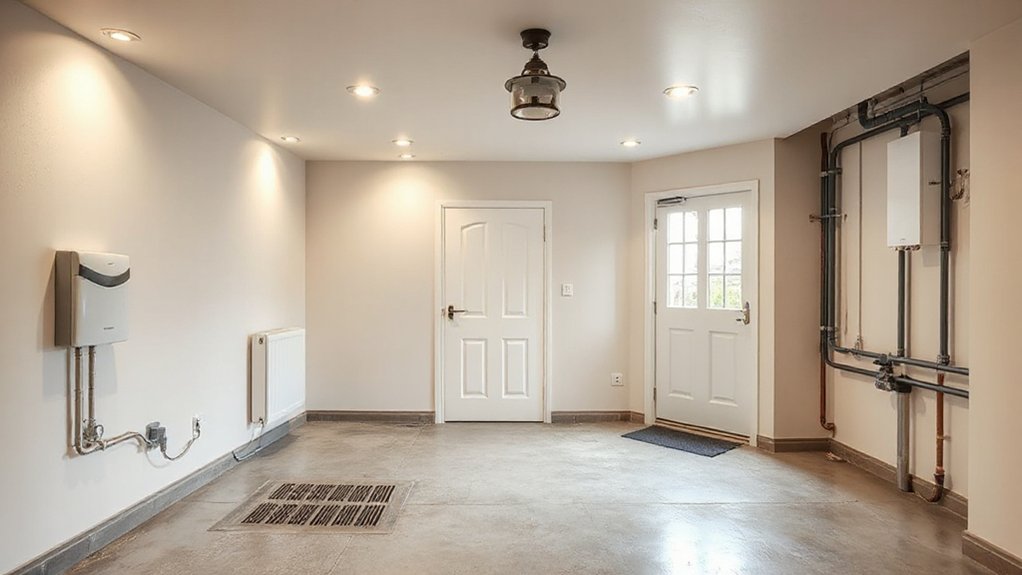
To guarantee a compliant liveable space, you must secure electrical, plumbing, and heating installations that meet UK regulations and safety standards.
You should commission a qualified electrician for all electrical work, obtain any required Part P notifications, and ensure circuit protection, bonding, and proper earthing are in place.
For plumbing, use registered plumbers for appliance connections, mains pressure checks, and compliant wastewater drainage, with appropriate traps and venting.
Heating systems must be commissioned by a Gas Safe or MVP-certified engineer, verify efficiency, carbon monoxide safety, and correct ventilation.
Plan layout to minimise risk of leaks and electrical interference with structural elements.
Consider Garage aesthetics and exterior finishes when routing services, ensuring weatherproof termination points and accessible service routes for future maintenance.
Building Regulations: When They Apply and How to Demonstrate Compliance
Building Regulations determine when you must seek compliance validation for a converted garage and what evidence you need to obtain. You assess applicable parts early, focusing on structural integrity, fire safety, ventilation, thermal performance, and services.
You must notify the relevant building control body and provide detailed drawings, specifications, and a compliance checklist demonstrating conformity with current standards. Your submissions should show that work is appropriate for its intended use, with minimum disruption to occupants and neighbors.
Arrange pre-application guidance if available, to anticipate any validation issues.
When planning, consider garage aesthetics to ensure harmonized integration with your home and landscaping plans that meet external design criteria.
Document approvals, maintain records, and retain certificates for future inspections or sales.
Choosing the Right Path: Planning Permission vs Permitted Development Decision Guide
Planning permission and permitted development serve different purposes, so you should assess which path applies to your garage conversion first.
Understand the basics: Planning Permission Essentials covers when you must apply, while Permitted Development Limits define what you can do without an application.
This guide starts by clarifying these thresholds so you can choose the legally safer, most efficient route.
Planning Permission Essentials
Choosing the right path between planning permission and permitted development is essential before converting a garage into a liveable space. You should assess whether your project requires formal planning permission or falls within permitted development (PD) rights.
Start by reviewing local authority guidance and the Town and Country Planning (General Permitted Development) Order, focusing on size, eaves height, and the space’s use. If your alteration exceeds PD limits, submit a planning application with detailed plans.
In any case, guarantee your proposals preserve neighbouring amenity and comply with building regulations. Clarify garage aesthetics to align with street scene expectations, and map landscaping plans to support access, drainage, and visual integration.
Document thresholds, potential impacts, and contingencies to support a transparent, compliant permitting process.
Permitted Development Limits
Before you proceed, assess whether your garage conversion falls within permitted development rights or requires planning permission. Permitted development limits govern size, extension height, and regional variations, so you must measure depth and storey height against current thresholds.
In practice, most garage conversions qualify if the footprint doesn’t exceed 50% of the curtilage and total floor area remains within specified limits, with no alterations to the building’s exterior envelope beyond permitted changes.
You’ll still need to deliberate noise, fire safety, and insulation standards.
If you exceed limits, planning permission becomes necessary, ensuring a formal assessment of impact on neighbours and local infrastructure.
Plan meticulously for Garage aesthetics and exterior renovations, documenting dimensions, materials, and finishes to avoid delays and disputes in the approval process.
Design for Compliance: Living Space That Meets Rules and Adds Value
Designing a compliant liveable space starts with a clear plan that integrates building regulations, safety standards, and practical requirements, so your conversion adds value without risking penalties or costly rework.
To achieve this, define space usage, room heights, ventilation, and insulation targets aligned with UK standards.
Guarantee structural integrity and fire safety, including adequate escape routes and smoke detection where required.
Plan utilities and finishes around accessibility and future adaptability, favouring durable, low-maintenance materials.
Prioritise garage aesthetics by selecting finishes and fittings that harmonise with existing exteriors and interior design principles while meeting regulatory spec.
Document compliance at every stage with accurate drawings, calculations, and approvals to facilitate inspections and commissioning, thereby safeguarding investment and enhancing resale appeal.
Practical Pitfalls to Avoid: Legal Pitfalls and How to Prevent Them
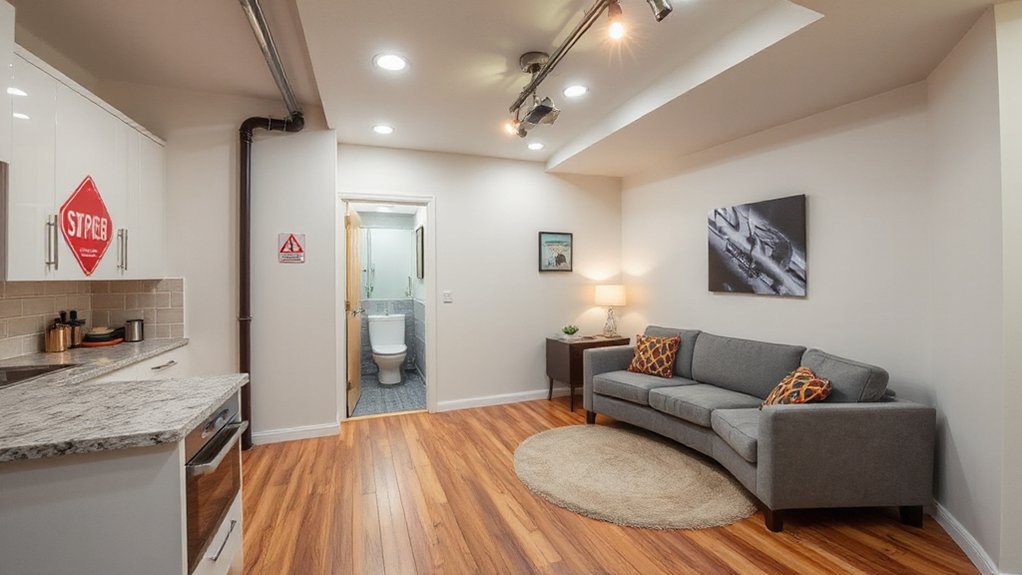
You should anticipate Planning Permission pitfalls, ensuring you verify exemptions and avoid costly delays.
You’ll also align with Building Regulations from the outset, documenting compliance to prevent later recourse.
Keep Proper Documentation Essentials central to your process so you can demonstrate legality and safeguard your project.
Planning Permission Pitfalls
Planning permission pitfalls can derail your project if you don’t anticipate them. In this section, you assess whether planning consent is required for a garage conversion and identify where it commonly trips you up.
You should verify permitted development rights, any local planning framework, and potential exceptions for materials or appearances that affect streetscape. Engage early with your local planning authority to confirm scales, uses, and potential conditions that could be imposed.
Document your proposed design’s alignment with space, light, and access considerations to preempt objections. Consider how garage aesthetics influence approval, including front-facing appearance and integration with surrounding buildings.
Plan for renovation financing contingencies if delays or conditions arise, and keep a transparent audit trail of decisions and correspondence.
Building Regulations Compliance
Building Regulations compliance is essential to a garage conversion, and skipping or mismanaging it can trigger costly delays or unsafe results. You must assess applicable standards before works commence, ensuring structural alterations, drainage, and ventilation meet approved criteria.
Verify that your plans reflect appropriate fire safety provisions, sound insulation, and energy efficiency targets, avoiding retrofits that complicate compliance. You should schedule early consultations with building control to identify required tests, such as airtightness and insulation performance.
Address Garage insulation expectations in the design phase to prevent later recourse or rewrites. Documented evidence of compliance supports the project’s legality and future resale; failure to obtain necessary Building permits creates exposure to penalties and stops.
Plan submissions with precise dimensions, materials, and fixings to streamline approval and keep the project on track.
Proper Documentation Essentials
Proper documentation is the backbone of a compliant garage conversion. You compile records before and after work to protect yourself and your project.
Begin with clear planning permissions, listing all applicable approvals, and attach correspondence with local authorities.
Retain sensible quotes, contracts, and guarantees from tradespeople, plus robust building notices.
Maintain a detailed scope of works, drawing revisions, and risk assessments to demonstrate due diligence.
Keep energy performance certificates, insulation specifications, and ventilation calculations accessible for inspections.
Document changes to floor plans, electrical layouts, and plumbing routes, noting deviations from initial consent with rationale.
Include legal disclaimers on all contracts to clarify responsibilities and limits.
Finally, preserve garage aesthetics documentation, ensuring consistency between design intent and finished outcome.
How Approvals Work: Step-by-Step Applications and Notices
Starting a conversion requires understanding the approval process from the outset. You’ll identify applicable authorities—planning, building control, and, where relevant, party-wall or permitted development rules.
Begin with a planning checklist: use deemed permission where exemptions apply, or prepare a planning statement detailing scope, impact, and compliance with local design standards.
Next, submit building-control applications for structural and electrical work, ensuring plans show insulation materials and ventilation requirements. You’ll receive application references and timelines, then respond to any consultee comments or requested amendments.
Notices may include site notices or neighbour notification, depending on jurisdiction.
Throughout, maintain clear records of decisions, conditions, and compliance actions.
Remember: garage aesthetics matter, and rigorous adherence to approvals prevents costly rework later.
Budget, Timeline, and Documentation: What You Must Plan For
To convert a garage legally and smoothly, you must plan your budget, timeline, and documentation upfront. You’ll establish a clear budget that accounts for building control fees, permits, insulation, wiring, plumbing, and finishes, plus a contingency for unforeseen issues.
Create a realistic timeline with milestones for design, surveys, contractor selection, and inspections, allowing buffer for delays.
Documentation should cover planning permissions, building regulations compliance, party-wall considerations, and EPC requirements.
Track costs using a spreadsheet and secure quotes in writing, avoiding vague estimates.
Consider garage aesthetics from the outset, balancing cost with durability and energy efficiency.
Outline interior decor choices early to prevent scope creep and misalignment with regulations.
Regularly review progress against milestones to maintain compliance and minimize disruption.
Frequently Asked Questions
Do I Need Any Permit for Small Garage Changes?
Yes, you’ll likely need permits for significant changes. Confirm Garage insulation is compliant and electrical rewiring follows regulations; consult building control. Obtain approvals before work, and document all inspections to avoid penalties and ensure safe, lawful conversion.
How Long Does Approval Typically Take?
Approval typically takes several weeks to a few months, depending on scope and local authority. You’ll need robust garage insulation and ventilation requirements met, so your plans show well-designed airflow, moisture control, and compliant energy efficiency.
Can I Convert Without Planning Permission?
You can’t usually convert without planning permission; check local rules first. If permitted development applies, guarantee proper garage insulation and ventilation requirements are met, and expect possible caveats. Verify with your council to avoid penalties and ensure compliance.
What Are Common Cost Overruns in Conversions?
Brace yourself for overruns like sinking ships: common cost overruns include underestimated materials, unforeseen structural needs, and permit delays. You should emphasize cost estimation and budget management to keep your project on track and within approved limits.
Are There Local Council Variations I Should Check?
Yes, you should check for local variations; consult your council early. You’ll need to review community consultation requirements and assess environmental impact, ensuring compliant planning permissions and any area-specific conditions before proceeding with the project.
Conclusion
In short, you’ll never actually be turning your garage into a “room with a view”—unless you plan, perm it, and prove it, all by the book. Ironically, the more rules you follow, the less chaos you’ll invite. So dot every i, log every decision, and cross every T. If you want a compliant, safe, value-adding space, treat red tape as your guide, not your foe, and you’ll finish with a gleaming, lawful result you can proudly use.