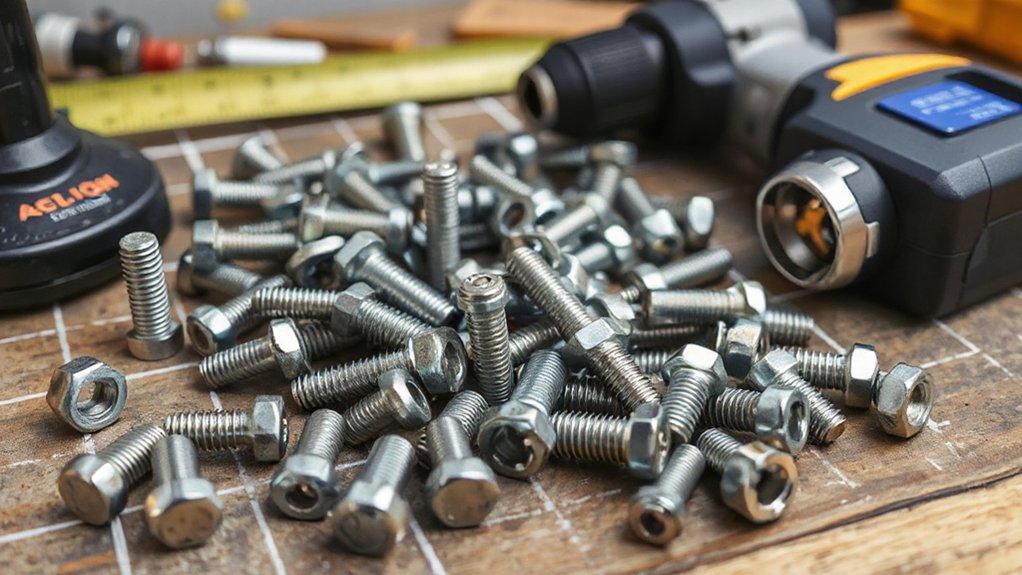
Let’s look at the answers to ‘What Are The Most Commonly Used Bolts For Home Improvement Projects and why’. In home projects you’ll rely on a mix of stainless and carbon steel bolts, plus zinc-coated variants for durability in moderate climates. For high-load joints, use bolts with appropriate thread types and head styles (hex or Torx) and pair them with nuts, washers, and anchors as needed. Wood screws suit quick, lighter tasks, while bolts excel at disassembly and structural joints. Finish with corrosion protection for outdoors. Curious what fits your project best? You’ll find more specifics below.
How to Pick the Right Bolts for Common Home Projects
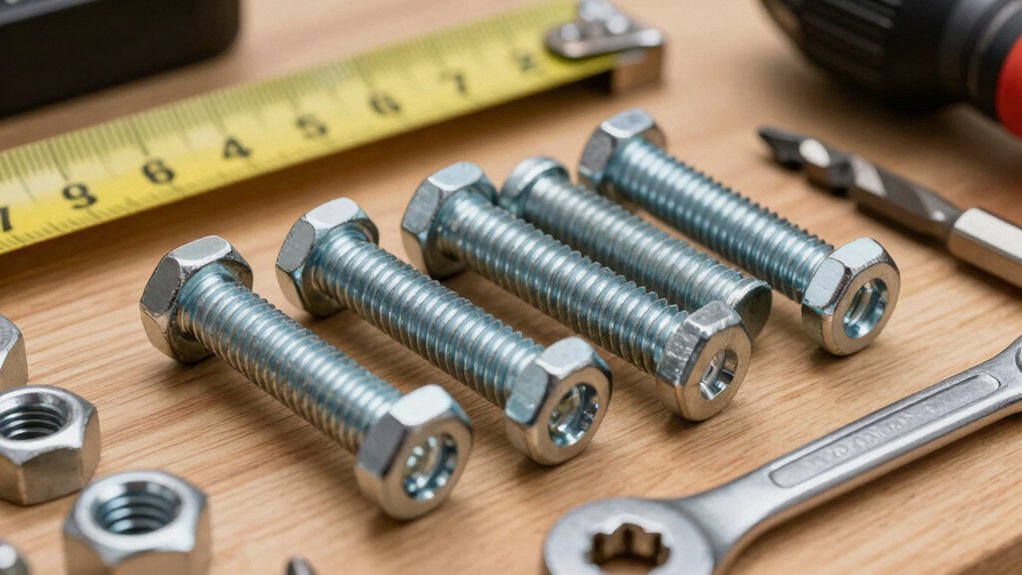
Choosing the right bolts starts with identifying the load, material, and installation context. You assess shear, tension, and vibration to select fastener capacity that matches your project demands.
For household assemblies, favor bolts with compatible thread types and head styles to simplify tool access and torque control. Prioritize corrosion resistance where moisture or chemicals are present, and account for material compatibility to prevent galvanic corrosion.
Match bolt diameter and length to the engagement depth and the connected substrates, ensuring a secure seat without protrusion that could snag or weaken joints.
Plan for bolt installation procedures that minimize thread damage and provide repeatable clamping. Include fastener maintenance steps—periodic inspection, cleaning, and torque rechecks—to preserve preload and structural integrity over time.
Bolt Materials Explained: Stainless, Carbon Steel, and Zinc
Stainless steel offers corrosion resistance and longevity, making it ideal where moisture or chemicals are present.
Carbon steel provides high strength for load-bearing applications, though it requires proper coatings or treatments to resist wear.
Zinc coating reduces corrosion risk across a range of environments and helps extend bolt life in everyday home projects.
Stainless Steel Pros
Stainless steel bolts offer a clear advantage in corrosion resistance, making them a solid choice for outdoor or moisture-prone applications. You benefit from consistent performance where humidity, salt spray, or chemicals threaten other alloys. The stainless steel durability is anchored in passive oxide films that self-heal, maintaining strength and appearance over time.
In practice, you’ll see lower maintenance and longer service life in critical joints.
- Corrosion resistance under diverse environments
- High strength-to-weight balance for load-bearing ties
- Minimal galling and extension of fastener life
- Stable dimensional tolerance across temperature shifts
- Low maintenance requirements in exposed installations
Choose stainless when you demand reliability, predictable strength, and corrosion resistance that keeps assemblies secure and pristine.
Carbon Steel Uses
With carbon steel bolts, you’ll get high-strength performance at a lower cost relative to stainless options, making them a practical choice for interior and non-corrosive outdoor applications.
You’ll leverage their core strength to secure structural joints, fasten load-bearing members, and resist shearing forces in drywall, framing, and cabinetry setups.
Carbon steel offers consistent thread pitch and reliable thread engagement when mated to compatible nuts and taps, delivering predictable torque-tension relationships.
However, you should plan for limited corrosion resistance in moist or chemical environments, so protection via coating or application selection matters.
For bolt corrosion concerns, choose appropriate surface treatments and verify coating compatibility with your substrate.
In all cases, assess load ratings, environment, and maintenance needs to optimize longevity and performance through precise installation and inspection of thread compatibility.
Zinc Coating Benefits
Zinc coatings provide a protective barrier that extends the life of bolts made from stainless and carbon steel by limiting exposure to moisture and corrosive contaminants. You’ll see reduced zinc corrosion under typical indoor and outdoor conditions, enhancing overall system reliability.
For power users, this means fewer replacements and smoother installation cycles. Zinc durability hinges on coating thickness, substrate compatibility, and service environment, so evaluate exposure like humidity, salt spray, and pollutants.
The result is a dependable, longer-lasting fastener stack that resists peeling and flaking when properly selected.
- Enhanced barrier against moisture and contaminants
- Increased service life through superior zinc durability
- Lower maintenance intervals and replacement costs
- Compatibility considerations for stainless and carbon steel
- Application-focused performance in demanding environments
When to Use Bolts vs. Wood Screws
Choosing between bolts and wood screws depends on the load, material, and whether the joint must be disassembled. You assess load paths, shear vs. withdrawal, and the need for repeatable disassembly.
Bolts excel in high-load connections and structural assemblies; use bolt installation with nuts, washers, and proper torque to achieve predictable clamping force.
Wood screws provide simpler, rapid fastening for lighter or non-structural ties where thread engagement in wood suffices.
For sustained strength, consider metal-to-wood interfaces and backing material to prevent pullout.
In disassembly-prone applications, bolts offer repeatable integrity with re-torque, while screws may loosen under vibration if not secured.
Apply precise fastening techniques: align parts, predrill where needed, and verify joint tightness to maintain stiffness and safety.
Avoid over- or under-tightening; accuracy sustains performance.
Understanding Bolt Sizes for Wood and Sheet Metal
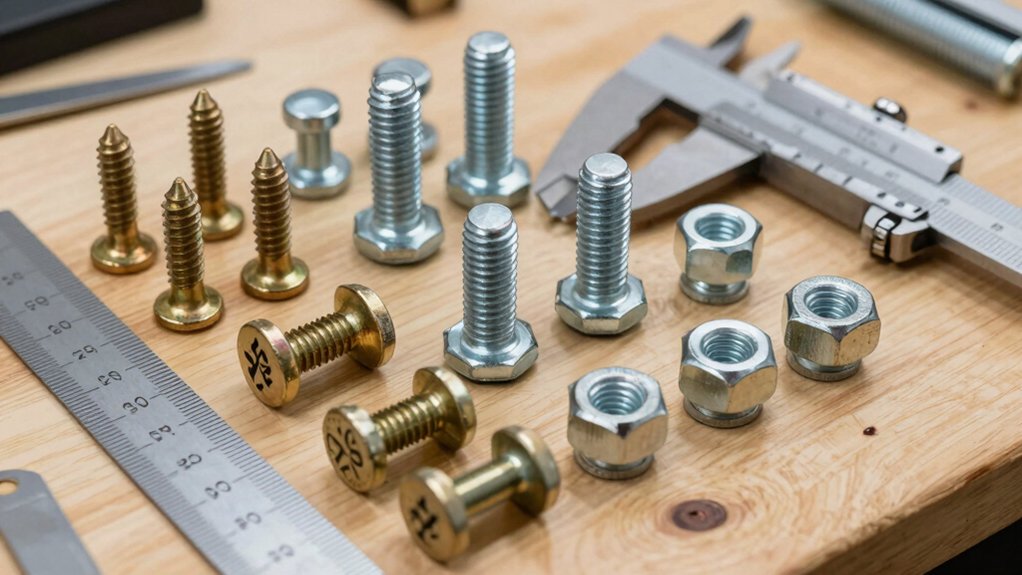
Understanding bolt sizes for wood and sheet metal requires aligning fastener dimensions with material thickness, strength, and load. You’ll choose sizes by consulting thickness charts and load calculations, guaranteeing you meet bolt strength requirements while preserving material integrity.
Precision matters when matching shank length, thread pitch, and grip depth to the joinery.
- Correct grip depth ensures full engagement without protrusion
- Thread compatibility with the nut or tapped hole is essential
- Wood and sheet metal require different diameters for equivalent loads
- Longer bolts aren’t always stronger; cross-verify shear and tension ratings
- Preload control prevents snapping or loosening under vibration
This approach minimizes failure risk, optimizes performance, and keeps assemblies reliable under demanding use.
Thread Types You’ll See on Home Projects
Thread types you’ll encounter define compatibility and installation specifics, starting with thread standards that govern pitch, diameter, and tolerance across fastener families.
You’ll also compare common bolt materials—carbon steel, stainless, and alloys—for corrosion resistance and strength in typical home projects.
Finally, you’ll note head types and uses (hex, pan, washer-face) to match tools and load requirements for secure, repeatable assemblies.
Thread Standards Explained
Thread standards define the size, pitch, and tolerance of fasteners and their mating nuts or tapped holes, so you know which bolts, screws, or threaded rod fit each project. You’ll measure length, diameter, and thread form to guarantee compatibility and performance. Understanding standards guarantees reliable strength, precise fit, and predictable failure margins, essential for demanding tasks.
- Thread pitch versus diameter
- Gauge systems (UNC/UNF, metric) and compatibility
- Tolerances and fit classes
- Bolt strength rating and material implications
- How to verify threads with taps, dies, and gauges
Mastering these elements lets you select parts with confidence, minimizes cross-threading, and maximizes performance. When you plan, you control outcomes, cut waste, and maintain structural integrity through rigorous standardization.
Thread standards empower decisive, high-quality results in every home project.
Common Bolt Materials
Common bolts come in a handful of materials, each offering distinct strength, corrosion resistance, and cost. You’ll encounter carbon steel, stainless steel, brass, and alloy options, chosen for specific environments and loads.
Carbon steel delivers high tensile strength at a lower price, but it’s prone to rust without coating. Stainless steel resists corrosion in moisture-rich spaces, yet can be more expensive and harder to thread consistently. Brass provides excellent friction properties and electrical nonconductivity, though it’s weaker for heavy loads.
Alloy steels, often heat-treated, maximize durability for demanding applications. Material choice directly impacts bolt installation efficiency and long-term performance, so verify compatibility with coatings, substrates, and fastener safety standards.
When selecting, balance strength, environment, and budget.
Head Types and Uses
When choosing bolts for home projects, the head shape you select determines how you drive, drive effort, and how the fastener seats. Head types influence seating flushness, load transfer, and tool compatibility, so pick with purpose.
Here, bolt head styles and bolt threading options shape performance in every fastener decision.
- Hex heads deliver torque control and accessible drive strength for high-performance applications
- 頭S Rounded and pan heads reduce snag risk and provide clean top surfaces for aesthetics
- Button and socket heads minimize profile while maintaining withdrawal resistance
- Flat and truss heads optimize alignment and distribution across shared surfaces
- Security and tamper-resistant heads deter removal while preserving integrity
Choose accordingly, prioritize fit, and verify tool compatibility for maximum fastening power.
The Best Bolt Heads and Drive Types for DIY
Choosing the right bolt heads and drive types can substantially speed up DIY projects and improve reliability. In this guide, you assess bolt head styles and their compatibility with tools, torque, and access conditions.
For high-torque applications, hex and Torx heads offer low slip and predictable engagement, while six-lobe drive mechanisms reduce cam-out in challenging materials.
Phillips and slotted heads suit simple, low-torque tasks but risk stripping under demand; use pattern familiarity matters.
Security-driven projects benefit from square drive and tamper-resistant variants, which resist unauthorized manipulation.
Recessed or flush heads minimize snag hazards and allow clean assemblies in tight spaces.
For convenience, pair compatible bit profiles with impact drivers to maximize efficiency and control, ensuring fast, repeatable performance.
Prioritize tool compatibility, material hardness, and intended service conditions.
Matching Nuts, Washers, and Anchors for Strength
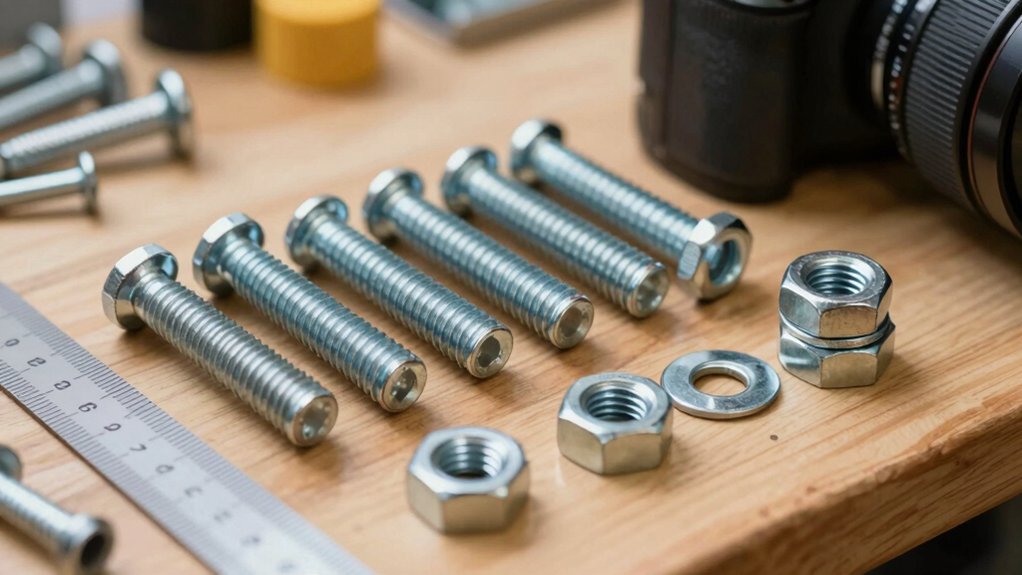
Matching nuts, washers, and anchors for strength require selecting compatible parts that grip firmly, distribute load evenly, and resist pull-out. You maximize joint integrity by pairing these elements with appropriate bolt head types and profiles, ensuring torque transmission and seating stability.
- Compatibility: match thread pitch, diameter, and grip length to avoid wobble
- Washer choice: select hardened or spring washers to prevent loosening
- Nut type: use lock nuts or nylon inserts for vibration resilience
- Anchor suitability: choose chemical, mechanical, or expansion anchors per substrate
- Load path: align nut, washer, and anchor to create a continuous, concentric load channel
Remember: precision triads you control—nut, washer, anchor—dictate strength and reliability in every fastened connection.
Finishes and Corrosion Tips for Outdoor Use
Outdoor hardware endures moisture, salt, and temperature swings, so selecting finishes and corrosion-resistant strategies is essential for longevity. You’ll prioritize coatings that deter galvanic attack and moisture intrusion, such as zinc plating with passivation, ceramic-based finishes, or powder coatings formulated for UV exposure.
Opt for stainless steel grades 304 or 316 when high corrosion resistance matters, especially near oceans or chemicals. Apply protective films or sealants to exposed threads to reduce moisture ingress during fastener installation.
Consider hot-dip galvanizing for heavy outdoor loads, then topcoat for UV stability. Selection hinges on environment, load, and maintenance cadence. By detailing installation and inspection intervals, you sustain outdoor durability and corrosion resistance, ensuring fasteners retain strength, appearance, and service life across seasons.
Quick-Reference Fastener Sizing by Project Type
When selecting fasteners for a given project type, use concise sizing guidelines to prevent over- or under-fastening. Quick-reference sizing aligns load, material, and embedment with correct thread length and bolt diameter, ensuring structural integrity and finish quality.
For each project type, rely on standardized diameters, grip ranges, and torques to maximize performance. Leverage decorative bolt options where aesthetics meet strength in visible applications, and prioritize ergonomic bolt design to reduce installation effort.
Maintain consistent bolt grade and coating to match environment and corrosion exposure. Refer to a project-type chart for quick decisions, then verify with practical site checks.
- Align project type with diameter, length, and thread pitch
- Account for material thickness and embedment depth
- Match coating to environment and load
- Prioritize ergonomic bolt design for installers
- Consider decorative bolt options for visible faces
Conclusion
You’ve learned the essentials of selecting bolts for home projects, from materials to finishes and fastener systems. One striking stat: up to 50% of DIY failures come from improper fastening choices or mismatched hardware. That’s why matching bolt type, size, head, and washer or anchor matters as much as the load and substrate. Use the right combination for durability, safety, and ease of future repairs—double-check specs, and don’t skip testing in a scrap piece before installation.