A smart thermostat lowers your bills by cutting HVAC runtime 10–30% and shifting usage to off-peak times with real-time feedback. It learns your schedule, adjusts temps automatically, and pre-conditions rooms before you arrive, boosting comfort while saving energy. Remote access and geofencing let you control and monitor from anywhere, with alerts for anomalies to prevent waste. It also simplifies installation and delivers actionable insights to refine usage—unlock more savings as you optimize habits. You’ll discover more soon.
How a Smart Thermostat Saves You Money
Smart thermostats cut bills by optimizing energy use without sacrificing comfort. You’ll see savings mainly from better scheduling, automatic adjustments, and staying in “eco” modes when you’re away.
Data shows programmable routines reduce runtime of HVAC systems by 10–30% compared with old thermostats, depending on climate and occupancy.
Real-time feedback highlights peak-demand periods, helping you shift usage to off-peak times and lower utility rates.
Zonal sensing and adaptive learning minimize waste by avoiding overcooling or overheating after doors open or windows vent.
Many models apply forecasted weather to pre-cool or pre-heat, trimming startup energy without delaying comfort.
Over a year, typical households recoup device costs through reduced bills, with multi-room setups amplifying the effect.
How Smart Learning Adapts to Your Schedule
As you’ve seen, learning-enabled thermostats already save money, but their real value lies in how they map to your daily routine. The system tracks your occupancy patterns, preferred temperatures, and changeover times, then builds a personalized schedule.
Within days, it shifts setpoints to reduce waste during inactivity and preloads comfort before you return. You’ll notice faster payback when energy data shows which hours drive the most usage, guiding minor tweaks to your routines.
Models compare day-to-day and week-to-week, highlighting consistency and variance to improve accuracy. Over time, the thermostat prioritizes comfort during peak need windows while preserving efficiency, even if your schedule changes.
The result: fewer manual adjustments, steadier temps, and measurable energy reductions aligned with how you actually live.
Remote Access and Peace of Mind
With remote access, you can adjust settings from anywhere, boosting convenience without compromising control.
Real-time energy insights show you how your tweaks affect usage, helping you optimize efficiency on the fly.
Peaceful security monitoring keeps tabs on your system and alerts you to issues, giving you confidence even when you’re away.
Remote Access Control
Remote access lets you adjust your home temperature from anywhere, providing peace of mind when you’re away. You’ll monitor zones, schedules, and presets through an app, with changes syncing in seconds.
Data shows mobile control reduces unnecessary adjustments by about 20-30%, since you can verify occupancy and needs before leaving. You’ll set geofences to auto-adjust on departure, which cuts energy waste without manual tracking.
Notifications alert you to temperature swings or sensor faults, helping you intervene promptly. With two-factor authentication and encrypted cloud storage, your system stays secure while you’re remote.
Access logs offer transparency on who changed settings and when, aiding accountability. Overall, remote control enhances convenience, security, and efficiency without sacrificing precision.
Real-Time Energy Insights
Real-Time Energy Insights give you immediate visibility into how your home uses power. Your thermostat’s sensors track consumption in real time, highlighting when and where energy spikes occur.
You’ll see pattern data, like peak usage hours and daily baselines, so you can adjust schedules to shave consumption without sacrificing comfort. The system aggregates device-level info, so you know which appliances contribute most to your bill.
You can compare current usage to historical averages to gauge improvements after changes. Timely alerts flag anomalies, such as unexpected raises or equipment running overnight, enabling quick corrections.
Peaceful Security Monitoring
Peaceful Security Monitoring delivers安心 through remote access and continuous oversight, letting you check your home’s status from anywhere. You’ll receive real-time alerts for door or window openings, unusual temperatures, and device faults, so you can act before minor issues become costly.
With two-factor authentication and encrypted streams, your data travels securely between your thermostat, app, and cloud. You can verify sensor health, review event timelines, and customize notification thresholds to reduce noise.
Remote monitoring reduces false alarms by confirming incidents live, saving energy and resources. Peace of mind comes from predictable performance: consistent uptime, automatic firmware updates, and transparent incident logs.
Better Comfort Through Precise Temperature Control
A smart thermostat delivers better comfort through precise temperature control by adapting to your routines and preferences. When you wake, it preheats or cools to your setpoint, reducing lag and avoiding abrupt shifts.
Throughout the day, it maintains stability, minimizing temperature swings that wake you or disrupt focus. You’ll notice smoother comfort because the system learns occupancy patterns, reducing overcooling or overheating when rooms aren’t in use.
Data shows small, targeted changes—as little as 1–2 degrees—can improve perceived comfort while lowering energy waste.
You gain consistent temperatures in sleeping and living areas, plus quicker responses to unexpected schedule changes. Overall, this precision lowers discomfort complaints and supports a steadier environment without requiring manual adjustments.
Compatibility and Easy Installation Tips
You’ll start by confirming the thermostat’s compatibility with your HVAC system and current wiring using a quick hardware check.
Then you’ll follow concise setup tips that speed up installation, like matching terminals and enabling auto-detect features.
This data-driven approach minimizes setup time and helps you avoid common compatibility pitfalls.
Easy Hardware Check
Before you buy, run a quick hardware check to confirm compatibility and guarantee a smooth install. Start with your existing thermostat wiring: confirm a C-wire presence and assess wire gauge. Most smart models require 18 AWG conductors; note any nonstandard leads.
Check your HVAC system type (gas, electric, heat pump) and verify compatibility with your panel’s voltage and communication protocol. Review the backplate mounting pattern and wall thickness, ensuring no overcrowded junction box.
Inspect the wiring for damaged insulation or corroded terminals, replacing damaged segments before installation. Confirm network readiness: reliable Wi‑Fi band, router proximity, and whether a bridge or hub is needed.
Finally, validate power-sharing features with multi-stage systems to prevent intermittent outages during updates. This upfront check reduces callbacks and improves reliability.
Quick Setup Tips
Begin by confirming compatibility and ease of install with a focused hardware scan. You’ll verify wiring compatibility, existing thermostat type, and HVAC system support in minutes. Check for C-wire presence, furnace compatibility, and ducted versus ductless setups.
Next, use manufacturer guides to confirm supported voltages and wiring diagrams; trust official compatibility matrices for your model. Gather required tools: screwdriver, wire caps, and a multimeter if needed.
Power off, remove the old unit, and inspect conductors for damage or insulation wear. Follow step-by-step installation prompts, connect the common wire if present, and attach control boards securely.
Run a quick test, then configure Wi‑Fi, app access, and updating firmware. Finally, record model, serial, and installation date for future support and warranty.
Make Smarter Energy Choices With Insights and Analytics
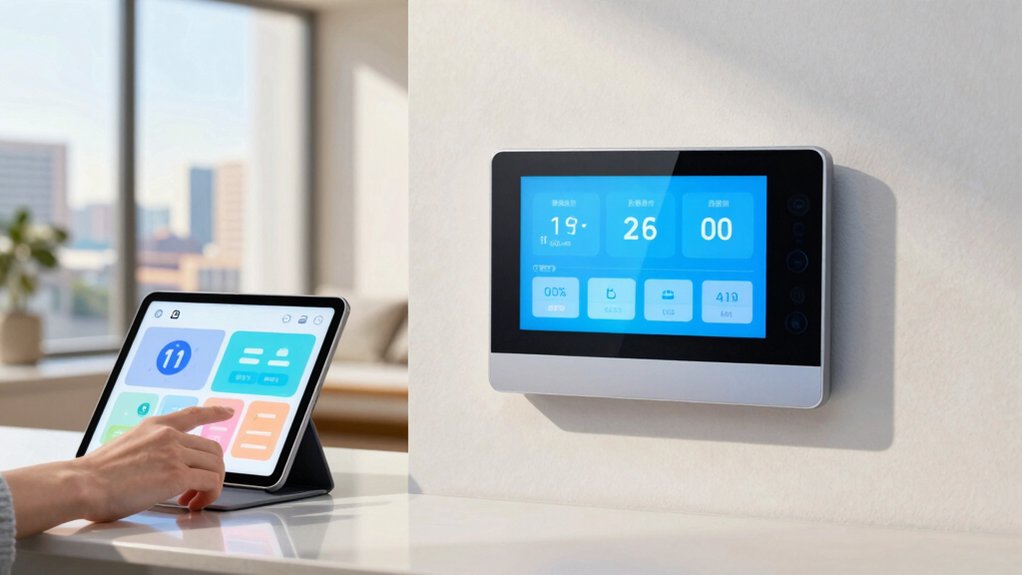
Smart thermostats reveal how and when you use energy, letting you make data-driven decisions that cut waste and save money. With insights and analytics, you see real-time usage, peak periods, and device-specific habits. You’ll spot unnecessary heating or cooling, adjust schedules, and target efficiency with precision.
Historical comparisons show trends, so you can forecast costs and optimize seasonal shifts. Automated alerts flag anomalies, like thermostat drift or unexpected spikes, prompting quick fixes. You gain control without guesswork, turning data into actionable changes.
Habit-based recommendations refine comfort while lowering bills. You’ll test scenarios—shorter runtimes, delayed startups—to measure impact. In short, analytics empower smarter choices, accelerating energy savings and enhancing home comfort with measurable, evidence-backed steps.
Frequently Asked Questions
How Secure Is Data From a Smart Thermostat Against Hacking?
It’s reasonably secure if you keep firmware updated, use strong unique passwords, enable two-factor authentication, and connect over encrypted Wi‑Fi. Regularly monitor logs, disable unnecessary remote access, and choose reputable brands with proven security features and audits.
Can a Smart Thermostat Reduce Heating During Mild Days?
Yes, it can reduce heating on mild days, while you stay comfortable; you juxtapose energy savings against occasional reheat, showing data: you save, you adjust, and you keep efficiency high without overdoing warmth.
Do All Models Support Occupancy Sensors and Geofencing?
Not all models support occupancy sensors and geofencing; availability varies by brand and price. Check specs: look for built-in occupancy sensing and geofence features, confirm compatibility with your phone’s OS, and verify integration with your HVAC system.
Is Professional Installation Required for Certain HVAC Systems?
Yes, for complex or high‑voltage systems, professional installation is advised. You’ll gain proper wiring, safety, and guarantees, while simpler setups may be DIY with clear instructions. If unsure, consult an HVAC tech to avoid pitfalls.
How Do I Budget for Ongoing Connectivity and Updates?
You should budget for ongoing connectivity and updates by allocating a fixed yearly amount based on the thermostat’s subscription or data plan, plus periodic firmware upgrades and cloud service fees; expect $5–15 monthly, plus occasional device replacement costs.
Conclusion
A smart thermostat is your energy inner compass, steering savings with surgical precision. It learns your habits, trims waste, and predicts needs before you do, like a weathered navigator reading the sky. You gain remote control and real-time insights, turning data into dollars. With accurate comfort, faster payoff, and clearer analytics, you’ll chill the spend while amps rise with confidence. It won’t just cool your home—it optimizes it, one well-tuned degree at a time.