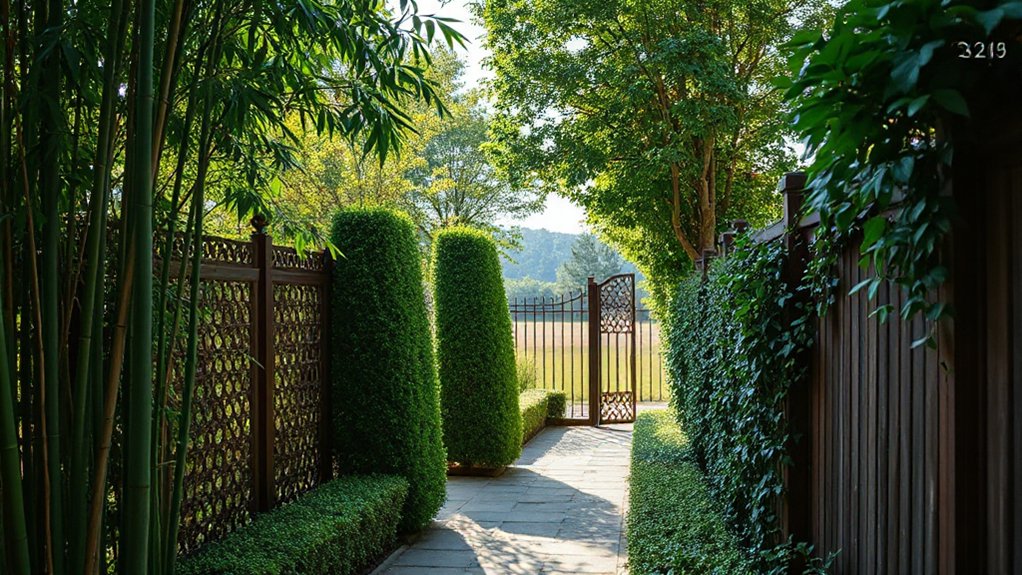
You might think privacy costs too much, but thoughtful design can create a secluded feel without a fortress look. Start by layering evergreen screens with deciduous accents and pair them with modular screens or trellises that you can tweak over time. Consider site specifics—slope, sun, and wind—to place berms and staggered plantings that read as a single, living wall. Curious how these elements come together for a durable, adaptable solution?
Identify Your Privacy Goals and Local Rules
Identifying your privacy goals and understanding local rules starts with a clear brief: what kind of privacy do you want (sound, sight, or both), and how visible should your garden be to neighbors and passersby? You’ll map acceptable sightlines, then check zoning, HOA, and local ordinances for height limits and noise covenants.
Define target outcomes: reduced street glare, minimized sound intrusion, or screened seating zones. Consider seasonal changes and microclimates that affect privacy effectiveness, noting any required setbacks. This groundwork guides material choices and budget.
Plan around privacy microclimates to tailor barriers, screens, and screening strategies. Document compliance steps and permit needs early to avoid delays.
Quick Wins for Garden Privacy: Screens, Plantings, and Layouts
Looking for quick, layerable privacy wins? Focus on three levers: screens, plantings, and layout. Start with modular screens or trellises placed at property edges to create immediate seclusion without doubling as visual clutter. Choose materials and colors that echo your garden décor for a cohesive, high-design backbone.
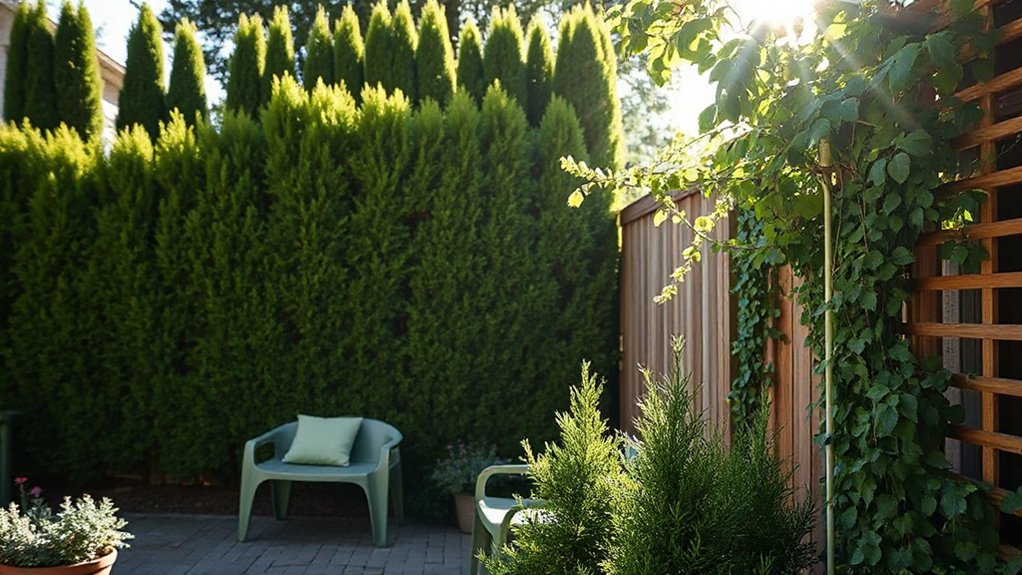
Layer soft edges with evergreen or year-round shrubs to reinforce privacy while still allowing airflow and light. In plantings, favor dense, compact forms near sightlines and tuck taller specimens toward boundaries to blanket views, using repeated textures for rhythm.
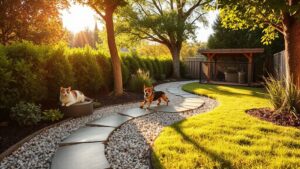
Layout matters: staggered beds, not rigid rows, reduce straight sightlines and invite discovery. Always weigh wildlife considerations—native species, habitat pockets, and pollinator corridors—to maintain ecological balance while preserving privacy.
Year-Round Privacy: Deciduous to Evergreen Layering
Year-round privacy hinges on the deliberate combo of deciduous structure and evergreen backbone. You create enduring screens by layering seasonal deciduous forms with evergreen silhouettes, ensuring coverage across all seasons.
Begin with a high, fast-growing deciduous scaffold to blur sightlines in summer and drop leaves to reveal plants beneath in winter, providing light-variation that fools visibility without sacrificing openness.
Integrate sturdy evergreen anchors—dense shrubs, shapeable hedges, and vertical accents—that maintain form and opacity through cold snaps and wind.
Plan a tight, diagonal, or staggered arrangement to maximize mass while minimizing gaps. This approach supports diy privacy by allowing on-the-fly adjustments, pruning without sacrificing overall density.
Use natural barriers—composed textures, color shifts, and varied heights—and tailor to site, climate, and rhythm.
Privacy-Focused Fences, Screens, and Structures: Materials and Maintenance
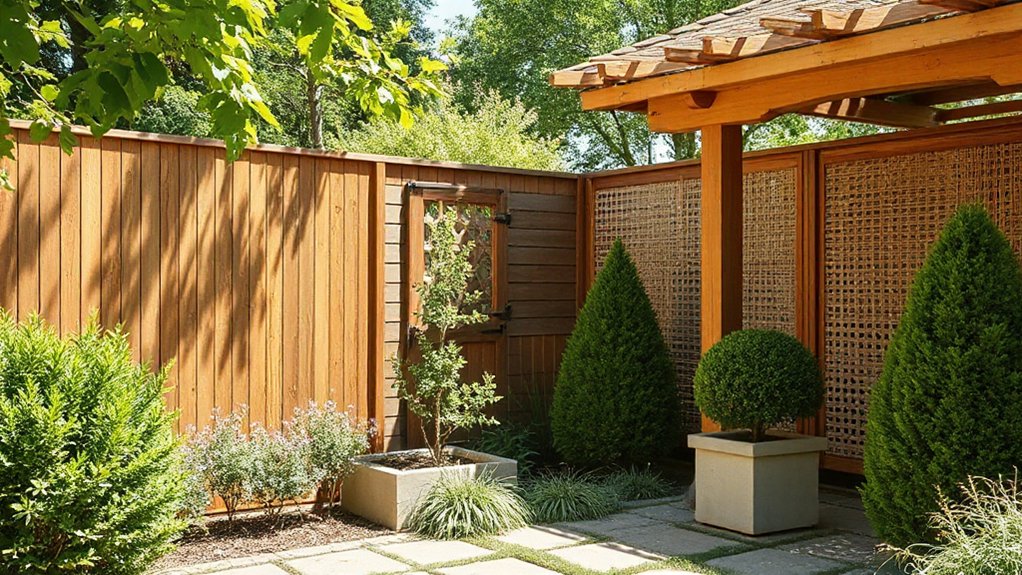
Privacy-focused fences, screens, and structures hinge on selecting materials that balance visual blocking with light transmission and require minimal ongoing maintenance. You’ll prioritize durable, weather-resistant options that resist warping and fading while preserving sight lines where desired.
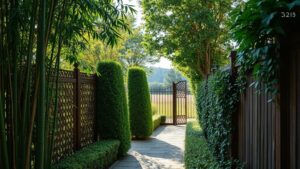
Consider decorative lattice as a lightweight screen element to soften edges and add texture without sacrificing air flow. For solid privacy, choose panels or slats with tight gaps and UV-stable finishes, ensuring clean lines and reduced maintenance under sun exposure.
Natural options like privacy hedges provide living concealment but need occasional trimming and irrigation planning to maintain uniform density.
Combine materials thoughtfully: lattice accents atop a solid core reduce bulk, while hedges backfill gaps for year-round enclosure.
Select colors and textures cohesive with your garden’s palette to maintain a streamlined, design-forward boundary.
Long-Term Privacy Investments: Climate, Terrain, and Custom Solutions
Even with high-quality screens and hedges, long-term privacy hinges on climate, terrain, and the right custom solutions that fit your site. You evaluate microclimates, slope, drainage, and sunlight to tailor enduring barriers.
Prioritize climate resilient plants that tolerate local extremes while delivering year-round screening and structural integrity. Combine native species with intermittently placed evergreen accents to reduce maintenance and water use.
Terrain-informed designs, like stepped screens for uneven ground or berms to capture wind, optimize privacy without visual clutter.
Invest in modular, adaptable solutions—slim, stacked screens, lattice panels, or retractable canopies—that can evolve with your landscape.
Use innovative privacy gadgets to monitor growth, adjust shading, and water efficiently, ensuring consistent protection across seasons.
Frequently Asked Questions
How Do Local Noise Ordinances Affect Garden Privacy Choices?
Noise restrictions shape your options by limiting loud outdoor additions and timing. You’ll align designs with community guidelines, choosing quiet, visually effective privacy features like screens or plantings that fit permitted hours and noise levels.
Can Pets Safely Share Fenced-Private Spaces With Neighbors?
Yes, pets can share fenced-private spaces if you enforce clear neighbor boundaries and supervise shifts; imagine a shared stage where safety cues guide each actor. Pet safety and Neighbor boundaries should guide your design, installations, and routines.
What Are Wildlife-Friendly Privacy Options for Small Yards?
Wildlife-friendly privacy for small yards relies on creating safe corridors and native planting. You’ll install wildlife corridors along edges, and choose native planting to provide cover, food, and movement routes while preserving your privacy and design integrity.
How to Measure Privacy Effectively Without Overplanting?
Privacy is measurable: use sightlines, setback, and shading to gauge effectiveness without overplanting. You’ll set privacy screens at ideal planting density, monitor visual height, and adjust spacing to maintain airflow and year-round aesthetics.
Are Temporary Privacy Solutions Allowed on Rental Properties?
Temporary privacy solutions on rental properties are often allowed with approval; check your lease first. You can install temporary fencing or privacy screens that are non-damaging, modular, and design-focused to minimize impact and maximize flexibility.
Conclusion
You’ve got a clear path to privacy: start with goals and local rules, layer evergreen screens with deciduous drama, and mix modular screens with living hedges for year-round cover. Prioritize terrain tweaks and smart maintenance to keep layouts dense and durable. A striking stat to hook readers: evergreen hedges can cut noise by up to 50% in urban settings, boosting comfort and perceived seclusion. Finish with simple, scalable steps that align design precision with your garden’s microclimate.