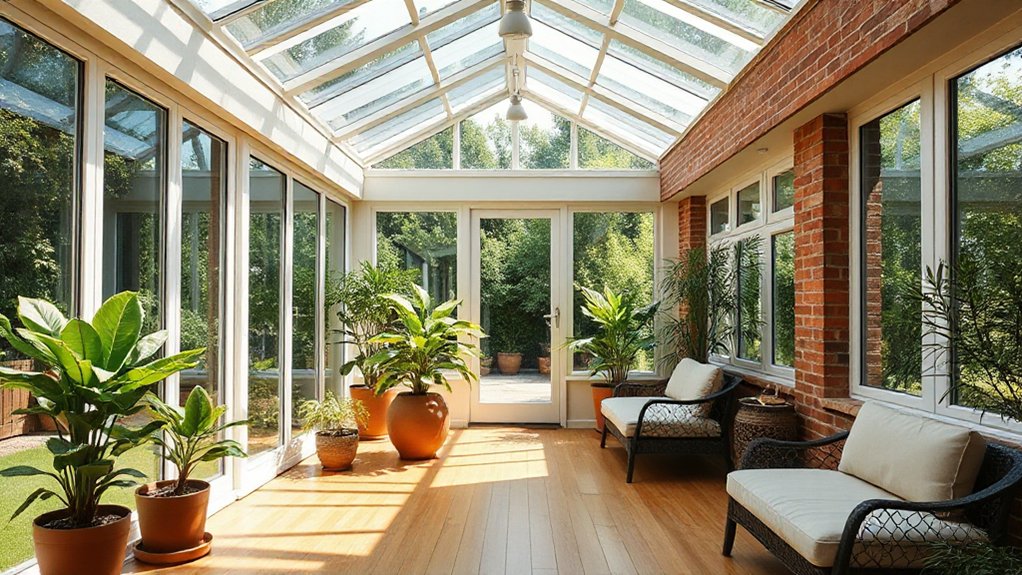
You’re looking for a conservatory that stays comfortable and energy-efficient year round, no matter the season. Start with a precise blend of insulation, glazing, and shading that minimizes heat gain and loss while maximizing natural light. Think adaptable layouts, smart roof options, and low-maintenance finishes that weather changes gracefully. The key is a design that quietly works with your climate and lifestyle—and that momentum will make you want to explore the practical details that follow.
Foundational Criteria for a Year‑Round Conservatory
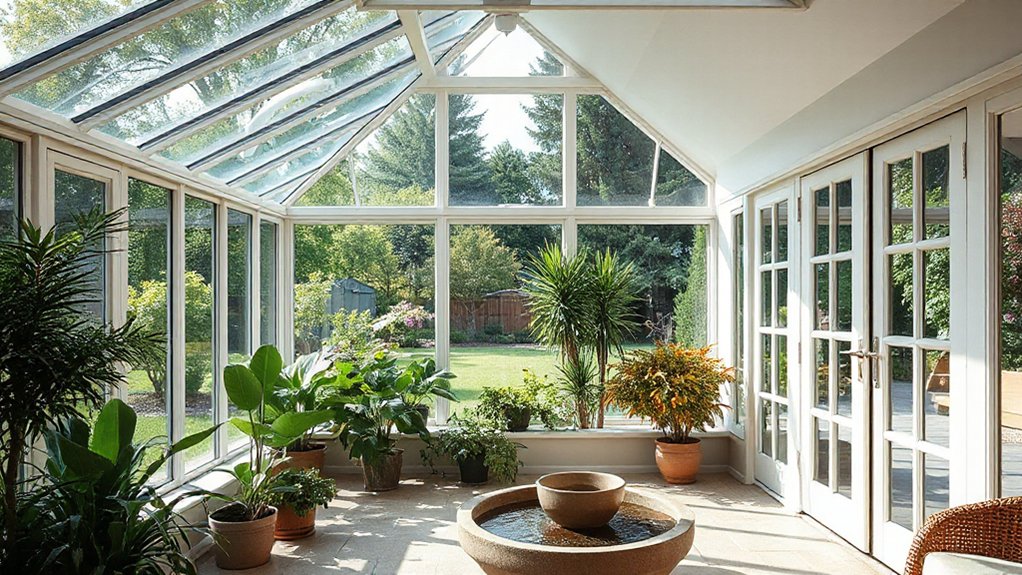
A year‑round conservatory rests on three foundations: reliable climate control, efficient insulation, and durable structure. You design around balanced climate zones, automatic vents, and variable shading so you stay comfortable without wasting energy.
Efficient insulation minimizes heat transfer and drafts, enabling stable temperatures with modest equipment. A durable structure resists wind, snow, and thermal movement, while joints and seals stay airtight over time.
Landscape integration matters: framing views, selecting materials that blend with surroundings, and aligning sightlines with outdoor terrain. You pursue aesthetic harmony by matching textures, color tones, and microclimates, ensuring the space feels cohesive with the garden.
Start with a robust structural system, add responsive climate features, and finish with materials that endure. This foundation supports reliable year‑round use and functional, precise performance.
Thermal Design Basics for Comfort and Efficiency
You’ll start with solid insulation performance, then tune for solar gain to keep warmth in and glare out. Think zoning and ventilation controls that adapt to use, seasonal shifts, and previewing comfort without waste.
This discussion connects insulation, solar management, and smart airflow to define a precise, efficient thermal design.
Insulation Performance Basics
Insulation performance sets the baseline for comfort and energy use in a conservatory. You optimize this by selecting high‑quality insulation materials and detailing assemblies that minimize heat loss. Focus on continuous envelope performance: avoid gaps, joints, and misaligned boards that create thermal bridging.
Use cavity fills, rigid backings, and properly sealed edges to reduce conductive paths. If you’re upgrading, target the weakest links first—roof domes, door thresholds, and glazing frames—and verify with a blower door or infrared scan.
Consider reflective or low‑emissivity surfaces to lower radiant exchange without sacrificing light. Balance thickness, density, and vapor control to prevent condensation.
Solar Gain Management
How can you control solar gain to keep a conservatory comfortable while cutting cooling loads? You tailor glazing choices and orientation to limit unwanted heat while maximizing daylight. Use low-emissivity coatings or spectrally selective panes to reduce radiant transfer without darkening interiors.
Pair high-performance frames with airtight seals to minimize thermal bridging, and design roof elements that shift heat away from occupied zones. Implement solar shading strategies that respond to sunpath, such as operable shading devices, adjustable louvers, or deployable blinds, for shading device optimization.
Integrate passive cooling concepts like exterior shading in peak months and natural ventilation when conditions permit. Consider Solar panel integration where possible to harvest energy without compromising visual comfort and thermal balance.
Plan maintenance access and clear operation of all systems.
Zoning and Ventilation Control
Zoning and ventilation control is the backbone of a comfortable, energy-efficient conservatory. You segment spaces by function and occupancy, matching airflow to usage without waste.
Use programmable vents and dampers to modulate cooling in sunlit zones while preserving warmth in retreat areas. Integrate demand-controlled ventilation that reacts to CO2 and humidity levels, keeping drafts out and comfort steady.
Smart materials, like phase-change panels and thermochromic glazing, adapt thermal mass and shade without manual adjustments, reducing reliance on mechanical cooling.
Acoustic design isn’t afterthought; you place absorptive treatments to minimize echo and noise penetration, preserving a calm climate.
Pair operable roofs with automated louver systems to balance daylight, ventilation, and energy efficiency across seasons.
Roof Systems to Reduce Glare and Improve Insulation
You’ll balance glare with glare-reducing roof materials while tracking how insulation performance metrics translate to year‑round comfort.
Consider how daylight control strategies orchestrate light when you compare different materials, R-values, and thermal bridges.
This discussion starts by linking material choices, measurable insulation gains, and practical room experience.
Glare-Reducing Roof Materials
Glare is a common, avoidable distraction in conservatories, so choosing roof materials that minimize harsh reflections and heat transfer is essential. You’ll prioritize glare reducing roof materials that balance translucency with diffusion, preventing hotspots while preserving natural light.
Look for coatings or laminates that suppress specular glare and convert direct sun into soft, uniform daylight. Daylight glare management should be integral to the panel geometry, frame finishes, and mounting details, reducing perceived brightness without compromising views.
Opt for materials with consistent albedo and low haze, so reflections stay gentle across seasons. Consider hybrid systems that combine diffusive layers with reflective tints to maintain color fidelity.
Finally, verify warranty, UV stability, and maintenance access, ensuring long-term performance and minimal seasonal glare fluctuations.
Insulation Performance Metrics
To reduce glare and boost comfort, insulation performance metrics must quantify how roof systems trap heat, dampen radiant heat transfer, and maintain stable indoor temperatures. You measure conductance, thermal mass, and diffusion resistance to compare assemblies, focusing on year‑round efficiency.
Evaluate R‑values alongside thermal inertia to capture peak load responses and heat loss in cold snaps. Consider dynamic factors: solar gain, shading, and air leakage impact on perceived comfort.
Insulation durability and long‑term performance influence annual energy use, so you prioritize materials with stable R over time, low moisture susceptibility, and resistance to air gaps. Confirm insulation installation meets detailing standards, seals joints, and preserves continuous layers.
Your metrics guide material selection, detailing, and system integration for reliable, glare‑reducing conservatories.
Daylight Control Strategies
Daylight control in conservatories blends glare reduction with insulation performance to keep interiors comfortable year-round. You optimize roof systems to balance brightness and heat flow, using dynamic shading and time-tested glazing.
Employ movable louvers or skylight blinds to adapt to sun position, reducing glare while preserving view. Select coatings and tints that minimize infrared transmission without washing out daylight, enhancing energy efficiency through seasonal shifts.
Integrate thermal breaks in structural framing to curb heat loss at joints, sustaining steady interior temperatures. Pair these strategies with decorative accents that cue shading, such as fabric wraps or color-blocked panels, without compromising daylight.
Plan for maintenance access and modular adjustments, ensuring long-term performance. This approach centers functional design, precise execution, and durable, adaptable daylight control.
Glazing Options for Heat, Light, and Privacy
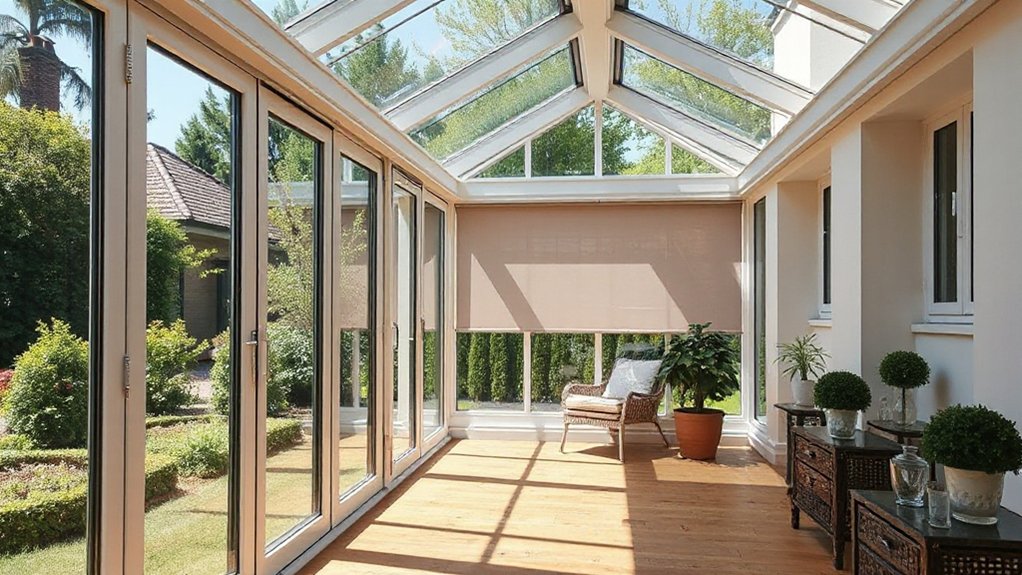
Glazing options shape heat, light, and privacy in a conservatory, so pick systems that balance insulation with natural illumination. You’ll prioritize low-emissivity glass, insulated glazing units, and selective tinting to reduce heat gain while preserving daylight.
Consider double- or triple-glazing with warm-edge spacers to minimize condensation and thermal bridging. Screened vents and smart coatings adapt to sun angles, keeping interiors comfortable year-round.
For privacy without sacrificing light, mix transparent panes with decorative treatments that don’t distort color. Integrate decorative window frames to emphasize architectural style and frame performance.
Privacy screen options, including retractable or fixed panels, offer adjustable seclusion without heavy visual impact. Pair glazing with weather seals and compliant shading devices to stabilize temperatures across seasons.
Maintain simplicity, efficiency, and structural integrity in every choice.
Layout Strategies for Seamless Indoor‑Outdoor Living
Blending indoor comfort with outdoor openness starts with a layout that blurs boundaries without sacrificing structure. You map zones that flow, not force, so doors, thresholds, and glazing align to create continual sightlines.
Place living spaces near operable walls to extend when needed, and tuck dining and work areas along sheltered passages that feel exterior yet protected. Use furniture scales that invite ease of movement and avoid clutter, preserving clear paths for traffic and airflow.
Incorporate decorative accents to cue seasonal shifts—textures, color pops, and greenery that unite inside and out. Employ lighting techniques that adapt: dimmed ambient for evenings, task lighting for work zones, and soft outdoor fixtures for terraces.
Finally, align storage with use, so daily rituals stay seamless and efficient.
Heating, Cooling, and Ventilation That Actually Work
Smart heating, cooling, and ventilation are nonnegotiable in a year‑round conservatory, so you design around predictable comfort rather than reactive fixes.
You deploy a zoned system that targets high-use areas first, reducing energy waste without sacrificing comfort.
Automated controls adapt to sun angles and occupancy, keeping interior conditions stable while minimizing drafts.
Thermal mass and strategically placed shading soften peaks, supporting efficient climate management.
Ventilation focuses on continuous air exchange with minimal heat loss, using low‑noise fans and smart dampers to balance fresh air with temperature consistency.
Landscaping aesthetics influence microclimates around exterior openings, guiding airflow and reducing heat gain.
Furniture selection and layout are chosen to complement ventilation paths and heat distribution, avoiding clutter that can obstruct performance.
Materials and Finishes That Cut Maintenance
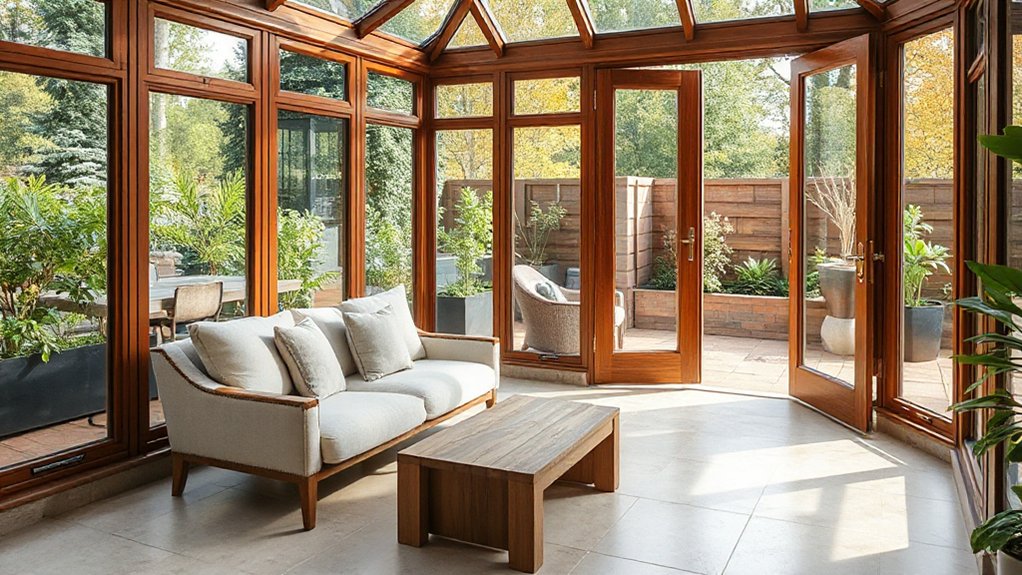
Materials and finishes matter because durable, low-maintenance surfaces reduce upkeep without compromising aesthetics. You’ll choose materials that resist weather, moisture, and UV exposure, so cleaning becomes minimal and longevity increases.
Look for sustainable materials that don’t compromise performance, such as recycled aluminum alloys, high-density polymer composites, and stabilized timber with low shrinkage.
Eco-friendly finishes should be low-VOC, UV-stable, and scrub-resistant, ensuring you don’t repaint annually. Favor coatings that resist staining, mold, and mildew, while maintaining color fastness in sunlight.
Seam performance matters too: seamless joints or concealed fasteners minimize dirt traps.
Opt for systems with transferable warranties and proven maintenance cycles, so you can plan upgrades rather than reactive fixes.
Models by Style: Modern, Traditional, and Hybrid Designs
Modern, traditional, and hybrid conservatory designs each deliver distinct aesthetics and performance goals, so you can choose a style that aligns with your architecture, climate, and lifestyle.
In this section, you assess how each model supports year‑round use. Modern designs maximize light, thermal efficiency, and open-plan versatility, aiding garden integration by creating seamless indoor–outdoor passages.
Traditional styles emphasize craft, proportion, and durability, delivering reliable comfort with timeless appeal.
Hybrid designs fuse energy performance with flexible layouts, ideal for variable seasons and evolving needs.
Prioritize garden integration when planning sightlines, glazing ratios, and shading strategies.
For furniture selection, match scale and material to your chosen model—low-profile pieces for modern lines, classic upholsteries for traditional cues, and modular systems for hybrids.
Select a model that sustains comfort, style, and practical maintenance.
Frequently Asked Questions
How Long Does Year-Round Use Typically Cost to Operate?
Year-round use costs vary, but you’ll likely spend a few hundred to several thousand dollars annually, dependent on energy efficiency and maintenance costs. You save with efficient glazing, smart thermostats, and regular upkeep to keep operating costs down.
Can Conservatories Be Solar-Powered With No Batteries?
You can’t run a conservatory purely on solar panels with no batteries; you’ll need battery storage for steady power, backup, and efficiency. You’ll optimize performance, integrate solar panels, guarantee reliability, and maintain climate control with smart, innovative solutions.
Which Approvals or Permits Are Required for Installation?
Permits vary by locale, but you’ll typically need to follow the building codes and complete the permit process before installation. Check with your local authority for plan review, inspections, and setback or variance requirements.
Do Year-Round Conservatories Affect Home Resale Value?
Yes—you’ll boost interior aesthetics and overall appeal, but resale value hinges on solid material durability and quality finishes. You’ll notice brighter spaces, durable glass and frames, and a confident, practical upgrade that stays attractive over time.
How Quickly Can a Project Be Completed Start to Finish?
You can complete a project in weeks, depending on scope. You’ll prioritize design flexibility and material durability, accelerating decisions and permits. You’ll coordinate trades tightly, minimize revisions, and maintain clear timelines to keep the build moving smoothly.
Conclusion
A year‑round conservatory isn’t just a room—it’s a living extension of your climate strategy. Imagine a glass hull that catches sun in winter and shields heat in summer, a space that breathes with your family’s rhythms. Data shows high‑performance glazing can cut heating needs by up to 40%. Like a ship’s hull, a well‑designed design keeps interiors steady while the world shifts outside. Build with purpose, and comfort becomes effortless, all year.