
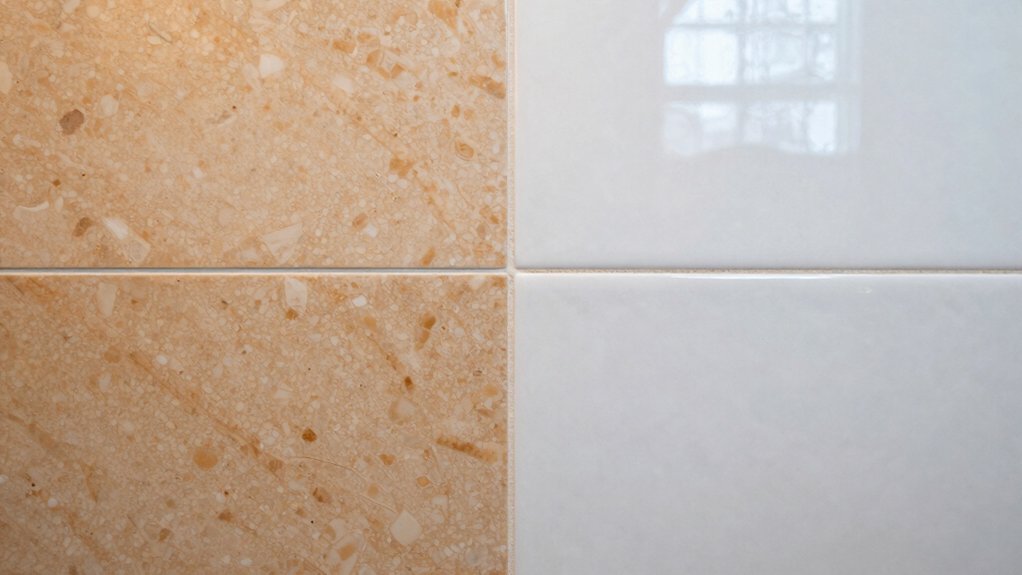
When you weigh travertine against porcelain tile, you’re weighing natural character against hard-wearing practicality. You’ll notice the warmth and unique veining of stone, or the consistent, cost-friendly precision of manufactured tile. Both have their perks and trade-offs, from maintenance to durability. Your space, climate, and routine will tip the scales—and the choice you make could change how you feel about every surface you step on. Consider what matters most as you decide.
Cost Comparison: Travertine Vs Porcelain Tile
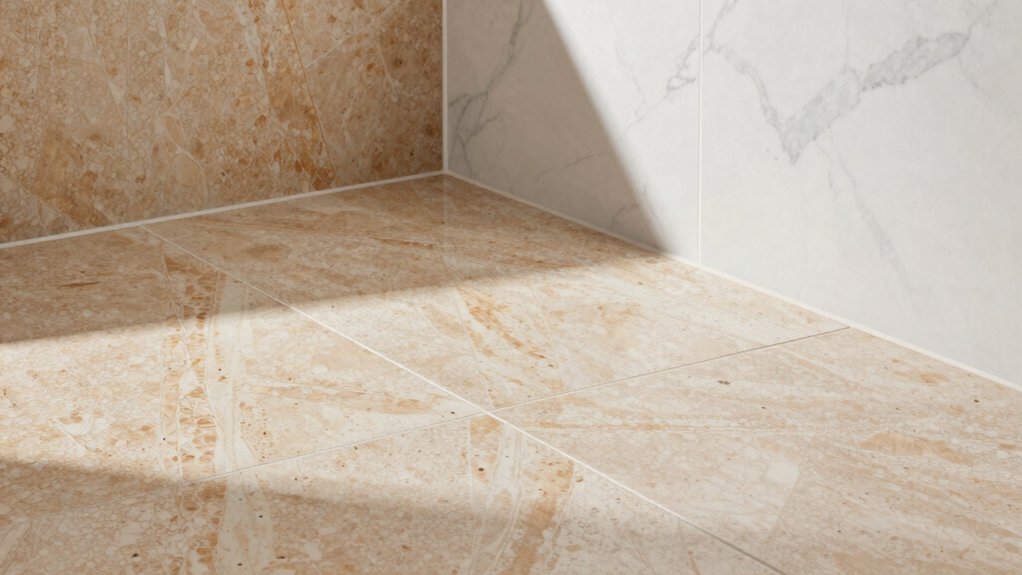
When weighing cost, travertine and porcelain tile diverge in both price and long-term value. You’ll notice upfront purchase prices differ: travertine usually costs more per square foot than porcelain, driven by quarrying, extraction, and limited supply.
Porcelain tiles, though affordable at first, can accumulate costs with special finishes, thicker setups, or larger formats. Installation matters, too; travertine demands skilled setting, grout sealing, and periodic resealing, adding to labor and maintenance.
Porcelain, with consistent size and dry-cut ease, often reduces labor time and waste. Over time, durability and maintenance shape value: travertine’s natural pits and potential staining may incur ongoing upkeep, while porcelain resists wear and moisture, lowering long-term care.
Your choice hinges on initial spend versus lifecycle costs and tolerance for upkeep.
Appearance and Style: Natural Stone Vs Manufactured Tile
Natural stone like travertine offers unique character with organic swirls, micro-variations, and subtle color shifts that age gracefully over time. You’ll notice that natural stone delivers individuality you can feel in texture and depth, plus the soft, architectural warmth that complements earthy palettes.
Manufactured tile offers predictability: uniform patterns, consistent color, and sharper edges for precise layouts. When you weigh appearance, stone’s irregularities become design accents, while porcelain or ceramic tiles provide sleek modernity and the illusion of movement through repeating texture.
Consider finish choices too: honed, tumbled, or brushed stone yields tactile sophistication; glossy manufactured tile delivers reflective brightness and a contemporary vibe. In balance, your space reads either timeless, tactile character or streamlined, controlled elegance—each aligns with intent, light, and scale.
Installation Considerations and Substrate Needs
Careful preparation sets up a lasting installation: both travertine and porcelain tile need a stable, clean substrate and appropriate underlayment. You assess slab or slab-ready concrete for flatness, identifying high spots and low points that invite lippage.
A professional-grade backer board or reinforced cement board may be required, especially on irregular floors. Don’t skip moisture control; test for relative humidity and install a vapor barrier when needed.
Choose an adhesive system compatible with your tile type and substrate, and apply evenly to avoid voids. Plan for movement joints where the space exceeds 8–12 feet or experiences temperature swings.
Ensure proper thickness and underlayment consistency under showers or wet areas, then proceed with a meticulous layout to minimize cutting waste and ensure aesthetic alignment.
Maintenance and Cleaning Requirements
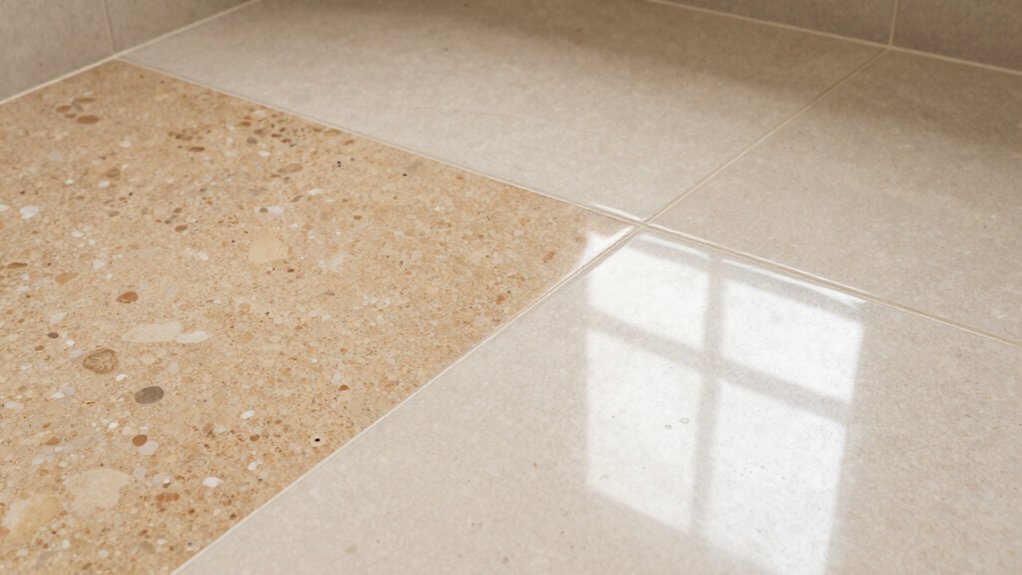
Maintenance and cleaning are key to preserving both travertine and porcelain tile appearances and performance. You’ll want a routine that protects finish and grout, not just surface shine.
For travertine, use pH-balanced cleaners and wipe up spills promptly to minimize staining; reseal as recommended to guard against moisture. Avoid acidic or abrasive products that etch or dull the stone.
Porcelain requires gentler upkeep: a daily sweep or vacuum to remove grit, then a mild, non-abrasive cleaner with warm water. Rinse thoroughly and dry to prevent streaks.
Use mats in high-traffic zones and place felt pads under furniture to reduce scratches. Periodically inspect grout lines, addressing any cracking or discoloration early.
Consistent, appropriate cleaning keeps both surfaces looking cohesive and performing reliably over time.
Durability and Longevity in Different Environments
Durability and longevity vary by environment, so you’ll want to match material strength to usage and climate from the start. Travertine offers natural resilience but thrives with proper sealing and moisture control; in humid bathrooms, it requires routine maintenance to prevent staining and etching.
Porcelain tile delivers consistent performance across showers, kitchens, and outdoor spaces, thanks to its dense, low-porosity surface and glazed layers. In high-traffic areas, porcelain resists chipping and wear better over time, while travertine may show surface changes with heavy use.
Temperature fluctuations influence both: porcelain tolerates freeze-thaw cycles well, whereas travertine needs preventive measures in cold climates. Choose based on exposure, maintenance capacity, and expected footfall to optimize longevity without compromising aesthetics.
Plan early, seal appropriately, and monitor moisture to sustain beauty.
Best Applications and Space Suitability
Porcelain tile fits a wide range of spaces thanks to its dense, low-porosity surface and uniform performance. You’ll appreciate its stability in moisture-prone areas, kitchens, and bathrooms, where spills and humidity come with daily life.
For high-traffic zones, porcelain’s hard surface resists scratches and wear, keeping lines clean longer. In residential settings, it adapts to living rooms and hallways with a modern, seamless look; in commercial spaces, it handles heavy footfall without compromising aesthetics.
Choose larger formats to reduce grout lines, enhancing visual flow. Matte finishes hide fingerprints, while polished options elevate luxury accents. Porcelain works well with underfloor heating, maintaining warmth evenly.
Travertine, by contrast, suits rustic or natural palettes, but requires sealing and more maintenance. Your space goals determine the best fit.
Pros, Cons, and Choosing the Right Material
Choosing the right material means weighing pros and cons against your space and life—porcelain and travertine each offer distinct benefits.
Porcelain shines with durability, low maintenance, and water resistance, making it a solid pick for bathrooms and high-traffic areas.
Travertine delivers timeless warmth, unique veining, and a natural texture that elevates luxury spaces.
Consider installation: porcelain often comes in precise slabs and is easier to seal consistently; travertine, while stunning, requires regular sealing and care to prevent staining.
Cost varies by region, with porcelain generally more affordable upfront but travertine adding resale appeal.
Foot traffic, humidity, and maintenance willingness should guide your choice.
If you want easy upkeep, porcelain wins; craving自然 elegance and character, choose travertine, knowing upkeep is higher.
Your space, your style, your decision.
Frequently Asked Questions
How Does Heat Resistance Differ Between Travertine and Porcelain Tile?
Porcelain resists heat better than travertine, so you’ll see less risk of cracking or discoloration. You’ll want to avoid extreme, direct thermal shocks with travertine, while porcelain handles heat cycles more reliably and maintains surface integrity over time.
Which Option Releases Fewer VOCS and Toxins Over Time?
You’ll breathe cleaner air with porcelain, releasing fewer VOCs and toxins over time. You’ll trust its low emissions, while travertine’s quirks tempt you to overlook the costs, irony in durability versus health, as you choose wisely.
Can Travertine Be Used Outdoors in Freezing Climates?
Yes, but not ideal: travertine can crack in freezing climates with freeze-thaw cycles, so you’d need proper sealing, slope, and maintenance, plus using low-porosity options and adequate installation to mitigate water absorption and damage risks.
Do Porcelain Tiles Require Any Special Edge Treatments for Water-Prone Areas?
Yes, porcelain tiles in water-prone areas benefit from eased edges like bevels or micro-radiused corners, plus proper grout sealing and sloped installation to prevent pooling; you’ll maintain clean lines, safety, and long-lasting performance.
How Do Slip Resistance Ratings Compare in Wet Environments?
In wet environments, you’ll want slip resistance ratings like higher COF values; look for 0.42–0.60 for floors, step up to 0.60+ in showers. Textures and finishes considerably affect grip understanding foot traffic and cleaning needs.
Conclusion
Choose clay- and concrete-born porcelain for practicality and longevity, or embrace nature’s nuanced travertine for warmth and wow. If you crave low upkeep, uniform underfoot, and budget balance, porcelain prevails. If you prize unique character, tactile texture, and timeless charm, travertine tempts. Weigh cost, care, and climate, then decide. Porcelain protects, performs, and persists; travertine tempts, tells, and transcends. Pick pragmatically, polish passionately, and proceed with purpose.