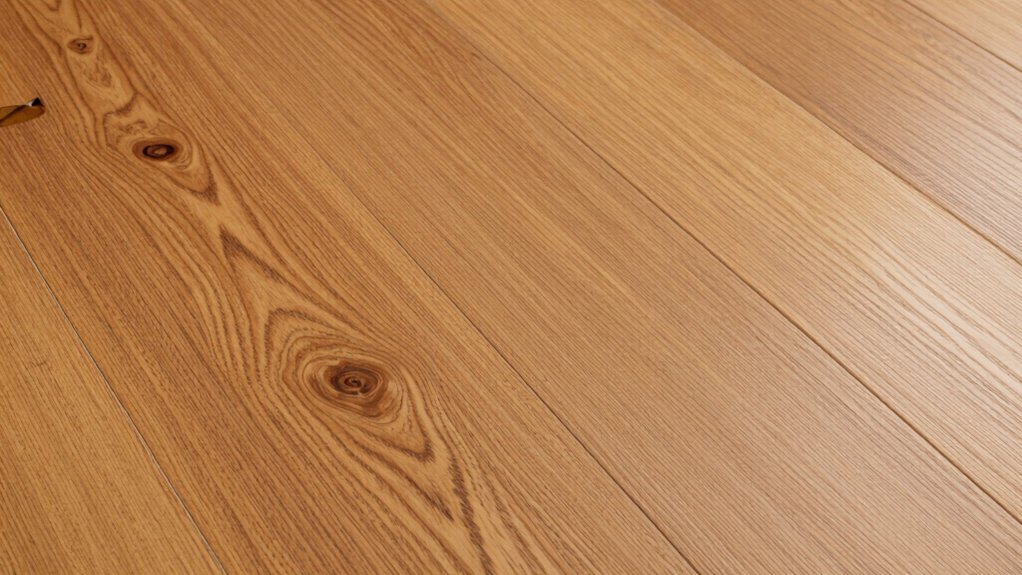
Solid hardwood uses a single, solid piece of mature timber, giving you authentic grain and a storied feel, while engineered consists of layers with a hardwood veneer that resists moisture and handles humidity swings. You’ll weigh refinishing potential against installation practicality, durability against subfloor constraints, and long-term value across spaces from basements to kitchens. The choice hinges on your environment and design goals, but the decision isn’t as straightforward as it seems—there’s more to uncover about performance under real-world conditions.
How Solid Hardwood Is Made
Solid hardwood is created from a single species of mature timber, typically felled, debarked, and cut into planks that preserve the wood’s natural grain. You select a straight-grained log, mill it to consistent thickness, and guarantee flatness for uniform surface planarity.
High-grade stock undergoes seasonal stabilization, removing knots and defects that compromise strength. You orient boards to optimize dimensional stability, then machine edges to precise tongue-and-groove or square profiles for tight joints.
After surface preparation, you apply a protective finish that enhances durability while maintaining the wood’s tactile warmth. You evaluate density, hardness, and workability to predict wear resistance and lifecycle performance.
The process emphasizes consistency, reproducibility, and on-site installation predictability, aligning with design goals for longevity and seamless integration in interiors.
How Engineered Hardwood Is Made
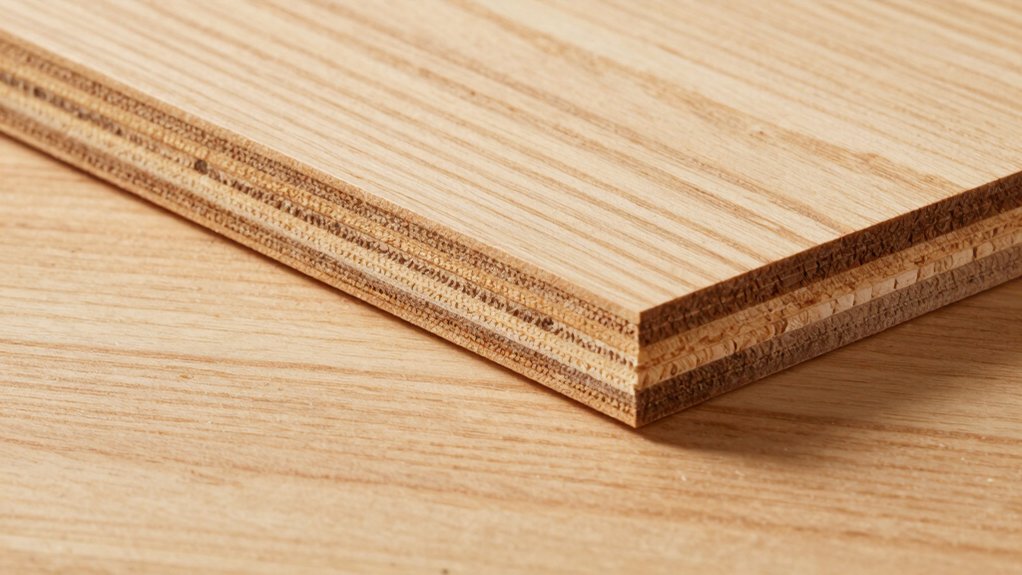
Engineered hardwood combines multiple layers of wood under heat and pressure to create a stable, ply-like core topped with a real hardwood veneer. This structure minimizes expansion and contraction while preserving the authentic look and feel of solid wood.
You’re inspecting the core as a cross-laminate assembly, typically birch, poplar, or hardwood veneers bonded with high-strength adhesives. The process emphasizes directional grain alternation to improve dimensional stability and reduce warp.
In manufacturing, you’ll see engineered boards milled edge-to-edge for consistent, tight joints, then stabilized with a balancing layer to counter moisture shifts. Top veneers are thickness-controlled to balance wear resistance with cost.
You assess finishing options—pre-finished vs site-finished—and note that veneers can be rotated or replaced. Overall, the method delivers scalable performance without sacrificing visual authenticity.
Durability: Solid Vs Engineered
Durability hinges on how each wood structure handles moisture, wear, and load over time. In solid hardwood, you get a single, homogeneous material that endures impact and scratches with a predictable response, yet expands and contracts with humidity, influencing joints and finish integrity.
Engineered boards layer high-density face stock over stable substrates, trading full-depth hardness for dimensional stability that resists moisture-driven swelling. You’ll notice fewer cupping and faster acclimation in engineered layers, particularly in climate-fluctuating spaces.
However, solid stock excels in long-term refinishing potential and saw-cut depth, offering unmatched edge-life when kept within stable environments. The trade-off centers on moisture exposure, subfloor conditions, and anticipated load; design choices should align with your space’s humidity profile and expected wear patterns to optimize performance.
Refinishing and Longevity
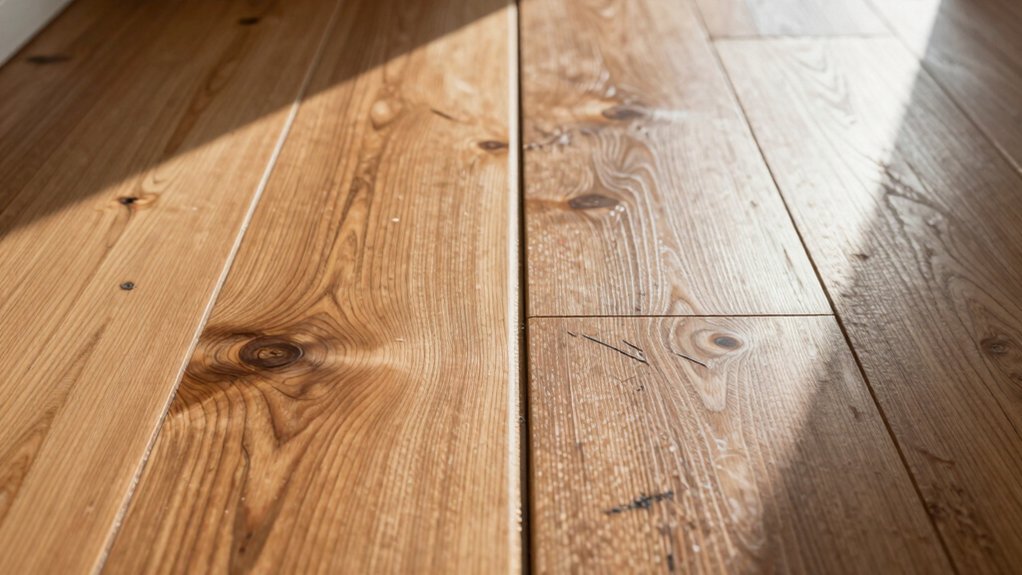
When planning refinishing and longevity, the key is understanding how each wood structure responds to wear, restoration, and environmental exposure over time. Solid hardwood offers depth potential and can sustain multiple refinishing cycles, but its performance hinges on plank thickness and grain stability.
Engineered floors, with a stable substrate, resist cupping and surface wear differently, often favoring thinner surface veneers for selective refinishing. You’ll assess wear patterns, floor traffic, and moisture history to decide between spot repairs or full refinishing.
Finishes matter: penetrating oils provide ease of recoat but limited abrasion resistance, while modern polyurethanes extend life but may require sanding. Humidity control, subfloor integrity, and acclimation time influence longevity as much as the chosen system.
Informed maintenance protocols maximize resilience, reducing costly overhauls.
Installation Options and Versatility
You have multiple installation paths to choose from, each with distinct subfloor compatibility and timing requirements that affect overall versatility. Solid and engineered hardwood offer varied fastening methods, including nail, staple, floating, and glue-down installations, enabling adaptation to concrete or wood subfloors with different moisture tolerances.
Engineered planks typically tolerate higher moisture and uneven substrates, expanding upper-floor options and renovation flexibility. Solid planks emphasize permanence and traditional aesthetics, favoring nailed or stapled methods.
Subfloor preparation remains critical: leveling, moisture testing, and acclimation reduce gaps and crown. Installation sequencing, expansion gaps, and moisture barriers influence long-term performance and floor feel.
Design-forward considerations include plank dimensions, edge details, and finish exposure, which shape visual rhythm and room perception. Versatility arises from balancing structural constraints, moisture control, and finish goals to meet project timelines and budget.
Performance in Kitchens and Wet Areas
Solid and engineered hardwood respond differently to kitchen and wet-area conditions, where moisture exposure, temperature swings, and high traffic stress performance come under scrutiny. You evaluate moisture handling first: solid wood expands and contracts across seasons, risking gaps and cupping in busy kitchens. Engineered cores resist some movement, delivering steadier performance on plywood or high-density composites.
In wet zones, finish wear matters, as scratches expose pore paths; you prefer water resistance from wear layers and approved finishes, not just species. You consider substrate compatibility, acclimation, and installation method, since floating, glue-down, and nailing approaches influence moisture pathways.
You weigh maintenance practicality, refinish limits, and long-term serviceability against aesthetics and edge detail. Design implications favor stable appearances, minimal distortion, and predictable repair, aligning material choice with cabinet hues, workflow, and humidity control.
Suitability for Basements and Subfloors
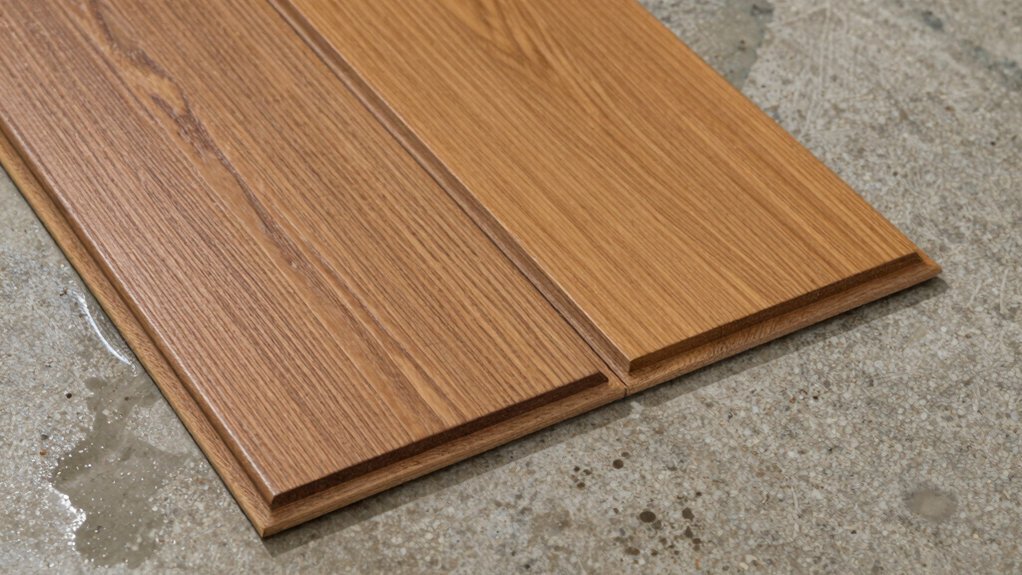
Basements and subfloors present distinct moisture and load challenges that affect hardwood performance. You’ll weigh substrate conditions, moisture barriers, and airflow alongside board construction.
Solid hardwood reacts to prolonged dampness with expansion, cupping, or warping, so its viability hinges on stable humidity, proper acclimation, and a rigid, dry subfloor.
Engineered hardwood, by contrast, leverages a multi-ply core that mitigates moisture sensitivity and deflection, yet still requires a suitable subfloor and climate control.
Evaluate subfloor flatness, moisture content, and species-specific tolerance before installation.
Fastening systems, vapor barriers, and underlayment choices become design levers for performance, not mere details.
For basements, prioritize moisture management and engineered options; for existing subfloors, confirm structural compatibility and long-term stability.
Your selection should align with intended use, climate, and maintenance plan.
Aesthetics: Grain, Color, and Texture
Aesthetics influence perceived space as much as performance, so grain, color, and texture must be analyzed alongside subfloor realities. You evaluate grain patterns for movement versus calm, recognizing that regal flames imply formality while straight, tight grains read as uniform and modern.
Color choices interact with lighting, room size, and adjacent materials, requiring precise luminance and undertone comparisons to avoid drift. Texture imparts tactility and glare control; in high-traffic areas, you balance smooth finishes against fingerprints and maintenance.
You consider engineered layers for consistent grain alignment and stable optical outcomes, while solid boards offer true depth but potential irregularities. You translate these variables into a finish strategy, documenting how grain, hue, and surface texture harmonize with architectural intent and long‑term durability.
Budget and Value Over Time
Although upfront cost isn’t the sole predictor of value, budget and long-term worth hinge on lifecycle performance, maintenance needs, and resale appeal. You assess durability, installation complexity, and wear resistance to forecast long-term expenses versus benefits.
Solid hardwood offers straightforward rebuilds and potential refinishing cycles, boosting resale confidence when floors show careful upkeep. Engineered options reduce moisture risk and installation constraints, often delivering stable subfloor compatibility and shorter downtime, which lowers interim costs.
Consider finish durability, UV resistance, and how often you’ll refresh or replace panels over time. Design-forward choices influence perceived value: consistent grain, tone retention, and minimal color drift sustain market appeal.
Finally, depreciation, warranties, and serviceability must align with your projected timeline, ensuring meaningful returns without sacrificing daily usability or aesthetic fidelity.
Choosing Based on Your Lifestyle and Space
Your lifestyle and space shape which hardwood solution fits best, balancing durability, moisture exposure, and foot traffic with installation practicality and downtime. You’ll assess exposure patterns: kitchens and baths demand moisture resistance, while living areas emphasize scratch resistance and comfort underfoot.
Engineered options excel in climate stability, reducing expansion risks in variable temps or basements, whereas solid floors favor long-term authenticity where seasonal movement is minimal.
Consider traffic intensity and cleaning habits; high-traffic zones justify thicker wear layers or denser finishes, while lighter areas can accept thinner profiles.
Subfloor compatibility matters: floating installations speed up downtime, while nailed or glued methods suit fixed, traditional aesthetics.
Finally, plan maintenance compatibility with your routine—refinishing frequency, humidity control, and seasonal adjustments drive the best material choice.
Frequently Asked Questions
How Does Humidity Affect Hardwood Floors Over Time?
Humidity causes wood to swell and shrink; you’ll see seasonal movement, cupping, gaps, or buckling if moisture is uneven. You’ll control this with stable indoor RH, acclimation, proper fasteners, and high-quality underlayment for durability.
Can I Install Hardwood Over Radiant Heated Floors?
Yes, you can, but you’ll need radiantly compatible systems and careful acclimation. You, however, must verify manufacturer specs, use a compatible underlayment, control moisture, and monitor heat cycles to prevent gaps, cupping, or delamination over time.
Which Finish Type Lasts Longest in High-Traffic Areas?
Polyurethane finishes last longest in high-traffic areas, offering superior abrasion resistance, stain protection, and easy maintenance. You’ll prefer a high-solids or aluminum-oxide polyurethane for enhanced durability and long-term performance under heavy use.
How Do Sound and Comfort Differ Between Options?
Sound feels firmer or mellower depending on subfloor and underlayment; comfort depends on system rigidity and cushioning. You’ll notice more impact noise on concrete slabs, less on wood joists, with thicker planks enhancing thermal and acoustic resonance.
Are There Eco-Friendly Hardwood Options and Certifications?
Yes—look for FSC, PEFC, and GreenGuard certifications, plus low-VOC finishes. You’ll choose responsibly sourced species, reclaimed options, and recycled-content core layers, balancing performance with ecosystem impact to meet design-forward, analytically sound expectations.
Conclusion
You’ll weigh solid longevity against engineered stability, balancing refinishing ability with moisture performance. In tight-or-well-ventilated spaces, engineered may outperform, while solid delivers timeless texture and upscale resale value. Consider subfloor conditions, installation constraints, and climate—little compromises today, big impact tomorrow. The choice hinges on lifestyle, maintenance tolerance, and design intent; get the right balance between performance and aesthetics. In short: know your space, favor purposeful materials, and you’ll get enduring, design-forward floors that stand the test. Take the leap.