
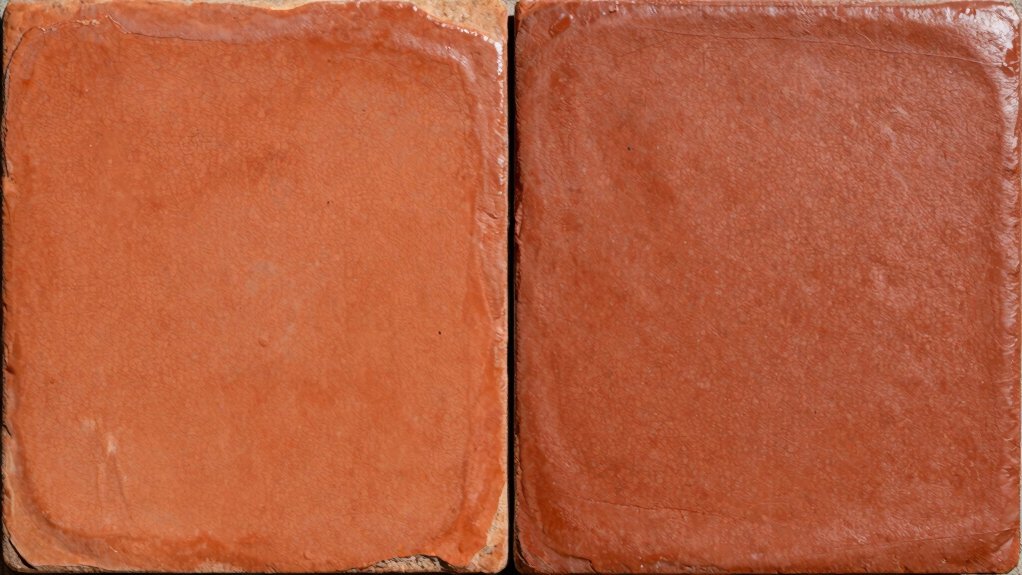
Saltillo tile and terracotta both originate from clay, but they diverge in craft and character. You’ll notice Saltillo’s handmade, regional clay yields irregular surfaces and warm, earthy hues that celebrate artisanal work, while terracotta presents a more uniform, unglazed texture with finer detail for classic interiors. Understanding these distinctions matters for durability, sealing needs, and installation. The choice affects how you manage maintenance and the overall vibe of a space, nudging you toward a design decision you’ll justify for years.
What Is Saltillo Tile?
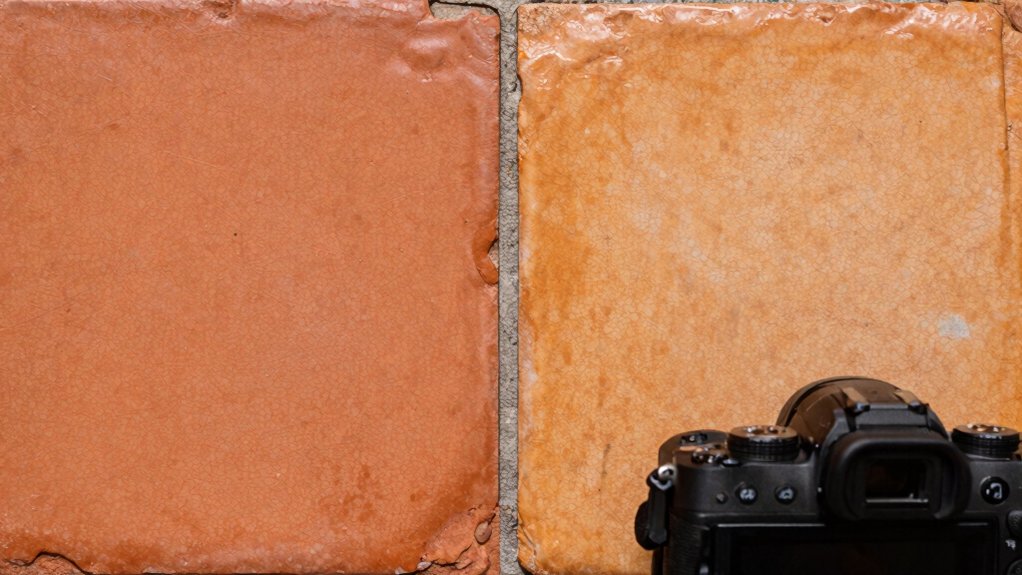
Saltillo tile is a handmade, low-fired terracotta tile originating from Saltillo, Coahuila, Mexico. You assess its composition as a clay-based substrate with iron oxide hues and a characteristic burnt-orange to deep red spectrum.
You evaluate the firing range, noting temperatures typically below conventional stoneware levels, which yields a porous matrix and distinct color variance. You examine how the tile’s porosity influences staining susceptibility and moisture handling, guiding installation choices and sealant strategies.
You quantify dimensional tolerance, acknowledging slight warpage and hand-cut edges that affect layout geometry. You consider surface texture options, from smooth to slip-treated finishes, and how each interacts with foot traffic and cleaning regimes.
You preserve authenticity by documenting handcrafting steps, while aligning performance goals with design intent and project constraints.
What Is Terracotta Tile?
Terracotta tile refers to unglazed ceramic tile made from natural clay that’s fired at relatively low temperatures, typically below stoneware ranges, yielding a porous, earthy substrate with a warm, reddish-brown to orange-red palette.
You work with a product that emphasizes porosity, slip resistance, and a tactile, matte surface that highlights natural variations in clay composition.
The material is dimensionally stable enough for indoor floors and walls when properly cured, but you’ll encounter higher water absorption than vitrified options, requiring appropriate sealing or moisture management in wet zones.
Terracotta’s color and texture are inherently variable, guiding design decisions toward rustic or heritage aesthetics.
You evaluate tile size, edge profiles, and finish options to achieve durable, cohesive installations without masking the clay’s character.
Origin and History of Saltillo
Originating in northern Mexico, Saltillo tile emerged from regional clay sourcing and traditional firing practices that optimized durability for warm, arid climates. You assess its historical trajectory as a design material shaped by workshop traditions, not mass production, ensuring consistent core properties even as regional styles evolved.
Its origin centers on vernacular brick-oven kilns and hand-pressed molds, yielding a dense, low-porosity body that tolerates temperature fluctuations and foot traffic with minimal warping. Over centuries, Tile styles aligned with architectural vernaculars, from colonial courtyards to modern interiors, while glaze applications and surface textures amplified tactile and visual performance.
You’ll observe a cumulative knowledge transfer between craftspeople, regional accessibility, and functional requirements, reinforcing Saltillo’s identity as a historically resourceful ceramic solution rather than a uniform industrial product.
Raw Materials and Manufacturing Process
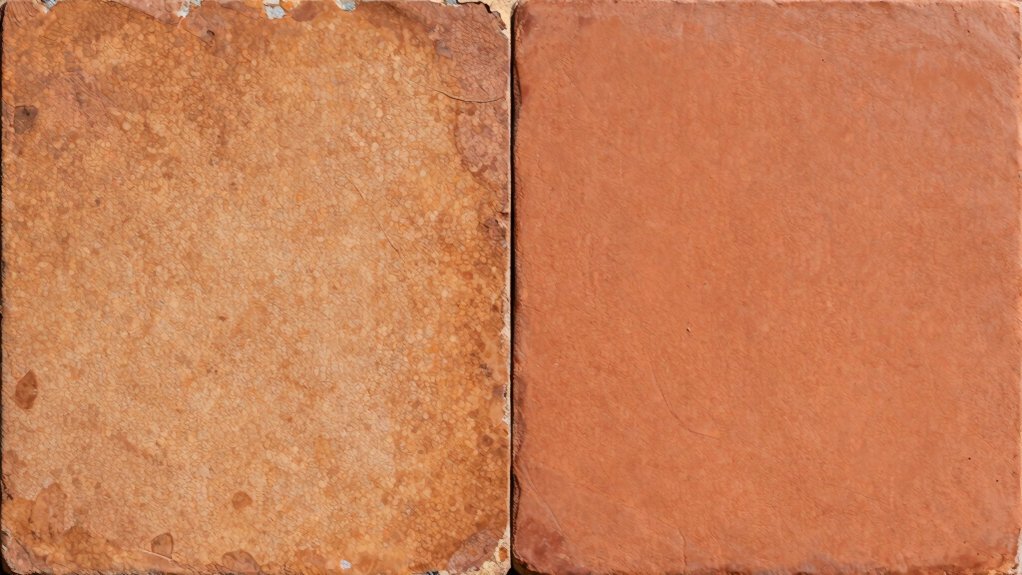
Raw materials and the manufacturing process hinge on selecting clay with the right particle size and plasticity, then shaping and firing it to achieve the dense, low-porosity body that defines Saltillo’s performance.
You evaluate raw clay batches for mineral balance, flux content, and particle distribution to control shrinkage and cracking risk.
Extrusion or hand-formed green bodies are shaped to consistent thickness and compaction, ensuring uniform density.
Drying protocols minimize warpage, with controlled humidity and time to prevent cracks.
Kiln firing targets a mature glaze-free body or a subtle Slip look, typically at cone 04–06, balancing hardness and porosity.
You monitor stage maturity with pyrometric cones and in-situ observations, adjusting temperature ramp rates and hold times to achieve a stable, durable brick.
Finish both structural integrity and color development via mineral authentication and process control.
Texture and Surface Finish
Texture and surface finish define tactile and visual performance; you’ll assess this by how the brick reads at touch and from distance, linking microstructure to slip-minimal glaze—or glaze-free—appeal.
You’ll notice Saltillo typically exhibits a coarser, stone-like texture with irregular pitting and subtle surface undulations, while terracotta favors a finer plane with smoother lay.
Surface finish reveals glaze presence, thickness, and consistency: Saltillo may carry a lightly speckled, semi-gloss to matte veneer that preserves tactile burrs, whereas terracotta often presents a more uniform, open-porosity surface that accepts patina and micro-scratches without hiding edges.
Consider slip resistance under wet conditions, because microcrystal edges influence friction.
In design terms, texture reads as material honesty; finish communicates care and expected wear.
Color Variations and Fading
Color variations and fading shift the perceived warmth, depth, and versatility of Saltillo and terracotta tiles, impacting design intent and material authenticity. You observe inherent color ranges—from warm reds and oranges to muted earth tones—that arise from mineral makeup, firing atmosphere, and clay sources. Variation is expected across batches and within a single installation, influencing grout selection, pattern recognition, and overall visual rhythm.
Fading occurs through sun exposure, cleaning regimens, and surface abrasion, altering chroma while preserving hue relationships. You should anticipate slight shifts over time rather than uniform aging, enabling intentional patina integration or requiring controlled seaming during layout.
To manage outcomes, specify stabilized finishes for color retention, document source material ranges, and implement planograms that accommodate natural nuance without compromising tonal balance.
Durability and Wear Resistance
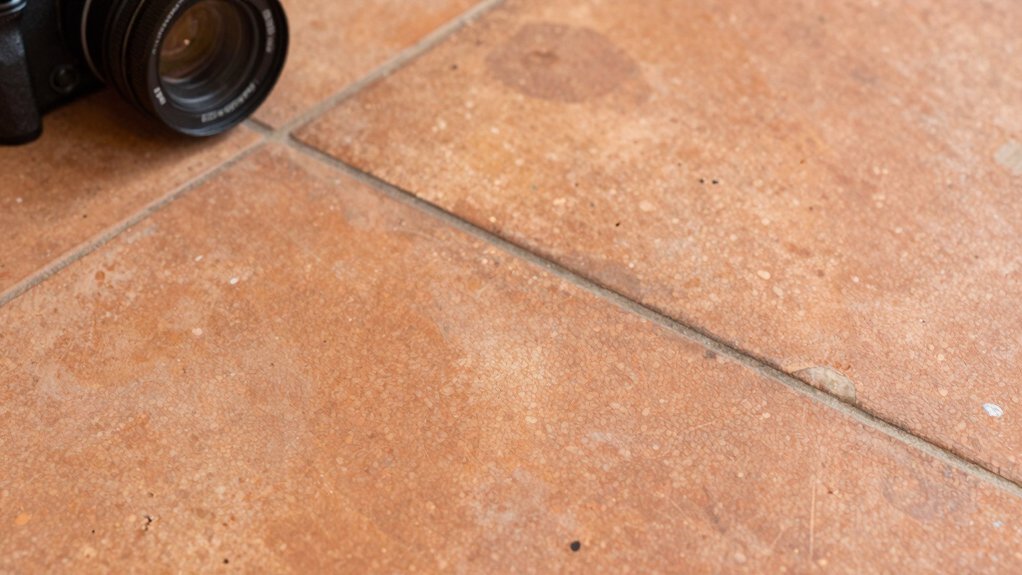
Saltillo tile and terracotta share a heritage of natural clay, but their durability and wear resistance hinge on composition, fabrication, and finishing nuances. You evaluate substrate density, pressed vs. molded production, and clay purity to predict long-term performance under foot traffic and furniture loads.
In practice, higher-fired finishes and properly sealed surfaces improve abrasion resistance, while pore structure influences scratch visibility and color stability. You’ll notice that terracotta’s rustic open pore can attract staining if not finished, whereas denser Saltillo variants resist minor impacts but may exhibit microchips along edges with heavy use.
Design decisions—tile thickness, joint sizing, and substrate preparation—directly affect deflection, wear patterns, and maintenance intervals. Choose with anticipated load, slip resistance, and planarity to optimize durability without compromising aesthetic character.
Maintenance, Sealing, and Care
Maintenance, sealing, and care for Saltillo tile and terracotta demand a disciplined routine to preserve appearance and performance. You should establish a regular cleaning cadence using a neutral pH cleaner and soft mop, avoiding acidic or alkaline compounds that can etch the surface.
Dry dust or brush before damp cleaning to prevent grit abrasion. Sealant choice matters: opt for breathable, film-forming or penetrating options aligned with your tile’s porosity and its intended use. Reapplication intervals depend on traffic, maintenance, and exposure.
Use mats in high-traffic zones to limit moisture intrusion. For spills, blot immediately, then clean with a mild detergent. Avoid steam or high-pressure devices.
Inspect grout joints periodically and address hairline cracks promptly to prevent moisture penetration and staining.
Installation Considerations and Substrates
Proper substrate selection and preparation are critical for Saltillo tile and terracotta installations, ensuring dimensional stability and long-term performance. You’ll verify substrate flatness within 1/8 inch per 10 feet and address variations with concrete patching or leveling compounds before setting.
Use a continuous, well-anchored base layer—prefer a sloped, moisture-controlled bed in exterior applications to reduce hydrostatic pressure. For interior kitchens or baths, ensure a stable, non-rigid substrate compatible with clay substrates, such as cementitious backer units.
Reduce porosity with a primer compatible with both substrate and high-absorption tiles. Select an unmodified or polymer-modified thin-set appropriate for saltillo and terracotta, avoiding excessive slump.
Install with consistent grout joints and full coverage to prevent voids, then seal only after curing to protect against moisture intrusion. Coordinate substrate treatments with anticipated movement and climate.
Design Applications and Style Pairings
When selecting design applications, prioritize spaces that benefit from the warm, earthy character of terracotta and Saltillo tiles, such as sun-drenched kitchens, Mediterranean-inspired living rooms, and outdoor patios with low-slip retention.
In practice, you align tile size, pattern, and finish to function and atmosphere. Saltillo’s natural variance favors rustic, handmade aesthetics; terracotta yields a more uniform, traditional look.
Pair with neutral walls to enhance tonal depth, or contrast with cool accents to emphasize warmth. Use larger formats for seamless floors in open plans, and smaller mosaics for alcoves or entryways to guide circulation.
Consider epoxy or penetrating sealers to preserve color while maintaining breathability. Complement with clay pottery, reclaimed woods, and wrought-iron hardware for cohesive, durable styling.
Prioritize slip resistance, maintenance practicality, and long-term performance alongside visual goals.
Frequently Asked Questions
Can Saltillo Tile Be Sustainably Sourced?
Yes, saltillo tile can be sustainably sourced, but you must verify quarry practices, low-impact kilns, and certifications. Prioritize suppliers with traceable material provenance, recycled-content additives, and documented environmental management to minimize emissions and resource depletion.
How Does Cost Vary by Finish or Patina?
Finish or patina can considerably shift cost; you’ll pay more for layered patinas, hand-applied textures, and protective sealants. As you upgrade complexity, expect higher installation and maintenance dues, while standard finishes keep budgets predictable and concise.
Is Saltillo Tile Suitable for Outdoor Use in Cold Climates?
Yes, Saltillo tile isn’t ideal for cold outdoor climates; it’s porous and prone to freeze-thaw damage. Use sealed, de-iced mats or switch to frost-resistant alternatives, and guarantee proper substrate, drainage, and temperature tolerance for long-term performance.
Can Saltillo Be Found in Contemporary Minimalist Designs?
Yes, saltillo can be found in contemporary minimalist designs. Around 60% of designers report incorporating rustic textures like Saltillo to soften clean lines while retaining modern precision, contrast, and warmth in tactile, low-contrast palettes.
Do Regional Peppers or Minerals Affect Tile Color?
Regional peppers or minerals can subtly affect tile color during firing and glaze development, influencing hue, warmth, and depth; you’ll notice variations in iron-rich clays or salt-related glazes, guiding your color decisions for precise design outcomes.
Conclusion
Saltillo tile and terracotta share clay roots, but their nuance fuels distinct design choices. If you crave handcrafted warmth and irregular charm, Saltillo delivers regional character with richer color variation; terracotta offers a more uniform, classic finish. An interesting stat: Saltillo tiles can show color shifts of up to 15% over time due to kiln temperatures and mineral content, shaping how you plan sealing and maintenance. Choose by your project’s authenticity goals, finish consistency, and long-term care expectations.