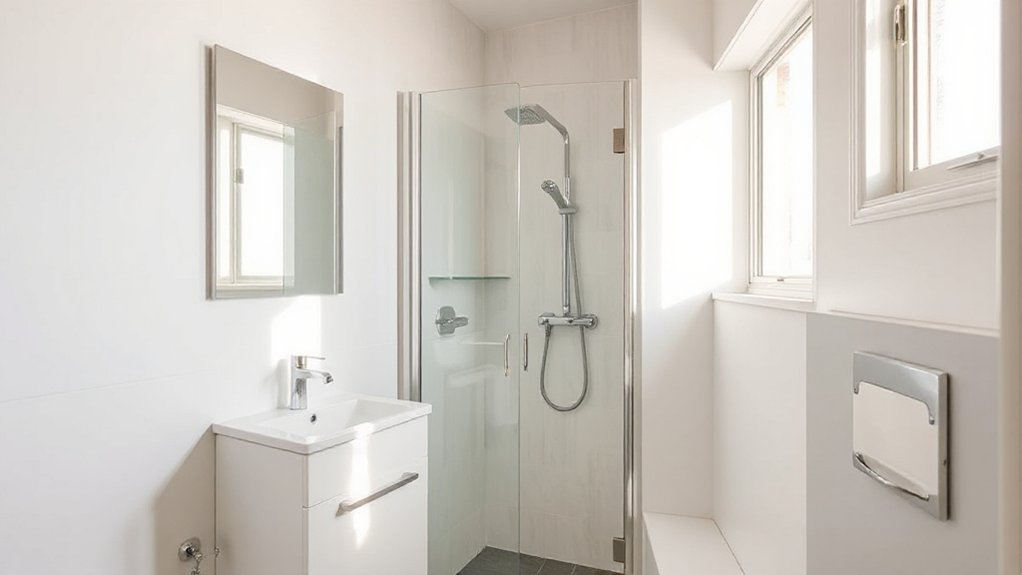
To nail modern bathroom styling in a compact space, you’ll want a light, cohesive color palette with cool undertones and cohesive tile choices to visually expand the room. Embrace reflective surfaces—large frameless mirrors and glossy tiles—to multiply light. Maximize storage with hidden niches, pull-out bins, and modular units, plus space-saving fixtures like corner sinks. Balance texture with matte and gloss finishes, rounded edges, and vintage touches kept minimal. Stay practical, stylish, and organized, and you’ll reveal more ideas as you continue.
How to Make a Tiny Bathroom Feel Larger: A Practical Styling Plan
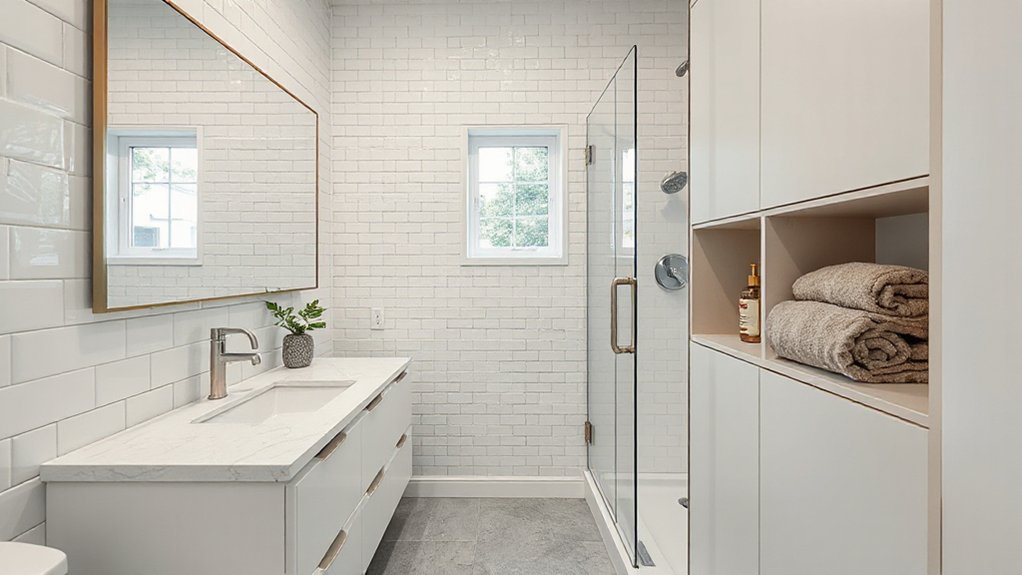
Small changes yield big gains in a tiny bathroom. You map out a plan that doubles perceived space with simple moves. Start by decluttering vertical surfaces, then choose narrow, high storage to keep essentials out of sight.
Classic vintage fixtures catch the eye without overwhelming the room, adding character while staying practical. Install a wall-mounted sink or compact vanity to free floor space, and use a clear or light-toned cubby for daily items.
Mirror a must: extend it beyond the door frame or stack two in a staggered arrangement to bounce light. Use bold accessories—bold towels, a striking rug, and a statement faucet—to anchor the design without clutter.
Finish with soft LED lighting to enhance openness and cohesion.
Choose a Light, Cohesive Color Palette for Small Baths
Light, airy walls set a fresh tone, making small baths feel more open. Keep a cohesive tile palette and mirror the light across fixtures to avoid visual clutter.
Use reflective surfaces to bounce light and unify your color scheme without adding bulk.
Light, Airy Walls
Want a space that feels bigger and brighter? Light, airy walls create the illusion of open space without sacrificing style. Choose a light, cohesive color palette for small baths, and keep walls clean with subtle texture to add depth. Use wall textures sparingly—matte paint, a soft gloss, or a hint of terrazzo can add dimension without clutter.
Apply color accents through accessories, towels, and storage fronts for contrast that stays calm. Pair pale walls with reflective surfaces and smart lighting to amplify brightness. Keep trim and cabinetry streamlined to reduce visual noise.
- Select a single base hue with cool undertones
- Introduce texture through paint finish or a delicate wallpaper
- Add color accents via textiles and fixtures for cohesion
Cohesive Tile Palette
When you’re styling tiles for a small bath, keep the palette cohesive and light to maintain an airy feel. A cohesive tile palette prevents visual chaos and makes the space read larger.
Choose a primary hue and two supporting shades that share undertones, so color coordination feels intentional, not accidental. Light neutrals with a soft tint expand walls visually, while a touch of warmth adds comfort.
Use the same grout color across different areas to create a seamless Tile transition, which helps the floor and walls flow together.
Limit bold patterning to a small accent area—think a skinny border or a shower niche—so you don’t break the calm.
Test samples in both daylight and bathroom lighting to confirm that the palette stays harmonious.
Reflective Surface Tricks
Elevate a small bath with reflective surfaces that bounce light and visually expand the room. You’ll maximize brightness and cohesion by pairing light tones with mirror-like finishes that catch the eye. Focus on a single cohesive color palette so surface reflections stay harmonious, not chaotic.
- Choose a light, neutral base and glossy accents to reflect ambient light without overwhelming the space.
- Use a large, frameless mirror or mirrored cabinet to multiply light sources and enhance depth.
- Finish fixtures and accessories in a unified sheen—polished chrome, brushed nickel, or satin brass—to maintain a calm, cohesive look.
Reflective surfaces are your ally; surface reflections create the illusion of more space, while keeping the style polished and intentional.
Reflective Surfaces That Brighten and Enlarge Space
Reflective wall finishes and smart mirror placement can instantly brighten a compact bath.
Position mirrors to multiply light and create the illusion of depth, and choose wall textures that reflect rather than absorb.
Use clean lines and minimal seams to keep the space feeling open and cohesive.
Reflective Wall Finishes
If you want a brighter, roomier feel in a compact bathroom, reflective wall finishes are your best ally. You’ll create depth with surfaces that bounce light, making the space feel larger without adding square footage.
Opt for frosted glass panels for soft diffusion, or choose high-gloss tiles to maximize sparkle. Pair with metallic accents to elevate the look and add a modern edge. Keep color minimal to maintain clarity and focus.
- Choose frosted glass or glossy tiles to reflect daylight and artificial light.
- Balance with metallic accents—chrome, brass, or brushed nickel—along fixtures and hardware.
- Keep walls simple and seamless; fewer seams mean more continuous reflection.
Light-Boosting Mirror Placement
How can a strategically placed mirror transform a tight bathroom? You use mirror placement to maximize light and create the illusion of space.
Position a large, glare-free mirror opposite a window or bright wall to bounce natural and artificial light across the room. Consider frameless or slim-framed designs to stay unobtrusive, and hang at eye level to reflect your best features without cluttering sightlines.
In small baths, vertical mirrors can elongate the ceiling, while paired mirrors multiply reflective surfaces for depth. Avoid overcrowding with accessories; keep the surface clean and free of edge glare.
This approach leverages reflective surfaces to brighten corners, enhance perceived size, and deliver a polished, practical aesthetic.
Smart Storage Hacks That Maximize Every Inch
Maximize every inch with clever storage that stays out of sight and keeps essentials within reach. You’ll reclaim counter space by using recessed niches and high shelves that blend with the bathroom’s lines, so clutter never dominates your view.
Opt for modular baskets and slim, stackable organizers that you can rearrange as needs shift. Choose wall-mounted solutions to free floor area, and embrace a cohesive color palette so storage feels intentional, not chaotic.
- Install a shallow, wall-mounted cabinet behind a mirror for daily-use items.
- Use stackable fabric bins under the sink and a peg rail for tools and towels.
- Integrate vintage accents with metal brackets and botanical decor to add character without crowding space.
Space-Saving Fixtures That Don’t Compromise Style
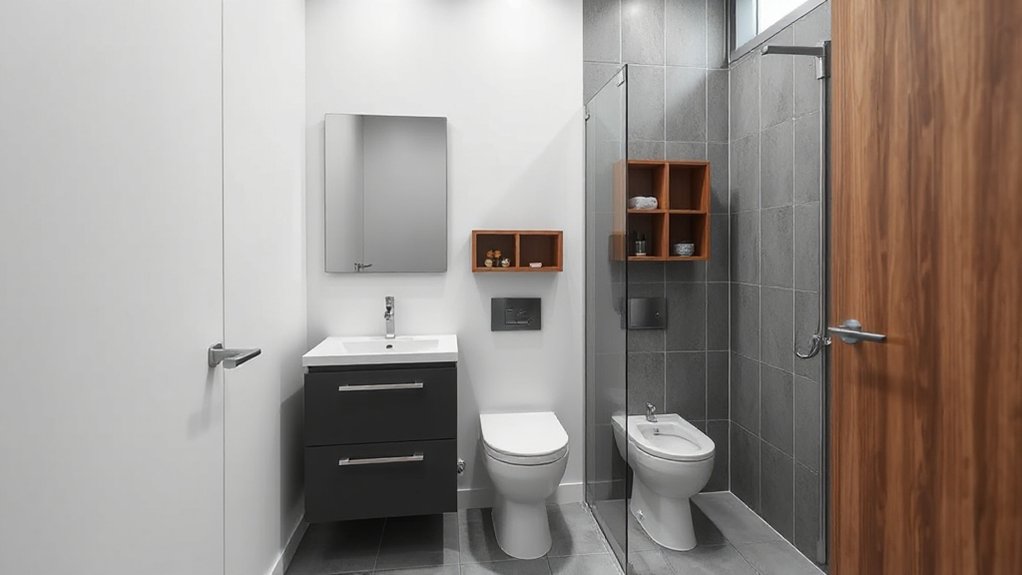
Space-saving fixtures can elevate small bathrooms without feeling crowded. You want form and function to align, so pick pieces that pull double duty. Look for compact toilets with dual-flush options and rounded bowls that save floor space without sacrificing comfort.
Wall-hung vanities keep sightlines open and make cleaning effortless, while recessed medicine cabinets hide essentials in plain sight. Opt for corner sinks or pedestal styles that reduce bulk yet still offer ample usability.
Choose innovative fixtures with built-in storage, soft-close hardware, and water-saving tech to curb clutter and consumption. Embrace space-efficient designs with matte finishes or warm woods to add texture without visual weight.
Finally, prioritize seamless progressions between zones to maintain an uncluttered, cohesive feel throughout.
Seamless Shower Solutions for Tight Corners
When a shower has to fit in a tight corner, clever layout and smart doors make all the difference. You can design a seamless look by choosing a door that slides or pivots out of the way, avoiding bulk and visual clutter.
A corner enclosure with clear glass minimizes visual weight and expands the sense of space, while a Rain shower adds luxe immersion without widening footprints.
1) Opt for a frameless, corner-to-corner enclosure to keep lines uninterrupted.
2) Install a recessed niche and a slim drain to preserve floor continuity.
3) Choose a rain shower head with adjustable spray and a low-profile handle for easy operation.
A cohesive, water-efficient setup completes the effect, delivering modern, practical style in compact baths.
Light and Mirror Pairings to Expand Perception in Small Baths
Light travels farther with brighter, cooler tones and well‑placed lighting that minimizes shadows.
Pair strategically positioned mirrors with reflective surfaces to amplify natural light and visually widen the room.
Consider mirror angles and heights that bounce light across key zones, pulling the eye deeper into the space.
Light Reflecting Strategies
Mirror pairing is your quickest route to a brighter, roomier feel in a compact bath. You’ll swap heavy finishes for reflective surfaces and let the space breathe with light.
Use color contrast to pull depth forward: bright whites with charcoal accents, or soft neutrals offset by a bold trim.
Natural light should be your ally; maximize it with sheer window coverings and frameless, clear glass where possible.
Every mirror choice shapes perception, so pick ones that double as storage or frame the best view.
Keep fixtures streamlined to avoid clutter, and let light bounce off polished surfaces for a quick lift.
- Choose high-contrast accents that echo your mirror frame.
- Favor natural light with minimal window treatments and clear glass.
- Pair mirrors with slim, integrated storage to reflect space efficiently.
Mirror Placement Tricks
Even smarter placement tweaks can make a tiny bath feel twice its size. You’ll pair the right mirrors with strategic angles to maximize light and openness. Start with a large wall mirror opposite a window to bounce natural illumination across the room, enhancing depth. Consider frameless or edge-to-edge options for a seamless look that minimizes visual clutter. Mount mirrors at eye level or slightly higher to create a continuous reflective surface, tricking the eye into perceiving more space.
Use clustered vanity mirrors to multiply light, but avoid crowding. Tilted mirrors or mirrored backsplints reflect brighter walls and emphasize vertical height. Remember mirror placement, reflective surface tricks, and keep hardware minimal. Subtle shadows disappear when you reflect soft LED sconces, delivering a cleaner, roomier vibe.
Rounded Edges and Soft Silhouettes for Calm Flow
Rounded edges soften the look and help a small bathroom feel more spacious, while soft silhouettes guide the eye for a calm, uninterrupted flow. You’ll create harmony by choosing curved fixtures and soft contours that read as light rather than heavy. Keep lines continuous and avoid sharp corners that interrupt movement.
Material choices should emphasize matte finishes and gentle reflections to maintain a serene atmosphere.
- Opt for curved fixtures and rounded vanity corners to minimize harsh angles.
- Choose soft contours on countertops, mirrors, and tile edges for a cohesive, airy feel.
- Pair gentle silhouettes with hidden hardware and subtle rounded towel bars for a polished finish.
Vertical Design Strategies: Shelving, Rails, and Wall-Mounts
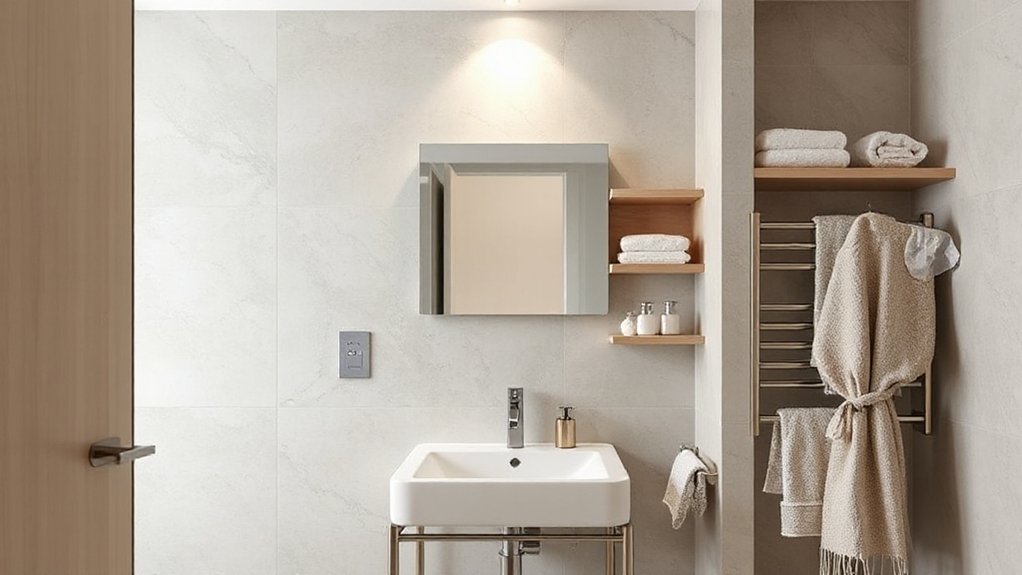
Vertical design strategies maximize storage without crowding the space. Shelving near mirrors keeps daily essentials within reach while staying out of the tub area. Choose slim, open units or recessed niches to preserve floor space and prevent visual bulk.
Use wall mounted fixtures to free counter real estate and create clean sightlines. Rails and towel bars should run vertically where possible, drawing the eye upward and adding perceived height.
Group matching baskets or canisters for cohesive storage without clutter. Install adjustable shelves so you can adapt to changing needs, like extra shampoo bottles or seasonal decor.
Prioritize impact with matte finishes and built-in lighting to highlight vertical elements. This approach delivers vertical storage that feels integrated, not crowded, maintaining a calm, efficient bathroom vibe.
Minimal Hardware and Hidden Details for a Clean Look
Minimal hardware keeps surfaces uncluttered, so choose integrated pulls or push-to-open mechanisms that disappear into your cabinetry. You’ll enjoy a calmer, cleaner look with hidden hardware that hides the clutter and highlights your minimalist fixtures.
The result: streamlined vanity fronts, seamless shower panels, and counters that read as single planes.
1) Opt for concealed hinges and surface-maintained hardware to avoid interruption in lines.
2) Choose push-to-open drawers and touch-latch doors for a truly seamless aesthetic.
3) Select hidden hardware that’s compatible with your faucet and lighting to keep the space cohesive and easy to maintain.
Texture Play: Tile Patterns and Tactile Surfaces for Small Baths
Texture isn’t just about looks in a small bath—it’s about how you move through the space. You can use tile patterns to guide your eye and your steps, making tight layouts feel deliberate, not claustrophobic.
Opt for varied textures in a restrained palette: a matte subway for walls, a glossy trim, and a short, tactile border to cue changes. Textured accents on benches, niches, or a shower curb add depth without bulk, while patterned floors create a grounded feel underfoot.
Pair tactile surfaces with practical grout choices—bacteria-resistant and easy to wipe. Keep scale in mind: small tiles multiply texture without overwhelming; large formats reduce grout lines.
Balance shine and matte, so light bounces softly yet stays legible under task lighting. Textured accents and tactile surfaces elevate small baths with substance.
Multifunctional Furniture and Accessories for Baths
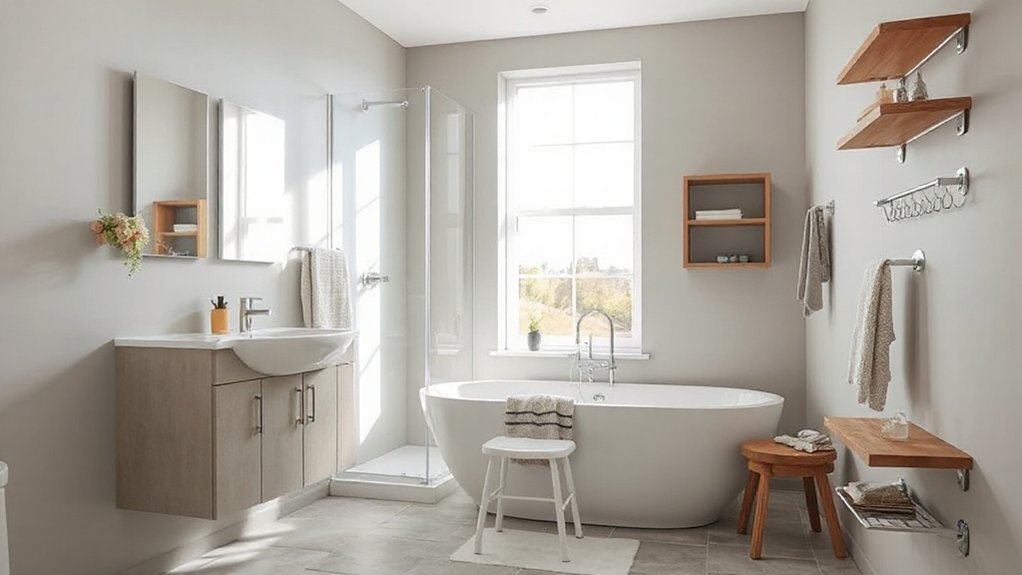
Multifunctional furniture and clever accessories free up space in a compact bath while boosting style and usability. You’ll curate pieces that serve dual purposes, like a vanity with built-in storage and a wall-mounted mirror that hides grooming essentials.
Opt for compact, modular units you can reconfigure as your needs shift, keeping floors clear and flow smooth. Vintage fixtures add character without bulk, while statement lighting draws the eye and illuminates tasks with personality.
Choose finishes that resist moisture and stay timeless, so you don’t rush replacements.
- Floating vanity with integrated storage and a frameless mirror
- Wall-mounted shelving paired with a compact towel ladder and hidden hooks
- Corner cabinet or tiered organizer topped by a bold pendant or sconce
Practical Lighting Tiers for Mood and Function in Compact Spaces
Layering lighting in a compact bath matters as much as choosing the right fixtures: you want task, ambient, and accent layers that multiply your space without clutter.
In practice, set ambient layers with soft ceiling or cove light to create an even wash without harsh hotspots. Pair this with focused task illumination at the vanity—think a horizontal strip or wall sconces that minimize shadows on your face and mirror.
Keep controls simple: dimmers let you shift mood without swapping bulbs. Use accent lighting sparingly to highlight architectural features or textures, not to overwhelm.
Separate zones help you avoid over-lighting while preserving nighttime usability. With a balanced scheme, you gain clarity, warmth, and a fuller feel in a compact bath.
Budget-Friendly Styling Tips for Compact Spaces
Think smarter about space with budget-friendly storage hacks that free up room without clutter. Choose multifunctional furniture and compact, versatile pieces to maximize every square inch.
Then tweak with DIY decor and details to personalize your bathroom. You’ll keep costs low, stay organized, and still achieve a polished, stylish look.
Budget-Friendly Storage Hacks
Need more storage in a small bath? You can maximize every inch with smart organization and chic cues. Focus on vertical space, slim shelves, and hidden compartments to keep surfaces clean and usable. Choose compact baskets, labeled jars, and pull-out bins that tuck behind doors or inside cabinets. Use vertical rail systems for towels and tools, and install a slim medicine cabinet with a mirrored front to add depth.
1) Install wall-mounted shelves above the sink for daily essentials.
2) Add a narrow, pull-out vanity with internal dividers to separate items.
3) Use magnetic strips and hooks inside cabinet doors for small accessories.
This approach feels practical and stylish, weaving vintage accents and statement lighting into a cohesive, clutter-free vibe.
Multifuntional Furniture Choices
Smart, budget-friendly multifunctional furniture is a game changer in small bathrooms. You’ll maximize every square inch with pieces that pull double duty, from vanity desks with hidden storage to wall-mounted cabinets that free floor space.
Choose stools and benches that tuck under sinks, and opt for mirrors with built-in shelves to keep essentials accessible. Look for modular units you can reconfigure as needs evolve, avoiding bulky singles.
Prioritize materials that resist moisture and cleaning hassles, like sealed wood composites and sealed metal. Add vintage accents through small, well-placed items that won’t overwhelm the room, and use bold patterns sparingly on textiles or a single focal cabinet to create personality.
Practical, stylish choices save space without sacrificing flair.
DIY Decor And Details
Ready to transform a tight bathroom without breaking the bank? You can reap big style gains with DIY decor and details that feel high-end without the price tag. Start with small, repeatable accents to create cohesion, and choose decorative details that reflect your vibe.
DIY accents can range from painted jars to handmade soap dishes, offering texture and personality without clutter. Focus on a minimal palette and purposeful contrasts—matte finishes against a glossy surface create depth in tight spaces.
Keep storage clever and visible décor purposeful, so every piece earns its keep.
- Create a matching set of painted jars for vanity essentials
- Craft a simple wooden tray to corral daily items
- Swap hardware with affordable, stylish DIY update options
Frequently Asked Questions
How Can I Make a Compact Bathroom Feel Taller?
You can make a compact bathroom feel taller by using vertical emphasis: install tall storage, reach-in closets, and a ceiling design with recessed lighting. Embrace creative storage, choose light colors, and keep mirrors and cabinetry slim and streamlined.
What Mirrors Maximize Perceived Space Most Effectively?
Mirror placement matters: maximize perceived space with tall, frameless mirrors mounted high and across walls. Use reflective surfaces strategically to bounce light, widening the room. You’ll feel taller and more open, while still keeping a sleek, stylish vibe.
Which Small Fixtures Balance Style and Functionality?
You should pick compact sinks and slimline toilets, balancing form and function. Choose vintage fixtures sparingly with minimalist designs for a cohesive look that packs charm without clutter, ensuring clean lines, easy maintenance, and practical daily use.
Can Outdoor or Natural Light Improve Tiny Bathrooms?
Yes, exterior illumination and sunlight enhancement brighten tiny baths, making them feel larger. You’ll optimize skylights, mirrors, and outdoor sconces to reflect daylight, while choosing warm LEDs for evenings. Practical, concise styling elevates space without clutter.
What Color Schemes Best Enhance a Compact Loo?
Your compact loo thrives with a light, airy palette: neutrals plus a soft accent wall. Color psychology guides balance; choose cool whites or pale grays, then an accent wall in muted blue or sage to open the space.
Conclusion
A tiny bathroom doesn’t have to feel tiny forever. You’ll start with a light, cohesive palette and reflections that double the view, then stash every inch with smart, stylish storage. Fixtures will save space without shouting, textures will whisper luxury, and lighting will tier your mood and function. As you test each clever choice, you’ll sense the room shifting—not bigger, but brilliantly aware of its own potential. The final touch? a lingering sense of, “What else could I do here?”