Think of a modern oasis you walk into every day, where materials meet humidity with grace. You’ll want a floor that resists moisture, stands up to splashes, and still feels warm underfoot. Luxury vinyl flooring offers that balance, combining durability with a refined look. But the real question is whether it fits your bathroom’s layout, heat, and care routine—and how it stacks up against alternatives. Let’s explore what makes LVF a practical, stylish option for wet spaces.
Understanding LVF and Its Moisture Resistance
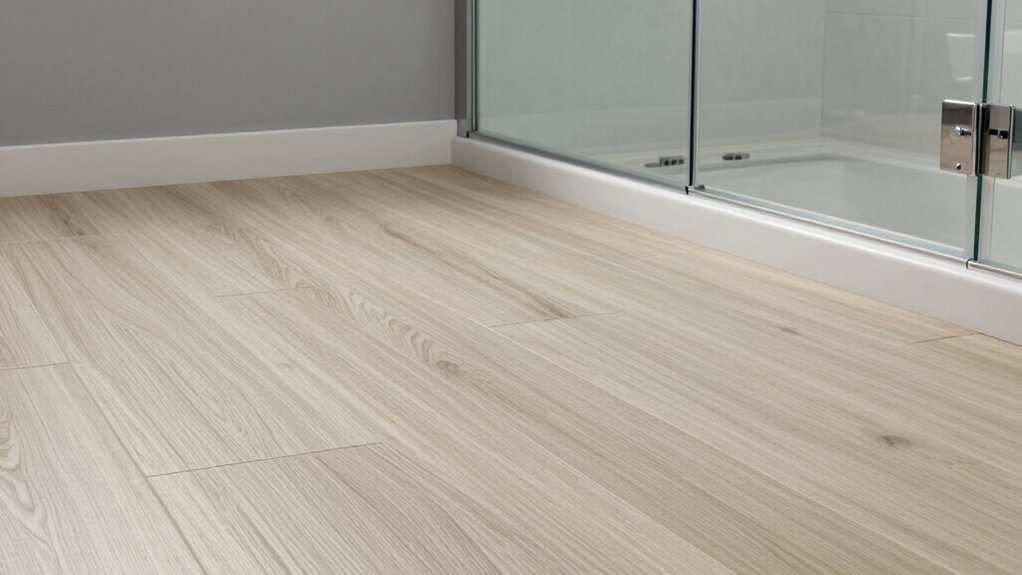
Luxury vinyl flooring (LVF) is a smart choice for bathrooms, thanks to its superior moisture resistance and forgiving surface. You’ll notice how LVF handles humidity, splashes, and steam without warping, curling, or staining. Its core layers are engineered to repel water at the surface, while the protective wear layer guards against scratches and scuffs from daily use.
You’ll benefit from stable dimensions, thanks to low water absorption and tight locking mechanisms that minimize gaps. When you evaluate moisture performance, focus on the wear layer thickness and the thickness of the waterproof core (if present).
You’ll also consider underlayment choices that support sound dampening and added moisture protection. In practice, choose a product with a rated water resistance suitable for bathrooms and a durable finish for long-term beauty.
Waterproof vs. Water-Resistant: What Bathroom Needs Require
Whether you’re renovating a powder room or updating a full bath, the choice between waterproof and water-resistant LVF comes down to how much moisture you expect and how long you want the floor to last.
In practical terms, waterproof means the plank or tile is sealed to resist leaks fully, offering peace of mind in wet zones like showers and tub surrounds. Water-resistant handles routine splashes and spills, but it isn’t immune to standing water or prolonged moisture.
For bathrooms with high turnover, multiple users, or pets, waterproof options reduce maintenance and scuffing concerns. If your space stays dry most days, water-resistant can save cost while still delivering stylish, durable performance.
Consider installation details, warranty specifics, and your moisture expectations to match the right LVF with your design lives.
How LVF Performs in High Humidity Environments
High humidity tests LVF’s performance since water vapor can affect adhesives and seams. You’ll notice LVF maintains stability when humidity spikes, thanks to tight locking systems and compatible underlayment.
In real bathrooms, humidity fluctuates; seams stay watertight when installed with proper expansion gaps and quality adhesive or click-lock integrity. Expect minimal swelling or cupping if the substrate is flat and dry-before-installation.
Moisture resistance hinges on the core construction and backing; rigid cores perform better under long, damp spells.
Regular ventilation helps keep humidity in check and protects your finish from gloss loss or edge lifting. Choose a product with a proven moisture warranty, and follow installation guidelines precisely.
With careful selection and setup, LVF handles high humidity without sacrificing style or comfort.
Differences Between Luxury Vinyl Plank and Tile for Bathrooms
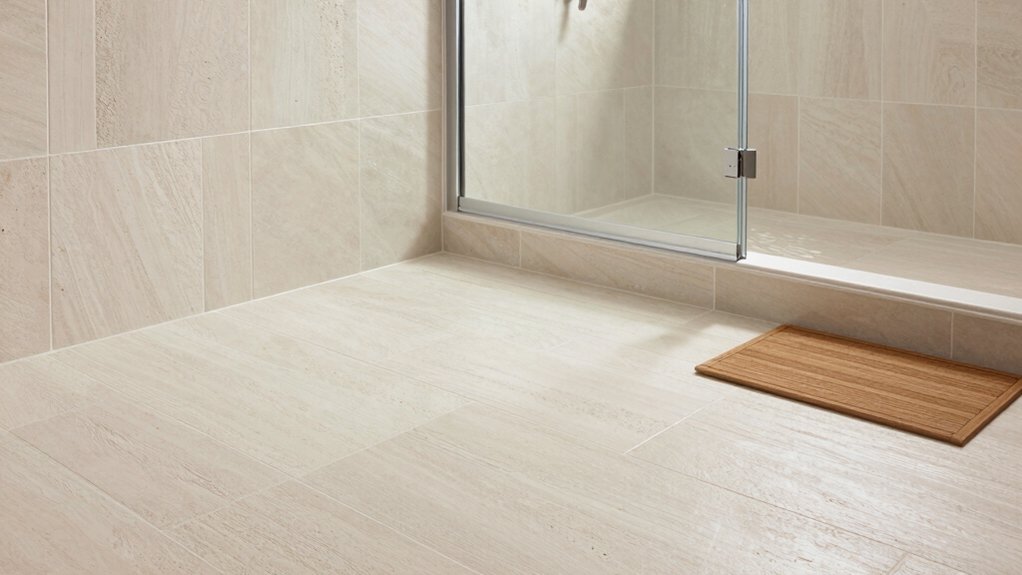
When choosing between Luxury Vinyl Plank (LVP) and tile for bathrooms, the main differences boil down to installation, feel underfoot, and maintenance.
LVP delivers a consistent surface with fewer seams, simpler cutting, and faster fit, while tile usually demands precise substrate prep and more grout work.
Underfoot, LVP tends to feel warmer, cushier, and quieter, whereas tile offers a harder, cooler surface with a traditional grout line texture.
In maintenance terms, LVP wipes clean with minimal care and resists staining, while tile requires regular grout cleaning and periodic sealing.
Design implications matter, too: LVP can mimic wood or stone with continuous flooring visuals, whereas tile emphasizes defined shapes, grout lines, and a cooler, more formal look.
Choose based on comfort, practicality, and long-term upkeep.
Installation Considerations for Bathrooms
Before you lay LVP in a bathroom, map out the essentials: subfloor condition, moisture barriers, and proper tape and seam methods. You’ll want a clean, dry surface and a stable base, so test for movement and fix any structural issues first.
Choose a water-resistant adhesive or floating planks with proper underlayment, depending on your product. Acclimate materials to room temperature and maintain consistent humidity during installation.
Plan layout to reduce cuts at walls and to align seams away from doors or fixtures. Use premium seam tape and sealing strips at junctions to prevent moisture intrusion.
Leave expansion gaps around edges, then secure with recommended fasteners or clips. Finally, verify planks click, float, or bond smoothly with no gaps for a professional finish.
Maintenance and Longevity: Keeping LVF Bathroom-Ready
Maintaining LVF in a bathroom is about routines that prevent damage and preserve look and function. To keep longevity top of mind, establish a quick daily wipe with a damp microfiber cloth to remove moisture, soap, and skid-prone residues.
Use mats at entry points and a soft, non-abrasive cleaner for weekly maintenance, avoiding waxes or petroleum-based products that can dull finish. Protect edges by sealing gaps and trimming baseboard exposure to standing water.
Ventilate after showers to reduce humidity-driven swelling or mold risk. When installing, choose a tight seam and proper underlayment to minimize water seepage.
Inspect seams quarterly for lifting or discoloration, and promptly address any moisture intrusion. With consistent routines, LVF maintains showroom appeal and bathroom-grade durability.
Cost, Value, and Comparative Budgeting for LVF Bathrooms
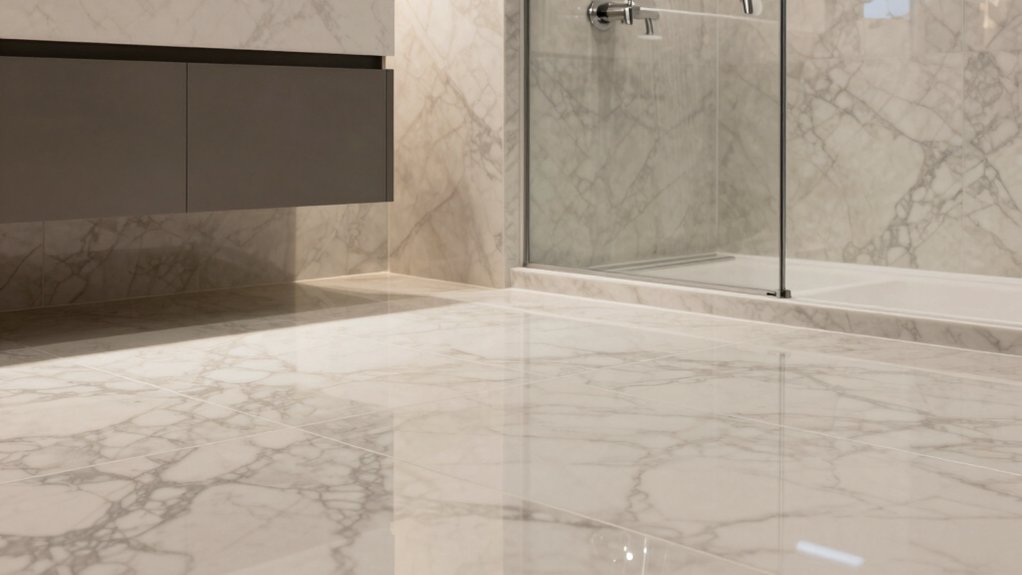
Cost and value for LVF bathrooms hinge on upfront cost, long-term savings, and resale appeal. You’ll compare price per square foot, installation ease, and warranty terms to gauge immediate investment versus future benefits.
Expect lower maintenance costs than many alternatives, plus better water resistance and quicker installation, which translates to less downtime and fewer trades. When budgeting, factor in underlayment, passages, and potential subfloor prep, then weigh these against authentic wood or stone looks, longevity, and color stability.
In resale terms, LVF tends to boost appeal with cohesive design and modern resilience, helping broaden buyer interest. Budget ownership by predicting energy use, replacement cycles, and profit from ongoing updates.
Keep design goals aligned with practical costs, ensuring value isn’t sacrificed for trend.
Practical Tips for Choosing LVF in Wet Areas
Choosing LVF for wet areas starts with your must-haves: slip resistance, water tolerance, and a finish that stays looking sharp.
For bathrooms, look for a PVC or ceramic-print that’s rated for moisture and has a textured surface, not a glossy slick that can be slippery when wet. Check a flooring’s W rating and ANSI or CE slip standards, then verify subfloor suitability and backing stability.
Pick planks or tiles with a tight wear layer and a sealed joins system to minimize seams. Consider groutless visuals or micro-beveled edges that deter grime buildup.
Design-wise, favor cooler tones to hide water marks, and pick patterns that hide transient moisture.
Finally, confirm humidity tolerance, easy maintenance, and compatible underfloor heating for year-round comfort.
Frequently Asked Questions
Can LVF Withstand Direct Water Submersion in Showers?
Yes, LVF can’t withstand direct water submersion in showers; it’s not designed for constant immersion. You should install proper moisture barriers, use water-resistant grout, and guarantee perimeter seals, then consider alternatives like porcelain tile or waterproof panels for wet zones.
Which LVF Wear Layers Are Best for Bathrooms?
For bathroom wear layers, choose a thick 20–30 mil wear layer with a durable polyurethane or ceramic-infused topcoat, plus a stable core for moisture resistance; you’ll get lasting performance and a clean, design-forward look.
Do Radiant Floor Heating Systems Affect LVF in Bathrooms?
Radiant floor heating can be used with LVF in bathrooms, but follow manufacturer guidelines, guarantee a compatible underlayment, and maintain appropriate temperature limits to prevent expansion issues and ensure long-term stability. Regular checks help preserve comfort and durability.
How Does Groutless Installation Impact Bathroom Moisture?
Groutless installs reduce maintenance by up to 50% and minimize moisture traps, improving bathroom humidity control. You’ll enjoy fewer mold risks, easier cleaning, and a sleek look, but guarantee proper underlayment and ventilation for long-lasting performance.
Can LVF Cabinets and Trims Match Bathroom Waterproofing Needs?
LVF cabinets and trims can match bathroom waterproofing needs if you pair them with proper moisture-rated materials, sealants, and installation details; guarantee compatible backer, edging, and color while maintaining ventilation and drainage for durability.
Conclusion
In bathroom spaces, luxury vinyl flooring stands up to moisture, wear, and daily splashes with ease. You’ll find waterproof cores, forgiving textures, and stylish options that pair with fixtures and trends. With proper installation and maintenance, LVF stays beautiful longer, resisting warps and stains. Think of it as a reliable workhorse that still looks designer—smart, practical, and low fuss. So yes, LVF is a sound choice for bathroom floors that want both form and function.