
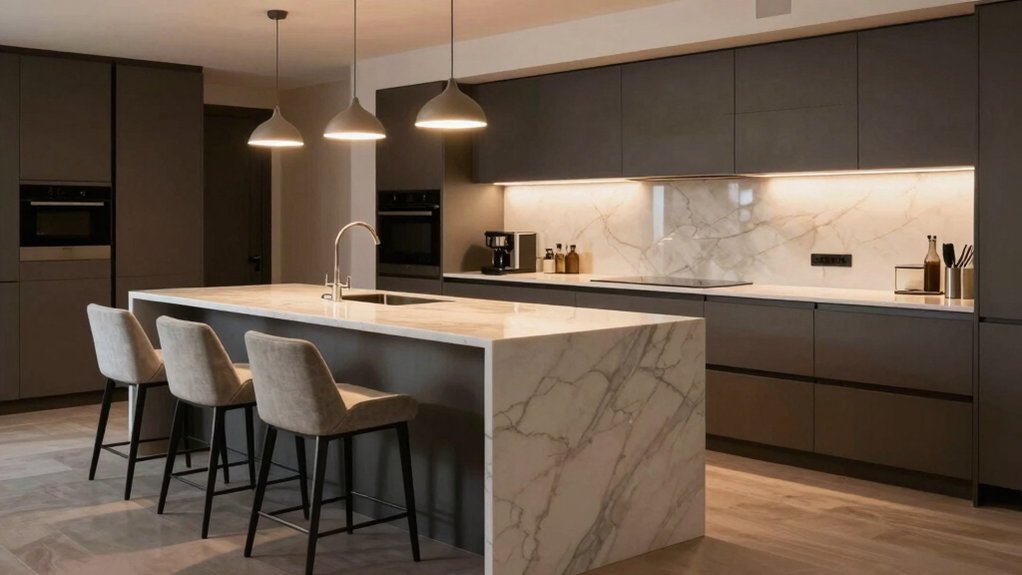
Like a hinge between chaos and calm, your kitchen layout pivots on choosing island or peninsula. You’ll weigh cost, space, and disruption, noticing that pensinsulas often cost less and fit tighter rooms, while islands offer more surface but demand more plumbing, electrical work, and time. Consider how traffic flows and how you’ll access storage without crowding. Curious how to balance budget with usability as you plan? Keep going to compare practical trade-offs for small spaces.
Footprint and Space Planning for Islands Vs Peninsulas
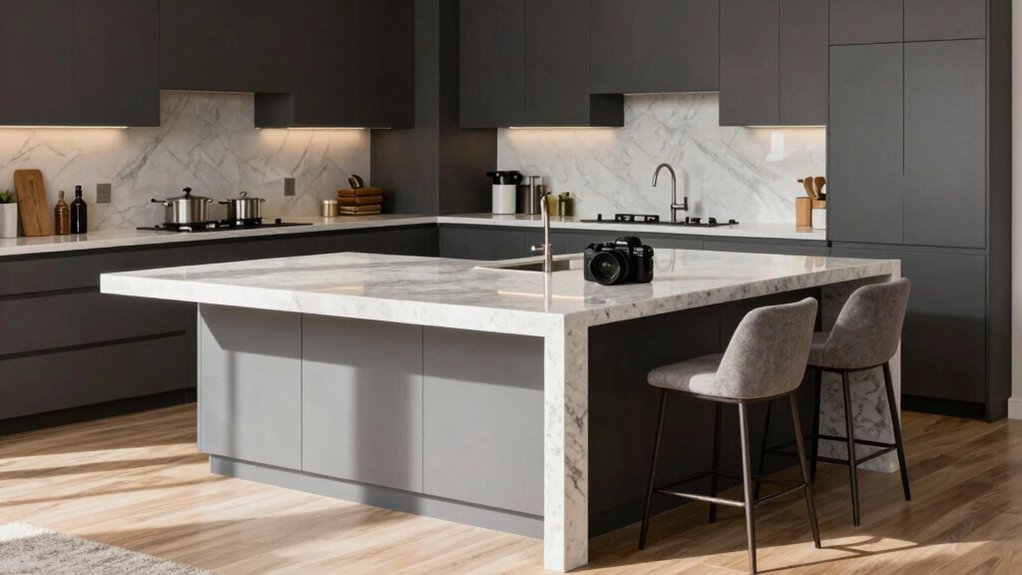
When planning the footprint, an island typically requires more clearances and circulation space than a peninsula, but offers greater seating and social access. You assess traffic patterns, door swings, and aisle widths to prevent bottlenecks between prep zones and dining.
An island creates a central hub, encouraging conversation, yet it demands focal distances for appliance work zones and waste stations.
A peninsula supports perimeter flow, reducing travel distance to adjacent rooms and preserving open sightlines. Consider clearance standards for seating at overhangs, legroom, and safe passage behind chairs.
You’ll weigh utility access, plumbing runs, and electrical outlets against room proportions and scale. Ultimately, you balance function with form, ensuring that the chosen configuration supports efficient cooking, easy cleanup, and comfortable interaction.
Cost Factors: Materials, Labor, and Finishes
Costs for a kitchen island or peninsula hinge on materials, labor, and finishes, with each factor influencing both upfront price and long-term value. You’ll weigh countertop choices, cabinet materials, and structural supports, because durability, maintenance, and style all ride on those picks.
Labor costs vary with complexity: custom cuts, precise joinery, and routing add hours and rates that spike totals.
Finishes matter too—sealed woods, quartz, or solid-surface surfaces affect stain resistance, heat tolerance, and cleaning needs, shaping ongoing expenses.
Material quality drives life span and resale appeal, yet premium options don’t guarantee proportional value if usage or care isn’t aligned.
Budget wisely by comparing warranties, supplier reliability, and finish maintenance, then balance cost against anticipated use to maximize both function and longevity.
Installation Time and Disruption in Small Kitchens
Installing a kitchen island or peninsula in a small space can be selectively disruptive, but planning ahead keeps the impact manageable.
In practice, installation time varies with design, materials, and site prep. You’ll likely face short-term detours: cabinetry removal, floor protection, and temporary wiring or lighting reconfigurations.
The key is sequencing: clear demolition first, then structural fixes, then finishes. Expect a focused window—often a few days to a week for a compact footprint—if trades run smoothly and access is easy.
You can minimize downtime by preordering components, aligning delivery with removal, and scheduling a single crew rather than multiple visits.
Consider temporary workflow adjustments, like parallel prep zones and staggered meal planning, to preserve usability without sacrificing accuracy or safety.
Plumbing and Electrical Considerations for Islands
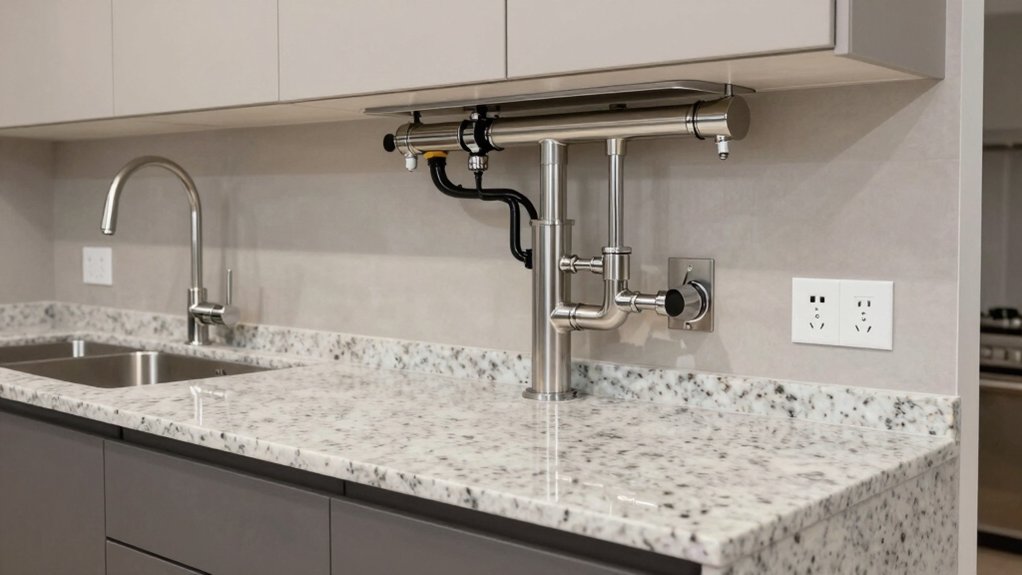
You’ll want to plan water supply routing and drainage before any install, so your island doesn’t disrupt existing lines. Pair that with thoughtful electrical circuit planning to prevent overloads and allow convenient outlets for small appliances.
Don’t overlook ventilation and code compliance, as proper clearances and permissions keep the setup safe and up to spec.
Water Supply Routing
When routing water supply to a kitchen island, plan for a clean, accessible run that minimizes length and avoids sharp turns. You’ll typically bias toward under-counter access cabinets or utility troughs, ensuring supply lines stay protected from heat, humidity, and potential impact.
Use dedicated cold and hot lines with shutoffs within easy reach, and consider kick-space protection to prevent damage from appliances or feet. Insulation on hot lines reduces heat loss, while air gaps prevent siphoning if the island includes a sink.
Route lines away from electrical fixtures and seams, maintaining a clean, tension-free stretch to minimize velocity loss and pressure drops. Label each line clearly and document routing for future maintenance, inspections, or remodels.
Safety, accessibility, and future-proofing drive efficient water supply routing.
Electrical Circuit Planning
Electrical circuit planning for islands requires coordinating with plumbing and cabinetry to guarantee outlets, lighting, and appliances are accessible without clutter. You’ll map power needs for frequent tools, under-counter fridges, and a main prep area, then align with existing wall circuits to minimize breakers.
Consider a dedicated circuit for high-draw appliances and a GFCI-protected outlet near sinks for safety. Plan switched task lighting and recessed can lights to reduce glare while keeping counters clear.
Use countertop-height outlets set within reach but protected from splashes, and run low-profile conduits or trunking behind cabinetry to preserve clean lines. Vet voltage drop over longer runs and anticipate future upgrades, like added USB or smart-home devices, without reworking major wiring.
Finally, document location, heights, and load calculations for trades.
Ventilation and Code Compliance
Ventilation and code compliance for kitchen islands hinge on aligning plumbing, electrical, and mechanical requirements so that airflow, moisture control, and safety standards are met without compromising workflow. You’ll need proper hood clearances, venting routes, and unobstructed exhaust paths that don’t interfere with island seating or storage.
When planning hookups, consider under‑counter drainage, trap positions, and trap arm slope to prevent sags and odors. Electrical follows local codes for receptacle placement, GFCIs near sinks, and dedicated small‑appliance circuits that don’t overload circuits shared with lighting.
Ensure combustion air and exhaust vent routing don’t conflict with cabinets or doors, and that drywall, framing, and insulation maintain fire‑resistance ratings. Finally, obtain inspections and permits early to resolve conflicts between layout, appliances, and building codes.
Layout Flexibility: Traffic Flow and Zoning
A kitchen island offers flexible traffic patterns and zoning by shifting focal points and work zones as needed, while a peninsula creates a natural division that guides movement along two sides of the counter.
In practice, you can reallocate prep, cooking, and cleanup zones with an island to optimize sightlines and flow, especially in open plans. It supports independent tasks without bottlenecks, but may require clear sightlines to avoid congestion near appliance doors.
A peninsula defines boundary lines while preserving continuous collaboration space; it can channel foot traffic along a defined route, reducing cross-traffic between cooking and dining areas. Consider sightlines, door swing, and aisle width to prevent pinch points.
Relative flexibility hinges on cabinet depth, seating needs, and adjacent living zones, ensuring efficient, safe circulation.
Seating and Dining Potential in Compact Areas
In compact spaces, seating and dining can maximize efficiency without crowding by favoring multi-use surfaces and compact, intimate configurations. You’ll want clear sightlines and flexible seating that adapts to gatherings or daily meals.
A peninsula tends to deliver integrated dining for two to four, with overhangs that double as casual pages for laptops or quick breakfasts.
An island can host a bar-height counter for standing conversations, complemented by a folded or drop leaf extension for formal meals when needed.
Prioritize legroom and circulation; ensure chairs tuck neatly under edges to prevent clutter.
Consider built-in benches or cantilevered stools to save floor space.
Material choices matter: smooth, easy-to-clean surfaces and rounded corners reduce pinch points and visual bulk.
Storage Options and Accessibility
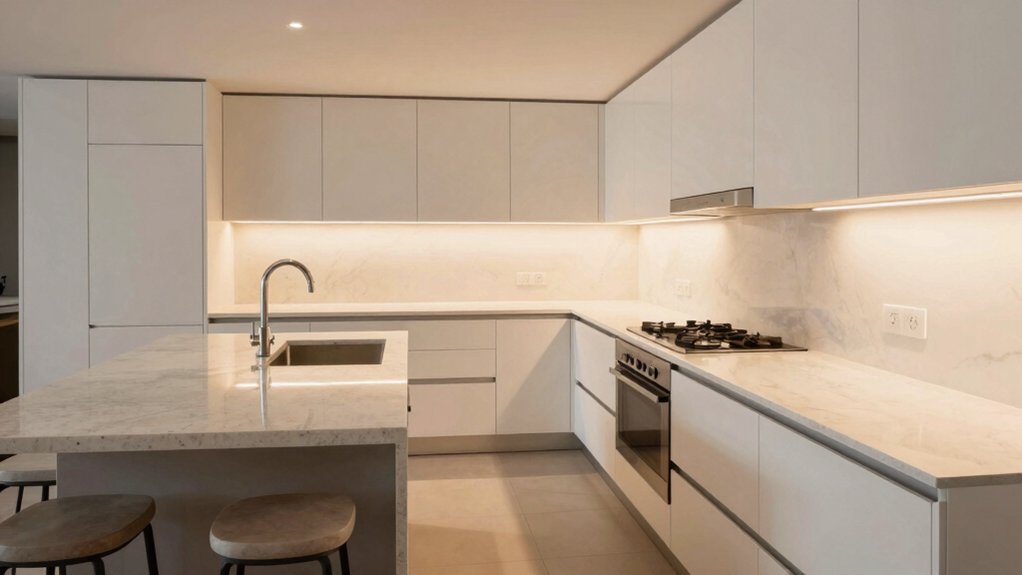
Storage options should align with the footprint and workflow of your kitchen island or peninsula, balancing accessible pull-outs, drawers, and fixed cabinets with clear sightlines.
You’ll maximize efficiency by grouping items by frequency of use, placing everyday essentials within easy reach and tucked-away behind doors for clutter control.
Pull-outs should accommodate height variation, so tall bottles or small appliances don’t block access.
Consider a mix of shallow and deep drawers to separate utensils, bakeware, and pantry staples, plus a dedicated trash or recycling pull-out to keep surfaces clean.
Accessible corner solutions, like swing-out shelves or lazy Susans, prevent dead space.
Finally, ensure integrated charging or power access is near prep zones to reduce trips and interruptions during cooking.
Aesthetic Impact: Style, Finish, and Cohesiveness
Aesthetic impact hinges on how your island or peninsula visually anchors the room, guiding how style, finish, and hardware cohere with the surrounding cabinetry and countertops. You prioritize a single design language so negative space doesn’t fight accents.
Choose finishes that reflect your core palette, then align edge profiles, hardware, and lighting to those cues. If your cabinets are matte, a glossy island can create a deliberate contrast or a quiet balance, depending on proportion.
Consider countertop material and edge details that echo or soften nearby surfaces, avoiding busy patterns that clash with wall colors.
Cohesion emerges when proportions, scale, and material repetition repeat across zones. The result is a unified workspace that feels intentional, purposeful, and visually calm, even in compact layouts.
Maintenance and Longevity in Busy Kitchens
With high-traffic kitchens, durability and easy upkeep aren’t afterthoughts—they dictate material choices and layout. You’ll prioritize surfaces that resist stains, scratches, and heat, then design cleanup flows that minimize transport and clutter.
For islands, choose hard-wearing quartz or solid surface over wood accents, and sealants that stand up to moisture without frequent upkeep. Peninsula layouts benefit from continuous edge protection and integrated seating that discourages spillover onto prep zones.
In busy routines, expect more frequent touchups rather than complete overhauls; plan for accessible storage, seamless seams, and rounded corners to reduce racking and cleaning time.
Longevity hinges on proactive maintenance: routine resealing, prompt stain treatment, and components rated for heavy use. Choose dependable hardware and confirm warranties for ongoing performance.
Quick Decision Guide: Which Fits Your Small Space Best
When you’re choosing between a kitchen island and a peninsula for a small space, start by mapping traffic flow, prep zones, and seating needs.
Next, assess scale: measure clearances, typical dishware, and appliance placement to guarantee comfort without crowding. If pedestrians dominate the area, favor a peninsula to keep sightlines open and create a continuous workspace against a wall.
If you want a defined prep zone that doubles as seating, an island offers flexibility, but only with enough surrounding clearance.
Consider storage needs as well: overhead cabinets on a peninsula save floor space, while an island can provide extra drawers and counter space.
Finally, weigh installation impact and budget—opt for modular, movable options if you expect changes.
Choose the setup that minimizes friction, maximizes function, and suits your daily rhythm.
Frequently Asked Questions
How Does Workflow Differ Between Islands and Peninsulas in Tiny Kitchens?
Islands boost workflow by creating a central hub you can access from all sides, while peninsulas streamline prep and cleanup as one continuous work zone; you’ll notice fewer steps and more deliberate traffic patterns in tiny kitchens.
Can Islands or Peninsulas Affect Resale Value More?
Islands typically boost resale value more, by offering a focal point and communal workspace that appeals to buyers; you’ll see higher perceived kitchen quality, increased storage, and flexible layouts, though peninsulas can still attract buyer interest when space is tight.
What Small-Space Constraints Drive Choosing a Peninsula Over an Island?
Peninsula works better when doorways and traffic zones are tight, you need easy one-wall access, and you crave compact seating without blocking sightlines; it reduces reach and clutter, while preserving open flow and storage near prep zones.
Are There Safety Concerns Unique to Islands in Compact Kitchens?
Yes, safety concerns exist: you’re near traffic patterns and hot surfaces, plus sharp corners in tight gaps. You should map clear walking space, use rounded edges, install adequate ventilation, and keep kid access supervised to prevent collisions.
Which Option Typically Costs Less to Install in Tight Spaces?
Peninsula typically costs less to install in tight spaces. You’ll save on cabinetry, plumbing, and electrical changes, while keeping open sightlines and easy traffic flow. You’ll also avoid extra island clearance, reducing overall labor and material costs.