
Infrared heating can be cheaper than gas in the UK if you target occupied zones, use smart controls, and have solid insulation; savings fade in poorly insulated or open-plan spaces. Costs hinge on electricity tariffs, fixed charges, and how you schedule heat versus gas’s fluctuating fuel prices. Infrared often has higher upfront costs but lower maintenance, with payback tied to usage patterns and grid decarbonization trends. If you keep exploring, you’ll see how to optimize this choice.
How Infrared Heating Works in UK Homes
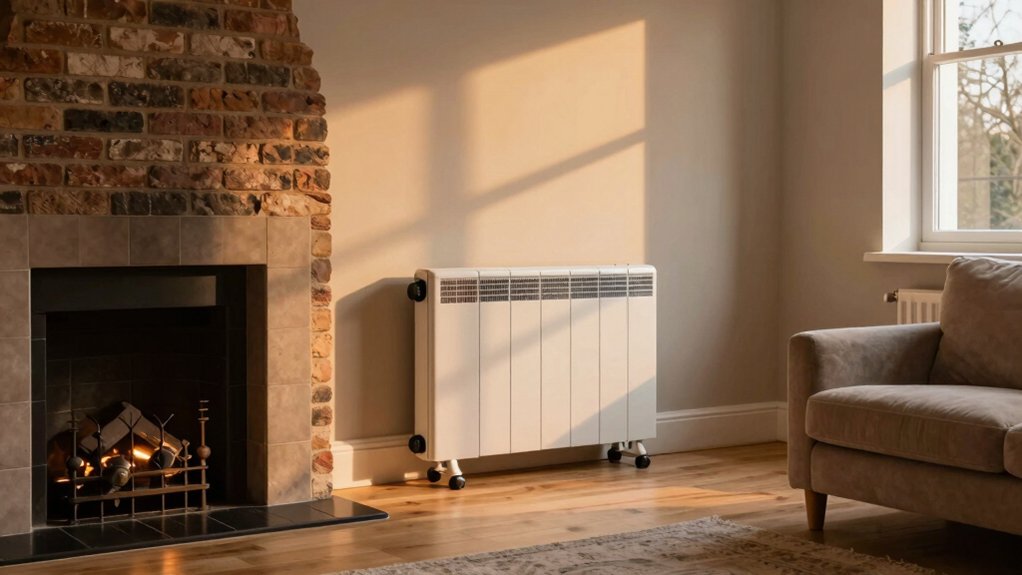
Infrared heating works by emitting radiant energy that directly warms people and objects in a room, rather than heating the air first.
In UK homes, panels or tubes emit IR wavelengths that transfer heat when they strike surfaces, furnishings, or occupants. You’ll feel warmth almost instantly, with less heat loss through drafts since the air remains cooler.
Data indicates efficiency depends on layout, insulation, and occupancy patterns. Policy guidance emphasizes energy use transparency, proper zoning, and safe installation to maximize comfort without excess consumption.
You should guarantee controls are programmable and calibrated for typical occupancy hours, enabling targeted heating. Resource-conscious design recommends combining IR with modest insulation improvements and weather sealing to reduce stray heat.
What Drives Running Costs: Tariffs, Insulation, and Usage
Tariffs and rates, insulation quality, and actual usage together shape your running costs. You’ll see how tariff structures and price caps interact with building efficiency to drive expenses.
While seasonal demand and consumption patterns highlight where savings come from. This discussion frames data-informed choices for policy and households to optimize energy spend without compromising comfort.
Tariffs and Rates
How do tariffs and rates shape running costs for infrared heating in the UK? You’ll see costs driven by price signals from suppliers, network charges, and standing tariffs.
Compare unit rates for electricity versus gas, noting that infrared is powered by electricity, so you’re exposed to wholesale market swings and time-of-use tariffs. If you face flat-rate electricity, your monthly spend tracks consumption more directly; with peak/off-peak pricing, shifting usage can cut bills.
You’ll want to factor line losses, metering fees, and distribution charges into total costs. Policy shifts toward decarbonization can alter levies, subsidies, and VAT treatment.
Data suggests tariff structures heavily influence annual running costs, and selecting time-aware plans alongside predictable consumption supports affordability and planning.
Insulation and Usage
Improved insulation and prudent usage patterns can substantially reduce running costs, because heat retention determines how often and how long the heating system runs. You’ll cut losses by sealing leaks, upgrading loft and wall insulation, and ensuring airtight doors and windows.
Data shows that even modest improvements in U-values yield meaningful bill reductions over winter peaks. Combine insulation with smart controls that adjust demand to occupancy and external temperatures, avoiding idle heating.
Usage decisions matter: schedule heating for high-demand periods, use lower thermostat setbacks at night, and leverage zoning to heat only occupied rooms. Tariff-aware operation, paired with accurate consumption monitoring, enables you to target reductions without compromising comfort.
In policy terms, invest in retrofit subsidies and standardized energy labeling to guide prudent choices.
Infrared vs Gas: Fundamental Cost Mechanics
You’ll compare cost structure differences between infrared and gas systems, focusing on upfront capital, ongoing fuel or electricity costs, and maintenance expenses.
We’ll weigh efficiency and payback by using current UK tariffs, unit costs, and typical usage patterns to show how each option scales with home characteristics.
This sets a data-driven, policy-conscious basis for budgeting decisions and resource planning.
Cost Structure Differences
Infrared heating and gas heating diverge in how costs accumulate over time. You’ll see upfront equipment and installation figures differ: gas systems often require venting, meters, and annual boiler maintenance, while infrared setups incur panel costs and possible surge protection.
Ongoing energy prices drive the largest gap: gas consumes fuel with fluctuating wholesale prices, whereas infrared relies on electricity with its own tariff structures. In policy terms, you should compare marginal costs per kilowatt-hour, plus standing charges for each service, since these fixed elements shape monthly bills.
Asset life matters too; infrared panels may outpace burners in depreciation and replacement cycles. Finally, grid reliability and carbon pricing influence long-run cost trajectories, affecting total ownership costs beyond the sticker price.
Efficiency And Payback
When evaluating efficiency and payback, the key question is how quickly each system turns energy input into usable heat at the location’s specific load profile.
Infrared heating converts energy directly to radiant heat at the surface it covers, often matching peak loads with lower operating hours, which can shorten payback when space heating dominates.
Gas systems typically deliver rapid air and space heating, yielding strong first-hour performance but potentially higher auxiliary costs for maintenance, fuel, and emissions compliance.
Real-world efficiency depends on insulation, control strategies, and occupancy patterns.
For policy and planning, compare full life-cycle costs, including capital, operations, and grid impacts.
Resource-conscious assessments favor systems with high heat-recapture potential, scalable controls, and alignment to demand-side management opportunities.
Upfront and Ongoing Costs: Purchase, Installation, and Maintenance
Upfront and ongoing costs for infrared heating and gas heating differ in key ways that affect total ownership. You’ll see higher initial hardware costs with infrared panels, plus potential for zoning flexibility that reduces wasted space heating.
Gas systems usually come with lower purchase prices, but you should account for boiler, radiators, and venting requirements that add up during installation.
Ongoing costs hinge on efficiency, maintenance, and energy tariffs; infrared lines incur minimal moving parts wear and generally lower maintenance compared to gas boilers, which require annual servicing and safety checks.
Pay attention to replacement cycle timings, insulation quality, and controller optimization, since these influence long-term spend.
Policy-ready data suggests total ownership favors infrared when grid decarbonization and electricity prices stabilize, yet local tariffs matter.
Real-World Price Comparisons Across Current Tariffs
Real-world pricing for infrared and gas heating varies across current tariffs, reflecting both energy market volatility and regional policy gaps. You’ll see frequent price moves tied to wholesale gas costs, network charges, and supplier competition, not just sticker rates.
Infrared heating typically offers simple, per-kWh pricing with potential access to green tariffs, while gas prices ride fluctuating wholesale markets and standing charges. When you compare tariffs, account for unit rates, daily standing charges, and occasional fixed-term deals.
Regional policies, like capacity market impacts or local subsidies, can shift apparent costs at the meter. Your decision should weight total annual energy spend, reliability, and bill predictability, rather than headline unit prices alone, to reveal true affordability across current tariff landscapes.
Carbon Footprint and Energy Efficiency Considerations
Infrared heating generally creates a smaller carbon footprint per unit of usable heat than gas heating when powered by low-emission grids, but its footprint varies with electricity source and building efficiency. You should consider grid mix, plant efficiency, and transmission losses when evaluating lifecycle emissions.
In published UK data, electricity-based heat often beats gas on annual CO2 per kWh, yet regional decarbonisation rates alter this picture. Energy efficiency matters: well-insulated spaces reduce wasted heat, raising delivered efficiency of infrared panels.
You’ll also weigh embodied energy in equipment and ongoing maintenance against ongoing fuel costs. Policy guides emphasize decarbonising grids, setting efficiency standards, and supporting retrofit measures.
Practical Buying Guide: Choosing the Right Infrared System
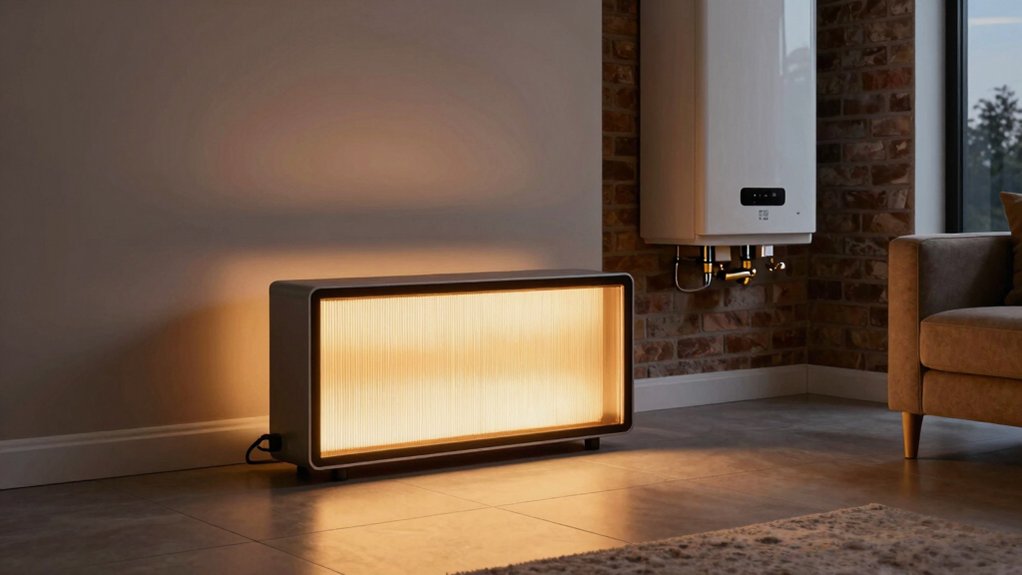
When you’re choosing an infrared system, start with a clear picture of your space, budget, and timing, then map them to available panel types, deployment options, and warranty terms.
Prioritize data: compare heat output (W/m²), efficiency ratings, and operating costs across models, focusing on real-use conditions rather than specs alone.
Favor systems with accurate zoning, thermostat compatibility, and controllable emissivity to minimize waste.
Align purchase with policy incentives, supplier reliability, and end-of-life recycling commitments to reduce long-term costs and environmental impact.
Assess installation requirements, maintenance intervals, and warranty coverage to avoid hidden expenses.
Favor transparent total-cost-of-ownership analyses, including electricity tariffs, potential rebates, and grid impact.
Choose modular solutions that scale with future space changes, ensuring resilient, fiscally responsible performance.
Case Studies: When Infrared Shows Savings (or Not)
Case studies reveal where infrared heating delivers real savings and where it doesn’t, guiding policy and purchasing decisions with concrete numbers. In commercial settings, infrared often wins when rapid heat is needed selectively, reducing overall energy use by targeting occupied zones and assets rather than mass-heating spaces.
In poorly insulated or high-air‑change-rate environments, savings dip as heat losses dominate, and payback periods extend beyond typical budgeting cycles. Residential pilots show mixed results: rooms with persistent cold spots or drafty envelopes benefit more, while open-plan layouts with slow heat response may underperform compared with gas heating for baseline warmth.
Data from metered trials emphasize equipment efficiency, control strategies, and occupancy patterns as key drivers of whether infrared delivers net advantages. Policy implications favor transparent performance reporting and standardized metrics.
Decision Framework: Is Infrared Cheaper for Your Home?
To decide if infrared heating is cheaper for your home, start with a clear, data-driven framework that weighs upfront costs, ongoing energy use, and local conditions.
Begin by listing capital costs (panels, install, controls) and compare with gas system refreshes or replacement.
Estimate annual energy consumption under your occupancy pattern, climate, and insulation level, then multiply by current tariffs and expected price trends.
Include maintenance, reliability, and downtime costs.
Factor building factors: insulation quality, room usage, solar gain, and heat loss.
Run sensitivity analyses for scenarios (high/low usage, price spikes, weather extremes).
Require transparent sources, such as local tariffs and performance data from reputable trials.
Use this framework to ground policy recommendations on subsidies, tariffs, and retrofit eligibility that reflect real household finances and regional variation.
Frequently Asked Questions
How Do Infrared Panels Impact Resale Value?
Infrared panels can boost resale value modestly, especially if you highlight energy efficiency, low operating costs, and quick comfort. You’ll appeal to buyers seeking modern tech, but make certain documentation, warranties, and installation compliance are ready and transparent.
Can Infrared Heating Cause Temperature Fluctuations?
Infrared heating can cause mild temperature fluctuations, especially in uneven spaces. You’ll notice faster responses near panels but cooler spots farther away; paired zoning and proper insulation minimize variation, making control more reliable and energy use more predictable.
Are There Safety Risks With Infrared Panels?
Infrared panels are generally safe when properly installed and maintained. You should guarantee correct placement, avoid overheating, and follow manufacturer guidelines. Regular inspections and edge-case considerations for pets or sensitive individuals help minimize potential hazards and liability.
Do Grants or Incentives Exist for Infrared Installs?
Yes, grants and incentives exist for infrared installs. You can access government schemes, local authority programs, and utility incentives, often requiring energy assessments, efficiency upgrades, or installation through approved contractors. Check current schemes and eligibility before planning.
What Maintenance Tasks Are Required Regularly?
Regularly inspect panels for dust, guarantee clear ventilation, and test thermostats quarterly; clean reflective surfaces annually, check wiring and fuses, monitor energy use, and schedule professional servicing per manufacturer guidelines to maintain safety and efficiency.
Conclusion
In a land of flickering streetlamps and shifting tariffs, you’re the captain steering a ship through fog. Infrared is a quiet lighthouse—low upfront, predictable heat—but its true cost rides the tides of tariffs, insulation, and usage. Gas remains the sturdy engine, cheaper per kilowatt if well insulated. Chart your course with data: run-time, standing charges, and carbon targets. If your home is well-sealed, infrared can save; if not, gas may win the voyage. Make the decision with a policy-minded, resource-conscious gaze.