
Did you know that most leasehold disputes arise from unapproved alterations, not safety issues? You’ll want to start by reviewing your lease for any prohibitions on structural or cosmetic changes, then seek written landlord consent before major work. You can often focus on non-structural updates and discreet replacements, but you’ll need clear documentation and proof of deposit protections. If you’re curious about compliant hacks and practical options that keep you within the terms, there’s more to take into account before you lift a tool.
Read Your Lease First to Find Hidden Rules

Read your lease carefully before any renovation plans. You must identify Lease clauses that govern alterations and note any notice requirements, consent thresholds, or permit needs.
You’ll assess whether the document specifies party-wall or building-management approvals, deposit implications, or responsibilities for restoration.
Look for Hidden restrictions that could limit finishes, structural work, or mechanical changes; check if exemptions exist for cosmetic improvements.
Confirm who holds the authority to approve changes and the formal process to request consent, including timelines and required documentation.
Pay attention to clauses about subletting, assignment, or lease termination linked to renovations.
Document ambiguities and seek clarification in writing.
Don’t assume consent is automatic; compliance reduces dispute risk and preserves your rights under the lease.
Identify Changes You Can Do Without Consent
There are several alterations and improvements you can typically carry out without formal consent, provided they don’t affect the structural framework, fire safety systems, or shared parts. You should verify your lease language, but many cosmetic and minor practical changes fall into this category.
You may redecorate, install non-structural fixtures, and swap fittings that don’t alter the layout or loads. However, you must respect Decorating restrictions and any building-wide rules, and you should avoid work that could encroach on common areas.
Plan work during reasonable hours to comply with Noise limitations and to minimize disruption to neighbours. Keep records of replacements and retain receipts.
If in doubt, pause until you confirm the lease permits the specific change.
Get Landlord OK for Structural or Cosmetic Changes
You should obtain the landlord’s written consent before undertaking structural or certain cosmetic changes, since these alterations can affect the building’s integrity, insurance, or tenancy terms.
You’re advised to review your lease clauses and identify any consent requirements, timing, and conditions, so you avoid breach.
Acknowledge that some modifications may require licensed contractors or building regulations compliance, which the landlord may insist upon as a condition of approval.
If consent is refused, request a written explanation and consider alternatives that preserve safety and compliance.
Document all approvals and keep records for Tenant rights, should disputes arise.
Don’t proceed without explicit permission, and respect any drawn boundaries or limitations stated in the lease.
Seek professional clarification when interpreting ambiguous Lease clauses.
Budget, Documentation, and Deposit Protection
After securing written consent for any structural or cosmetic changes, you’ll need to set a clear budget, assemble the necessary documentation, and guarantee deposit protection is correct.
You’ll itemize costs for materials, labor, and contingency, and keep receipts in a single file.
Documentation should include written approvals, tenancy terms, and any landlord restrictions, plus insurance details where required.
Verify deposit protection within the statutory period, and ensure you receive the prescribed scheme information for the tenant.
Plan decorating tips carefully to avoid damage claims, documenting existing conditions with dated photos.
Coordinate moving logistics to minimize disruption and comply with access times.
Maintain a precise record of changes and approvals to defend against disputes, and review terms quarterly to prevent unapproved alterations or withheld deposits.
Lease-Safe DIY Hacks and Practical Alternatives
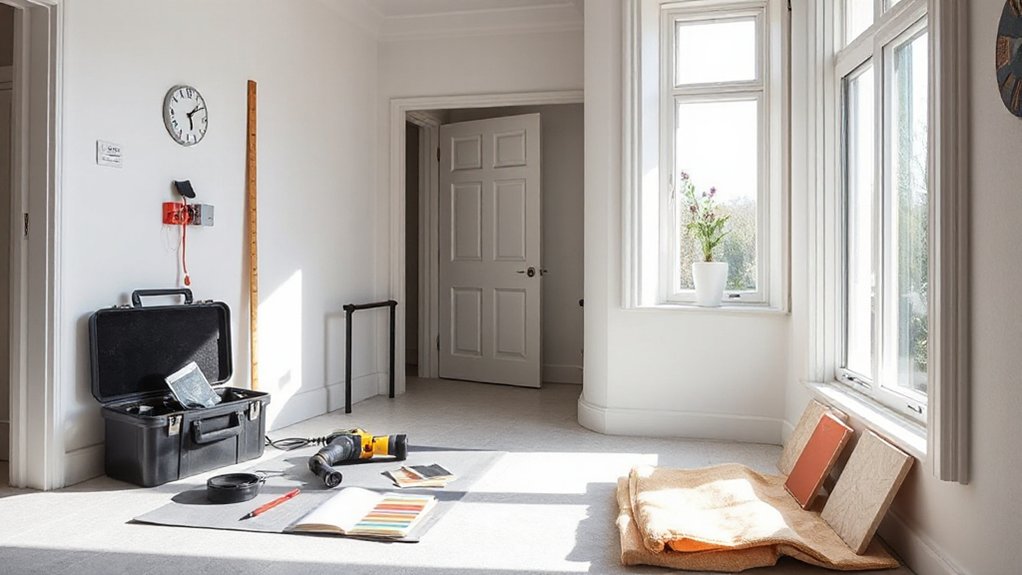
To stay Lease-safe, focus on practical, non-permanent options that protect your deposit and comply with your tenancy terms. You can implement decorative accents that are easily removable without leaving damage or residue, such as peel-and-stick wallpaper borders, removable wall decals, or washable fabric curtains.
For lighting, choose freestanding fixtures and battery-operated options rather than fixed electrical changes, which preserves compliance and reduces risk.
Consider SMART upgrades that don’t modify wiring, like programmable thermostats that don’t alter heating controls or smart plugs used with existing outlets, ensuring you can revert them before moving out.
Use furniture arrangement to refresh spaces without drilling or wall hooks.
Document purchases with receipts, and seek written landlord consent for any temporary installations beyond guidelines.
Frequently Asked Questions
Can You Renovate Without Voiding the Tenancy if You Revert Improvements?
Yes, you can renovate without voiding tenancy if you revert improvements. You should track changes, obtain landlord consent, and document agreements. For DIY tips, keep records; manage renovation budget responsibly, and guarantee permits and safety standards are met throughout.
What Consent Timeline Should You Expect From a Landlord?
Landlord approval typically arrives within a defined renovation timeline, often 2–4 weeks. You should seek written consent promptly and acknowledge potential delays; timeline variability depends on the lease, scope, and landlord responsiveness, so plan accordingly and document all contacts.
Are There Penalties for Non-Compliant Cosmetic Changes?
Yes—there can be penalties for non-compliant cosmetic changes. You must follow painting restrictions and any flooring modifications rules; otherwise, you may face damages, fees, or required restoration upon tenancy end. Stay precise, cautious, and compliant with lease terms.
How to Handle Permitted Alterations at the End of the Lease?
Silence becomes a door, symbolizing careful timing: you should restore the property if required, and document changes. You secure Tenant rights and honor Lease clauses, ensuring end-of-lease compliance, then confirm obligations with the landlord before exit.
What Documentation Proves Compliance With Lease Rules During Disputes?
Documentation proves compliance during disputes, so you should retain clear records. You’ll show Lease violations were avoided, and reference Documentation requirements for safeguarding evidence, including notices, consent forms, plans, and dated photographs to support lawful alterations and dispute resolution.
Conclusion
You’ll finish with a lease that still stands, unscathed by hasty tweaks. Treat each change like a careful repaint, tapping only what you’re allowed and documenting every stroke. Read the body of rules—hidden clauses may bite—then secure written consent for anything structural. Keep your records pristine, deposits protected, and your DIY wins within the margins, like a precise legal sketch. In the end, you’ll renovate confidently, compliant, and ready for the next quiet, predictable lease renewal.