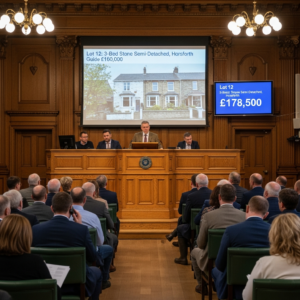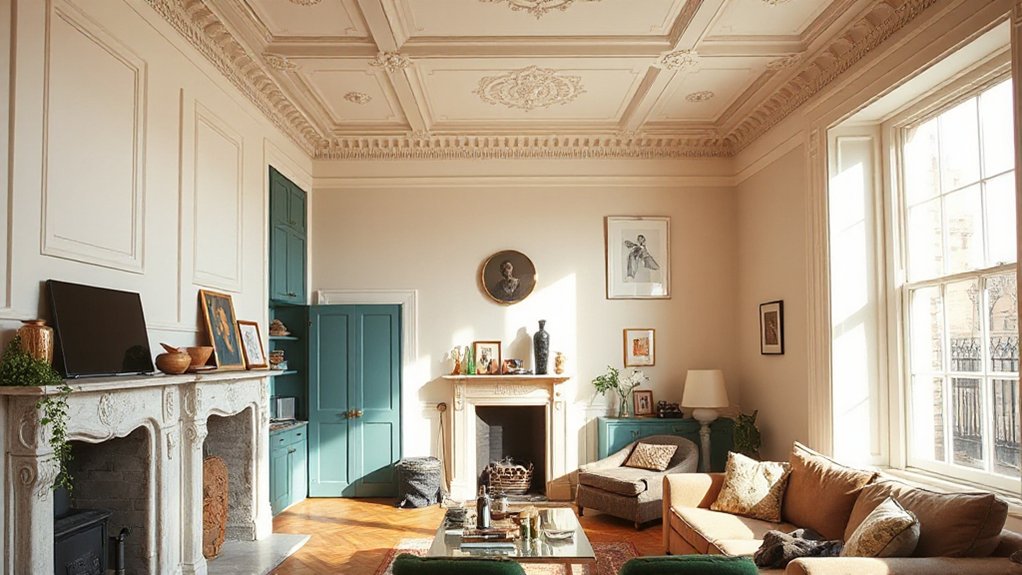
You’ll hear that renovating Edinburgh’s historic flats is a revolution in quietness, yet the walls still hold centuries of weather and care. You’ll balance preserving sash and cornice with modern comfort, choosing reversible upgrades that respect fabric and form. You’ll navigate planning rules, decide what to keep, and map layouts that honor lineage while improving flow. Start with a clear brief, then connect with sympathetic trades—the project hinges on discipline, timing, and meticulous detail. Keep going to map the potential.
Why Edinburgh Historic Flats Are Unique
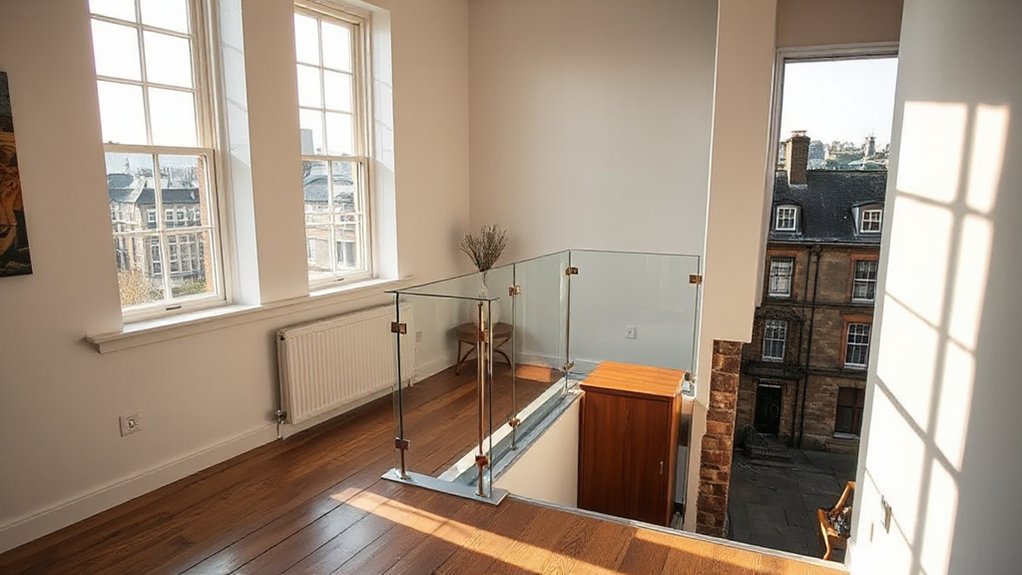
Edinburgh’s historic flats stand apart because their layout and fabric reflect centuries of urban living within a single tenement shell. You navigate asymmetric staircases, high ceilings, and robust skirting, noticing how partitioning evolved with everyday needs without erasing original fabric.
The tiered rooms, sash-and-case windows, and plasterwork reveal centuries of construction practices, local quarry materials, and skilled trades. This isn’t decorative heritage alone; it’s structural testimony to urban density, fireproofing strategies, and adaptive reuse.
You assess preservation-first criteria, recognizing that historical preservation sustains authenticity while enabling cautious modernization. Cultural significance isn’t only about aesthetics; it anchors community memory, daily rituals, and collective identity.
Respecting these dimensions guarantees your work honors the tenement’s continued role in Edinburgh’s living heritage.
Define Your Renovation Goals: Preserve or Modernize?
Decide early whether your aim is preservation, modernization, or a measured blend, because this choice sets every subsequent design and compliance path. You’ll frame your renovation goals around what’s essential to maintain historic value while delivering usable space.
Begin by mapping protected features—decorative plasterwork, cornices, original floorboards—and decide which survive, which require careful restoration, and where adaptive reuse applies. If you lean toward preservation, document existing conditions, preserve joinery, and integrate modern lighting with discreet concealment to minimize disruption.
If modernization wins, prioritize flexible layouts, durable finishes, and compliant services without erasing historic character. In a blended approach, schedule staged interventions that respect fabric while updating life-safety and comfort.
This goal-setting guides material selections, detailing, and long-term stewardship.
Planning Rules for Edinburgh Listed Buildings: What’s Allowed?
You’ll need to understand that listed-building permissions hinge on respecting historic fabric while planning any alterations. Your works must demonstrate how proposed changes preserve architectural integrity and consult Schedule-listed constraints from Historic Environment Scotland.
We’ll discuss what constitutes applicable works in historic fabric and how to document them for a compliant, preservation-focused approach.
Listed Building Permissions
Listed Building permissions govern what you may alter inside Edinburgh’s protected structures, balancing the character-defining features with practical needs. You’ll work within statutory frameworks administered by Planning Authoritys and Historic Environment Scotland, ensuring any change respects the building’s intrinsic value.
Before drafting proposals, assess whether alterations affect significance, and consult guidance on listed status, conservation principles, and survey requirements.
Documentation should be precise: describe affects on fabric, rationale for intervention, and mitigation strategies.
For interior changes, permissions hinge on maintaining essential spatial hierarchies, finishes, and joinery, with exceptions only where essential for safety or accessibility.
When planning furniture placement, consider movement and sightlines without compromising historic fabric.
Lighting design must avoid invasive wiring or alterations that degrade plasterwork or cornices, seeking discreet, reversible solutions where possible.
Works In Historic Fabric
In Edinburgh, works in historic fabric must respect the building’s defining materials, construction methods, and architectural language while accommodating legitimate practical needs. You assess proposals against listed-building constraints, prioritising sympathetic intervention over wholesale replacement.
You’ll preserve original hierarchies of significance, avoid altering core silhouettes, and minimise reversible alterations where possible. Where modern systems are essential, you integrate them discretely, using equivalent textures, finishes, and detailing that echo historical accuracy.
You should document all changes, justify them scientifically, and seek approvals early, demonstrating how interventions maintain durability and legibility. Any new openings, partitions, or fixtures must respect traditional spatial logic and scale.
Balance functional upgrades with heritage values, aiming for Modern aesthetics that enhance usability without erasing historical narrative.
Which Architectural Features Are Worth Keeping?
In Edinburgh flats, you should prioritize features that preserve original detailing, since these elements anchor the building’s character and historic narrative.
Assess structural integrity first to guarantee any retained feature remains safe and serviceable, avoiding compromise for aesthetics alone.
Balance preservation with practicality by documenting intentions and ensuring repairs respect both materiality and line of sight, so the features contribute to future stability as well as provenance.
Original Detailing Respect
Original Detailing Respect: Which Architectural Features Are Worth Keeping?
You assess original detailing with rigorous standards, prioritising elements that reveal Edinburgh’s craft and social history. Focus on features with documented historical significance, such as cornices, plasterwork, timber staircases, sash windows, and decorative plaster ceilings, where retention preserves contextual storytelling.
Where feasible, you document provenance, maker, and period style, guiding decisions with preservation techniques that minimize intervention. Where damage exists, pursue non-destructive stabilization and reversible repairs, avoiding wholesale replacement.
Retention should support authentic reading of the room, ceiling height, proportion, and masonry rhythm. Adaptations must respect scale, texture, and patina, ensuring new services don’t erode original details.
Structural Integrity Gauge
A clear gauge of structural integrity guides decisions about what to retain in a modernised Edinburgh flat. You assess masonry faults, timber decay, and load paths with calibrated scrutiny, balancing authenticity with safety.
Structural reinforcement must be targeted, not ornamental, prioritising elements that underpin rigidity and serviceability. Your inspection records foundation stability, subsidence indicators, and floor levelness, cross-referencing historical alterations against current performance.
Where walls function as bearing members, you verify coursing continuity, tie patterns, and potential for vibration amplification before proposing interventions. Preserve principal structural skins and original alignment, but document discreet reinforcements that preserve appearance.
Avoid over-encoding modern systems into ancient fabric; integrate discreet, code-compliant reinforcement where needed. This approach preserves evidentiary value while maintaining long-term durability and adaptability for contemporary use.
Layout Changes That Respect Historic Spaces
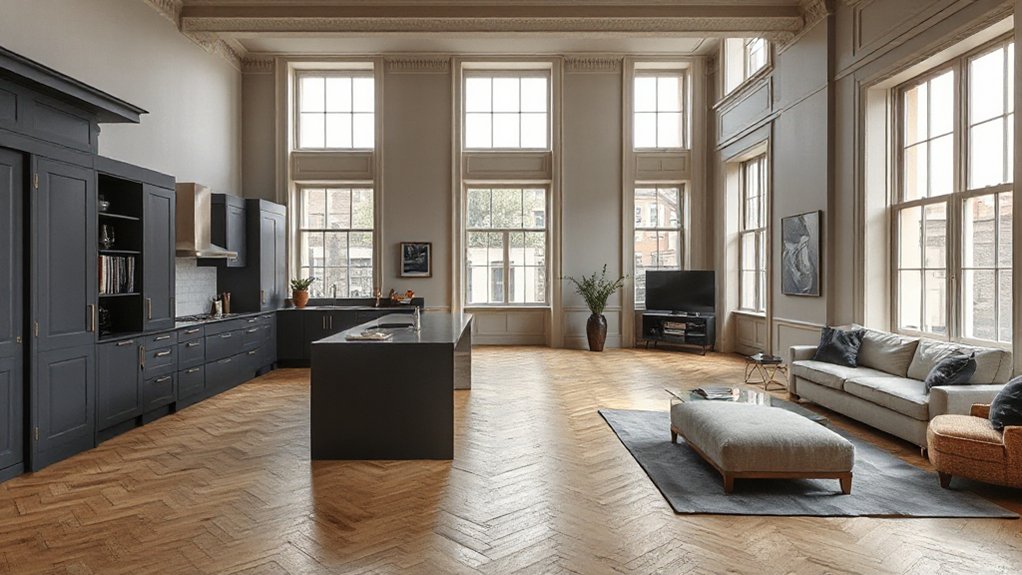
To respect Edinburgh’s historic spaces, plan layout changes that preserve core relationships between rooms, chimney stacks, and original doorways while enabling modern circulation.
You map existing sightlines and traffic patterns, then introduce subtle, reversible changes that minimize structural impact. Prioritize preserving primary junctions and hearth alignments, using doorways as anchors for new zones rather than complete removals.
Where openings must shift, employ slim, traditional-appearing partitions or glazed screens that maintain light and historic proportions. Integrate storage and circulation within existing alcoves to avoid disruptive infill.
Choose furnishing styles that respect provenances without over-cluttering, and color palettes drawn from period schemes to reinforce spatial legibility.
Document interventions for future stewardship, ensuring any updates remain compatible with conservation guidelines and scholarly interpretation.
Finishes That Hint at History Without Feeling Dated
You can select finishes that hint at Edinburgh’s past with restraint, balancing subtle historic cues against contemporary performance.
Use materials and textures that read as aged without appearing dated, such as properly patinated metals, stone-inspired surfaces, and restrained timber detailing.
Prioritize durability, compatibility with listed-space principles, and clear documentation to support ongoing preservation goals.
Subtle Historic Hints
Subtle historic hints can be integrated through finishes that nod to Edinburgh’s past without invoking nostalgia fatigue. You pursue historical authenticity by selecting materials that resonate with period craft without replicating any single era.
In practice, opt for lime-based plasters, traditional limewash, and subtle patinas on timber to reflect age without appearing weathered. Maintain aesthetic harmony by matching grain, tone, and surface texture across rooms so finished spaces read as a cohesive whole rather than a collage of eras.
Use concealed or unobtrusive detailing—munted skirting, chamfered architraves, or softly rounded coves—that reference historic joinery while meeting contemporary performance standards. Prioritize breathable assemblies, proper sealing, and compatible paints to avoid trapped moisture and preserve character for future preservation.
Timeless Yet Modern Finishes
Even when you aim for a modern feel, finishes that nod to Edinburgh’s past should read as deliberate, not decorative. In historic flats, you balance fabric, texture, and form to honor timber, plaster, and masonry without inert replication.
Choose surfaces that read as timeless—limed oak, matte lime plaster, and low-gloss limewashed masonry—so light travels with restraint, not flash. The goal is continuity with the building’s language, not distraction from it.
Contemporary furniture can sit confidently against such backdrops when kept simple and proportionate, avoiding throwback motifs. Pair with Modern art sparingly, ensuring scale aligns with bay windows and historic moldings.
Subtle patination, controlled patina, and period-inspired hardware anchor the space, while contemporary amenities stay discreet behind doors or within cabinetry.
Energy, Insulation, and Heating for Historic Flats
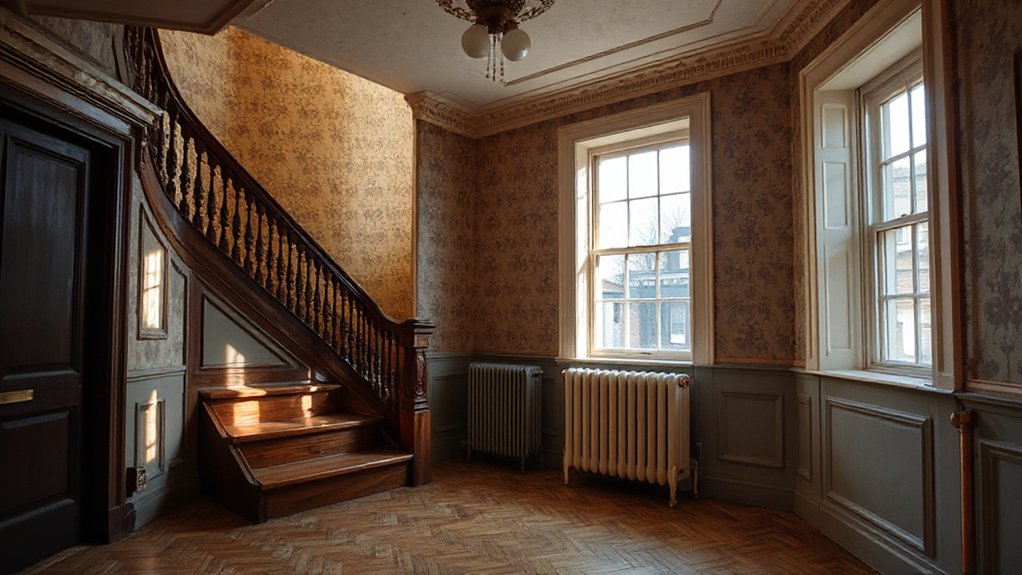
Historic flats in Edinburgh demand a careful balance between modern comfort and preservation. You’ll assess fabric first, prioritising airtightness, insulation, and thermal mass without compromising historic fabric. Use targeted, discreet measures: draught-proofing at sash windows, cavity or interior insulation where permitted, and sympathetic loft or roof insulation that respects historical allowances.
For heating, specify low-temperature, evenly distributed systems that avoid radiant heat under heritage detail, preferring zoned circuits and wall-mounted options that minimise visible equipment. Integrate solar means where feasible, ensuring discreet solar integration aligns with rooflines and parapets.
Consider renewable heating as a supplementary source, such as a compact heat pump or biomass where permitted, paired with a balanced, programmable control strategy to sustain comfort and conserve energy. Document decisions for future preservation reviews.
Smart Tech That Keeps Character Intact
Smart tech can improve comfort and efficiency in historic Edinburgh flats without eroding their character by prioritizing discreet, reversible installations and clear documentation. You’ll integrate controls that respect listed fabric, using low-profile sensors, wired connections, and concealed cabling to minimize visual impact.
Prioritize reversible methods so future conservators can undo changes without damage. Energy dashboards should be unobtrusive, calibrated to avoid glare, and linked to historical fabric records for traceability.
When selecting devices, favor non-invasive retrofits and wireless options that don’t require alterations to timber joinery or plaster. Blend vintage appliances visually with modern systems to maintain period feel while delivering reliable performance.
Consider how Modern art-inspired interfaces can guide usage without dominating spaces, and guarantee maintenance routines preserve collectable value and architectural integrity.
Finding Sympathetic Tradespeople and Managing the Project
Finding sympathetic tradespeople and managing the project requires clear criteria, documented expectations, and careful coordination from day one. You’ll approach this with a disciplined plan: establish a concise brief that defines preservation objectives, required permissions, and acceptable materials.
In historic Edinburgh flats, Historical context matters; you’ll foreground original fabric, structure, and detailing, limiting interventions to essential upgrades.
For Tradesperson selection, verify credentials, refurbishment experience in listed properties, and familiarity with traditional joinery and limework. Interview references, review past projects, and request precedents showing sympathetic restoration.
Create a single point of contact, circulate a written scope, and set milestone reviews to maintain alignment with conservation aims.
Maintain meticulous change logs, approve deviations only when they preserve authenticity, and document decisions for future audits and approvals.
Budget, Timelines, and Risk in Edinburgh Flat Renovation
Carefully align budget with conservation priorities: define a focused cost envelope, allocate reserves for unforeseen conservation requirements, and cap discretionary spend that could threaten historic fabric.
You approach cost analysis as a disciplined diagnostic, tracing unit costs to specific conservation outcomes and fabric preservation needs, not merely cosmetic upgrades.
Develop timeline planning that respects seasonal access, permit workflows, and the cadence of trades while preserving historical routes and services.
Identify critical path tasks tied to essential fabric protection, then buffer for risk events—unexpected substrate findings, lead paint remediation, or findings from surveys.
Monitor progress with week-by-week reviews and adjust allocations to maintain compliance with statutory constraints.
Communicate constants: avoid scope creep, document changes, and secure approvals before proceeding to safeguard both fabric and heritage value.
Frequently Asked Questions
How Long Does Approval Typically Take for Listed Renovations?
Typically, approval for listed renovations takes several weeks to a few months, depending on project complexity. You’ll navigate heritage preservation processes and secure renovation permits promptly, while ensuring compliance with advisory body recommendations and careful, historically informed execution.
Can I Install Modern Kitchens Without Altering Features?
You can install a modern kitchen without altering features, provided you prioritize interior design that respects historic fabric and tenant safety, coordinating with authorities and preserving ornament, joinery, and finishes while integrating discreet, reversible updates.
What Are Common Hidden Costs in Historic Flat Projects?
Like wandering a lace-curtained corridor, you’ll face hidden costs in historic flat projects: Historic preservation rules, unexpected contractor delays, and renovation permits hurdles. You’ll budget for surveying, scaffolding, and archival consultations to avoid shocking surprises.
Are Overnight Noise Restrictions Different for Listed Buildings?
Yes, overnight noise restrictions can differ for listed buildings, reflecting building preservation considerations and local noise regulation practices; you’ll adhere to stricter expectations, ensuring renovations respect historic fabric while coordinating permitted hours and acoustic detailing.
How Do I Budget for Unknown Structural Issues?
You budget for unknown structural issues by commissioning a structural assessment and building a contingency planning buffer into your plan, ensuring any mitigations align with preservation guidelines, historic fabric constraints, and robust risk-tracking throughout the project.
Conclusion
In the end, you’ll thread modern comfort through Edinburgh’s historic fabric without erasing its soul. You balance insulation, heating, and services with reversible, sympathetic interventions, preserving key architectural cues while updating performance. For example, a flat could retain sash windows and plaster cornices, while discreet underfloor heating and hidden cabling upgrade efficiency. Your success hinges on clear goals, compliant planning, and trusted specialists who respect context as rigorously as you do the budget and timeline.