You’ll find that modernization can be approached with a careful hedging of risk, preserving essential period traits while enabling practical upgrades. You’ll balance timber framing, brickwork, and generous joinery against airtightness, insulation, and discreet glazing, so the exterior keeps its proportion and texture. With a pragmatic plan for layout, finishes, and built‑ins, you’ll create a coherent interior that still nods to the era, yet leaves room for future adaptation—and that balance prompts questions worth pursuing as you proceed.
Preserve the 1930s Charm: Features Worth Keeping
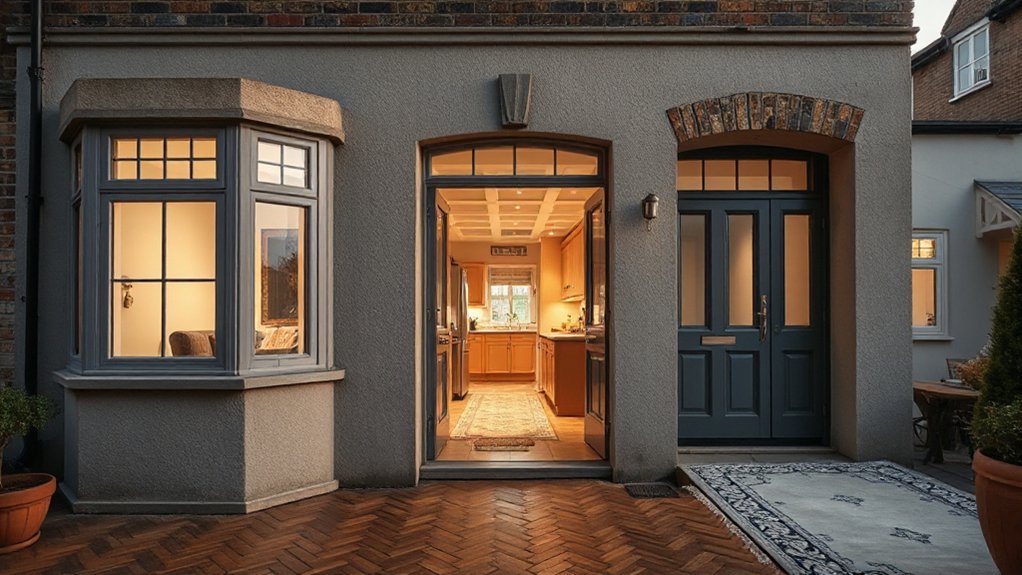
Many original elements anchor the house’s character and value, so start by identifying features with enduring structural and aesthetic significance—timber framing, reveal plasterwork, artful brickwork, and period-appropriate joinery.
You assess load paths, sash-and-frame geometry, and cornice lines to determine retention priority.
Prioritize assessable elements that support period authenticity without compromising safety: timber lintels, decorative plaster between stud bays, and brick bond patterns visible on facades.
Document joinery profiles, mortise-and-tenon connections, and hardware typologies to guide restoration versus replacement.
When upgrading services, preserve vintage fixtures where feasible, integrating discreet modern runs to maintain legibility of original fabric.
Record findings for future maintenance, ensuring that any intervention preserves the measured rhythm of spaces and the inherent period authenticity while enabling controlled modernization.
Plan Modern Layout Without Sacrificing Character
Balancing modern functionality with preserved character begins with a disciplined spatial strategy. You align circulation routes to minimize impact on heritage details while maximizing flexible zones.
Openness is achieved through measured open plan living, where primary spaces retain quoined edges and original ceiling heights, preventing a sense of over-simplification.
Use a logical 2-zone approach: public entertaining and private retreat, connected by a discreet transitional threshold to sustain proportion and acoustic discipline.
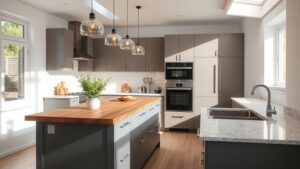
Introduce a Modern kitchen design that respects material grain, using muted palette, integrated storage, and concealed services to preserve façade rhythm.
Structural clarity guides partitioning: light timber tracery or glass screens can define zones without eroding scale.
Documented sightlines safeguard architectural fabric, ensuring contemporary practicality remains subordinate to character.
Boost Energy Without Altering the Look and Feel
Implement energy gains through facade upgrades that respect the era’s aesthetic—think high-performance, slim-profile insulation and selective glazing that preserve external rhythm and proportions.
Combine these with hidden insulation strategies integrated into cavities and around reveals to minimize visual impact while maximizing thermal performance.
Assess each option for building physics, ensuring detailing is airtight, moisture-safe, and compatible with existing construction without altering the house’s perceived character.
Energy-Efficient Facade Upgrades
Could you upgrade a 1930s semi-detached façade without changing its character? Yes, via energy-efficient facade upgrades that respect aesthetics while improving performance.
Begin with high-performance, retrofitted cladding systems featuring continuous insulation, airtight membranes, and concealed drainage to minimize thermal bridges.
Use a slim-profile, color-matched render or brick slip that preserves texture and massing.
Integrate operable shading devices and low-reflectance openings to regulate solar gains without altering rhythm or glazing proportion.
Include discreet installation of solar panels on suitable roofs or terraces, ensuring mounting systems are integrated with rainwater harvesting strategies where feasible.
Specify thermal breaks at interfaces, guarantee compliant air leakage targets, and verify wind-load compatibility.
Monitor performance with post-occupancy testing to confirm durable, low-energy gains without visual compromise.
Hidden Insulation Solutions
Hidden insulation solutions let you boost thermal performance without altering appearance. You’ll evaluate methods that preserve period aesthetics while delivering measurable R-values and surface heat flux reductions. Focus on targeted integration: attic insulation strategies that minimize visual impact, using high-performance batts, mineral wool, or rigid boards in loft hatches and access routes.
Consider cavity filling where wall voids remain structurally accessible through chase openings or existing gleaned cavities. Select low-dust, low-expansion injections that avoid wall damage. Assess air leakage consequences via blower-door testing, then combine with air barriers at junctions to prevent convective heat loss.
Documentation should specify thermal bridging reduction, moisture management, and compliance with local building codes. Prioritize non-disruptive installation, maintain original detailing, and verify performance with post-install verification.
Choose Finishes That Complement Period Details
To harmonise a 1930s semi with its era-appropriate character, select finishes that echo period-appropriate details while prioritising durability and simplicity. You’ll curate surface treatments and materials that read as authentic yet modern, aligning with architecturally legible cues such as reeded wood, mid-tone oak, and matte ceramic tile.
Employ restrained palettes that reflect natural light and plaster textures, avoiding anachronistic gloss.
Consider period accents in trim profiles, coving, and architraves, ensuring profiles remain true to scale and proportion.
Choose Vintage fixtures that respect proportions, metal finishes, and patina, matching bronze or nickel tones to hardware, lighting, and plumbing as a cohesive set.
Document finish schedules precisely to support long-term maintenance and colour stability in living spaces and service zones.
Upgrade Insulation, Draughtproofing, and Windows
Upgrading insulation, draughtproofing, and windows is a critical step for a 1930s semi, delivering tangible reductions in heat loss and improved occupancy comfort without altering the building’s character.
You assess thermal bridges, U-values, and airtightness first, prioritising continuous insulation at concealed cavities and around floor-perimeter joints.
Implement draught proofing techniques to low-friction door bottoms, sash seals, and letterplates, targeting liveable space comfort without compromising ventilation strategy.
Choose window upgrade options that balance historic appearance with performance: secondary glazing where retention of original sash is preferred, or thermally broken, double-glazed units for enhanced heat retention and reduced condensation.
Guarantee accurate commissioning tests, monitoring air leakage rates, and validating post-installation improvements against design targets.
Document changeovers for future maintenance and regulatory compliance.
Layer Lighting for Atmosphere and Efficiency
Layer lighting shapes both ambiance and energy performance in a 1930s semi, balancing task illumination with soft-waded atmospherics to reduce glare and heat loss. You implement a layered approach: ambient glow from diffuse ceiling or wall fixtures, complemented by task layering at work zones to maintain visual acuity.
Use high-CRI LEDs with selectable lumen output and color temperature aligned to room function, avoiding extreme contrasts. Dim zones strategically to preserve mood while maintaining safety for stairs and entrances.
Employ controls that synchronize with daylight, occupancy, and shading, reducing baseline consumption. Specify luminaires with glare control, low uplight, and efficient chassis.
Document lumens per area, watts per square meter, and maintenance schedules to sustain performance over decades.
Smart Storage: Built-Ins for Everyday Living
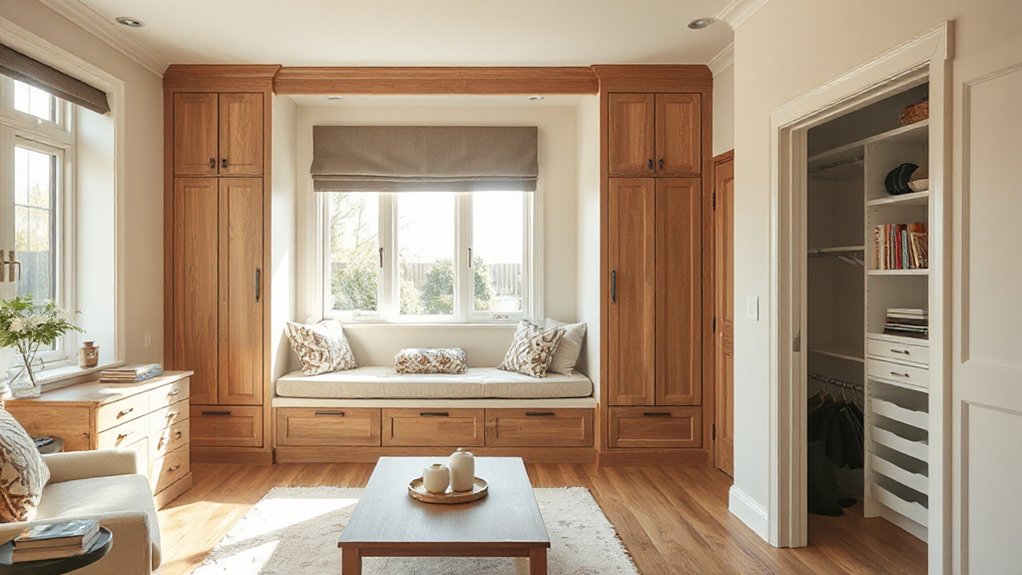
You’ll evaluate built-in nooks and concealed storage tricks as core components of a practical, space-efficient scheme for a 1930s semi.
Concrete integration considerations include load-bearing implications, furniture-grade finishes, and service access for maintenance.
The discussion will align with modular typologies and contemporary fit-out standards to balance heritage aesthetics with disciplined, usable capacity.
Built-In Nooks
Built-in nooks maximize space without consuming floor area, turning underutilised corners and recesses into efficient storage and functional zones. You assess corner geometry, alignment with wall planes, and access ergonomics, ensuring seamless integration with base cabinetry and wall-hung systems.
Precision finishes matter: mitred joints, reinforced shelving, and moisture-rated substrates guarantee long-term performance. In living areas, design niche depths to avoid obstruction of primary circulation while supporting seating, display, or concealed storage.
For provenance, you’ll incorporate period artwork and vintage furniture as contextual anchors, contrasting with streamlined hardware and neutral backdrops.
In kitchens and baths, install pull-out organizers, adjustable hooks, and soft-close mechanisms to enhance daily use. Document assembly tolerances, fire/separation clearances, and durability testing to validate built-in nook longevity.
Hidden Storage Tricks
Hidden storage thrives on precise geometry and modular adaptability. You’ll implement smart-sourcing of space by mapping wall, floor, and datum lines to create flush interfaces that remain invisible until required.
Begin with hidden compartments integrated into bay windows, plinths, and stair risers, then codify access via sprung or magnetic closures to preserve aesthetics.
Prioritize concealed drawers that glide on low-friction runners, ensuring load distribution respects structural soffits and cavity depths.
When designing cabinetry, align carcass tolerances to standard UK sheet sizes to minimize waste and improve installation tolerances.
Consider ventilation and thermal isolation for pantry niches adjacent to appliances, and incorporate removable dividers for variable storage.
Document access points discreetly; label mechanisms rather than spaces to sustain a clean, uninterrupted interior.
Curb Appeal: Exterior Updates That Respect the Era
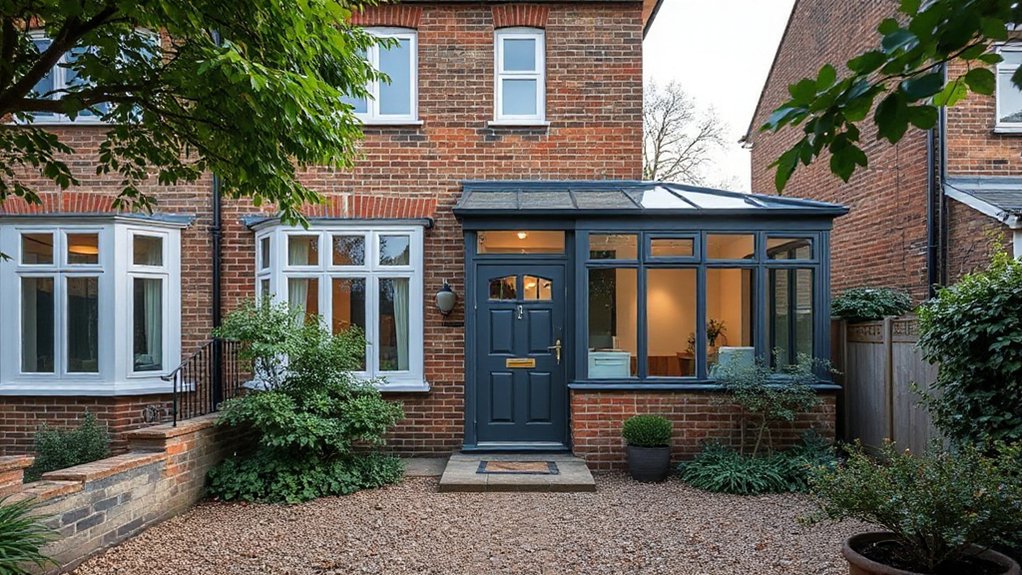
Curb appeal for a 1930s semi-detached house hinges on harmonizing period-appropriate materials with clear sightlines and low-maintenance finishes, so exterior updates enhance architectural legibility without erasing era cues.
You evaluate the façade rhythm, choosing brick, render, or timber cladding that aligns with the original palette, while preserving key features such as slender casement windows and eaves detailing.
Emphasize sightlines from street to entry, applying restrained lighting and consistent plaster or masonry joints to maintain legibility.
For functional upgrades, implement garden landscaping that complements the garden’s geometry without altering the house’s silhouette, and plan a driveway redesign that uses permeable paving, edging, and restrained surfacing to reduce visual mass.
This approach sustains era cues while improving durability, accessibility, and curb-readability.
Frequently Asked Questions
How Can I Balance Modern Tech With Historic Aesthetics?
You balance modern tech with historic aesthetics by integrating discreet Smart lighting and Automated security that complement original features, using programmable scenes, low-profile controls, and wired-into-period circuits to preserve authenticity while delivering contemporary usability.
What Hidden Costs Come With Period-Accurate Upgrades?
Hidden renovation expenses arise from period accuracy challenges, including sourcing authentic materials and compliant retrofits. You’ll encounter premium rates, extended lead times, and specialized labor, requiring careful budgeting, documentation, and risk assessment to maintain architectural integrity without overrun.
Which Builders Are Best for Preserving Original Features?
Symmetry arcs, guiding you: look for builders skilled in restoration techniques and handling preservation challenges. You’ll evaluate bids, insist on period-accurate methods, and choose firms that document detailing, moisture control, and compatible materials to protect original features.
How Do I Fund Energy-Efficient Upgrades for a 1930S Home?
You can access grant programs and financing options to fund energy-efficient upgrades for your 1930s home, evaluating eligibility, terms, and payback periods, then prioritize measures with highest energy savings while aligning with local incentives and structural constraints.
Can Contemporary Furniture Coexist With Vintage Architectural Details?
Yes, contemporary furniture can coexist with vintage architectural details, as you balance proportions and materials. Vintage charm informs palette and textures, while furniture blending relies on intermediate silhouettes, muted tones, and precise measurements to preserve hierarchy and acoustic clarity.
Conclusion
You’ve explored a balanced path: modern comfort without erasing 1930s character. If you test a theory about “modern efficiency equals personal comfort,” the evidence supports it when upgrades are discreet, respects structure, and preserves key details. When you verify airtightness and thermal bridging with precise diagnostics, you’ll see measurable gains—lower energy use, steadier temps, and preserved charm. The result isn’t just a house rejuvenation; it’s a rigorous, emotionally resonant dialogue between past and present.