You probably don’t realize how much empty air defines a room’s scale, and a few deliberate moves can stretch that feeling without a single wall coming down. You’ll optimize flow with slim, multifunctional pieces and hidden storage, catch daylight with clean windows and mirrors, and tease zones with color and light rather than partitions. If you apply a tested sequence, you’ll notice the space breathe—yet there’s more to refine as you plan, test, and avoid common tiny-flat traps.
Visualize Extra Space Quickly in a Tiny Flat
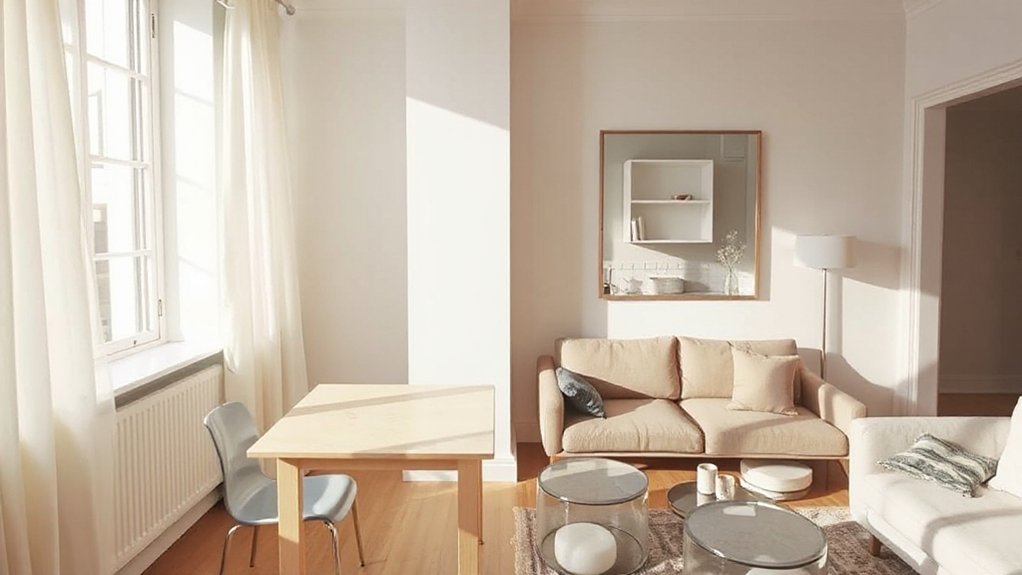
If you want instant breathing room, start by visualizing the space you already have. You’ll map your daily flows first: where you sit, eat, and work, then identify wasted gaps.
Picture walls opening, light circulating, furniture shifting without moving a single appliance. Begin with deliberate furniture arrangement to reveal clear sightlines and functional zones. Place sofas and chairs to frame views, not block them, and keep pathways unclustered.
Choose window treatments that maximize light when open and soften shadows when needed, swapping heavy drapes for airy shades if possible. Remove one redundant item for every new piece you consider, then test the layout for at least a day.
Your tiny flat gains breathing room as purpose guides placement, not clutter.
Carve Open Layouts Without Walls
Open layouts don’t need walls to define zones; they rely on lines, sight, and flow. You can carve open layouts without walls by rethinking furniture placement, using partial screen elements, and choosing transparent or low-profile dividers.
Start with a central hub—kitchen, living, and dining—so each zone shares sightlines, not barriers. Use color, textures, and lighting to cue shifts instead of walls.
Opt for an open plan design mindset: remove nonload-bearing partitions, or substitute them with sleek cabinetry or a moving screen that disappears when needed. Prioritize scalable tones and consistent finishes to unify spaces.
When you plan wall removal, evaluate structure, moisture paths, and electrical runs. Preserve storage by embedding cabinets into boundaries rather than enclosing rooms, keeping openness intact without sacrificing function.
Illuminate to Expand Small Spaces
Let there be light—that’s your quickest expansion trick. You cast a brighter zone, making every corner feel closer to air. Prioritize natural light: keep windows clean, choose sheer treatments, and place mirrors opposite openings to bounce sunshine across rooms.
Daylight is your layout amplifier, so position work zones near windows and use translucent screens instead of solid barriers to preserve openness. Ceiling height matters: reflect it with vertical stripes, tall lamps, and shelves that draw the eye upward, creating a sense of greater space.
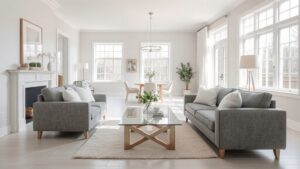
Choose light, neutral tones for walls and ceilings to extend brightness without competing with focal pieces. Keep clutter low and sightlines clear; every unbroken line reads larger.
Finally, dimmers give you flexible, daytime-wide, nighttime-cozy—without sacrificing perceived volume.
Pale Walls With Strategic Color Accents
Pale walls keep a room feeling airy, but a few well-chosen color accents pull in personality and depth. You’ll use color strategically, not loudly, to define zones and guide the eye toward focal points.
Start with color psychology in mind: a muted blue for calm workflows, a warm terracotta for inviting corners, or a sage for grounding. Apply these hues sparingly—think a single accent wall, artwork, cushions, or a throw—so contrast remains deliberate, not chaotic.
Pair bold accents with pale surfaces to preserve space perception and rhythm. Consider wall textures to add depth without bulk: matte finishes feel expansive, while a subtle plaster or linen effect adds tactility that reads as sophisticated rather than busier.
Balance is key: restraint creates perceptual space.
Mirrors for Instant Width and Light
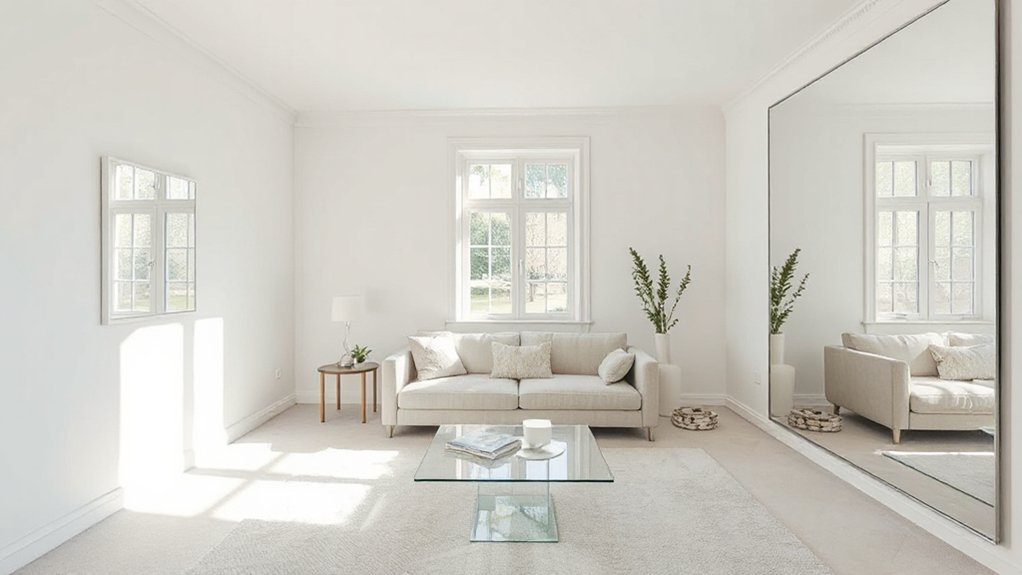
Position mirrors to multiply width: place one large or two aligned vertically to extend the sightline rather than crowd the room.
Reflect more light by facing windows or lamps, and position mirrors to bounce brightness across walls.
Use strategic placements—think corner angles and along flight paths—to create instant openness and a brighter mood.
Mirror Placement Tricks
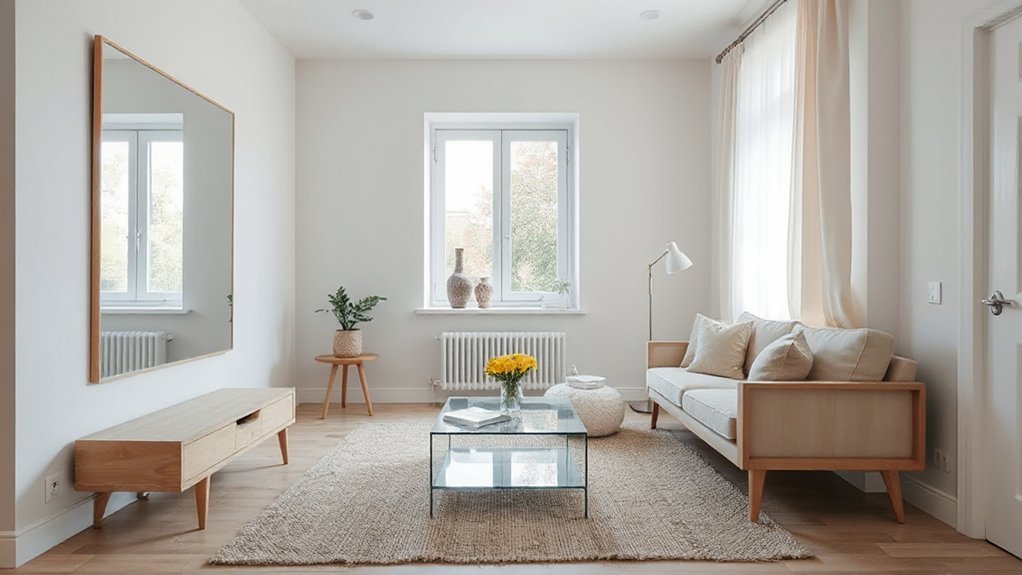
Mirrors instantly widen a room and flood it with light when you place them strategically. Position tall, slim mirrors opposite windows to double natural light, making the space feel airy and expansive.
Use furniture orientation to create clean sightlines; reflect open areas rather than clutter, so pathways stay obvious and calm. If you can, mount a mirror at eye level across from a seating zone to visually extend the lounge without adding bulk.
Keep window treatments simple and reflective when possible—sheer drapes or light blinds can enhance the glow without absorbing it. Leaning mirrors can add dimension along narrow walls, but secure them for safety.
Avoid overloading walls; a single statement piece can amplify width with precision.
Light Enhancement Effects
Light bounces off glass and glossy surfaces, turning corners into catch-alls of brightness. You’ll use mirrors to amplify natural sunlight, widening the illusion of space without structural changes.
Place a tall mirror opposite a window to double the daylight and visually extend ceiling height, making rooms feel airy rather than cramped. In hallways, lean or wall-mount a slim mirror along the length to create a sense of continuity and flow.
Consider a pair of facing mirrors to multiply reflections, or a high-mounted mirror to balance lower sightlines. Avoid heavy frames that truncate light; sleek, frameless options keep the focus on glow.
Remember: brighter, more reflective surfaces boost perceived depth, so curate light paths for steady, even illumination.
Multi-Functional Furniture That Frees Floor Space
Multi-functional furniture isn’t just a gimmick—it’s a smart redesign of your square footage. You gain breathing room by choosing pieces that serve more than one job.
Look for convertible beds that tuck away without a fight in the morning, freeing floor space for daily tasks. A sofa becomes a guest suite and a work surface when needed, without sacrificing comfort.
Modular shelving lets you reconfigure on a whim, so walls feel taller and clutter stays contained. Opt for compact, sturdy designs with clean lines that don’t shout for attention.
Put storage where you already stand or sit: under beds, at sofa ends, or behind doors. With intention, you transform tight corners into versatile zones you actually use.
Zone Your Space Without Heavy Renovations
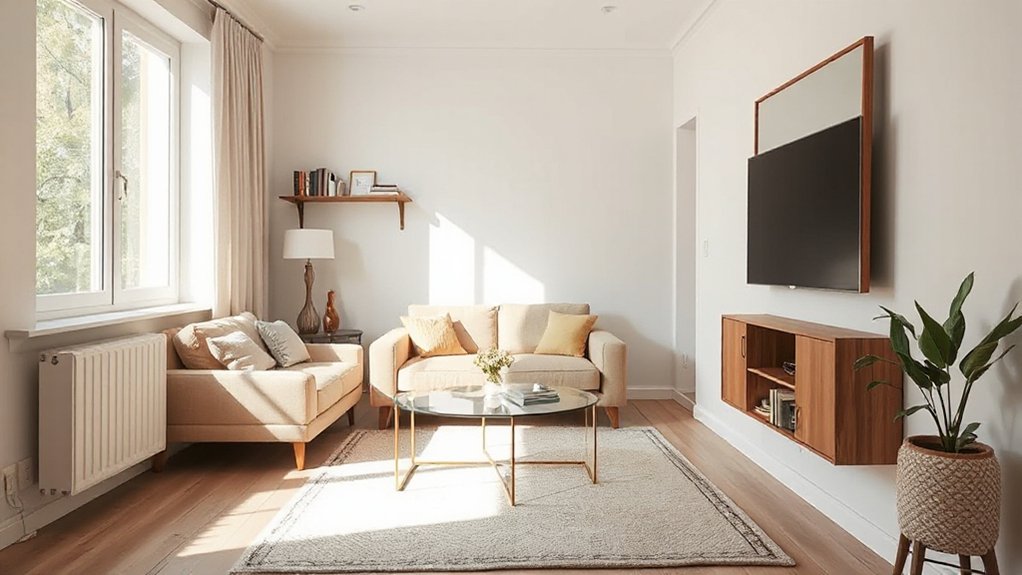
You can zone your space without heavy renovations by treating each area like a purse of function you can rearrange. Start with a clear boundary idea: a rug, a screen, or a sofa orientation that signals different purposes. Use furniture arrangement to create distinct zones for work, dining, and lounging without closing off sightlines.
Keep heights and textures varied to cue progressions, not barriers. A tall plant or a light screen subtly separates a reading nook from a workspace, preserving flow. Create privacy zones with curtains or sliding panels when you need focus or rest, then open them to reclaim air and light.
Let color, lighting, and accents reinforce purpose, so the flat feels intentional, efficient, and expansive.
Hidden Storage That Lowers Clutter and Grows Feel
Hidden storage isn’t a gimmick—it’s a plan you can implement today. You’ll stack smart solutions that hide clutter while boosting usable space, every square inch doing double duty.
Start with compact, concealed options and let the space breathe as your belongings become purposefully organized.
Hidden Storage Ideas
Hidden storage isn’t just about tucking things away; it’s about reclaiming space without sacrificing style. You’ll access room by choosing pieces that hide everyday clutter in plain sight. Think hidden compartments integrated into benches, beds, and coffee tables, so surfaces stay clean and purposeful.
Concealed drawers in a hallway console or under a sofa armrest offer quick, unseen stashes for keys, chargers, and seasonal décor. Use stair tucks or under-stair cubbies to transform dead space into usable storage without visual noise.
Opt for furniture with integrated lift lids and magnetic catches to keep lids controlled and smooth. Pair these strategies with clear, labeled bins inside drawers to keep items accessible yet out of sight.
The result: calmer spaces that feel larger, calmer, and more intentional.
Clutter-Slaying Solutions
Clear the visual noise by turning every inch into smart storage, so clutter doesn’t outpace your space. You’ll transform chaos into cohesion by choosing furniture arrangement that maximizes surface area and flow, not footprint.
Prioritize pieces with hidden compartments, lift-top ottomans, and beds with drawers to reclaim floor space. Use color psychology to cue calm: cool tones recede, warm accents energize without crowding.
Store Dewy clutter behind closed doors, and keep a single, visible focal point to anchor the eye. Label bins subtly to reduce rummaging, and rotate display items seasonally so surfaces stay clean.
Pair vertical solutions with low-profile seating to preserve airiness. With intentional placement and thoughtful concealment, smaller rooms feel organized, breathable, and unexpectedly generous.
Quick Decor Moves for Airier Rooms on a Budget
To make rooms feel airier on a budget, start with lightweight, visible changes that add illusion and ease: swap heavy drapes for sheer fabrics, and mount curtains higher to draw the eye upward.
Then trim clutter and redefine zones with slim, multi-use furniture, so air can move freely.
Choose cool, pale tones to expand perceived space, guided by color psychology, and keep accents sparing so contrast doesn’t overwhelm.
Apply Feng shui principles by placing essentials away from doors and corners, letting traffic flow feel uninterrupted.
Mirrors go where they reflect light without doubling clutter, boosting brightness.
Use translucent storage and open shelving to reveal space rather than hide it.
Finally, layer lighting: diffuse ceiling light, plus task lamps, to cultivate depth and airiness.
Plan, Test, and Avoid Common Tiny-Flat Traps
Plan your tiny-flat moves with intention: map the space, test each idea, and spot traps before they trap you. You’ll sketch a flow first, then live with scale in mind.
Test furniture arrangements in 3D—walk the path, note gaps, and avoid obstructed corners that steal light or movement. Prioritize essential pieces, then rotate or swap to reveal new sightlines without chaos.
Use color psychology to cue calm, heighten focus, or visually extend walls; keep palettes coherent to prevent jarring breaks that shrink spaces.
Anticipate conflicts: a bulky sofa can dominate a room you intended to feel airy. Measure, compare, adjust.
Document outcomes, discard dead ends, and refine until movements feel effortless, not forced. Your tiny-flat becomes a selective stage—clear, purposeful, larger in effect.
Frequently Asked Questions
How Can I Make Ceilings Feel Higher With Color and Fixtures?
Yes, you can: choose pale ceiling painting to reflect light and install slim, low-profile fixtures; opt for recessed or hidden lighting, and pick cool whites. This strategy visually raises ceilings, while thoughtful fixture selection enhances airy, cohesive vibes.
What Low-Cost Glare-Free Lighting Tricks Widen a Room?
Did you know studies show rooms feel 20% larger with strategic lighting? You can widen a space with low-cost glare-free options. Mirror placement reflects natural light, expanding depth, while soft, diffuse fixtures keep glare down and ambiance high.
Can Rugs Change the Perceived Size of a Tiny Flat?
Yes, rugs can alter perception, especially with strategic furniture arrangement and color contrast. You’ll widen a room by floating pieces, avoiding clutter, and using light, contrasting mats under zones; this creates depth, making your tiny flat feel noticeably larger.
Do Vertical Storage Ideas Truly Free Floor Space?
Yes—vertical storage ideas truly free floor space. You’ll love vertical shelves and smart storage hacks that tuck away clutter, pull your gaze upward, and give your flat a lighter, roomier feel without costly changes.
How Can Plants Improve Openness Without Crowding Rooms?
Plants boost openness by guiding sightlines and pairing scale with room flow. Use strategic plant placement and greenery types that hover above eye level, avoiding clutter. Choose tall, slim varieties, and place positives near focal points for breathable space.
Conclusion
You can make a tiny flat feel expansively livable with smart, flexible choices. Visualize layouts, shed walls in spirit, and flood rooms with light through pale walls, mirrors, and layered lamps. Embrace hidden storage and slim furniture to keep surfaces calm. Quick decor shifts—color pops, translucent screens, and zone cues—elicit macro-scale effects. Fun statistic: homes with well-lit spaces feel up to 3 times larger. Plan, test, and keep clutter off the radar for a breezier, brighter home.