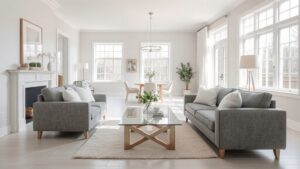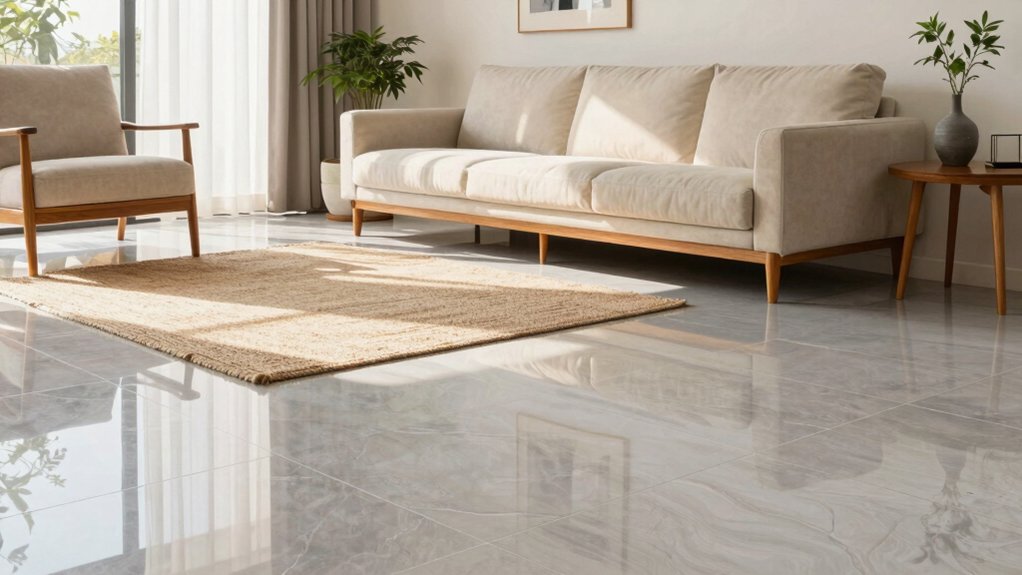
To decorate a living room with tile floors, start by choosing patterns that suit your space—large-format tiles for open areas, or mosaics for intimate corners—so sightlines stay clean. Pair neutral rugs with coordinating paints, echoing the base hue across textiles. Balance scale with furniture that respects the room’s proportions, and use rugs to define zones. Add cozy textures and lush greenery, then layer accessories that complement the tile. If you keep exploring, you’ll open even more styling ideas.
Choosing Tile Patterns to Suit Your Space
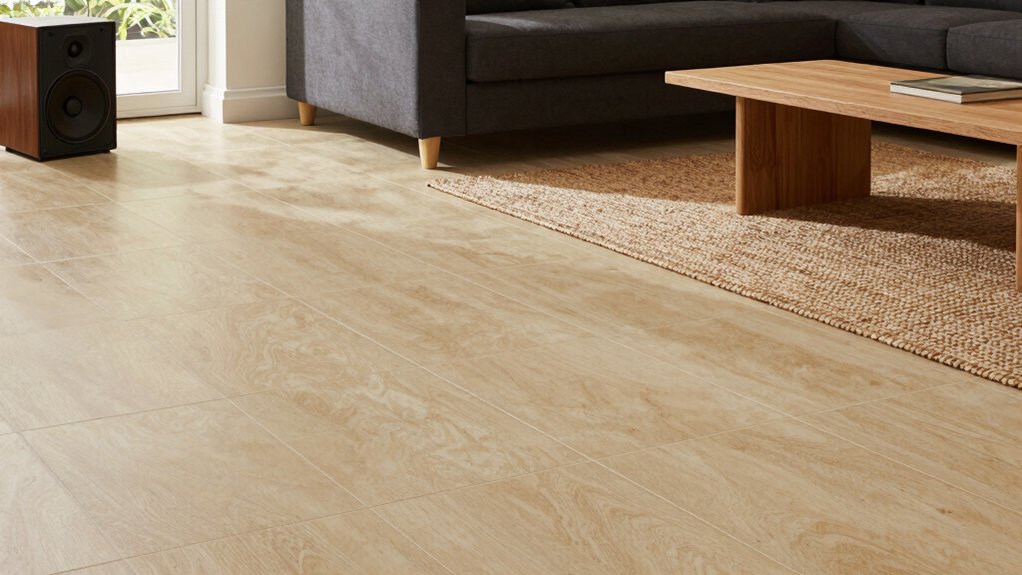
Choosing tile patterns that fit your space starts with scale and flow. You evaluate room dimensions, doorways, and pathways, then pick pattern options that emphasize movement without overpowering furniture. Large-format tiles suit open layouts, while smaller mosaics add texture in intimate nooks.
Diagonal layouts create dynamism, but might complicate cutting around columns; keep sightlines clean by aligning grout lines with doorways. Consider your focal point—fireplace, window seating, or architectural features—and use pattern to guide attention there.
Consistency matters: repeat a single motif or alternate two complementary patterns for rhythm. Plan grout colors early; a closely matched grout blends edges, a lighter shade accents gridlines. You’ll achieve cohesion by balancing pattern scale with room proportions and by previewing layouts before setting.
Pairing Paints and Rugs for Cohesive Style
Pairing paints and rugs creates the foundation for a cohesive living room, tying tile, furniture, and light into a single mood. You’ll want color coordination that ties your palette together without shouting.
Start with a neutral rug in a mid-tone to anchor the space, then select wall paint and a secondary rug that echo or complement that base hue. An accent wall can amplify the theme without clutter, using a shade that’s slightly richer or cooler than the main walls.
Consider how tile tones interact with textiles; cool grays pair with slate or blue rugs, while warm creams harmonize with taupe or terracotta accents. Keep metallics restrained to avoid competing with the rug’s pattern.
Subtle contrast and intentional repetition create a balanced, inviting room.
Selecting Furniture That Balances Scale
When your living room centers on tile floors, furniture should balance proportion with the room’s openness: choose pieces that fit the scale of the space without overwhelming it. Start with a width-to-height ratio that respects sightlines; avoid oversized sofas in small rooms and compact benches in expansive halls.
Anchor the seating with a mindful arrangement that preserves flow, letting negative space breathe between pieces. Use area rugs to ground groups, define conversation zones, and add warmth without adding bulk. Incorporate wall art sparingly, selecting pieces that echo the room’s palette and won’t visually crowd the walls.
Choose low-profile silhouettes for coffee tables and consoles, and let vertical elements rise without crowding. Prioritize cohesion, restraint, and a balanced, airy feel.
Adding Cozy Touches: Throws, Plants, and Textures
Layer warmth into the room with soft throws, lush plants, and tactile textures that invite longer stays. You pair cozy textiles with the cool tile by layering throws over sofas and chairs, creating focal pockets that read as intimate retreats.
Introduce varied textures—woven baskets, boucle pillows, and a tactile rug—to add depth without clutter. Place a few sturdy, low-height planters to soften edges and bring life to the floor plan.
Choose area rugs that define conversation zones and cushion underfoot, balancing scale without overpowering the tile. Add wall art that echoes color and mood, aligning with the room’s palette while preserving clean sightlines.
Keep arrangements intentional, allowing negative space to balance warmth and modernity.
Layering Accessories to Enhance Tile as a Backdrop
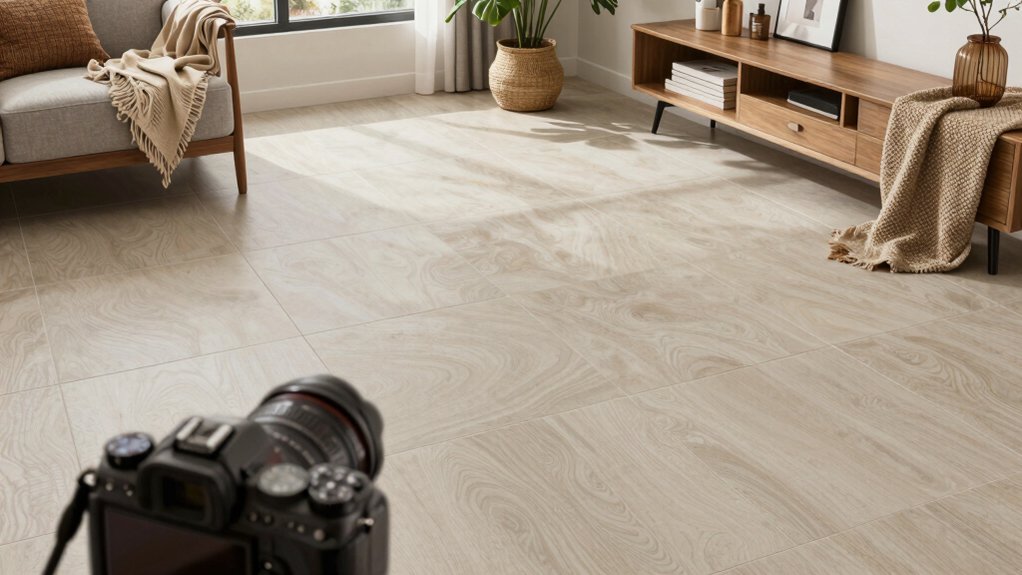
The tile backdrop invites accessories to shine, so choose pieces that complement its color and texture rather than compete with it. Layering works best when you treat tile as a quiet stage: select decorative borders or sculptural objects that echo its hues or pattern without overpowering.
Place textiles, like a rug or curtains, to pick up subtle undertones, then add a few statement pieces that contrast slightly in shape or metal finish. Be mindful of contrasting grout; it can frame your accents or pull attention away from the surface.
Keep the palette cohesive, letting tiles dictate the rhythm while accessories provide cadence. Aim for balance: a curated handful of pieces creates a refined, harmonious depth without visual noise.
Conclusion
You’ve set the scene with tile that speaks softly yet confidently. Keep palettes cohesive, letting paint and rugs echo the tile’s mood, not compete with it. Choose furniture that fits the room’s rhythm, balancing scale and flow. Add textures—throws, plants, woven accents—that invite touch without clutter. Layer accessories thoughtfully, so every piece serves the backdrop rather than overwhelms it. Your living room will feel timeless, immersive, and so stylish you could swear the tiles themselves glow like a supernova.