

To pick a reliable general contractor for home projects, start by defining your goals and budget up front, then verify licenses, insurance, and bonding with clear, measurable criteria. Check credentials, licensing status, and past project performance, plus references with specific questions about on-time delivery and budget adherence. Use a standardized bid checklist, demand line-item costs, and a transparent change-order process. guarantee payment schedules protect you with lien waivers; expect contingency plans for scope shifts. More tips await.
Define Your Project Goals and Budget Up Front

Defining your project goals and budget upfront sets the foundation for a successful build. You map the scope with precision, set measurable milestones, and align owner expectations with contractor capabilities.
Start by articulating the target outcomes and essential features, then attach a strict budget ceiling tied to each element. Define a realistic project timeline that accommodates permits, sequencing, and risk buffers.
Pin down trade-offs early—quality versus speed, flexibility versus fixed scope—and document them in a concise brief. Monitor material costs as a living metric, updating the plan when prices shift.
Establish decision gates for design changes and approvals to avoid scope creep. With clear goals and disciplined budgeting, you retain control, optimize cash flow, and drive accountability across every contractor touchpoint.
Check General Contractor Credentials and License Requirements
To move from goals and budget to reliable delivery, you must verify that your general contractor meets the right credentials and license requirements. You’ll assess state and local licenses, specialty classifications, and active status, excluding any suspensions or delinquencies. Demand verifiable documentation and confirm registration tallies with the issuing agency. Your goal is a clean pass: license number, expiration date, and governing jurisdiction recorded in your file.
Prioritize credential verification that aligns with your project scope, whether residential, commercial, or specialized trades. Conduct background checks focusing on prior project outcomes, disciplinary actions, and litigation history. Tie findings to performance expectations, timelines, and cost controls.
When credentials and license requirements align, you reduce risk, elevate accountability, and empower decisive, data-driven decisions.
Verify Insurance, Bonding, and Safety Records
When you verify insurance, bonding, and safety records, you set a measurable baseline for risk.
Start with confirmation of current liability and worker comp policies, then check bonding compliance and any claims history, all against your project risk metrics.
Finally, review onsite safety records and incident logs to quantify safety performance and guarantee ongoing adherence.
Insurance Verification Steps
Ensuring you work with a contractor who carries solid insurance, bonding, and safety records starts with a straightforward verification process: confirm current general liability and workers’ compensation coverage, request copies of certificates, and check policy dates for continuity.
You’ll evaluate policy limits, sublimits for subcontractors, and endorsements relevant to your project. Verify the insurer’s financial stability and ensure certificates name you as an additional insured where appropriate.
Compare coverage details against project risk, downtime exposure, and total cost impact. Document the claim process, including incident reporting timelines and preferred vendors.
Rigorously certify there are no gaps, exclusions, or retroactive dates. This disciplined approach minimizes risk while maintaining momentum, ensuring you can proceed with confidence and measurable protection.
Bonding Compliance Checks
Bonding compliance is essential for project risk management: you’ll verify that the contractor’s insurance, bonding, and safety records align with contract requirements and site standards. You assess coverage limits, bond amounts, and policy ages, then map them to milestones and potential exposure.
You demand clear proof of bonding compliance and current contractor licensing, confirming licenses match project scope and state classifications. You quantify risk by cross-checking certificates of insurance, endorsements, and lapses, flagging gaps before commitments.
You require simultaneous verification of safety records, incident rates, and corrective actions, ensuring they meet your performance criteria. You document findings, assign owners, and set remediation timelines.
Your decision rests on proven data, not promises, delivering a tighter, safer, and more enforceable contractor selection.
Onsite Safety Records
To verify onsite safety records, you’ll corroborate live insurance, bonding, and safety performance against contract requirements and site standards. You’ll compare incident rates, near-misses, and corrective actions to predefined thresholds, then flag gaps before work proceeds.
Verify active coverage, limits, and applicability for all trades, plus ensure bonding supports project scope and milestones. Assess safety records by reviewing OSHA logs, approved safety programs, and site-specific risk assessments, focusing on training cadence and equipment compliance.
Demand measurable outcomes: days without incidents, completion of safety observations, and closure time for corrective actions. Require transparent reporting and real-time dashboards to track performance against targets.
With this evidence, you’ll constrain risk, protect workers, and maintain execution momentum for a reliable build. onsite safety, safety records.
Review Past Projects and Public Reputation Sources

You should assess Past Work Recognition and check Reputation Verification Methods to gauge quality metrics, speed, and consistency.
Look for Public Project Records to confirm project scope, timelines, and budgets against claimed results.
This starts the conversation on how solid past performance and public signals translate into reliable contractor performance.
Past Work Recognition
What do past projects say about a general contractor? You’ll measure quality through tangible results: on-time delivery, budget adherence, and defect rates. Review a portfolio that shows completed homes, renovations, and commercial work with before/after metrics. Look for consistency across projects, not isolated wins.
Past awards signal peer and industry recognition, but prioritize those tied to similar scopes and markets you serve. Client testimonials provide direct insight into responsiveness, communication, and problem-solving under pressure. Quantify satisfaction through net promoter style signals, repeat business, and referral rates.
Compare project sizes, complexity, and timelines to your plans. Use public reputation sources to triangulate reliability, then corroborate with a few reference calls to confirm what the numbers imply in real life.
Reputation Verification Methods
Reviewing past projects and public reputation sources provides a concrete baseline for a contractor’s reliability. You’ll verify outcome quality, timeliness, and budget adherence by inspecting project galleries, warranties, and post-completion fixes.
Track metrics like on-time completion rate, change-order frequency, and defect resolution time to quantify performance. Cross-check client references for consistency, and probe for recurring issues that flag risk.
Leverage reputation management practices by consolidating feedback across platforms, identifying patterns, and requesting documented improvements when needed. Compare contractor rankings on trusted directories and industry associations, noting response times and conflict handling.
Examine online reviews for sentiment trends, volume, and verification status—discern genuine feedback from manufactured praise. Prioritize firms with transparent processes, proactive communication, and verified positive outcomes to minimize surprises.
Public Project Records
Public project records provide a factual baseline for evaluating a general contractor’s track record. You’ll assess completed work, scope accuracy, on-time delivery, and cost adherence across publicly available filings. Look for project lists, bid histories, change orders, and final inspection outcomes to quantify performance.
Compare total project values, duration variance, and defect rates to industry benchmarks, then chart outcomes against peers. Public project records also reveal recurring issues, such as safety violations or lien activity, signaling risk exposure.
Pair this with contractor transparency: demand accessible documentation, standard reporting formats, and open communication channels. A transparent contractor publishes progress updates, budget traces, and RFIs.
When records align with stated capabilities, you gain leverage, predictability, and confidence to proceed.
Verify References With Specific Questions
When you verify references, ask targeted questions that reveal performance and reliability beyond what brochures show. Seek specifics on on-time completion, change-order frequency, and budget adherence.
Ask for comparable projects in your area and request final costs vs. initial estimates, plus any post-completion service results. Track metric-driven responses: average days to complete milestones, defect rates, and communication responsiveness.
Probe for problem resolution: who owned problems, how quickly they were fixed, and whether delays were avoided with proactive planning. Confirm background checks and verify legal documentation to ensure credentials, licenses, insurance, and bond status align with reality.
Finally, call references who weren’t listed, cross-check with public records, and assess overall contractor accountability and consistency under pressure.
Compare Bids Using a Standardized Checklist
Use a standardized bid checklist to compare all proposals side by side, focusing on Standardized Bid Criteria to guarantee apples-to-apples assessments. Break down each bid with a Clear Cost Breakdown and quantify key metrics like scope coverage, schedule, and risk factors.
This Vendor Comparison Metrics approach helps you spot true value, flag gaps, and make a data-driven choice.
Standardized Bid Criteria
To compare bids effectively, use a standardized checklist that captures all critical cost, scope, and schedule elements. You’ll compare line items for labor, materials, contingencies, and overhead, then translate them into measurable metrics you can audit. Use objective thresholds, not vibes, to expose true value and risk.
Align each bid to a fixed scope canvas, so deviations are obvious before signing. Include project financing and legal considerations as evaluative anchors, ensuring funding implications and contract terms are understood upfront.
- Normalize unit costs and allowances to eliminate contractor variance.
- Tie every bid to a fixed timeline with milestones and penalty metrics.
- Directly map scope to deliverables, exclusions, and change protocol.
- Flag financing arrangements and legal terms for risk exposure and compliance.
Clear Cost Breakdown
A clear cost breakdown is essential for fair bid comparisons. You’ll compare bids with a standardized checklist that separates labor, materials, permits, and contingency, so you can pinpoint where each contractor allocates funds.
Track line-item costs against your financial planning goals to ensure math stays tight and expectations stay aligned.
Require unit prices for major material groups and documented labor hours to prevent hidden markups.
Look for scope clarity: removed or added items should trigger revised estimates, not guesswork.
Tie design preferences to cost implications, so deviations are quantified and approved.
Demand a responsive change-order process and a transparent allowance framework.
A precise breakdown empowers you to negotiate from a position of data, not ambiguity, and to lock in value while preserving project quality.
Vendor Comparison Metrics
Vendor comparison metrics provide a consistent framework to evaluate bids side by side. You’ll compare proposals using a standardized checklist to reveal true value, not hype, and you’ll sharpen your decision with hard data on cost estimation and material durability.
1) Cost estimation accuracy: confirm line-item detail, unit prices, contingencies, and the rationale behind each figure.
2) Scope alignment: assure the bid matches your project specs, timelines, and any exclusions.
3) Quality and durability: compare material durability, warranties, and long-term maintenance implications.
4) Vendor reliability: assess schedule risk, past performance, communication speed, and change-order handling.
Use this matrix to discipline your picks, challenge evasions, and drive a higher standard for your project’s outcomes.
Understand Contracts, Warranties, and Change Orders
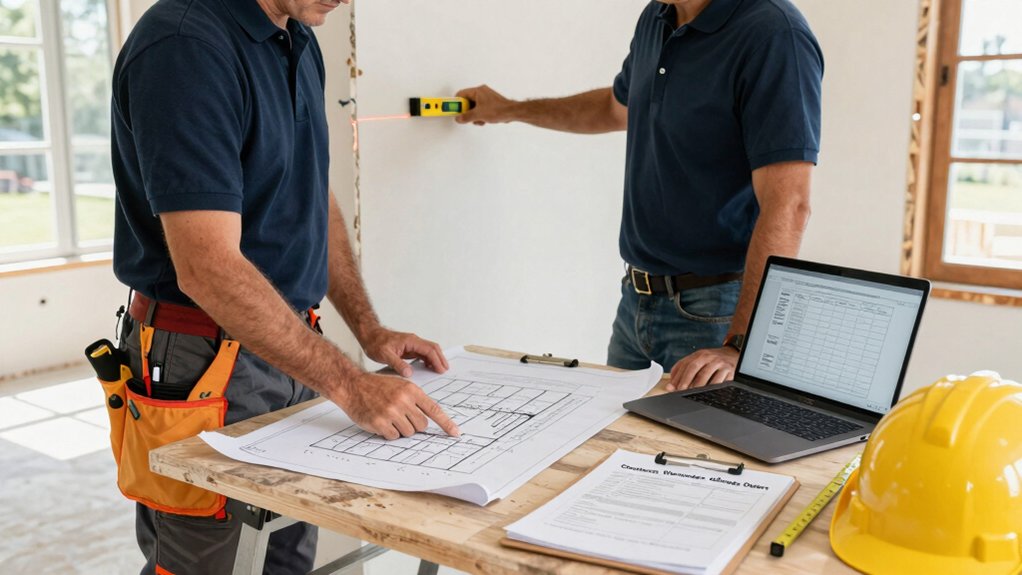
Understanding contracts, warranties, and change orders is essential to avoid cost overruns and disputes. You’ll want clear contract language that defines scope, milestones, payment milestones, and acceptance criteria.
Track change orders meticulously; require written authorization, cost impact, and timeline effects before work proceeds.
Your decision should hinge on a documented warranty policy that specifies coverage periods, what’s included, exclusions, and how to file claims.
Measure risk by the delta between bid assumptions and final work, plus contingency buffers for unexpected issues.
Ensure you can audit schedules and invoices against the contract framework, and demand party responsibilities be explicit for delays, substitutions, and quality standards.
Favor concise, enforceable terms that enable accountability and quick remediation.
Evaluate Communication Style and Availability
Evaluating a contractor’s communication style and availability starts with clear expectations: you should know who you’ll contact, how quickly you’ll hear back, and the cadence of updates. You’ll measure responsiveness as a performance metric, not a feeling.
- Define primary contact and escalation paths for issues.
- Set turnaround targets (same-day, 24 hours) and track adherence.
- Establish update frequency (daily brief, weekly summary) and format.
- Confirm accessibility during critical phases (phone, text, portal).
Key terms to embed: Communication clarity and availability responsiveness. Expect transparent status reports, proactive flagging of risks, and disciplined follow-through. If the contractor can’t meet these benchmarks, you’ll face friction, delays, and budget creep.
Prioritize partners who demonstrate concise, timely, outcome-driven communication that keeps you in control.
Inspect Proposed Teams, Subcontractors, and Supervision
To assess proposed teams, subcontractors, and supervision, review each team member’s roles, qualifications, and track record against project needs. You’ll compare licensing, past performance, safety records, and on-time delivery metrics to establish credibility.
Examine subcontractors for specialized skills, reliability, bonding, and capacity to scale with your project. Demand documented affiliations, insurance, and change-order history to reduce risk.
Require clear escalation paths, defined supervision responsibilities, and consistent reporting cadence. Use quantified expectations: weekly progress updates, milestone adherence, and defect resolution timelines.
Assess supervision strategies, including on-site presence, job-site coordination, and safety compliance. Prioritize teams that demonstrate proactive risk management, transparent communication, and measurable quality controls.
Your goal: maximize accountability, minimize disruption, and guarantee predictable, superior outcomes through rigorous team evaluations.
Judge Project Management Practices and Scheduling
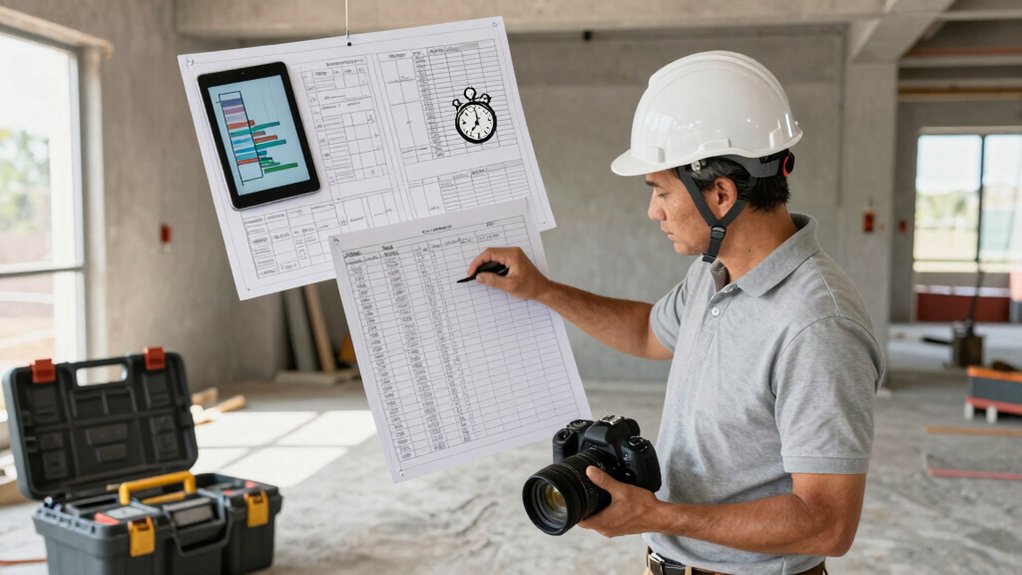
Inspect how the project is managed day-to-day and how schedules are built, tracked, and adjusted. You’ll judge the backbone of project management and scheduling by cadence, accountability, and results. Look for disciplined planning, transparent milestones, and data-driven decisions that keep the budget in check and timelines intact.
- Assess the master plan’s realism, baselined milestones, and contingency buffers.
- Verify daily progress updates, change-control rigor, and variance reporting.
- Confirm scheduling tools, critical-path clarity, and impact analyses on delays.
- Measure delivery velocity, milestone adherence, and recovery time after disruptions.
This is your power bench: deep visibility into metrics, proactive course corrections, and unwavering focus on on-time completion.
Project management and scheduling should feel precise, intentional, and relentlessly efficient.
Assess Quality Controls and Material Choices
You set quality apart by aligning on QA standards and clear material criteria from the start. You’ll compare supplier specs, test results, and compliance marks, then translate them into measurable thresholds.
Use concrete metrics—sampling rates, defect limits, and material durability ratings—to drive decisions and track performance.
Quality Assurance Standards
Quality assurance standards guarantee you get consistent results from your contractor, guiding both process controls and material selection. You’ll measure performance, document benchmarks, and demand accountability at every phase. Focus on rigorous QA plans that tie quality to outcomes, not intentions, so design preferences translate into tangible deliverables.
- Establish testable specifications for materials and workmanship, with pass/fail criteria.
- Implement third‑party inspections at key milestones to verify compliance and authenticity.
- Track metrics like defect rate, rework, and on‑time completion to drive continuous improvement.
- Require traceability of materials, certifications, and supplier performance to protect durability and project integrity.
Material Selection Criteria
Material selection criteria matter most when you translate QA plans into actual performance. You evaluate options by measurable standards: load-bearing capacity, moisture resistance, and lifecycle cost. Require formal testing results, supplier certifications, and third-party verifications before approval.
Compare material durability across climates, maintenance needs, and replacement cycles to avoid hidden expenses. Inspect product data sheets for dimensional stability, thermal performance, and finish integrity; demand consistency across batches. Align choices with project specs for strength, safety, and code compliance.
Assess aesthetic appeal alongside practicality, ensuring visuals meet design intent without compromising performance. Track decisions with a concise criteria matrix, documenting trade-offs and rationale. Your goal: reliable performance, predictable budgets, and superior project outcomes driven by objective, data-based material selection.
Clarify Payment Schedules and Lien Protections
To prevent payment disputes, clearly outline when payments are due and what they cover, including milestone and change-order provisions. You’ll bolster payment clarity and lien security by tying charges to measurable deliverables and approved changes.
- Define a payment schedule with due dates, percentages, and conditions for each milestone.
- Attach all change orders to revised scopes and costs, with written approval before work begins.
- Require lien waivers at each payment stage to protect project-wide liquidity.
- Document final reconciliation and retainage terms to ensure completion and compliance.
Result: predictable cash flow, lower risk of holds, and enforceable protections that keep you in control without delays or ambiguity.
Plan for Risk, Scope Creep, and Contingencies
How will you guard against surprises? You implement disciplined risk planning that translates into measurable actions. Define top risks by project phase, quantify impact, and assign owners with deadlines.
Establish a formal change-control process to cap scope creep, requiring written approvals before any work begins. Build a contingency budget that’s transparent and itemized, tying buffers to mapped risk levels and historical data.
Track variances weekly, using dashboards that show forecast vs. actuals with clear red/green signals. Set milestone-based gates to halt work if risk thresholds are exceeded, forcing corrective plans before cost overruns escalate.
Document assumptions, include warranty reserves, and update plans as realities shift. With contingency budgeting and disciplined risk planning, you maintain control and protect timelines, costs, and quality.
Negotiate a Fair, Transparent Agreement

Negotiate a fair, transparent agreement by defining clear terms up front and aligning them with project milestones. You drive value by tying scope, schedule, and payments to measurable deliverables, not promises.
Prioritize budget planning and contractor interviews to validate assumptions, then lock milestones to actual progress.
- Define scope tightly and attach price to verifiable tasks.
- Establish a payment schedule anchored to finished milestones.
- Include change-order procedures with cost and timeline impact.
- Specify dispute resolution and termination rights with objective criteria.
Track performance with dashboards: forecast vs. actuals, change orders, and milestone completion rates.
Require detailed estimates, line-item budgets, and risk allocations.
Document decision rights and escalation paths.
Favor contracts that emphasize transparency, accountability, and owner control to pressure-test commitments.
Prepare a Decision Checklist and Next Steps
Prepare a decision checklist that translates your contract terms into actionable steps. Start by mapping each clause to a specific deliverable, owner action, and due date.
Define a concise project timeline with milestones, responsible party, and metrics for completion.
Establish a zero-tolerance policy for scope creep: if a change arises, you require written approval, impact assessment, and updated schedule.
Create a decision log capturing tradeoffs, risks, and cost implications, with a daily or weekly review cadence.
Institute structured contractor communication: preferred channels, response time targets, and escalation paths.
Implement daily progress updates, photos, and sign-offs to verify progress against plan.
Conclude with a clear next-steps checklist and a quarterly project-health snapshot to sustain momentum and enforce accountability.
Conclusion
You’ll pick a contractor who matches your goals, budget, and risk tolerance, and you’ll feel it in the numbers: clear timelines, transparent costs, and documented protections. As you verify licenses, insurance, and past performance, coincidences surface—an exact project milestone aligns with a similar, successful completion, a subcontractor name mirrors a reputable reference, and a payment schedule neatly protects you from lien risk. Trust data, trust your checks, and finalize with a concise, ironclad agreement.