
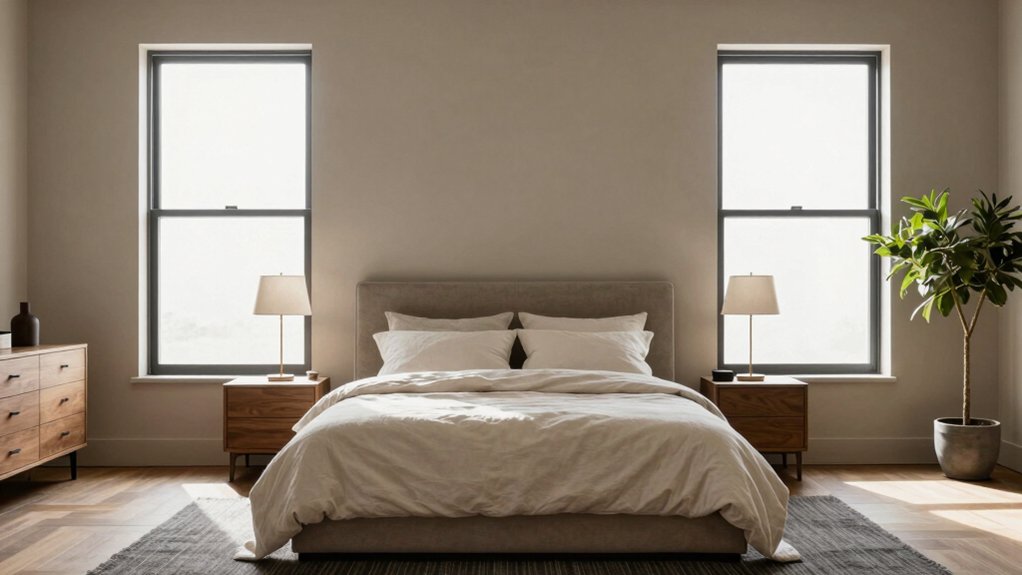
To arrange a bedroom with two windows, start by placing the bed for symmetry or a slight offset to highlight a focal feature, with equal nightstands on both sides for balance. Layer lighting—soft ambient, practical task lamps, and subtle accents—so the space feels calm day and night. Choose a cohesive palette that honors views and uses textures to add depth. Use window treatments that balance light and privacy, then optimize storage and flow. If you want more, you’ll uncover further strategies.
Maximizing Light and Privacy With Two Windows
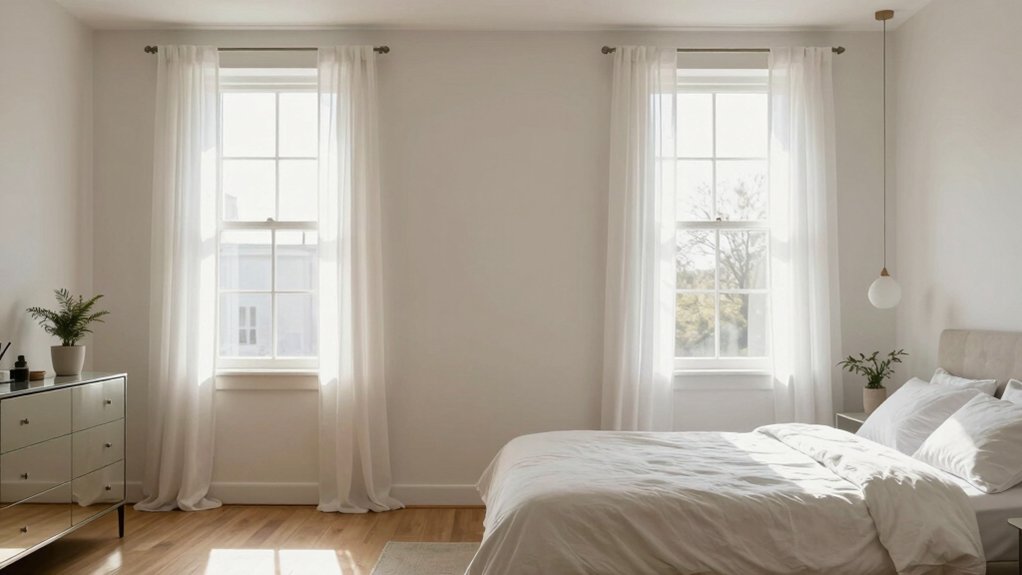
Two windows in a bedroom can be your best source of light and privacy at the same time. You’ll frame morning sun to lift mood, while keeping street glare at bay with thoughtful shade choices.
Start with a balanced layout: position the bed to avoid casting distracting shadows, and place seating where natural light remains soft and inviting.
Prioritize vertical blinds or sheer curtains for flexible control, then layer with blackout drapes for deep rest.
Consider window maintenance practices that keep glare low and panes clear, and schedule regular checks for proper sealing and hardware function.
If a pane ages or you crave more efficiency, window replacement should be evaluated for long-term comfort.
This approach preserves light, privacy, and calm in your space.
Bed Placement Strategies for Dual-Window Layouts
In a dual-window bedroom, let the bed anchor the room’s balance: place it so lighting from both panes flatters you without casting distracting shadows on your face or the TV or desk beyond. Aim for window symmetry, centering the bed between the casings if possible, or offset to align with a focal feature like a dresser or artwork.
Position nightstands to create equal visual weight, and ensure the headboard supports a calm, sleep-friendly zone rather than competing with glare. Consider curtain styles that harmonize with the frame proportions, keeping lengths equal and rods centered.
If space favors, offset the bed slightly to improve traffic flow while preserving balance. Prioritize a clear path, minimal clutter, and a soothing palette.
Lighting Layers: Ambient, Task, and Accent Ideale
Lighting in a dual-window bedroom should be layered and purposeful: ambient light sets a calm baseline, task lighting targets practical zones like reading or desk work, and accent lighting highlights texture and mood without glare. You’ll define each layer to cohere with two windows, maximizing daylight while avoiding contrast hot spots.
Install a soft overhead or coves for even diffusion, then add directional lamps near a window seat to invite quiet moments. For tasks, choose a focused lamp with adjustable brightness; keep color temperature consistent to reduce eye strain.
Accent pieces—wall sconces or LED strips—draw attention to architectural features without overpowering the view. Consider cross ventilation: lighting control near operable windows prevents drafts and balances air flow.
Color and Texture Palettes That Honor Views
Color and texture choices should honor the view while supporting the room’s layered lighting. You pick palettes that reflect outdoor scenery without overwhelming it, balancing cool neutrals with warm accents. Choose mid-tones that won’t compete with daylight shifts, and introduce texture through fabrics, rug fibers, and wall treatments to add depth.
Keep window-adjacent surfaces calm, so decorative window trim stands out as a refined frame rather than a distraction. Subtle patterns—microstripes, heathered weaves—add dimension without pulling focus from the vista.
Coordinate window sill decor with restrained ornaments, plants, or stones that echo exterior elements. Test finishes under both morning and evening light, adjusting contrast and saturation to preserve legibility and serenity.
The result feels cohesive, immersive, and intentionally calm throughout the room.
Window Treatments That Balance Flow and Function
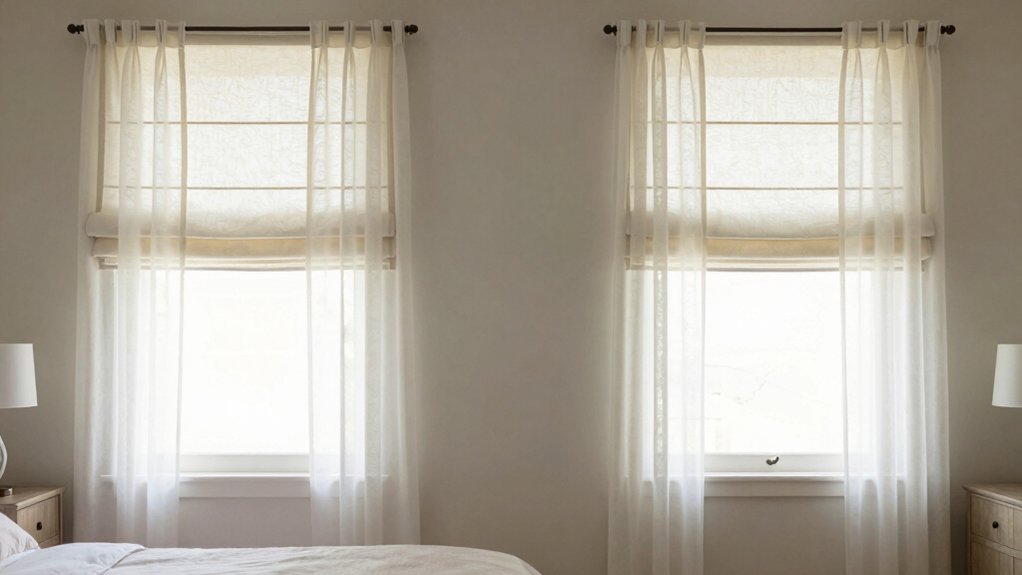
The right window treatments weave flow and function by framing your view while controlling light, privacy, and acoustics with precision.
In a two-window layout, choose drapery styles that mirror each other’s rhythm, so the room reads as a single, cohesive unit. Opt for light-filtering fabrics to maintain daytime brightness, and pair with blackout panels for sleep-ready nights.
Hang curtain hardware at appropriate heights to elongate walls and emphasize symmetry, then layer with a sheer for soft diffusion without sacrificing practicality.
Consider a slim, motorized track for effortless adjustments, ensuring both windows respond to the same angle of light. Keep hardware unobtrusive, balancing form with function to preserve the room’s calm, balanced flow.
Storage Solutions and Furniture Placement for Space
To maximize space in a two-window bedroom, place a compact, neutral bed arrangement centered between or flanked by evenly spaced nightstands that echo the window rhythm. Then anchor the room with a low-profile dresser or storage chest on the wall opposite the windows.
Use vertical storage first—tall, slim profiles optimize floor area without crowding sightlines. Choose multipurpose pieces with hidden compartments to minimize clutter.
Position seating or a small bench at the foot of the bed to extend circulation and provide prep space for outfits.
Integrate decorative wall art thoughtfully to avoid overloading walls; pair it with area rug options that define zones while preserving balance.
Prioritize symmetry, budget-friendly ingenuity, and seamless passages between sleep, storage, and movement.
Styling Tips to Create a Restful, Coordinated Bedroom
A harmonious color palette unifies your space, so choose two or three calm hues and repeat them across walls, bedding, and accents.
Balance window treatments with clean lines and coordinated rods or hardware to keep the room feeling open and serene.
Tie everything together with a cohesive textiles palette—think solid tones, soft patterns, and subtle textures that echo the colors you selected.
Harmonious Color Palette
Pairing a harmonious color palette starts with a calm foundation: choose a dominant neutral that feels serene and versatile, then layer in a restrained, complementary accent hue for depth. You’ll balance warmth and coolness by pairing soft beiges or greiges with a subdued accent—perhaps a muted blue or sage—so every element reads cohesive at a glance.
Apply color thoughtfully: keep large surfaces neutral, inject personality through textiles, art, and small accents. In practice, coordinate decorative window trims with the primary tone to keep lines intentional, and use window sill decor to echo the accent hue without overpowering the space.
Test lighting at different times to ensure the palette remains harmonious from sunrise to night. Maintain restraint, preserve rhythm, and let contrast occur in texture rather than saturation.
Balanced Window Treatments
Balanced window treatments set the tone for a restful, coordinated bedroom by weaving light, privacy, and texture into a single, cohesive statement. You’ll balance proportion for two windows by selecting curtain styles that echo architectural lines and offer easy cadence across the room.
Opt for a mid-weight fabric with a subtle drape to preserve airy daylight while guarding overnight privacy. Mount rods at or slightly above the window frame to visually widen the openings, then dress both windows with synchronized panels for harmony.
Consider a light lining to soften glare without dulling color. Keep window sills clear of clutter, using minimal accents that reflect your palette. The result is calm symmetry, tactile interest, and a refreshed, orderly feel throughout the space.
Cohesive Textiles Palette
To keep a bedroom feeling serene and cohesive, choose a textiles palette that threads color, texture, and pattern through every surface. You’ll balance light and dark shades by selecting two dominant tones and using subtle variations for depth.
Begin with Bedding fabric choices that feel satin-smooth or matte, then layer with tactile textures like linen, wool, or cotton blends.
Introduce Decorative throw pillows in a cohesive motif—repeat a motif across prints or harmonize through a shared color. Keep patterns restrained; scale differs between large- and small-format pieces to avoid visual clash.
Consider a unifying accent color across curtains, bedding, and rugs for coherence.
Finish with a fabric sheen plan that mirrors the room’s hardware, ensuring calm continuity without overstating contrast.
Conclusion
You’ve arranged light, sightlines, and storage into a calm, coherent retreat. With two windows, you’ve balanced brightness and privacy, and every choice—color, texture, and placement—supports rest. An interesting stat helps the scene: homes with well-lit bedrooms report 20% better sleep quality on average. Picture soft morning glow slipping between drapes, framed views at dusk, and a tidy crease-free bed that invites you to linger. Your room now feels both intentional and welcoming.