You can gain usable space in a semi-detached home without major structural work by reconfiguring layouts, prioritizing vertical storage, and choosing modular, multi-use furniture. Optimize flow with smart zoning, hidden compartments, and reflective surfaces to boost brightness. You’ll see how small tweaks—lighting, color, and seamless indoor-outdoor links—can expand perception and function. The core ideas are practical and actionable, but the real payoff hinges on how you implement them in your space. Let’s start with where you actually live.
Assess Your Space: What You Actually Have and How It Behaves
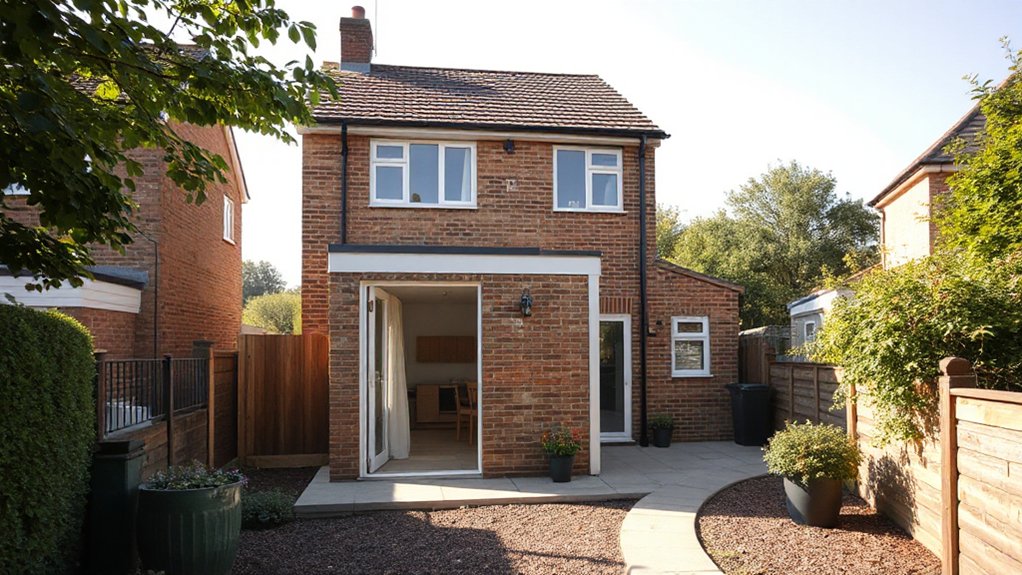
Assess what you actually have and how it behaves. Start by mapping existing footprints, elevations, and tie-ins to the shared wall. Identify load paths, including rafters, beams, and any ceiling joists that transfer weight to the party wall.
Check doors, windows, and floor heights for alignment issues that could curb expansion. Note outdoor landscaping features that affect drainage, soil stability, and footprint enlargement.
Evaluate existing structural reinforcements: any steel ties, masonry ties, or timber brackets already in place, and whether they’re adequate for added loads.
Document utilities, conduit routes, and vent stacks that might constrain new layouts. Confirm building code limits, eave setbacks, and foundation tolerance before planning.
This ensures safe, cost-effective decisions without premature design changes.
Plan Zones: How to Allocate Space for Living, Work, and Circulation
Plan zones by mapping how you’ll use each area and how people move through it. You’ll designate primary workflows: living, work, and circulation, with clear chokepoints minimized.
Sketch adjacencies so that entry points flow logically to shared spaces, while private zones remain insulated. Allocate circulation corridors to minimize cross-traffic and optimize daylight, sightlines, and acoustics.
For work areas, assign built-in storage and electrical load distribution to support devices without cord clutter.
Consider outdoor landscaping as a buffer between public and private zones, shaping passages with minimal disruption to structure.
Plan for structural reinforcement where lightweight partitions alter load paths, making sure existing framing remains compliant.
Confirm zones align with ventilation and humidity control to protect materials and finishes throughout the home.
Document zoning decisions for future renovations or extensions.
Reconfigure Without Renovation: Smart Layout Tweaks That Free Room
Reconfiguring your space without a major renovation starts with smart layout tweaks that free room and improve flow. Start by mapping function zones and trimming overlap: designate clear primary uses, then align furniture to create sightlines that shorten movement paths.
Prioritize anchored items—sofas, beds, desks—around focal walls or windows, avoiding blocking access to doors and closets. Use vertical storage to reclaim floor space, and implement modular seating that can reflow for entertaining or work.
Reconsider room adjacency: convert a pass-through into a defined entry or dining corridor with nonlocking furniture placement. Optimize privacy solutions by spacing seating, adding screens, or repositioning rugs to cue separation without walls.
Guarantee traffic remains intuitive, sightlines stay open, and storage is accessible from each zone.
Light, Air, and Perceived Space: Low-Cost Brightness Strategies
Maximize natural light by locating and widening key sightlines, and use mirrors or reflective surfaces to bounce brightness into interior rooms.
Improve airflow by opening adjacent doors to create cross-ventilation and reduce stagnant air, especially in shared spaces.
Choose bright, low-contrast colors and simple finishes to increase perceived space without adding cost or complexity.
Natural Light Boosts
Natural light is a practical and cost-effective way to make a semi-detached home feel brighter and more spacious. You optimize existing apertures first: photograph and measure window area, then compare to room depth to identify dark zones.
Prioritize glazing upgrades that preserve thermal performance while increasing visible brightness. Use high‑transmission glass with appropriate coatings to minimize glare and heat gain.
Position mirrors and light‑colored surfaces to reflect daylight deeper into living spaces. For daytime comfort, align interior layouts to capitalize on sun paths, and consider skylights or light tubes where structure allows.
Natural ventilation remains compatible with brightness goals, aiding air movement without compromising light.
Exterior design choices, like light‑reflective cladding and strategically placed openings, further boost perceived space while maintaining curb appeal.
Airflow Through Rooms
To improve airflow through rooms without costly changes, start by promoting cross-ventilation: open windows on opposite walls or at least on adjacent walls to create a breeze path, and keep internal doors open or use transoms to let air move freely between spaces.
Implement ventilation strategies that focus on directional flow, not force. Position high–low vents or clerestory openings where feasible to encourage stack effect, and avoid obstacles that block corridors.
Use ceiling fans set to rotate counterclockwise in warm conditions to push air downward and mix volumes for perceived brightness and comfort.
Track performance with simple indicators: door position, window opening symmetry, and observed draughts. Continuous airflow monitoring supports airflow optimization without major structural changes.
Brightness Through Color
Could color really brighten a space without a renovation? Yes, when you deploy color strategically to manipulate light perception.
Begin with wall tones: choose cool, light hues to reflect daylight and reduce shadowed corners. Implement warm accents sparingly to avoid shrinking depth.
Consider color psychology to influence mood and perceived airiness, not just aesthetics.
Paint finishes matter: satin or eggshell offer balanced reflectivity and washability, while avoid high-gloss on large surfaces to prevent glare.
Ceiling whites or pale neutrals lift the perceived ceiling height and brighten upper zones.
Use consistent color shifts to create continuous planes that read as open space.
Coordinate trim and cabinetry with slightly lighter or darker values to guide sightlines.
Test swatches at different times of day to confirm brightness outcomes.
Hidden Storage That Frees Floor Area
Hidden storage can dramatically free floor space in a semi-detached home. You’ll maximize usable area by integrating hidden nooks and storage benches where they’re least disruptive. Prioritize vertical cleverness: build in recessed shelves beside doorways, under stairs, and along hallway alcoves to keep contents out of sight yet accessible.
Opt for lift-up lids on benches in living rooms or entryways to conceal everyday items while preserving seating function. Use multi-purpose fixtures, such as ottomans with internal compartments or stairs with cubbies, to avoid dedicated cavities.
Choose uniform, shallow drawers behind interior panels to reduce protrusions in narrow spaces. Label interiors clearly and maintain weight limits to prevent warping. Regularly audit stored items to prevent clutter accumulation and preserve floor area.
Ceilings, Floors, and Visual Tricks to Expand the Feel of Space
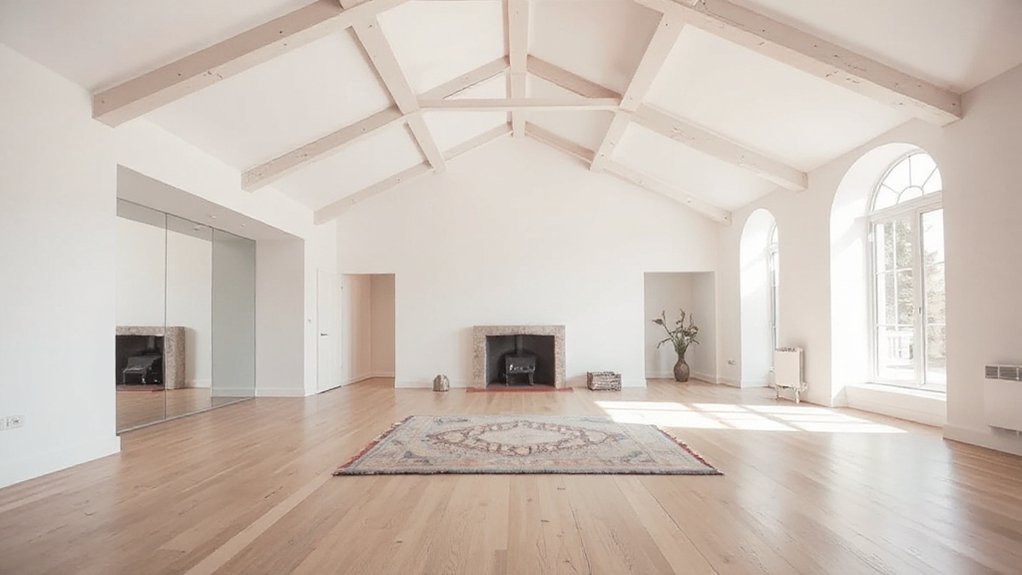
You’ll explore how ceiling height and lines influence perceived space, starting with Perceived Height Tricks that draw the eye upward.
On the floor, aim for light, continuous visuals and subtle flow to reduce visual breaks and widen the room.
We’ll discuss practical, precise methods to apply these effects without sacrificing function.
Ceilings: Perceived Height Tricks
Ceilings can visually expand a space without structural changes, and small adjustments often yield immediate results. You optimize ceiling height perception by lighting, color, and line work rather than actual measurements.
Use bright, diffuse lighting to eliminate shadows that compress vertical cues, and place sconces higher than eye level to draw eyes upward. Choose a single, light-reflective color for ceilings to boost perceived spaciousness without creating stark contrasts.
Avoid heavy crown moldings; if you use trim, keep it minimal and the same color as the ceiling. Consider a subtle vertical pattern or tall, narrow artwork to guide gazes upward.
Install recessed lighting along the perimeter to emphasize ceiling plane, not clutter. These steps enhance ceiling height perception while maintaining functional, everyday living space.
Floors: Light and Flow Visuals
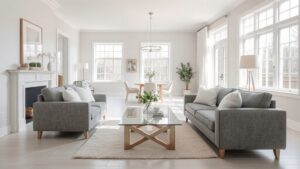
Floors set the rhythm of a space and can visually stretch or compress it based on tone, pattern, and lighting. You choose a light, neutral floor to reflect daylight and create continuity between rooms, minimizing breaks that cut sightlines.
Run courses or planks in the same direction as primary circulation to reinforce flow, avoiding abrupt changes that interrupt scale. Consider a low-contrast border or seamless progression at door thresholds to preserve perceived width.
Matte finishes reduce glare, while subtle texture adds depth without breaking the line of sight. Use artistic murals strategically to draw the eye along a corridor, enlarging perceived space without heavy construction.
Acoustic panels behind seating or on walls dampen noise, preserving calm and contributing to an open, airy feel.
Gentle Extensions and Indoor-Outdoor Transitions
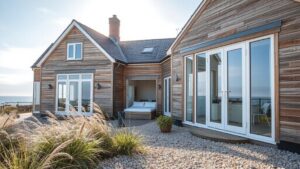
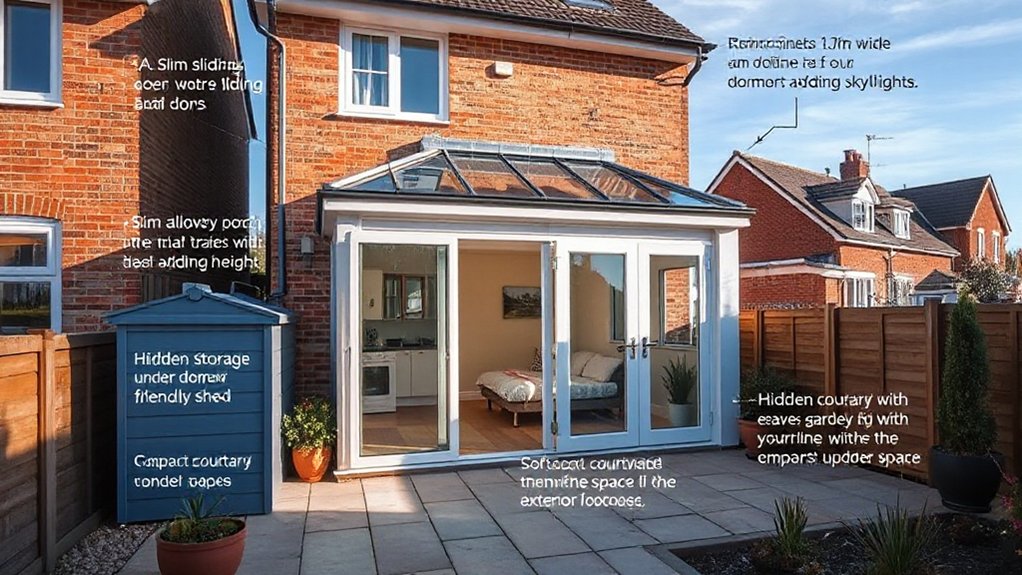
Gentle extensions and smooth indoor-outdoor progressions hinge on preserving the home’s structure while expanding usable space. You’ll plan transitions that read as natural additions, not abrupt ruptures. Start with a restrained footprint, selecting low-profile extensions that mirror existing materials and rooflines.
Prioritize airtight, thermally broken connections to prevent drafts and moisture ingress. Use large, paired glazing to blur boundaries, but maintain shading options for seasonal comfort. Interior finishes should flow seamlessly into exterior zones, enabling quick shift between functions.
Garden integration is reinforced by aligning plantings with rooms and ensuring sightlines stay coherent. For outdoor privacy, employ screens, fencing, or landscaping that shields activity without isolating the home.
Document structural limits and obtain appropriate permits before fabrication.
Multi-Use Furnishings for Daily Variety
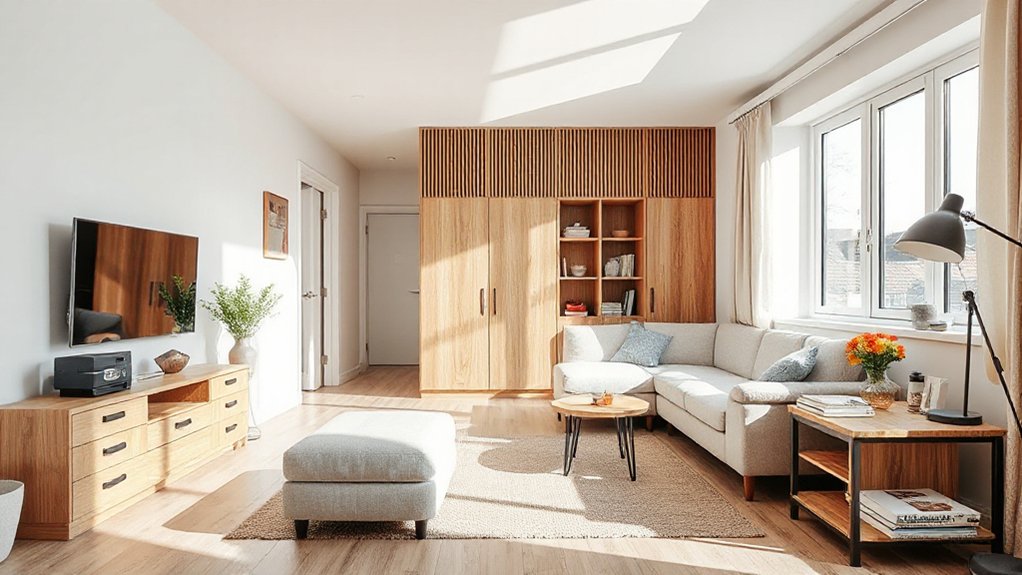
Multi-use furnishings maximize daily versatility by integrating storage, seating, and work surfaces within compact footprints. You’ll select pieces that collapse, rotate, or stack without sacrificing stability.
Favor modular units that pair seamlessly into adaptable layouts, so you can reconfigure rooms for cooking, study, or hosting.
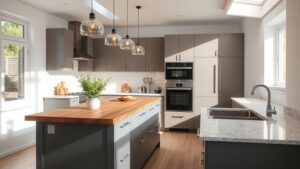
Prioritize hidden storage to reduce clutter while preserving surface area for tasks. Use fold-down desks, extendable tables, and wall-mounted desks that appear as part of cabinetry when not in use.
Choose seating with built-in storage or modular cushions that reassemble into different seating arrangements.
Materials should resist wear and be easy to clean, with interchangeable legs and finishes to suit evolving interiors.
This approach keeps spaces flexible, minimizes permanent changes, and supports daily variability without compromising function or flow.
Budget, Trade-Offs, and a Quick-Win Action Plan for Semi-Detached Homes
You’ll need a clear budget framework that aligns with the flexible layouts discussed earlier. Then map trade-offs to save space while preserving function in a semi-detached home. Start with a baseline cost tally for non-structural changes: furniture reconfig, built-ins, and compact systems.
Prioritize cost effective solutions that deliver measurable gains in usable area without invasive work. Compare reallocation of underutilized zones (nooks, corridors) against small, high-impact upgrades (sliding doors, pocket closets, vertical storage).
Consider spatial perception: brighter finishes, mirror accents, and consistent color flow to maximize apparent room size. Establish a quick-win plan with three timeline tiers: immediate, 4–6 weeks, and 2–3 months.
Document trade-offs, expected ROI, and potential disruption. Use a disciplined approval process to prevent scope creep and ensure predictable outcomes.
Frequently Asked Questions
Can I Add Space Without Planning Permission in Many Regions?
You can sometimes add space without planning permission, but it varies by region. Garage conversions and loft extensions may qualify for permitted development rights; verify local rules, height limits, and neighbor consultation before proceeding.
Which Walls Truly Define Load-Bearing Risk in a Semi-Detached?
“Where there’s a will, there’s a way.” You identify load-bearing walls by structural beams, columns, and brick joints; avoid cutting them. Plan interior layout changes carefully, and prioritize ventilation improvements to preserve safety and airflow.
Are Insulation Upgrades Enough to Feel Bigger Without Expansion?
Insulation effectiveness alone won’t physically expand your rooms, but it improves comfort and perceived space. You’ll feel bigger spaces as drafts drop and noise reduces, improving perception of space while targeting thermal performance and air tightness.
How Do I Budget a Non-Structural Space-Increase Plan?
Budget a non-structural space-increase by itemizing costs, prioritizing interior lighting upgrades and furniture placement, estimating durations, and adding a 15–20% contingency; track expenses weekly, compare quotes, and validate ROI before purchasing or reallocating space.
Will External Changes Improve Perceived Space More Than Internal Tweaks?
Yes, external changes, like garden landscaping and window enlargement, visually expand space more quickly than internal tweaks by drawing light and sightlines outward, while you evaluate structural constraints and costs with practical, precise measurements and timelines.
Conclusion
You’ve got practical, repeatable steps to gain space without major structural work. By evaluating what you have, smartly zoning, tweaking layouts, and adding hidden storage, you’ll free floor area while preserving flow and privacy. Use light, color, and reflective surfaces to enhance height, and weave in gentle indoor-outdoor shifts for a broader feel. Stick to modular, multi-use furnishings and budget-friendly tweaks. In the end, you’ll stretch your space without breaking the bank—home sweet home, time and again.