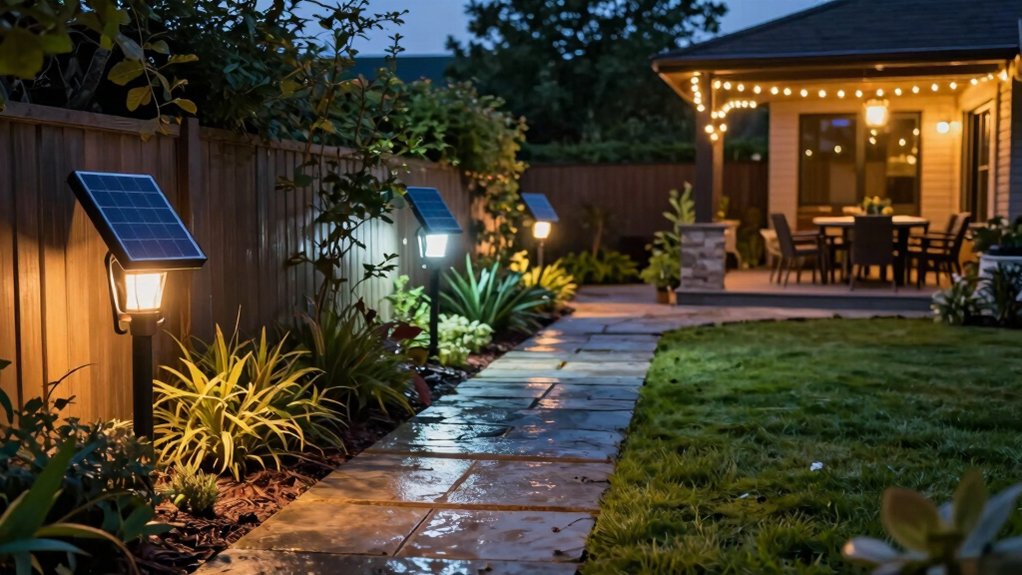
When you’re lighting a garden on a budget, you’ll weigh solar versus wired by what matters most: upfront cost, maintenance, and reliability through the seasons. Solar is easy and cheap to install, but performance depends on sun and battery life; wired lasts longer but costs more upfront and requires planning. The key is to focus on zones that matter most and pair warm LEDs with simple controls. Curious how to balance these choices for real impact without overspending?
Budget-First Lighting Goals for Your Garden
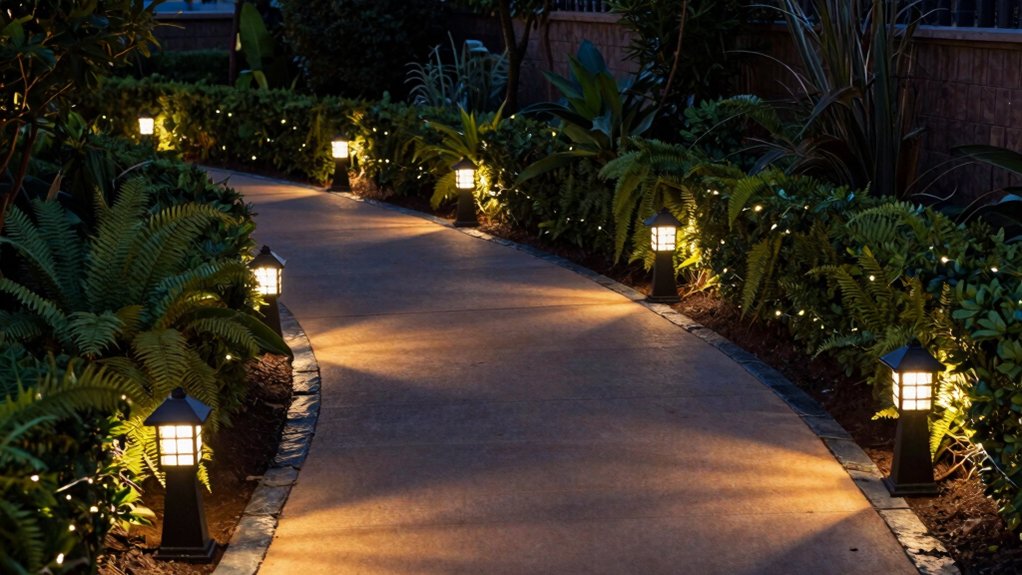
To set budget-friendly lighting goals for your garden, start with a clear plan that prioritizes essential areas, safety, and mood without overspending. Begin by mapping high-traffic zones, entrances, and focal features, then assign minimum lumens per area based on purpose.
Target 20–40 lux for functional paths, 40–60 lux for work zones, and 60–80 lux near entryways for safety. Estimate fixture counts using a conservative 40–60% overage to compensate for shading and aging.
Favor efficiency: choose LED options with 3000K warmth for a natural look and a rated life of 25,000 hours or more.
Create a budget with line-item caps for hardware, wiring, and controls, plus a small reserve for maintenance. Document your goals and update quarterly, tracking energy and cost savings.
Solar Vs Wired: Core Trade-Offs You’Ll Feel
Solar vs wired lighting boils down to reliability, cost, and maintenance—so you’ll feel the trade-offs in real-world use. In practice, solar systems are simple to install and cheaper upfront, but their reliability hinges on sun hours and battery health, which can vary by season and location.
Wired setups offer steady performance and predictable longevity, yet demand higher initial wiring labor and potentially intrusive installation. Expect lower ongoing energy costs with wired lighting, while solar costs stay steadier and often shift with battery replacements.
Maintenance demands differ: solar needs panel cleaning and battery checks, wired systems push conduit and switchgear upkeep. Data shows failure rates cluster around batteries and drivers for both, but solar remains more sensitive to climate.
Choose based on available sun, budget tolerance, and desired consistency.
Real-World Performance: Brightness, Durability, and Timing
You’ll assess how brightness expectations line up with actual outputs across common fixtures, noting real-world lumen claims vs. measured performance.
Durability matters as climates vary, so you’ll compare how materials hold up under heat, moisture, and seasonal use.
Finally, you’ll factor timing reliability, looking at on/off cycles, dusk-to-dawn sensors, and battery or power consistency to keep your landscape lighting predictable.
Brightness Realities
When you evaluate garden lights, brightness isn’t just a number on a label—it’s how well the fixture illuminates paths, borders, and focal points in real conditions. In practical terms, expect lumen claims to overstate field performance by 15–40% in shade or at angle.
Compare on-site tests: measure perceived brightness at 2–3 meters, noting hot spots, glare, and uniformity. Solar units may underperform at twilight and beyond a few hours, while wired options often sustain steadier output.
Consider color temperature; a warm 2700–3000K reads more inviting for borders, while 4000K can sharpen details along a walkway. Duty cycles matter: shorter, brighter pulses drain batteries faster; longer runtimes require steady, lower output.
Favor fixtures with real-world lumen measurements, consistent beam angles, and documented runtime benchmarks.
Durability in Climate
Durability in climate matters as much as brightness, because real-world performance hinges on environmental stress as much as lumen output. In practice, you’ll compare materials, seals, and IP ratings to predict longevity. Solar options tend to endure constant UV exposure, but solder joints and battery chemistry matter more over time.
Wired systems can suffer from moisture ingress at connectors or conduit, yet robust UV-rated cables and weatherproof housings reduce risk. In testing, expect temperature swings, humidity, and wind to affect brightness stability and component life.
Look for shaded-bundle designs that limit overheating and silicone gaskets that maintain seals. Real-world data show that higher ingress protection and quality finishes correlate with longer service life, fewer failures, and steadier performance across seasons.
Prioritize proven weatherproofing, maintenance access, and durable connectors to meet budget expectations.
Timing Reliability
Timing reliability matters just as much as brightness and durability because real-world performance hinges on how consistently lights respond to triggers and loads. In practice, timing is about how quickly a sensor or controller reacts and how steady it stays across cycles.
Solar options depend on battery state, temperature, and sun exposure, which can shift on cloudy days or during seasonal changes. Wired systems benefit from stable power and predictable control signals, yet wiring length and interference can delay responses.
Look for products with documented timing specs, fast warm-up, and low jitter under load. Tests that compare trigger-to-light delay, dusk-to-dawn accuracy, and maintenance-induced drift help you choose.
Prioritize reliability metrics alongside brightness and durability for predictable garden scenes.
Cost Breakdown: Upfront, Maintenance, and Longevity
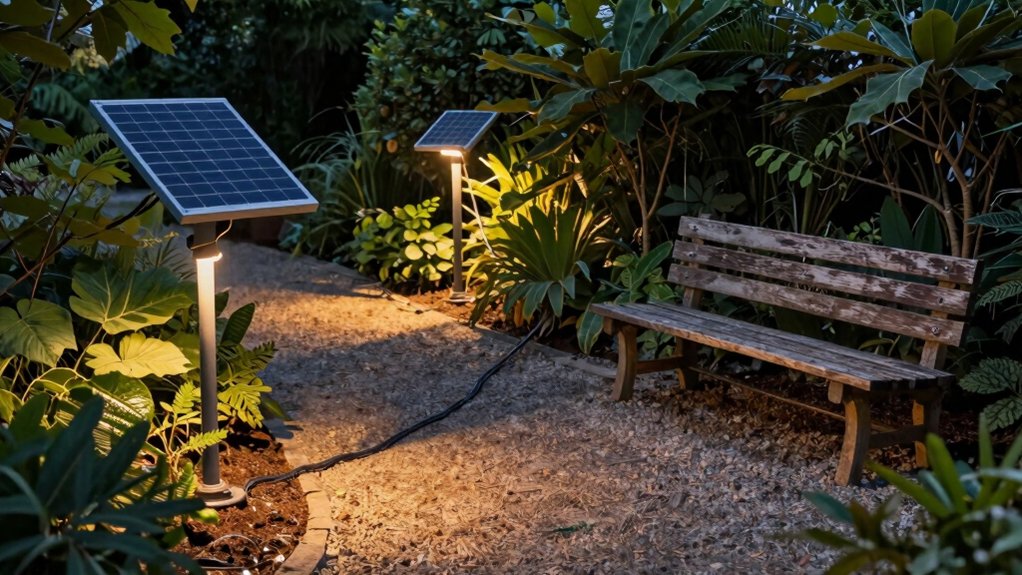
Upfront costs vary with the lighting type, but a clear picture helps you plan: LEDs generally cost more at purchase yet save the most over time through lower energy use and longer lifespans, while solar options minimize immediate outlay but depend on sun exposure and weather.
In wired systems, you pay for fixtures, transformers, and installation, plus potential trenching. Solar kits reduce wiring needs but can require larger batteries and controllers for consistent night lighting.
Maintenance cycles differ: LEDs need rare diode checks; solar cells require periodic cleaning and battery replacement every 5–10 years.
Longevity data favors quality LEDs with efficient drivers and dependable solar panels; wired setups emphasize robust weatherproofing and secure connections.
Over a decade, total cost often favors LEDs if usage is frequent, while solar remains competitive in light-duty, low-coverage applications.
Setup Steps: Quick Wins for a Cozy After-Dark Glow
You can get a cozy after-dark glow fast by prioritizing simple, reliable setups that don’t require a full redesign. Start with a small, bright focal lit area—think a doorway, seating nook, or path edge. Use plug-in or solar stake lights with weather-rated IP65+ to minimize maintenance.
Map a short circuit: one power source feeding two to four fixtures, keeping cable runs under 10 feet where possible. Choose warm color temperatures (2700–3000K) for comfort and test brightness at dusk.
Place lights behind sightlines to avoid glare and position low to the ground to accent textures. Favor motion or dusk-to-dawn sensors only if they don’t create gaps in illumination.
Record setup time, cost per lumen, and expected runtimes to compare options quickly.
Practical Tips to Maximize Light With Less Fuss
Smart lighting should be simple and reliable, so you get more brightness with less effort. Start with a baseline: measure current lumens in key areas, then target a 20–40% boost with efficient fixtures. Choose high-CRI LEDs (90+), and favor warm temperatures (2700–3000K) for inviting evenings.
Use motion or dusk-to-dawn sensors to reduce idle hours and extend battery life on solar setups. For wired systems, install low-voltage, weatherproof cables, and keep runs short to minimize voltage drop.
Group lights into zones, dimmers, and timers to prevent overlighting. Prioritize path lighting at eye level and focal spots at 1.5–2 meters height.
Regularly clean lenses and update firmware where available. Document run times, noting what delivers visible impact with minimal maintenance.
A Simple, Budget-Smart Lighting Plan for Borders, Paths, and Focal Points
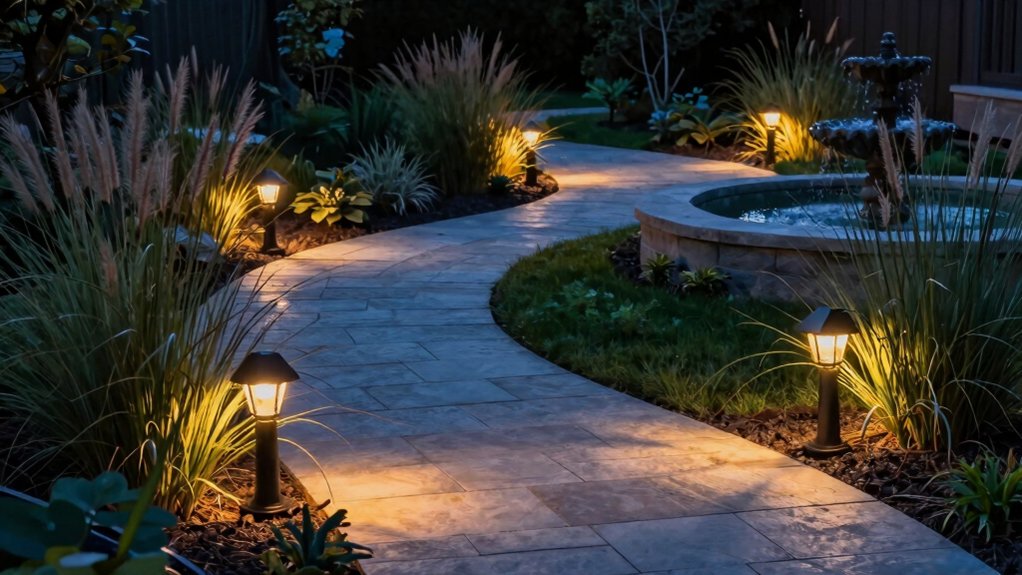
To keep borders, paths, and focal points lit efficiently, start with a simple zoning plan that assigns one lighting level per area and uses motion or time-based controls to avoid waste.
Map borders, beds, and walkways into zones with distinct brightness goals: low for borders, medium for paths, high for focal points.
Choose LED fixtures with warm color temperatures (2700–3000K) for a natural look and better recognition.
Favor solar path lights for low-traffic routes and wired fixtures for high-visibility zones, balancing cost and reliability.
Use timers or motion sensors calibrated to your routine so lights activate only when needed.
Document energy use and maintenance intervals, then adjust spacing, brightness, and fixture type as your garden evolves.
This pragmatic approach minimizes waste while delivering consistent, safe illumination.
Frequently Asked Questions
How Long Do Solar Lights Last on Cloudy Days?
Solar lights on cloudy days last only the day, typically until dusk if skies clear later, but performance drops. Rely on rechargeable batteries, expect 1–2 cloudy days per charge, and replace batteries every 1–2 years for consistency.
Are Smart Bulbs Worth the Extra Cost Outdoors?
Yes, smart bulbs outdoors are worth it if you value schedules, remote control, and zoning; they cost more upfront but save energy and time with automation, though durability and weather ratings should be your baseline first.
Can Wired Lighting Be Installed Without Professional Help?
Installing wired lighting yourself is possible, but risks mains work. If you’re handy, follow code, shut off power, use proper conduit, and call an electrician for uncertain steps—it’s like building a puzzle with precise measurements. Stay safe, calculate loads.
Do Garden Lights Attract Wildlife or Insects?
Yes, garden lights can attract insects, especially white or bright white LEDs; use warmer, dimmer options and shielded fixtures to reduce draws, while keeping outdoor areas safe and wildlife-friendly. Monitor lighting duration and adjust accordingly.
Is Battery Replacement Cheaper Than New Fixtures?
Yes, battery replacement is usually cheaper upfront, but costs can add up over time; compare battery lifespan, replacement frequency, and fixture efficiency—often buying new fixtures with longer life beats ongoing replacements in total cost and performance.