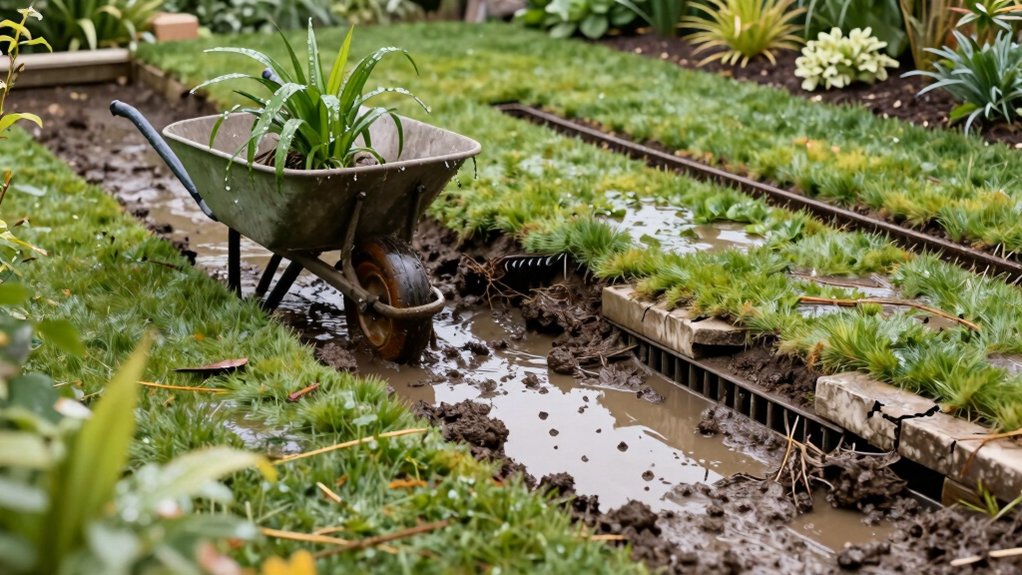
Drainage problems can sabotage your landscape before you plant a single thing. If water pools, soils stay soggy, or erosion trims your beds, your hard work may never pay off. Address grading, swales, or permeable paths now to protect foundations and keep plants thriving. Skipping fixes risks wasted money and ongoing maintenance. So where do you start, and what fixes give you the most value without overthinking the project?
Spotting Drainage Troubles in Your Yard
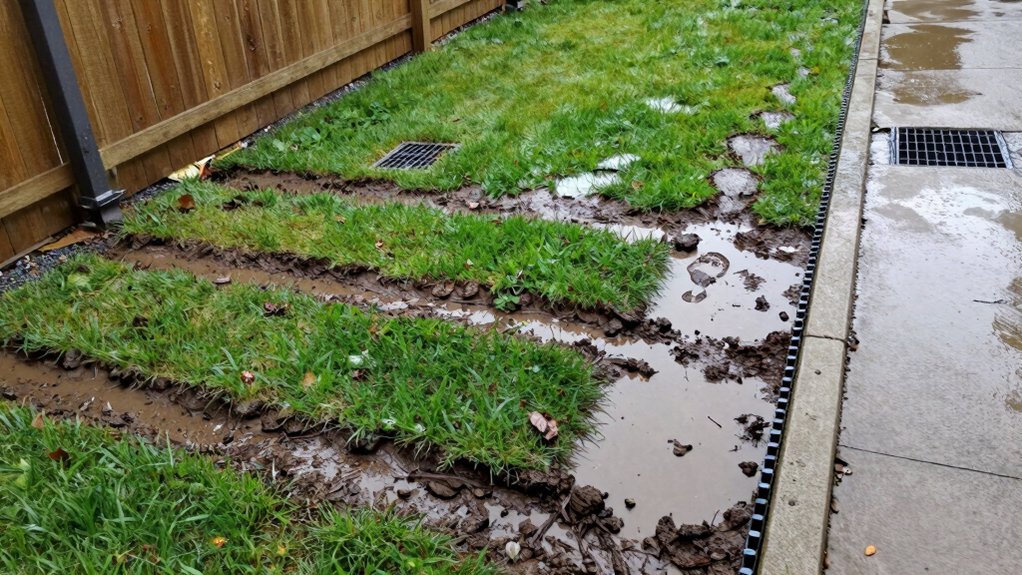
Look for signs of standing water after rain, uneven ground, and damp patches that linger for more than a day. You’ll notice puddles that don’t dry quickly, especially in low spots or near foundations.
Check for trenches or rills forming after storms, which indicate inadequate slope or compaction.
Inspect under eaves and along walls for persistent moisture, which may signal poor drainage or leaking gutters.
Observe your yard after a heavy rainfall; if water pools in multiple locations or takes more than 24 hours to recede, document the pattern.
Track soil texture; clay soils hold water longer than sandy soils.
Use a simple test: dig a 6-inch hole, fill with water, and time the soak-in rate. Record findings to guide corrective steps.
Why Grading and Slope Matter for Healthy Soil
By getting the grading right, you control where water flows and how soil settles, which directly affects root health and structure. Proper soil grading, slope, and drainage guide water away from foundations and toward beneficial outlets, reducing erosion and pooling.
With clear water-flow control, you create a stable base for healthy soil and plants, making it easier to manage moisture and nutrients.
Proper Soil Grading
Proper soil grading is essential because slope directs water flow away from foundations, paths, and planting beds, reducing erosion and pooling. You assess the site by mapping existing elevations with a level and long ruler, noting high and low points.
Then you plan a gentle, continuous incline, aiming for a drop of about 1 inch per 8 feet in lawn areas and steeper transitions near structures per local codes. Remove debris, compact only minimally, and amend soil to improve texture where needed.
Install reclaimed or crushed stone under paths to support drainage, and create swales along borders to guide runoff. Verify drainage through a simple rainfall test, observing water movement after simulated storms.
Adjust grading incrementally until water sheds cleanly away.
Slope and Drainage
A well-planned slope is the backbone of healthy soil and reliable drainage. You shape grade to direct excess water away from foundations and from beds, preventing pooling that suffocates roots.
Start by evaluating your site with a level, noting water pockets after a rain. Then establish a gradual slope: about 1–2 percent across beds, sharper near impervious surfaces, gentler away from delicate plantings.
Keep long, continuous contours to encourage infiltration, not sheet flow that erodes. Use soil amendments and organic matter to improve structure, so water-permeability aligns with slope.
Verify drainage outlets and swales are positioned to catch runoff before it causes erosion. Maintain consistent grading as beds settle, and recheck after heavy storms.
Precise grading reduces erosion, promotes root access to air, and stabilizes garden beds.
Water Flow Control
Water flow control hinges on proper grading and slope because these guarantee water moves where it benefits the soil and roots rather than pooling or rushing erosion. You assess grade first, identifying high points and runoff paths.
Then you design gentle, continuous slopes that slow velocity, reduce concentrated flow, and encourage infiltration. Use a level, transit, or simple string lines to map grade changes in small increments, aiming for a consistent downward gradient away from foundations and beds.
Implement swales or shallow trenches to capture excess water without creating perched pockets. For soil with clay, widen drainage paths and add organic matter to improve permeability.
Regularly check for signs of pooling, rills, or erosion, and adjust slope or channeling promptly to maintain steady, beneficial water movement.
Common Causes of Wet, Soggy Patches
Poor drainage paths can redirect water to areas that stay wet after rain, creating soggy patches you’ll notice first along low spots.
Heavy rain overwhelming the soil’s capacity accelerates pooling, so you’ll see longer-lasting wet zones even with brief showers.
Saturated soil limits, like clay-heavy or compacted beds, trap moisture and keep patches damp until you break the cycle with better drainage and aeration.
Poor Drainage Paths
Poor drainage paths are a common source of wet, soggy patches in lawns and gardens. You’ll identify them by observing where water concentrates after rainfall or irrigation, then tracing flow outward from the source. Begin at low points, noting any channeling that directs water toward beds, foundations, or sidewalks.
Check slope and grading: a gentle, uniform slope prevents pooling; even minor deviations can create runoff pockets. Inspect for compacted soil that blocks infiltration, and test soil texture—clay dries slowly and stays soggy, sand drains quickly but may erode.
Look for root barriers or hardscapes that redirect flow without dispersing it; these cause lateral spreading. Repair by regrading, adding topsoil, installing swales, or perforated drainage lines.
Verify improvements with repeated rainfall simulations and adjust as needed.
Heavy Rain Impact
Heavy rain can overwhelm existing drainage paths, turning even well-graded lawns into muddy, saturated zones. You’ll notice that surface runoff piles up where grading isn’t enough, or where downspouts dump near walkways. Pin down the pattern: duration, intensity, and slope govern flow speed.
Check for blocked outlets, clogged gutters, or misaligned swales that slow, divert, or absorb water. Create a simple map of runoff routes, then test with a light drizzle or a hose at low pressure to observe where water concentrates.
Prioritize preventing ponding near foundations, basements, or crawl spaces. Improve micro-contours with gentle swales, or install discrete trenches filled with permeable materials.
Finally, ensure gutters discharge away from pavements to reduce repeated saturation during storms.
Saturated Soil Limits
Saturated soils limit drainage when moisture exceeds the soil’s capacity to hold or shed water, creating lasting patches that persist after rain. You’ll identify this condition by observing slow surface drying, muddy footprints, and waterlogged roots.
Begin with soil texture checks: clay-heavy mixes retain water longer than sandy soils, while loams show intermediate behavior. Next, assess infiltration rates using a simple ring test or a peppered rain gauge over 24 hours. If water pools beyond 24 hours, drainage is constrained.
Address the root cause by improving structure with organic matter, aeration, and strategic compaction reduction. Consider sub-surface solutions like French drains or raised beds in persistent zones.
Then, re-evaluate after implementing changes to confirm moisture levels drop and garden health improves.
The Impact of Poor Drainage on Plant Health
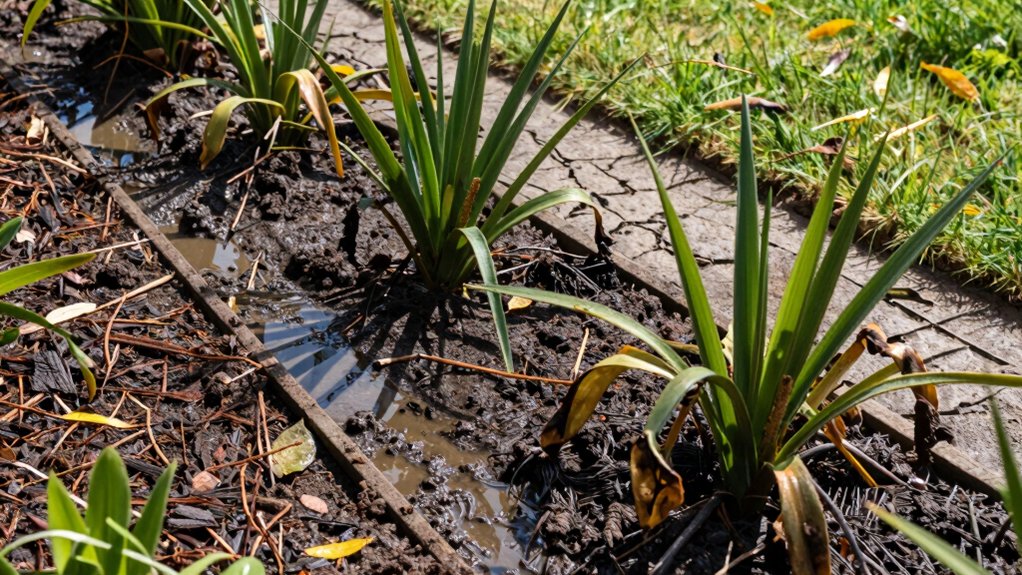
When soil drains poorly, roots struggle to access oxygen, which stunts growth and invites stress. Your plants suffer reduced root respiration, slowing nutrient uptake and weakening resilience. Excess moisture creates anaerobic pockets that shift microbial balance, increasing root rot risk and root tip mortality.
Waterlogged conditions collapse air-filled pores, degrading soil structure and hindering expansion, leading to stunted shoots and pale, limp foliage. Inconsistent moisture cycles trigger erratic flowering and leaf drop, while salinity concentration rises as water evaporates, stressing root systems further.
You’ll notice wilting despite surface moisture, slower recovery after drought, and heightened susceptibility to pests. To protect health, monitor drainage, maintain even moisture, and prevent standing water. Accurate assessment and controlled drying prevent long-term decline.
Budget-Smart Fixes That Work Before Planting
Before you plant, start with budget-smart fixes that improve drainage without breaking the bank. Assess surface water patterns: note where puddles form after rain and identify runoff paths. Focus on simple, proven tweaks first.
Create shallow swales or shallow trenches to guide water away from planting beds, using compacted soil or mulch to slow flow.
Improve soil structure by aerating and lightly incorporating organic matter; this boosts infiltration without expensive amendments.
Install perforated drainage pipe only where necessary, routing to a low spot, then backfill with gravel for filtration.
Elevate beds gradually with soil mounds to encourage drainage, avoiding perched areas.
Apply mulch to preserve moisture balance and reduce crusting.
Recheck after a rain event, adjust spacing, and document effective fixes.
How to Assess Your Property’s Drainage
Evaluating your property’s drainage starts with a clear map of how water moves across the landscape. Begin by identifying high and low points, noting slopes, and marking existing runoff paths. Create a simple sketch or use a grid to log rainfall flow during a storm event, documenting where water pools and how long it stays.
Inspect downspouts, driveways, and lawn areas for patterns of erosion or saturation, especially after heavy rain. Note soil type and vegetation, since percolation rates influence drainage. Check irrigation zones for overwatering signs and ensure rainwater gutters aren’t directing water toward foundations.
Record findings, then prioritize issues by impact and ease of remedy. This assessment guides targeted fixes instead of guesswork, preserving landscape health and budget.
Simple Grading and Grading Techniques to Try
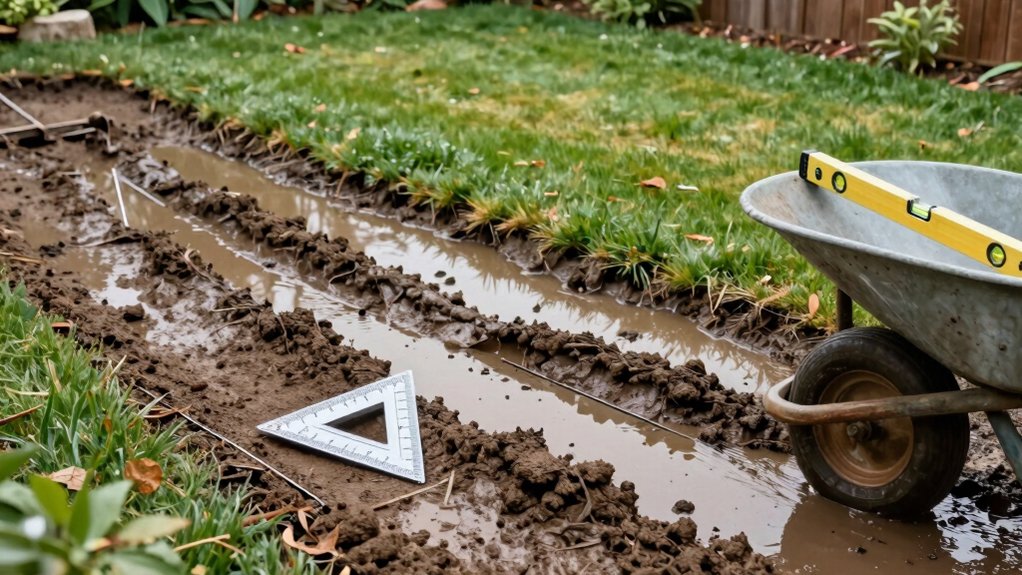
Grading is a straightforward way to control water flow and prevent pooling, so start with a plan you can measure. You’ll map existing contours, then set target slopes that move water away from structures at about a 2% grade for flat areas. Use a level and stakes to mark lines, ensuring consistency across the site.
Remove sod, dig shallow trenches, and test bed soil for compaction; loosen dense sections to promote infiltration. Add clean fill in layers, compacting lightly to maintain a stable cross-section.
Create swales or shallow basins that guide runoff toward designated drainage points, not the foundation. Check that surface texture remains uniform and that edges blend with surrounding yard grade.
Recheck grades after rain tests, adjusting as needed before final turfing or paving.
Drainage Solutions for Slopes and Erosion
You’ll explore slope drainage options to slow water flow and protect soil structure. We’ll cover erosion control methods that fit your landscape and maintenance needs, from terracing to vegetation ground cover.
Finally, we’ll outline how to safeguard your drainage system to ensure long-term performance.
Slope Drainage Options
Slope drainage options offer practical ways to manage water on sloped landscapes and prevent erosion. You’ll assess slope angle, soil type, and runoff velocity before choosing a method.
Start with contour planning: cut learning from the land, mark lines parallel to the slope, and install shallow swales to intercept and slow flow.
Use ridges or French drains where water concentrates, ensuring perforated pipe drains toward an outlet.
Employ terracing only where space and grade permit, with even steps that create flat work surfaces and retain moisture for plants.
Guarantee proper installation: geotextile separation, backfill with clean angular gravel, and compact in stages.
Maintain unobstructed outlets, inspect after heavy rains, and document changes to monitor effectiveness over time.
Erosion Control Methods
Erosion control on slopes combines drainage strategies with stabilizing measures to protect soil and structures. You’ll assess slope grade, soil type, and surface runoff to tailor a plan.
Begin with contouring to slow water flow, then install swales or berms that direct drainage away from vulnerable areas. Use mulch or vegetation with deep roots to stabilize surface soil, supplementing with geotextiles where erosion risk is high.
Install check dams in concentrated flow paths to dissipate energy, and consider terracing if slopes are steep or long. Drainage outlets must terminate well below the root zone to prevent scouring, while maintaining accessibility for maintenance.
Always document the sequence, monitor performance after rain events, and adjust practices before landscaping or adding permanent features.
Drainage System Maintenance
Drainage system maintenance on slopes requires regular inspection, timely clearing of blockages, and proactive repairs to sustain effectiveness. You’ll verify outlet flow after rain and note any pooling or erosion indicators.
Inspect trenches, corrugated pipes, and surface drains for cracks, sagging, or scale buildup, and remove debris that can impede movement. Clean outlets and screens, ensuring unobstructed discharge paths, then reseal joints if you detect seepage.
Test catch basins and grit chambers, confirming that lids are secure and floats operate freely. Schedule seasonal checks, particularly after heavy storms or freeze–thaw cycles.
Address sags with proper grading or added fill, restore vegetation around channels, and replace damaged components promptly. Document findings, plan repairs, and maintain a spare parts list to minimize downtime during maintenance.
When to Consider Professional Help
If you’ve tried basic fixes without success, it’s time to contemplate professional help. You should seek experts when your drainage issues persist after reseating blocks, adjusting slopes, and inspecting for soil compaction.
Look for signs that exceed DIY feasibility: persistent hotspots after rain, standing water on multiple zones, or groundwater intrusion into foundations. A pro can diagnose with trench testing, dye tracing, and camera surveys, identifying underground failures you can’t see.
Confirm that licensed contractors carry proper warranties, insurance, and a clear scope of work. Expect recommendations that may include grading alterations, French drains, or permeable bedding, rather than a single quick fix.
Plan for accurate cost estimates, timeline transparency, and written guarantees before you authorize any excavation. Proceed only when solutions align with safety and long-term drainage stability.
Planning Your Landscaping Around Proper Drainage
Good drainage isn’t an afterthought in landscaping—it shapes how your plants grow, how paths stay dry, and how you use outdoor spaces. Planning starts with an honest site assessment: map existing slopes, note low spots, and identify persistent puddles after rain.
Set priorities for functional zones—seedbeds, seating, and circulation—based on drainage results. Create a grading plan that routes water away from structures, using positive slopes of 1–2 percent where possible.
Install proper drainage features first: grading adjustments, French drains, or perforated pipes with gravel beds, then backfill with soil that compacts well. Choose plantings tolerant of moisture where needed, and emphasize gravel, mulch, and raised beds in wet areas.
Finally, verify drainage by simulating a heavy rain event and adjusting as required.
Frequently Asked Questions
How Can I Tell if My Yard Drains Downhill From Heavy Rain?
Yes—you can tell by watching water flow after rain. Stand downhill from the slope, note pooling and runoff speed, trace wet areas back to their source, check for consistent downhill drainage patterns, and test with dye-free tracer water.
Do Beans or Mulch Affect Drainage More Than Soil Type?
Beans and mulch affect drainage more than soil type, but only slightly; you’ll notice mulch moderates surface flow, while beans increase organic matter but also moisture. You’ll methodically compare percolation, roots, and compaction, imagining precise, incremental improvements.
Will Adding Gravel Improve Drainage in a Lawn?
Yes, adding gravel can improve drainage in a lawn short term, but it isn’t a fix-all. You should carve out poor spots, install a proper gravel-plus-perforated-drain system, and consider soil amendment to sustain long-term turf health.
Can Plant Selection Fix Drainage Without Grading?
Plant selection alone can’t fix drainage without grading; you’ll still accumulate water. Choose species tolerant of wet roots, install proper grades, and create outlets. Combine with soil amendments and drainage corridors to reliably improve site conditions. Then evaluate landscaping options.
Is There a Cheap Temporary Fix for Standing Water?
Yes, you can temporary fix standing water with a cheap, quick plan: dig shallow trenches to direct water, lay perforated tubing or gravel, and install a temporary sump or pump; monitor after rain and adjust as needed.