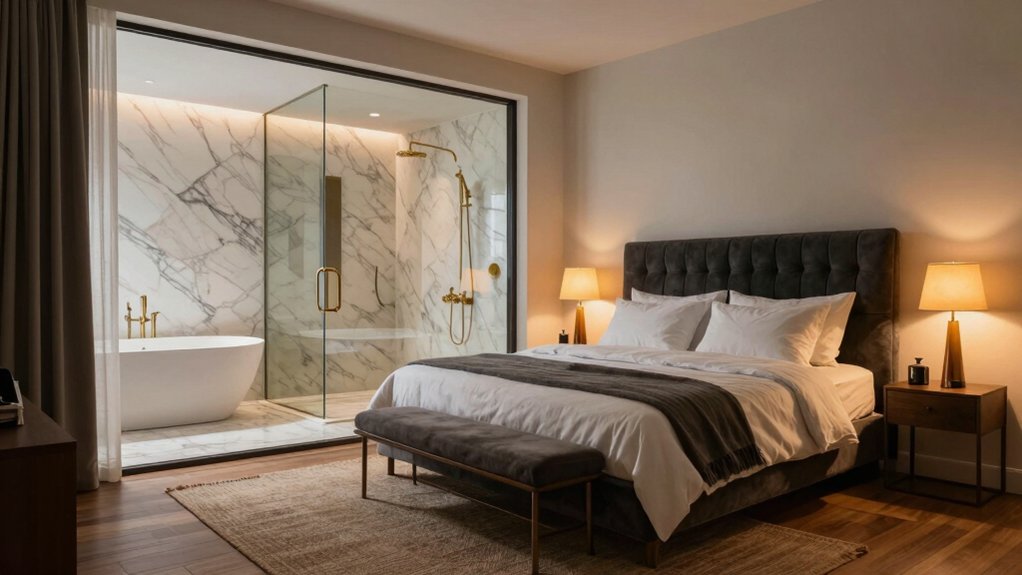
You can expect a master bedroom and bath to cost roughly $150,000 to $350,000, plus permits and design fees. Your total hinges on room size, layout, and finishes, plus structural and mechanical upgrades like framing, plumbing runs, electrical, and HVAC. Budget by unit costs for framing, pipes, fixtures, and lighting, then add premium finishes or luxury touches. Track deviations to protect margins. If you keep going, you’ll uncover how to refine costs step by step.
Factors That Drive the Cost
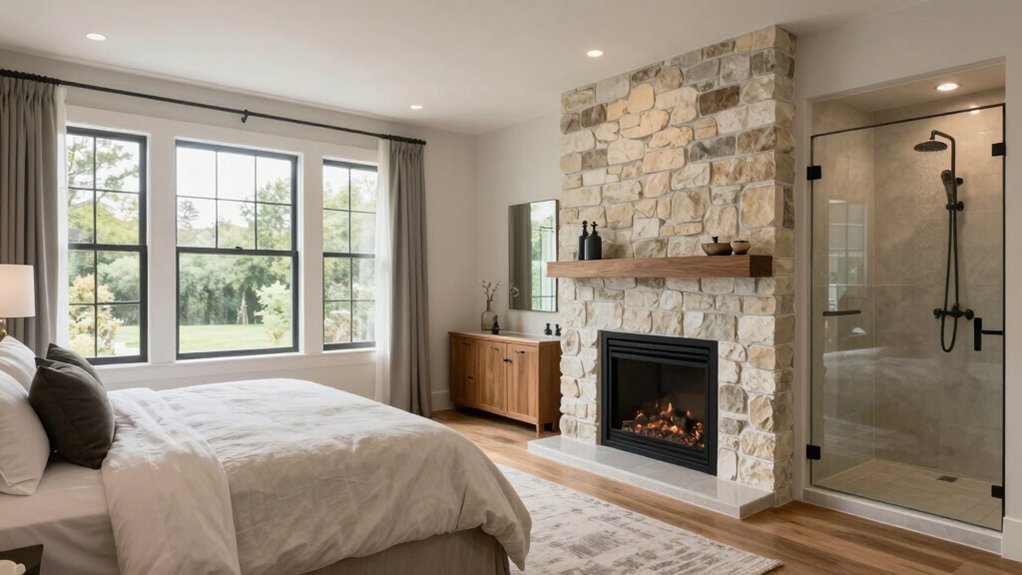
Factors that drive the cost include room size, layout complexity, and material choices. You’ll quantify impact by per-square-foot rates, sequencing, and finishes. Room size sets baseline; larger footprints elevate plumbing, electrical, and HVAC load.
Layout complexity increases carpentry hours, door swings, and built-in furniture, raising labor and waste. Material choices determine unit costs, durability, and maintenance intervals; premium finishes boost both material sourcing time and price.
Decor styles influence fixture selection, trim profiles, and installation precision, with transitional or high-end looks demanding tighter tolerances. Consider cabinetry depth, nonstructural walls, and ceiling height in cost modeling.
Budget clarity improves when you map suppliers, lead times, and warranty terms. Track unit costs for finishes, wall treatments, and floorings to maintain discipline and avoid overruns.
Structural and Mechanical Upgrades
Structural and mechanical upgrades set the baseline cost for a master suite by sizing and validating the core systems: structural reinforcement, new or relocated plumbing, upgraded electrical and HVAC, and any required dampening or moisture controls.
You’ll quantify each element as unit-costs: framing adjustments, beam/filed loads, pipe runs, drip legs, and new fixtures. Lighting design materials and controls are included but distinct from finish fixtures, so you price wiring trenches, switches, and dedicated circuits per room.
Plumbing upgrades cover supply and waste rerouting, venting, and potential under-slab work. HVAC updates address duct relocation, enhanced airflow, and zoning, with efficiency-rated equipment factored at current rates.
Structural checks, moisture barriers, and sound dampening contribute per‑square‑foot costs. Document assumptions, coatings, and permit fees to maintain transparent budgeting throughout the early design phase.
Finishes, Fixtures, and Luxuries
Finishes, fixtures, and luxuries translate the bare structure into a liveable space by detailing per-room amenities and their unit costs. You’ll itemize finishes (walls, floors, ceilings) and fixtures (bath, lighting) with clear unit prices, enabling precise cost forecasting.
For lighting design, plan fixture types, lumen output, controls, and wattage per room, then convert these specs to per-square-foot and per-item costs.
Furniture selection shapes the overall budget, so specify bed, nightstands, dressers, seating, and storage with exact prices and delivery considerations. Include premium options for comfort and durability, contrasting them with standard alternatives to show value.
Document trim, hardware, and specialty items (vent covers, mirrors) with SKU and price. Present subtotal by category and cumulative totals for straightforward comparison and decision making.
Budgeting Strategies and Cost-Cutting Tips
To stretch your master suite budget without sacrificing quality, start with an itemized plan that prioritizes high-impact upgrades and clearly assigns unit costs. Then, identify opportunities to save—like selecting mid-range finishes and standard fixtures where feasible.
You’ll quantify design aesthetics choices by per‑item cost, comparing premium versus value options to avoid overinvesting in trends. Prioritize energy efficiency upgrades with tangible payback, such as LED lighting, smart thermostats, and high‑efficiency windows, and record their exact unit costs.
Seek bulk pricing on cabinetry and millwork, and consider off-season installation to reduce labor rates. Favor standard tile patterns and consistent grout joints to minimize waste.
Document deviations in a single cost ledger, then track actuals vs. estimates to preserve margin and ensure predictable, transparent budgeting throughout the project.
Timeline, Permits, and Financing Considerations
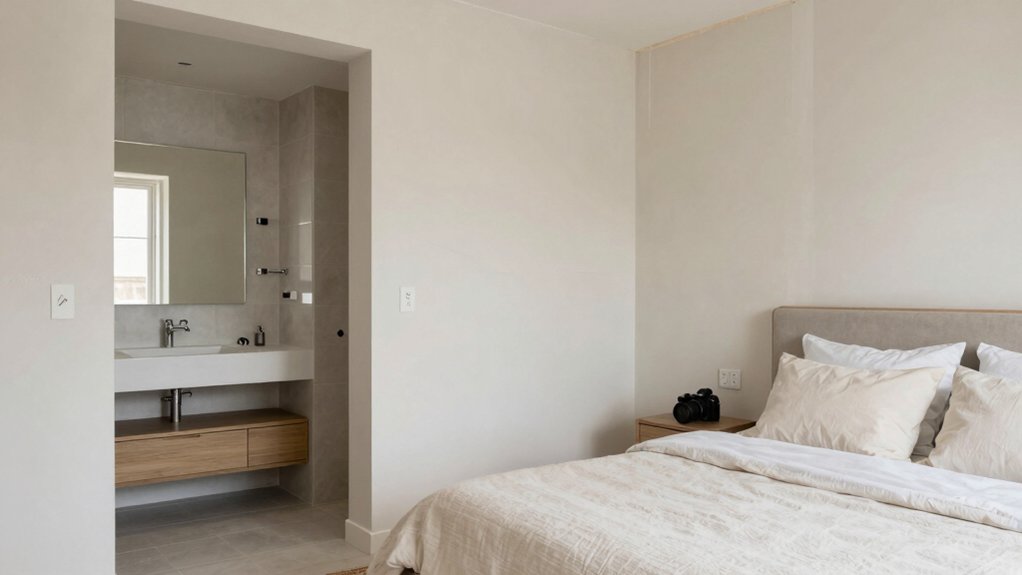
Coordinating timeline, permits, and financing starts with a clear, itemized schedule that aligns with your budget: set milestone dates for design finalization, permit submissions, and phased inspections, and lock in lender timelines and draw required documents.
You’ll trace a linear path from design inspiration to final approvals, mapping permit scopes to trades and inspection windows. Budget for lead times, such as engineer reviews or energy code amendments, to prevent delays.
Contractor selection should align with a defined payment schedule tied to completed milestones, preserving cash flow and accountability.
Prepare a design brief that matches unit-cost expectations, then confirm each permit phase with exact submission packages.
Maintain contingency lines for changes in scope, and review financing terms early to avoid last‑minute funding gaps.
Conclusion
You estimate, you compare, you decide. You budget, you track, you adjust. You prioritize structure, you specify finishes, you verify permits. You plan, you schedule, you finance. You save, you optimize, you protect. You choose efficiency, you demand reliability, you expect clarity. You measure costs, you monitor changes, you finish strong. You design comfort, you deliver value, you sleep soundly. You invest wisely, you gain confidence, you move forward. You win.